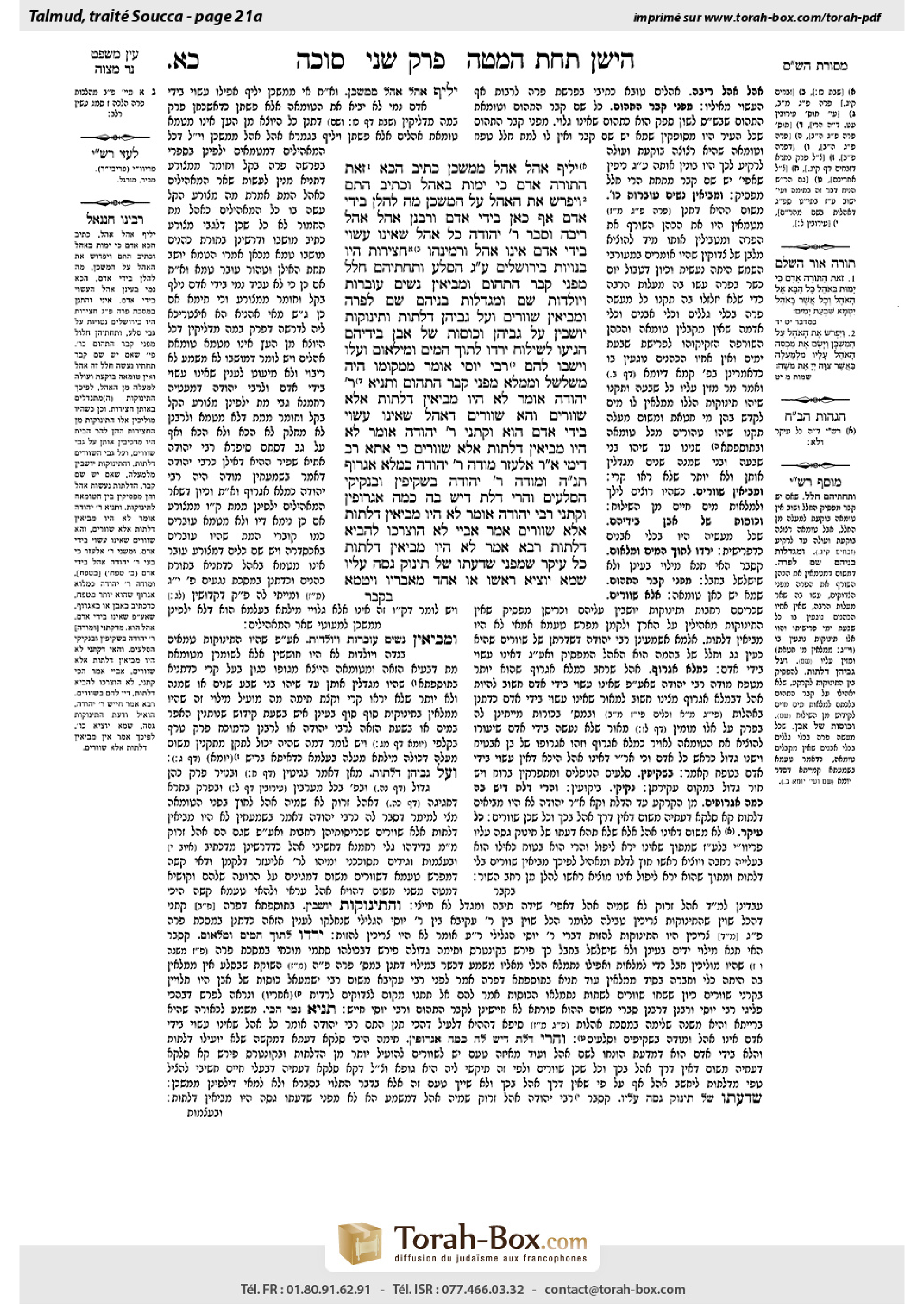
Sukkah 21a: Talmud study for Daf Yomi
Daf Yomi is the daily study of one Talmud folio. Explore 37 tractates with scans, Hebrew text, Sefaria English and AI-generated French translations where annotated.
Passage selection and English or AI-generated French translation are available where the scan has annotations. Daf Study is independent of Torah-Box and Sefaria.
Browse Sukkah · סוכה · All tractatesSukkah 21a text and translations
This page of Sukkah includes the Aramaic text, an English translation and an AI-generated French translation, alongside the scan above.
סוכה כ״א א · Aramaic and Hebrew text
יָלֵיף ״אֹהֶל״ ״אֹהֶל״ מִמִּשְׁכָּן. כְּתִיב הָכָא: ״זֹאת הַתּוֹרָה אָדָם כִּי יָמוּת בְּאֹהֶל״, וּכְתִיב הָתָם: ״וַיִּפְרֹשׂ אֶת הָאֹהֶל עַל הַמִּשְׁכָּן״, מָה לְהַלָּן בִּידֵי אָדָם, אַף כָּאן בִּידֵי אָדָם. וְרַבָּנַן: ״אֹהֶל״ ״אֹהֶל״ רִיבָּה.
וְסָבַר רַבִּי יְהוּדָה כׇּל אֹהֶל שֶׁאֵינוֹ עָשׂוּי בִּידֵי אָדָם אֵינוֹ אֹהֶל? וּרְמִינְהוּ: חֲצֵירוֹת הָיוּ בְּנוּיוֹת בִּירוּשָׁלַיִם עַל גַּבֵּי הַסֶּלַע, וְתַחְתֵּיהֶם חָלָל, מִפְּנֵי קֶבֶר הַתְּהוֹם. וּמְבִיאִין נָשִׁים עוּבָּרוֹת וְיוֹלְדוֹת שָׁם וּמְגַדְּלוֹת בְּנֵיהֶם שָׁם לַפָּרָה.
וּמְבִיאִין שְׁוָורִים וְעַל גַּבֵּיהֶן דְּלָתוֹת, וְתִינוֹקוֹת יוֹשְׁבִין עַל גַּבֵּיהֶן וְכוֹסוֹת שֶׁל אֶבֶן בִּידֵיהֶם. הִגִּיעוּ לַשִּׁילוֹחַ, יָרְדוּ לְתוֹךְ הַמַּיִם וּמִילְּאוּם, וְעָלוּ וְיָשְׁבוּ לָהֶם. רַבִּי יוֹסֵי אוֹמֵר: מִמְּקוֹמוֹ הָיָה מְשַׁלְשֵׁל וּמְמַלֵּא, מִפְּנֵי קֶבֶר הַתְּהוֹם.
וְתַנְיָא, רַבִּי יְהוּדָה אוֹמֵר: לֹא הָיוּ מְבִיאִין דְּלָתוֹת, אֶלָּא שְׁוָורִים. וְהָא שְׁוָורִים, דְּאֹהֶל שֶׁאֵינוֹ עָשׂוּי בִּידֵי אָדָם הוּא, וְקָתָנֵי, רַבִּי יְהוּדָה אוֹמֵר: לֹא הָיוּ מְבִיאִין דְּלָתוֹת אֶלָּא שְׁוָורִים!
כִּי אֲתָא רַב דִּימִי, אָמַר רַבִּי אֶלְעָזָר: מוֹדֶה רַבִּי יְהוּדָה כִּמְלֹא אֶגְרוֹף. תַּנְיָא נָמֵי הָכִי: וּמוֹדֶה רַבִּי יְהוּדָה בִּשְׁקִיפִין וּבִנְקִיקֵי הַסְּלָעִים.
וַהֲרֵי דֶּלֶת, דְּיֵשׁ בָּהּ כַּמָּה אֶגְרוֹפִין, וְקָתָנֵי, רַבִּי יְהוּדָה אוֹמֵר: לֹא הָיוּ מְבִיאִין דְּלָתוֹת אֶלָּא שְׁוָורִים! אָמַר אַבָּיֵי, לָא הוּצְרְכוּ לְהָבִיא דְּלָתוֹת.
רָבָא אָמַר: לֹא הָיוּ מְבִיאִין דְּלָתוֹת כׇּל עִיקָּר, שֶׁמִּפְּנֵי שֶׁדַּעְתּוֹ שֶׁל תִּינוֹק גַּסָּה עָלָיו, שֶׁמָּא יוֹצִיא רֹאשׁוֹ אוֹ אֶחָד מֵאֵבָרָיו, וְיִטָּמֵא
Sukkah 21a · English translation
He derives by means of a verbal analogy that only a man-made tent transmits impurity, deriving the tent written with regard to impurity imparted by a corpse from the tent written with regard to the Tabernacle. It is written here with regard to impurity imparted by a corpse: “This is the teaching when a man dies in a tent” (Numbers 19:14). And it is written there with regard to the Tabernacle: “And he spread the tent over the Tabernacle” (Exodus 40:19). Just as there, with regard to the Tabernacle, the tent was established by a person, so too here, with regard to impurity of a corpse, it is a tent established by a person. And according to the Rabbis, because the passage dealing with impurity imparted by a corpse, i.e., tent tent, is repeated several times, this amplifies and includes any structure that provides shelter, even if it is not a standard tent.
The Gemara asks: And does Rabbi Yehuda hold that the legal status of any tent that is not established by a person is not that of a tent? The Gemara raises a contradiction from a mishna (Para 3:2): Courtyards were built in Jerusalem atop the rock, and beneath these courtyards there was a space of at least a handbreadth due to the concern lest there is a grave in the depths. In that case, the space served as a barrier preventing the impurity from reaching the courtyards above. And they would bring pregnant women, and they would give birth there in those courtyards. And they would raise their children there and would not leave there with the children until they grew. All this was done so that the children would be untainted by any impurity and would be able to assist in the ritual of the red heifer, whose ashes are used to purify those impure with impurity imparted by a corpse.
And once they reached age seven or eight and were capable of assisting in the performance of this ritual, the priests would bring oxen there. And they would place doors on the backs of these oxen, and the children would sit upon the doors and they would hold cups of stone, which are not susceptible to ritual impurity, in their hands. When they reached the Siloam pool, they descended into the water and filled the cups with water, and ascended and sat themselves on the doors. The water in the cups was mixed with the ashes of the heifer and used for sprinkling on the impure person or vessels. Rabbi Yosei says: The children did not descend from their oxen; rather, each child from his place on the door would lower the cup with a rope and fill it with water due to the concern lest there is a grave in the depths beneath the path leading from the oxen to the pool.
And it is taught in a baraita that Rabbi Yehuda says: They would not bring doors; rather they would bring only oxen. The size of the spinal column and the body of the animal was sufficient to constitute a tent and therefore served as a barrier before the impurity imparted by a grave in the depths. And this is difficult, as aren’t oxen a tent that is not established by a person; and it is taught that Rabbi Yehuda says: They did not bring doors; rather they brought only oxen. Apparently, the legal status of a tent that is not man-made is that of a tent.
When Rav Dimi came from Eretz Yisrael to Babylonia he said that Rabbi Elazar said: Rabbi Yehuda concedes that the legal status of a tent that is not man-made is that of a tent when the tent is a fistbreadth, which is more than a handbreadth in terms of length, width, and height. It is only when the tent is less than the size of a fist that Rabbi Yehuda holds that it is not a tent. That opinion is also taught in a baraita: And Rabbi Yehuda concedes in the case of caves and deep cavities in the rocks that their status is that of a tent even though they are not man-made.
The Gemara asks: But a door on the back of an ox is an object that measures several fistbreadths, and it is taught that Rabbi Yehuda says: They did not bring doors but only oxen. Apparently, a door does not constitute a tent, since that is not the manner in which a tent is typically established. Abaye said in response that Rabbi Yehuda did not say that the legal status of the door is not that of a tent; rather, he said: They did not need to bring doors because the oxen themselves were sufficiently broad.
Rava said Rabbi Yehuda’s statement should be explained differently. They would not bring doors at all. Because a child has an exaggerated sense of self-confidence due to the width of the door, he might allow himself to move from side to side and as a result, perhaps he will extend his head or one of his limbs beyond the edge of the door and will become impure
Sukkah 21a · Traduction française (IA)
Il déduit, au moyen d’une analogie verbale, que seule une tente construite par un homme transmet l’impureté. Il rapproche la tente mentionnée à propos de l’impureté due à un cadavre de celle mentionnée à propos du Tabernacle. À propos de l’impureté due à un cadavre, il est écrit : « Voici la loi lorsqu’un homme meurt dans une tente » (Nombres 19:14). Et à propos du Tabernacle, il est écrit : « Il étendit la tente sur le Tabernacle » (Exode 40:19). De même que, dans le cas du Tabernacle, la tente a été dressée par une personne, de même, dans le cas de l’impureté due à un cadavre, il s’agit d’une tente dressée par une personne. Selon les Rabbins, en revanche, la répétition du terme « tente » dans le passage relatif à l’impureté due à un cadavre amplifie la portée du texte et inclut toute construction qui abrite, même si elle n’est pas une tente au sens habituel.
La Guemara demande : Rabbi Yehuda considère-t-il vraiment qu’une tente qui n’a pas été construite par une personne n’a pas le statut de tente ? La Guemara soulève une contradiction à partir d’une Michna (Para 3:2) : Des cours furent construites à Jérusalem sur le rocher, et un espace d’au moins un téfa’h fut ménagé sous ces cours, par crainte qu’il n’y ait une tombe dans les profondeurs. Cet espace faisait alors écran et empêchait l’impureté d’atteindre les cours situées au-dessus. On y amenait des femmes enceintes, qui y accouchaient. Elles y élevaient leurs enfants et ne quittaient pas les lieux avec eux avant qu’ils aient grandi. Tout cela visait à préserver les enfants de toute impureté, afin qu’ils puissent participer au rituel de la vache rousse, dont les cendres servent à purifier ceux qui sont impurs en raison de l’impureté due à un cadavre.
Lorsqu’ils atteignaient l’âge de sept ou huit ans et étaient capables de participer à l’accomplissement de ce rituel, les prêtres y amenaient des bœufs. Ils plaçaient des portes sur le dos de ces bœufs ; les enfants s’asseyaient sur les portes et tenaient dans leurs mains des coupes de pierre, qui ne sont pas susceptibles de contracter l’impureté rituelle. Lorsqu’ils arrivaient au bassin de Siloé, ils descendaient dans l’eau, remplissaient les coupes, puis remontaient et reprenaient place sur les portes. L’eau contenue dans les coupes était mélangée aux cendres de la vache et servait à asperger la personne ou les ustensiles impurs. Rabbi Yosei dit : Les enfants ne descendaient pas de leurs bœufs ; au contraire, chacun, depuis la place qu’il occupait sur la porte, abaissait sa coupe à l’aide d’une corde et la remplissait d’eau, par crainte qu’il n’y ait une tombe dans les profondeurs sous le chemin menant des bœufs au bassin.
Et il est enseigné dans une baraïta que Rabbi Yehuda dit : Ils n’apportaient pas de portes ; ils n’apportaient que des bœufs. La colonne vertébrale et le corps de l’animal avaient des dimensions suffisantes pour constituer une tente et faire ainsi écran à l’impureté provenant d’une tombe dans les profondeurs. Cela pose difficulté : les bœufs ne sont-ils pas une tente qui n’a pas été construite par une personne ? Or, il est enseigné que Rabbi Yehuda dit : Ils n’apportaient pas de portes, mais seulement des bœufs. Il semble donc qu’une tente qui n’est pas construite par un homme ait bien le statut de tente.
Lorsque Rav Dimi vint d’Erets Israël en Babylonie, il rapporta que Rabbi Elazar avait dit : Rabbi Yehuda reconnaît qu’une tente qui n’est pas construite par un homme a le statut de tente lorsque ses dimensions atteignent un poing en longueur, en largeur et en hauteur — ce qui dépasse un téfa’h. Ce n’est que lorsque la tente mesure moins d’un poing que Rabbi Yehuda considère qu’elle n’a pas le statut de tente. Cette opinion est également enseignée dans une baraïta : Rabbi Yehuda reconnaît que les grottes et les profondes cavités des rochers ont le statut de tente, bien qu’elles n’aient pas été construites par un homme.
La Guemara demande : Mais une porte placée sur le dos d’un bœuf mesure plusieurs poings, et il est enseigné que Rabbi Yehuda dit : Ils n’apportaient pas de portes, mais seulement des bœufs. Il semble donc qu’une porte ne constitue pas une tente, puisque ce n’est pas ainsi qu’on construit habituellement une tente. Abaye répondit que Rabbi Yehuda ne disait pas que la porte n’avait pas le statut de tente ; il disait plutôt : Ils n’avaient pas besoin d’apporter de portes, car les bœufs eux-mêmes étaient suffisamment larges.
Rava dit qu’il faut expliquer autrement la déclaration de Rabbi Yehuda. Ils n’apportaient pas de portes du tout. La largeur de la porte donnait à l’enfant un sentiment excessif de sécurité ; il pouvait alors se permettre de bouger d’un côté à l’autre et risquer ainsi de passer la tête ou l’un de ses membres au-delà du bord de la porte et de devenir impur.
Traduction française générée par IA à partir de l’édition anglaise de Sefaria. Vérifie toujours un passage avec le texte source.
Text from Sefaria: William Davidson Edition - Vocalized Aramaic (CC BY NC); William Davidson Edition - English (CC BY NC).