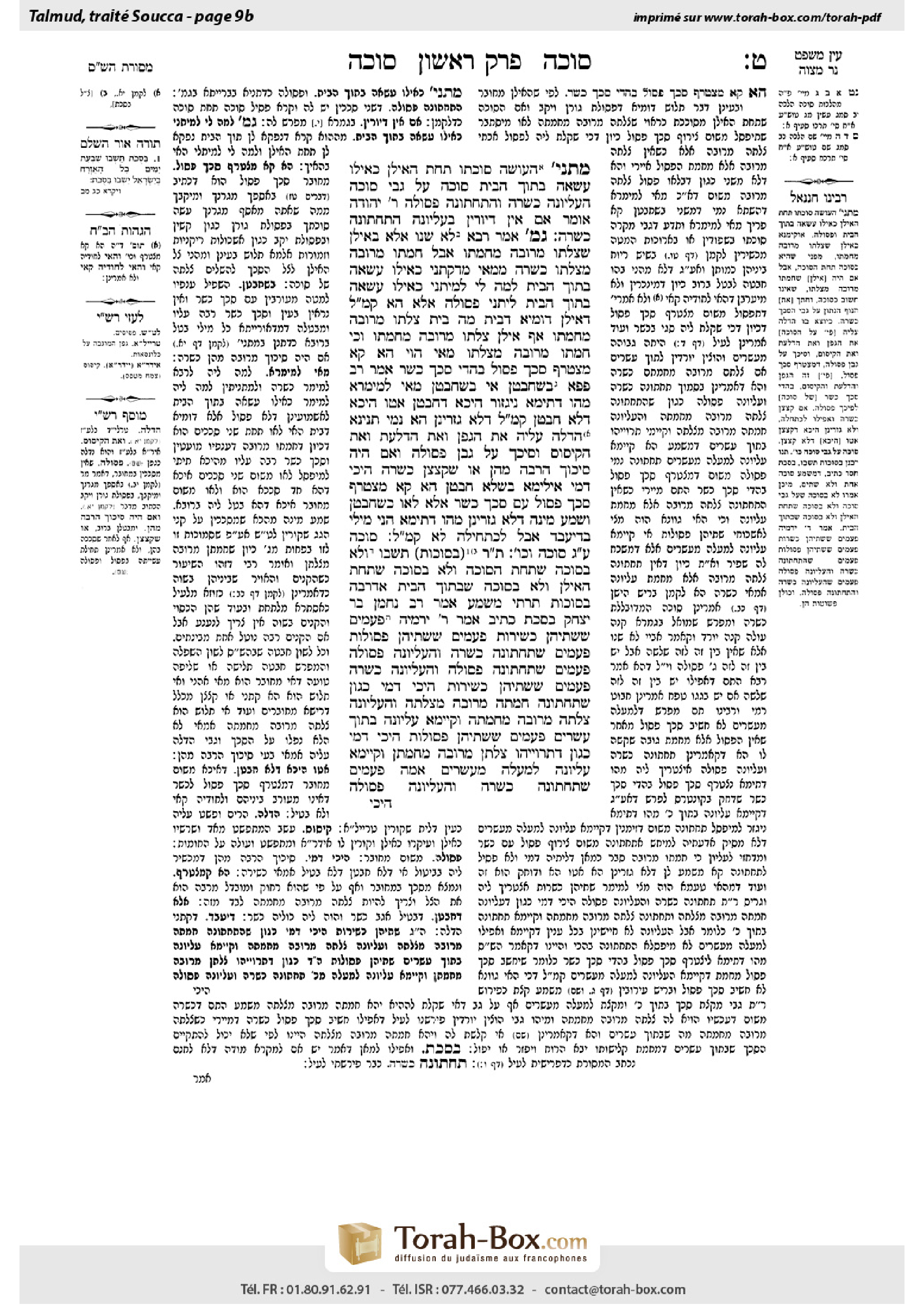
Sukkah 9b: Talmud study for Daf Yomi
Daf Yomi is the daily study of one Talmud folio. Explore 37 tractates with scans, Hebrew text, Sefaria English and AI-generated French translations where annotated.
Passage selection and English or AI-generated French translation are available where the scan has annotations. Daf Study is independent of Torah-Box and Sefaria.
Browse Sukkah · סוכה · All tractatesSukkah 9b text and translations
This page of Sukkah includes the Aramaic text, an English translation and an AI-generated French translation, alongside the scan above.
סוכה ט׳ ב · Aramaic and Hebrew text
מַתְנִי׳ הָעוֹשֶׂה סוּכָּתוֹ תַּחַת הָאִילָן — כְּאִילּוּ עֲשָׂאָהּ בְּתוֹךְ הַבַּיִת. סוּכָּה עַל גַּבֵּי סוּכָּה — הָעֶלְיוֹנָה כְּשֵׁרָה וְהַתַּחְתּוֹנָה פְּסוּלָה. רַבִּי יְהוּדָה אוֹמֵר: אִם אֵין דָּיוֹרִין בָּעֶלְיוֹנָה — הַתַּחְתּוֹנָה כְּשֵׁרָה.
גְּמָ׳ אָמַר רָבָא: לֹא שָׁנוּ אֶלָּא בְּאִילָן שֶׁצִּלָּתוֹ מְרוּבָּה מֵחֲמָתוֹ, אֲבָל חֲמָתוֹ מְרוּבָּה מִצִּלָּתוֹ — כְּשֵׁרָה.
מִמַּאי — מִדְּקָתָנֵי: ״כְּאִילּוּ עֲשָׂאָהּ בְּתוֹךְ הַבַּיִת״: לְמָה לִי לְמִיתְנֵי ״כְּאִילּוּ עֲשָׂאָהּ בְּתוֹךְ הַבַּיִת״? לִיתְנֵי ״פְּסוּלָה״! אֶלָּא, הָא קָא מַשְׁמַע לַן דְּאִילָן דּוּמְיָא דְּבַיִת: מָה בַּיִת צִלָּתוֹ מְרוּבָּה מֵחֲמָתוֹ — אַף אִילָן צִלָּתוֹ מְרוּבָּה מֵחֲמָתוֹ.
וְכִי חֲמָתוֹ מְרוּבָּה מִצִּלָּתוֹ, מַאי הָוֵי? הָא קָא מִצְטָרֵף סְכָךְ פָּסוּל בַּהֲדֵי סְכָךְ כָּשֵׁר! אָמַר רַב פָּפָּא: בְּשֶׁחֲבָטָן.
אִי בְּשֶׁחֲבָטָן מַאי לְמֵימְרָא! מַהוּ דְּתֵימָא: נִיגְזוֹר הֵיכָא דַּחֲבָטָן אַטּוּ הֵיכָא דְּלֹא חֲבָטָן, קָא מַשְׁמַע לַן דְּלָא גָּזְרִינַן.
הָא נָמֵי תְּנֵינָא: הִדְלָה עָלֶיהָ: אֶת הַגֶּפֶן וְאֶת הַדְּלַעַת וְאֶת הַקִּיסוֹס, וְסִיכֵּךְ עַל גַּבָּן — פְּסוּלָה, וְאִם הָיָה סִיכּוּךְ הַרְבֵּה מֵהֶן אוֹ שֶׁקְּצָצָן — כְּשֵׁרָה.
הֵיכִי דָמֵי? אִילֵּימָא בְּשֶׁלֹּא חֲבָטָן, הָא קָא מִצְטָרֵף סְכָךְ פָּסוּל עִם סְכָךְ כָּשֵׁר! אֶלָּא לָאו, כְּשֶׁחֲבָטָן, וּשְׁמַע מִינַּהּ דְּלָא גָּזְרִינַן! מַהוּ דְּתֵימָא: הָנֵי מִילֵּי בְּדִיעֲבַד — אֲבָל לְכַתְּחִילָּה לָא, קָא מַשְׁמַע לַן.
סוּכָּה עַל גַּבֵּי סוּכָּה וְכוּ׳. תָּנוּ רַבָּנַן: ״(בַּסּוּכּוֹת) תֵּשְׁבוּ״, וְלֹא בְּסוּכָּה שֶׁתַּחַת הַסּוּכָּה, וְלֹא בְּסוּכָּה שֶׁתַּחַת הָאִילָן, וְלֹא בְּסוּכָּה שֶׁבְּתוֹךְ הַבַּיִת.
אַדְּרַבָּה: ״בַּסּוּכּוֹת״ תַּרְתֵּי מַשְׁמַע! אָמַר רַב נַחְמָן בַּר יִצְחָק: ״בַּסֻכֹּת״ כְּתִיב.
אָמַר רַבִּי יִרְמְיָה: פְּעָמִים שֶׁשְּׁתֵּיהֶן כְּשֵׁירוֹת, פְּעָמִים שֶׁשְּׁתֵּיהֶן פְּסוּלוֹת, פְּעָמִים שֶׁתַּחְתּוֹנָה כְּשֵׁרָה וְהָעֶלְיוֹנָה פְּסוּלָה, פְּעָמִים שֶׁתַּחְתּוֹנָה פְּסוּלָה וְהָעֶלְיוֹנָה כְּשֵׁרָה.
פְּעָמִים שֶׁשְּׁתֵּיהֶן כְּשֵׁירוֹת הֵיכִי דָּמֵי? כְּגוֹן שֶׁתַּחְתּוֹנָה חֲמָתָהּ מְרוּבָּה מִצִּלָּתָהּ, וְהָעֶלְיוֹנָה צִלָּתָהּ מְרוּבָּה מֵחַמָּתָהּ, וְקָיְימָא עֶלְיוֹנָה בְּתוֹךְ עֶשְׂרִים.
פְּעָמִים שֶׁשְּׁתֵּיהֶן פְּסוּלוֹת הֵיכִי דָּמֵי? כְּגוֹן דְּתַרְוַיְיהוּ צִלָּתָן מְרוּבָּה מֵחֲמָתָן, וְקָיְימָא עֶלְיוֹנָה לְמַעְלָה מֵעֶשְׂרִים אַמָּה.
פְּעָמִים שֶׁתַּחְתּוֹנָה כְּשֵׁרָה וְהָעֶלְיוֹנָה פְּסוּלָה
Sukkah 9b · English translation
MISHNA: With regard to one who establishes his sukka beneath a tree, it is as though he established it inside the house and it is unfit. If one established a sukka atop another sukka, the upper sukka is fit and the lower sukka is unfit. Rabbi Yehuda says: If there are no residents in the upper sukka, the lower sukka is fit.
GEMARA: Rava said: They taught this halakha that a sukka beneath a tree is unfit only with regard to a tree whose shade is greater than its sunlight, as the source of the shade in the sukka is the tree and not the roofing. However, if its sunlight is greater than its shade, the sukka is fit, as in that case the roofing provides the shade.
The Gemara asks: From where does Rava reach this conclusion? The Gemara answers: He learns this from the fact that the mishna teaches: It is as though he established it inside the house. Why do I need the mishna to teach: It is as though he established it inside the house? Let the mishna teach simply: It is unfit. Rather, this is teaching us that in the context of this halakha, a tree is similar to a house; just as with regard to a house, its shade is greater than its sunlight, so too, with regard to a tree, it invalidates the sukka only if its shade is greater than its sunlight.
The Gemara asks: And even if the sunlight is greater than the shade of the tree, what of it? Why does Rava deem the sukka beneath the tree fit in that case? Isn’t there unfit roofing, the uncut branches of the tree, joining together with the fit roofing on the sukka, rendering even the fit roofing on the sukka unfit? Rav Pappa said: This is referring to a case where one lowered the uncut branches and combined them with the fit roofing so that the branches still attached to the tree are inconspicuous. Given that the majority of the roofing is fit, the roofing in its entirety is fit.
The Gemara asks: If it is a case where he lowered them, what is the purpose of stating this halakha? Isn’t it self-evident? The Gemara answers that it is necessary lest you say: Let us issue a decree and deem the roofing unfit in a case where one lowered them due to a case where one did not lower them. Therefore, it teaches us that we do not issue such a decree.
The Gemara asks: That halakha, too, we already learned in a mishna: If one trellised the grapevine, the gourd, or the ivy, climbing plants, over a sukka while they are still attached to the ground, and he then added roofing atop them, the sukka is unfit, as roofing attached to the ground is unfit. If the amount of fit roofing was greater than the plants attached to the ground, or if he cut the climbing plants so that they were no longer attached to the ground, it is fit.
The Gemara clarifies the details of the mishna: What are the circumstances? If we say that it is referring to a case where he did not lower the climbing plants and combine them with the fit roofing, doesn’t the unfit roofing join together with the fit roofing on the sukka, rendering even the fit roofing on the sukka unfit? Rather, isn’t the mishna referring to a case where he lowered them, and conclude from this mishna that we do not issue a decree in a case where he lowered the branches due to a case where he did not lower the branches. Rava’s statement is therefore unnecessary. The Gemara answers: Lest you say that this applies only after the fact, i.e., that if one already lowered the uncut branches or plants it is not unfit, but one may not do so ab initio; therefore, Rava teaches us that one may place roofing in this manner even ab initio.
§ The mishna continues: If one established a sukka atop another sukka, the upper sukka is fit and the lower sukka is unfit. The Sages taught in a baraita that the verse states: “In sukkot shall you reside” (Leviticus 23:42), and not in a sukka that is beneath another sukka, and not in sukka that is beneath a tree, and not in a sukka that is inside a house.
The Gemara questions that derivation. On the contrary, the term “in sukkot,” which is written in the plural, indicates two. The conclusion should be that one sitting inside a sukka beneath a sukka fulfills the mitzva. Rav Naḥman bar Yitzḥak said: Although the term is vocalized in the plural, basukkot is written without the vav, indicating a single sukka.
Rabbi Yirmeya said: There are times when both of the sukkot one atop the other are fit; there are times when both of the sukkot are unfit; there are times when the lower sukka is fit and the upper sukka is unfit; and there are times when the lower sukka is unfit and the upper sukka is fit.
The Gemara elaborates: There are times when both of the sukkot one atop the other are fit. What are the circumstances? It is in a case where in the lower sukka its sunlight is greater than its shade, rendering the sukka unfit, and in the upper sukka its shade is greater than its sunlight, rendering the sukka fit. And the roofing of the upper sukka is within twenty cubits of the ground. In that case, the roofing of the upper sukka is effective for both the upper sukka and the lower one.
There are times when both of the sukkot are unfit. What are the circumstances? It is in a case where in both sukkot, their shade is greater than their sunlight, but the upper one is more than twenty cubits above the roofing of the lower sukka, rendering it unfit. Since the roofing of the upper sukka is unfit, and it casts shade over the lower sukka, the lower sukka is also unfit.
There are times when the lower sukka is fit and the upper sukka is unfit.
Sukkah 9b · Traduction française (IA)
MICHNA : Si quelqu’un installe sa soukka sous un arbre, c’est comme s’il l’avait installée à l’intérieur d’une maison, et elle est invalide. Si quelqu’un installe une soukka au-dessus d’une autre soukka, la soukka supérieure est valide et la soukka inférieure est invalide. Rabbi Yehouda dit : S’il n’y a personne dans la soukka supérieure, la soukka inférieure est valide.
GUEMARA : Rava a dit : Ils ont enseigné que la soukka installée sous un arbre est invalide uniquement si l’ombre de l’arbre est plus importante que la lumière du soleil, car l’ombre dans la soukka provient alors de l’arbre et non du sekhakh. En revanche, si la lumière du soleil est plus importante que l’ombre de l’arbre, la soukka est valide, car c’est alors le sekhakh qui fournit l’ombre.
La Guemara demande : De quoi Rava tire-t-il cette conclusion ? La Guemara répond : Il la déduit du fait que la Michna enseigne : « C’est comme s’il l’avait installée à l’intérieur d’une maison. » Pourquoi la Michna doit-elle enseigner : « C’est comme s’il l’avait installée à l’intérieur d’une maison » ? Qu’elle enseigne simplement : « Elle est invalide. » Cela nous apprend plutôt que, pour cette halakha, un arbre est comparable à une maison : de même que, dans le cas d’une maison, l’ombre est plus importante que la lumière du soleil, de même, dans le cas d’un arbre, celui-ci n’invalide la soukka que si son ombre est plus importante que la lumière du soleil.
La Guemara demande : Et même si la lumière du soleil est plus importante que l’ombre de l’arbre, qu’est-ce que cela change ? Pourquoi Rava considère-t-il que la soukka installée sous l’arbre est alors valide ? Le sekhakh invalide — les branches non coupées de l’arbre — ne se joint-il pas au sekhakh valide de la soukka, rendant même le sekhakh valide de la soukka invalide ? Rav Pappa a dit : Il s’agit d’un cas où l’on a abaissé les branches non coupées et où on les a mêlées au sekhakh valide, de sorte que les branches encore attachées à l’arbre ne se distinguent pas. Puisque la majeure partie du sekhakh est valide, le sekhakh dans son ensemble est valide.
La Guemara demande : S’il s’agit d’un cas où on les a abaissées, pourquoi mentionner cette halakha ? N’est-ce pas évident ? La Guemara répond qu’il faut le préciser, de crainte que tu ne dises : Décrétons que le sekhakh est invalide lorsqu’on a abaissé les branches, en raison du cas où on ne les a pas abaissées. Elle nous apprend donc que nous ne prenons pas un tel décret.
La Guemara demande : Cette halakha aussi, nous l’avons déjà apprise dans une Michna : Si quelqu’un fait courir la vigne, la courge ou le lierre, des plantes grimpantes, au-dessus d’une soukka alors qu’elles sont encore attachées au sol, puis ajoute du sekhakh par-dessus, la soukka est invalide, car le sekhakh attaché au sol est invalide. Si la quantité de sekhakh valide est supérieure à celle des plantes attachées au sol, ou s’il coupe les plantes grimpantes de sorte qu’elles ne soient plus attachées au sol, la soukka est valide.
La Guemara précise les détails de la Michna : Dans quelles circonstances ? Si nous disons qu’il s’agit d’un cas où il n’a pas abaissé les plantes grimpantes pour les mêler au sekhakh valide, le sekhakh invalide ne se joint-il pas au sekhakh valide de la soukka, rendant même le sekhakh valide de la soukka invalide ? La Michna ne traite-t-elle donc pas d’un cas où il les a abaissées ? On peut alors déduire de cette Michna que nous ne prenons pas de décret dans le cas où les branches ont été abaissées en raison du cas où elles ne l’ont pas été. La déclaration de Rava est donc superflue. La Guemara répond : De crainte que tu ne dises que cela ne s’applique qu’après coup, c’est-à-dire que si quelqu’un a déjà abaissé les branches non coupées ou les plantes, la soukka n’est pas invalide, mais qu’il ne peut pas le faire a priori ; Rava nous apprend donc qu’on peut disposer le sekhakh de cette manière même a priori.
§ La Michna poursuit : Si quelqu’un installe une soukka au-dessus d’une autre soukka, la soukka supérieure est valide et la soukka inférieure est invalide. Les Sages ont enseigné dans une baraïta que le verset dit : « Vous résiderez dans des soukkot » (Lévitique 23:42), et non dans une soukka sous une autre soukka, ni dans une soukka sous un arbre, ni dans une soukka à l’intérieur d’une maison.
La Guemara conteste cette déduction. Au contraire, l’expression « dans des soukkot », écrite au pluriel, indique qu’il y en a deux. Il faudrait donc conclure que celui qui se trouve dans une soukka sous une autre soukka accomplit la mitsva. Rav Naḥman bar Yitzḥak a dit : Bien que le terme soit vocalisé au pluriel, basukkot est écrit sans vav, ce qui indique une seule soukka.
Rabbi Yirmeya a dit : Il arrive que les deux soukkot superposées soient valides ; il arrive qu’elles soient toutes deux invalides ; il arrive que la soukka inférieure soit valide et la soukka supérieure invalide ; et il arrive que la soukka inférieure soit invalide et la soukka supérieure valide.
La Guemara développe : Il arrive que les deux soukkot superposées soient valides. Dans quelles circonstances ? Lorsque, dans la soukka inférieure, la lumière du soleil est plus importante que l’ombre, ce qui rend la soukka invalide, tandis que, dans la soukka supérieure, l’ombre est plus importante que la lumière du soleil, ce qui rend la soukka valide. Le sekhakh de la soukka supérieure se trouve alors à moins de vingt coudées du sol. Dans ce cas, le sekhakh de la soukka supérieure est valable à la fois pour la soukka supérieure et pour la soukka inférieure.
Il arrive que les deux soukkot soient invalides. Dans quelles circonstances ? Lorsque, dans les deux soukkot, l’ombre est plus importante que la lumière du soleil, mais que la soukka supérieure se trouve à plus de vingt coudées au-dessus du sekhakh de la soukka inférieure, ce qui rend la soukka supérieure invalide. Puisque le sekhakh de la soukka supérieure est invalide et projette son ombre sur la soukka inférieure, la soukka inférieure est elle aussi invalide.
Il arrive que la soukka inférieure soit valide et la soukka supérieure invalide.
Traduction française générée par IA à partir de l’édition anglaise de Sefaria. Vérifie toujours un passage avec le texte source.
Text from Sefaria: William Davidson Edition - Vocalized Aramaic (CC BY NC); William Davidson Edition - English (CC BY NC).