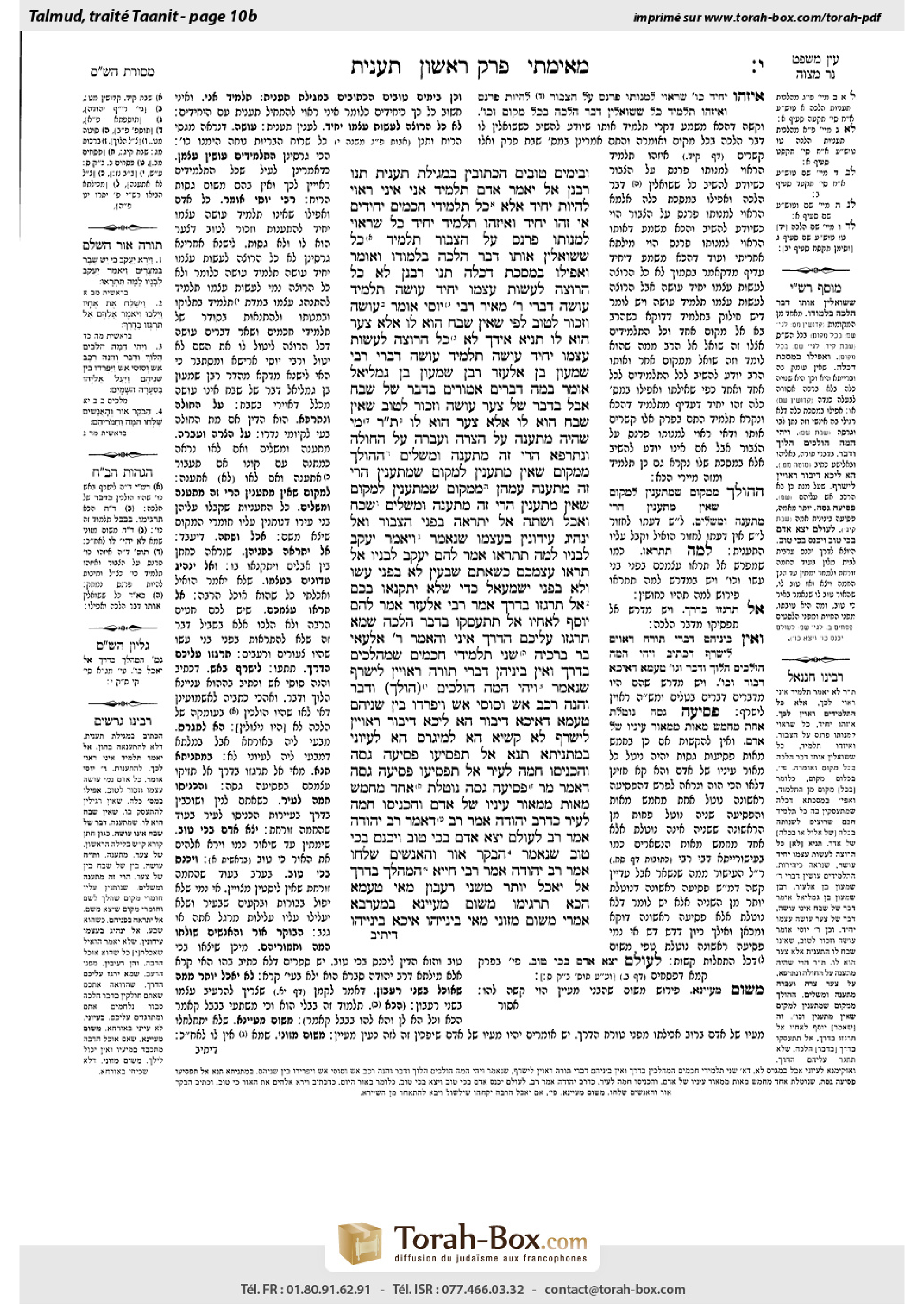
Taanit 10b: Talmud study for Daf Yomi
Daf Yomi is the daily study of one Talmud folio. Explore 37 tractates with scans, Hebrew text, Sefaria English and AI-generated French translations where annotated.
Passage selection and English or AI-generated French translation are available where the scan has annotations. Daf Study is independent of Torah-Box and Sefaria.
Browse Taanit · תענית · All tractatesTaanit 10b text and translations
This page of Taanit includes the Aramaic text, an English translation and an AI-generated French translation, alongside the scan above.
תענית י׳ ב · Aramaic and Hebrew text
וּבְיָמִים טוֹבִים הַכְּתוּבִין בִּמְגִילַּת תַּעֲנִית.
תָּנוּ רַבָּנַן: אַל יֹאמַר אָדָם תַּלְמִיד אֲנִי, אֵינִי רָאוּי לִהְיוֹת יָחִיד, אֶלָּא: כׇּל תַּלְמִידֵי חֲכָמִים יְחִידִים. אֵיזֶהוּ יָחִיד וְאֵיזֶהוּ תַּלְמִיד? יָחִיד — כֹּל שֶׁרָאוּי לְמַנּוֹתוֹ פַּרְנָס עַל הַצִּבּוּר, תַּלְמִיד — כׇּל שֶׁשּׁוֹאֲלִין אוֹתוֹ דָּבָר הֲלָכָה בְּתַלְמוּדוֹ וְאוֹמֵר, וַאֲפִילּוּ בְּמַסֶּכְתָּא דְכַלָּה.
תָּנוּ רַבָּנַן: לֹא כׇּל הָרוֹצֶה לַעֲשׂוֹת עַצְמוֹ יָחִיד עוֹשֶׂה, תַּלְמִיד — עוֹשֶׂה, דִּבְרֵי רַבִּי מֵאִיר. רַבִּי יוֹסֵי אוֹמֵר: עוֹשֶׂה, וְזָכוּר לַטּוֹב, לְפִי שֶׁאֵין שֶׁבַח הוּא לוֹ, אֶלָּא צַעַר הוּא לוֹ.
תַּנְיָא אִידַּךְ: לֹא כׇּל הָרוֹצֶה לַעֲשׂוֹת עַצְמוֹ יָחִיד עוֹשֶׂה, תַּלְמִיד — עוֹשֶׂה, דִּבְרֵי רַבִּי שִׁמְעוֹן בֶּן אֶלְעָזָר. רַבָּן שִׁמְעוֹן בֶּן גַּמְלִיאֵל אוֹמֵר: בַּמֶּה דְּבָרִים אֲמוּרִים: בְּדָבָר שֶׁל שֶׁבַח, אֲבָל בְּדָבָר שֶׁל צַעַר — עוֹשֶׂה, וְזָכוּר לַטּוֹב, שֶׁאֵין שֶׁבַח הוּא לוֹ, אֶלָּא צַעַר הוּא לוֹ.
תָּנוּ רַבָּנַן: מִי שֶׁהָיָה מִתְעַנֶּה עַל הַצָּרָה וְעָבְרָה, עַל הַחוֹלֶה וְנִתְרַפֵּא — הֲרֵי זֶה מִתְעַנֶּה וּמַשְׁלִים. הַהוֹלֵךְ מִמְּקוֹם שֶׁאֵין מִתְעַנִּין לִמְקוֹם שֶׁמִּתְעַנִּין — הֲרֵי זֶה מִתְעַנֶּה עִמָּהֶן. מִמְּקוֹם שֶׁמִּתְעַנִּין לִמְקוֹם שֶׁאֵין מִתְעַנִּין — הֲרֵי זֶה מִתְעַנֶּה וּמַשְׁלִים.
שָׁכַח וְאָכַל וְשָׁתָה — אַל יִתְרָאֶה בִּפְנֵי הַצִּבּוּר, וְאַל יַנְהִיג עִידּוּנִין בְּעַצְמוֹ, שֶׁנֶּאֱמַר: ״וַיֹּאמֶר יַעֲקֹב לְבָנָיו לָמָּה תִּתְרָאוּ״, אָמַר לָהֶם יַעֲקֹב לְבָנָיו: אַל תַּרְאוּ עַצְמְכֶם כְּשֶׁאַתֶּם שְׂבֵעִין, לֹא בִּפְנֵי עֵשָׂו וְלֹא בִּפְנֵי יִשְׁמָעֵאל, כְּדֵי שֶׁלֹּא יִתְקַנְּאוּ בָּכֶם.
״אַל תִּרְגְּזוּ בַּדָּרֶךְ״, אָמַר רַבִּי אֶלְעָזָר, אָמַר לָהֶם יוֹסֵף לְאֶחָיו: אַל תִּתְעַסְּקוּ בִּדְבַר הֲלָכָה, שֶׁמָּא תְּרַגְּזוּ עֲלֵיכֶם הַדֶּרֶךְ.
אִינִי? וְהָאָמַר רַבִּי אִלְעַאי בַּר בֶּרֶכְיָה: שְׁנֵי תַּלְמִידֵי חֲכָמִים שֶׁמְּהַלְּכִים בַּדֶּרֶךְ וְאֵין בֵּינֵיהֶן דִּבְרֵי תוֹרָה — רְאוּיִין לִישָּׂרֵף, שֶׁנֶּאֱמַר: ״וַיְהִי הֵמָּה הֹלְכִים הָלוֹךְ וְדַבֵּר וְהִנֵּה רֶכֶב אֵשׁ וְסוּסֵי אֵשׁ וַיַּפְרִדוּ בֵּין שְׁנֵיהֶם״, טַעְמָא דְּאִיכָּא דִּיבּוּר, הָא לֵיכָּא דִּיבּוּר — רְאוּיִין לִישָּׂרֵף!
לָא קַשְׁיָא: הָא — לְמִיגְרַס, הָא — לְעַיּוֹנֵי.
בְּמַתְנִיתָא תָּנָא: אַל תַּפְסִיעוּ פְּסִיעָה גַּסָּה, וְהַכְנִיסוּ חַמָּה לָעִיר. אַל תַּפְסִיעוּ פְּסִיעָה גַּסָּה — דְּאָמַר מָר: פְּסִיעָה גַּסָּה נוֹטֶלֶת אֶחָד מֵחֲמֵשׁ מֵאוֹת מִמְּאוֹר עֵינָיו שֶׁל אָדָם.
וְהַכְנִיסוּ חַמָּה לָעִיר — כִּדְרַב יְהוּדָה אָמַר רַב. דְּאָמַר רַב יְהוּדָה אָמַר רַב: לְעוֹלָם יֵצֵא אָדָם בְּ״כִי טוֹב״ וְיִכָּנֵס בְּ״כִי טוֹב״, שֶׁנֶּאֱמַר: ״הַבֹּקֶר אוֹר וְהָאֲנָשִׁים שֻׁלְּחוּ״.
אָמַר רַב יְהוּדָה אָמַר רַבִּי חִיָּיא: הַמְהַלֵּךְ בַּדֶּרֶךְ — אַל יֹאכַל יוֹתֵר מִשְּׁנֵי רְעָבוֹן. מַאי טַעְמָא? הָכָא תַּרְגִּימוּ: מִשּׁוּם מַעְיָינָא. בְּמַעְרְבָא אָמְרִי: מִשּׁוּם מְזוֹנֵי. מַאי בֵּינַיְיהוּ? אִיכָּא בֵּינַיְיהוּ,
Taanit 10b · English translation
and for commemorative holidays that are written in Megillat Ta’anit, which contains a list of dates on which the Sages prohibited fasting.
The Sages taught in a baraita: A person should not say: I am only a student, and consequently I am unworthy to be considered an individual who fasts, as stated in the mishna. Rather, with regard to the fasts of individuals, all Torah scholars are individuals. The baraita elaborates: Who is an individual and who is a student? An individual is anyone who is learned in Torah and worthy to be appointed leader and teacher over the community. A student is any Torah scholar who is asked a matter of halakha in his studies and he says the correct answer, and this is the case even if he is familiar only with the tractate of the kalla month, i.e., the tractate the community studied that year.
The Sages taught in another baraita: Not everyone who wishes to make himself an individual and conduct himself accordingly may do so, and nor may everyone who wants to act like a student do so. This is the statement of Rabbi Meir. Rabbi Yosei says: One may do so, and he is even remembered for good, as the conduct of a Torah student is not a source of praise for him, but it is a source of pain for him. It is proper for one to take these obligations upon himself and he is not considered to be acting inappropriately.
It is taught in another baraita: Not everyone who wishes to make himself an individual may do so, and nor may everyone who wishes to act like a student do so. This is the statement of Rabbi Shimon ben Elazar. Rabban Shimon ben Gamliel says: In what case is this statement said? It is said with regard to a matter of praise, e.g., adorning oneself with the garments of a Torah scholar. However, with regard to a matter of pain, when Torah scholars act strictly, one may do so, and one who acts strictly is remembered for good, as it is not a source of praise for him, but it is a source of pain for him.
The Sages taught in a baraita: With regard to one who was fasting for a certain trouble and the trouble passed, or if one was fasting for the recovery of a sick person and that person was healed, one may not cease his fast merely because its cause has been removed; rather, he completes his fast. The baraita continues: With regard to one who goes from a place where they are not fasting to a place where they are fasting, he fasts with them. Conversely, with regard to one who goes from a place where they are fasting to a place where they are not fasting, he completes his fast as a resident of his hometown.
With regard to one who forgot the fast and ate and drank, he should not show himself before the community while satiated, and he should not indulge in luxuries. One should not think that because one has already eaten, his fast is completely nullified, and one may conduct himself as if it were not a fast day at all. Rather, one should minimize one’s eating, as it is stated: “And Jacob said to his sons: Why do you show yourselves?” (Genesis 42:1). Jacob said to his sons: Do not show yourselves when you are satiated, not before the members of the house of Esau, nor before those of Ishmael, so that they not be jealous of you, as they suffer from hunger. This teaches that one should not show he is full when others are hungry.
§ The Gemara presents another piece of advice related to the story of Joseph and his brothers. Joseph said to them: “See that you not fall out by the way” (Genesis 45:24). Rabbi Elazar said that Joseph said to his brothers: Do not become occupied in a matter of halakha, lest you fall out on the way. If you discuss a halakha while traveling you might get into an argument, and it is important for travelers to remain on good terms.
The Gemara asks: Is that so? But didn’t Rabbi Elai bar Berekhya say: With regard to two Torah scholars who are walking along the road and there are no Torah matters discussed between them, they are worthy of being burned, as it is stated: “And it came to pass, as they still went on, and talked, that, behold, there appeared a chariot of fire, and horses of fire, which parted them both asunder” (II Kings 2:11). The reason that the chariot of fire did not harm Elisha is because there was a Torah matter between them, from which it may be inferred that had they not been discussing a Torah matter, they would have been worthy of being burned.
The Gemara answers: This is not difficult. This opinion of Rabbi Elai bar Berekhya is referring to studying by rote, by reviewing material one has already learned, which is permitted and even appropriate while traveling, whereas that opinion of Rabbi Elazar is referring to examining a halakha in depth, in which case it is likely that the scholars will come into conflict.
It is taught in a baraita that Joseph said to his brothers: Do not take long strides and bring the sun into the city, i.e., you should enter the city to spend the night there before the sun has set. The Gemara elaborates: Do not take long strides, as the Master said: A long stride takes away one five-hundredth of a person’s eyesight, and this loss is not worth the time saved.
The Gemara further explains: And bring the sun into the city, this is in accordance with a statement that Rav Yehuda said that Rav said. As Rav Yehuda said that Rav said: A person should always leave the place where he has spent the night with “it is good” (Genesis 1:4), i.e., after sunrise, as the Torah uses the expression “it is good” with regard to the creation of light. This goodness is manifest in the sense of security one feels when it is light. And likewise, when one comes into an unfamiliar city he should enter with “it is good,” before sunset, as it is stated: “As soon as the morning was light, the men were sent away” (Genesis 44:3).
Similarly, Rav Yehuda said that Rabbi Ḥiyya said: One who is walking along the road should not eat more each day than he would normally eat each day in a year of famine. The Gemara asks: What is the reason for this? Here in Babylonia they interpreted that the reason is due to one’s bowels. Since the exertion of traveling can damage full bowels, it is preferable to eat less than the normal amount. In the West, Eretz Yisrael, they say that the reason is due to food, i.e., if one eats too much, his food may not last the entire journey, and therefore he should ration his meals. The Gemara asks: What is the practical difference between these two opinions? The Gemara answers: The practical difference between them
Taanit 10b · Traduction française (IA)
et pour les fêtes commémoratives consignées dans la Meguilat Ta’anit, qui énumère les dates auxquelles les Sages ont interdit de jeûner.
Les Sages enseignent dans une baraïta : Une personne ne doit pas dire : « Je ne suis qu’un étudiant et, par conséquent, je ne mérite pas d’être considéré comme un particulier qui jeûne », comme l’indique la Michna. En effet, pour ce qui est des jeûnes des particuliers, tous les érudits en Torah sont des particuliers. La baraïta précise : Qui est un particulier et qui est un étudiant ? Un particulier est toute personne versée dans la Torah et digne d’être nommée dirigeant et enseignant de la communauté. Un étudiant est tout érudit en Torah à qui l’on pose, dans le cadre de ses études, une question de halakha et qui donne la bonne réponse, même s’il ne connaît que le traité étudié durant le mois de kalla, c’est-à-dire le traité que la communauté a étudié cette année-là.
Les Sages enseignent dans une autre baraïta : Toute personne qui souhaite se présenter comme un particulier et se conduire en conséquence ne peut pas le faire, pas plus que toute personne qui souhaite se comporter comme un étudiant. Telle est l’opinion de Rabbi Meïr. Rabbi Yossei dit : On peut le faire, et l’on est même loué pour cela, car la conduite d’un étudiant en Torah n’est pas une source de louange pour lui, mais une source de peine. Il convient de prendre ces obligations sur soi, et l’on n’est pas considéré comme agissant de manière inappropriée.
Une autre baraïta enseigne : Toute personne qui souhaite se présenter comme un particulier ne peut pas le faire, pas plus que toute personne qui souhaite se comporter comme un étudiant. Telle est l’opinion de Rabbi Shimon ben Elazar. Rabban Shimon ben Gamliel dit : Dans quel cas cette règle s’applique-t-elle ? Elle s’applique à une question de prestige, par exemple lorsqu’on se pare des vêtements d’un érudit en Torah. En revanche, lorsqu’il s’agit d’une question de peine, c’est-à-dire lorsque des érudits en Torah s’imposent des règles strictes, on peut le faire, et celui qui agit avec rigueur est loué, car cela n’est pas une source de prestige pour lui, mais une source de peine.
Les Sages enseignent dans une baraïta : Celui qui jeûnait à cause d’une épreuve qui a pris fin, ou celui qui jeûnait pour la guérison d’un malade qui a guéri, ne peut pas interrompre son jeûne au seul motif que sa cause a disparu ; il doit au contraire mener son jeûne à son terme. La baraïta poursuit : Celui qui se rend d’un endroit où l’on ne jeûne pas à un endroit où l’on jeûne jeûne avec les habitants. À l’inverse, celui qui se rend d’un endroit où l’on jeûne à un endroit où l’on ne jeûne pas mène son jeûne à son terme, comme le ferait un habitant de sa ville.
Celui qui a oublié qu’il jeûnait et a mangé et bu ne doit pas se présenter rassasié devant la communauté ni s’adonner aux plaisirs. Il ne faut pas penser que, puisqu’on a déjà mangé, son jeûne est entièrement annulé et que l’on peut se conduire comme si ce n’était pas du tout un jour de jeûne. Au contraire, il faut réduire sa consommation, comme il est dit : « Jacob dit à ses fils : Pourquoi vous regardez-vous les uns les autres ? » (Genèse 42:1). Jacob dit à ses fils : Ne vous montrez pas rassasiés, ni devant les membres de la maison d’Ésaü ni devant ceux d’Ismaël, afin qu’ils ne soient pas jaloux de vous, eux qui souffrent de la faim. Cela enseigne qu’on ne doit pas montrer qu’on est rassasié lorsque les autres ont faim.
§ La Guemara présente un autre conseil lié à l’histoire de Joseph et de ses frères. Joseph leur dit : « Veillez à ne pas vous quereller en chemin » (Genèse 45:24). Rabbi Elazar dit que Joseph dit à ses frères : Ne vous engagez pas dans une question de halakha, de peur de vous quereller en chemin. Si vous discutez d’une halakha pendant le voyage, vous risquez de vous disputer, alors qu’il est important que les voyageurs restent en bons termes.
La Guemara demande : Est-ce vraiment le cas ? Rabbi Ilai bar Berekhya n’a-t-il pas dit : Deux érudits en Torah qui marchent sur la route sans discuter entre eux de sujets de Torah méritent d’être brûlés, comme il est dit : « Tandis qu’ils poursuivaient leur marche en parlant, voici qu’un char de feu et des chevaux de feu les séparèrent l’un de l’autre » (II Rois 2:11). Si le char de feu n’a pas fait de mal à Élisha, c’est parce qu’ils parlaient d’un sujet de Torah ; on peut donc en déduire que, s’ils n’avaient pas discuté d’un sujet de Torah, ils auraient mérité d’être brûlés.
La Guemara répond : Il n’y a pas de difficulté. L’opinion de Rabbi Ilai bar Berekhya concerne la récitation par cœur, c’est-à-dire la révision d’un enseignement déjà étudié, ce qui est permis et même approprié pendant un voyage. En revanche, l’opinion de Rabbi Elazar concerne l’examen approfondi d’une halakha, auquel cas les érudits risquent d’entrer en conflit.
Une baraïta enseigne que Joseph dit à ses frères : Ne faites pas de grandes enjambées et faites entrer le soleil dans la ville, c’est-à-dire entrez dans la ville pour y passer la nuit avant le coucher du soleil. Ne faites pas de grandes enjambées, car le Maître a dit : Une grande enjambée diminue d’un cinq-centième la vue d’une personne, et cette perte ne vaut pas le temps gagné.
La Guemara explique en outre : « Faites entrer le soleil dans la ville » concorde avec ce que Rav Yehouda a dit au nom de Rav. Rav Yehouda a dit au nom de Rav : Une personne doit toujours quitter l’endroit où elle a passé la nuit avec « c’est bon » (Genèse 1:4), c’est-à-dire après le lever du soleil, car la Torah emploie l’expression « c’est bon » à propos de la création de la lumière. Cette bonté se manifeste par le sentiment de sécurité que l’on éprouve à la lumière du jour. De même, lorsqu’on arrive dans une ville inconnue, on doit y entrer avec « c’est bon », avant le coucher du soleil, comme il est dit : « Dès que le matin fut clair, on renvoya les hommes » (Genèse 44:3).
De même, Rav Yehouda a dit au nom de Rabbi Ḥiyya : Celui qui marche sur la route ne doit pas manger chaque jour davantage que ce qu’il mangerait normalement lors d’une journée d’une année de famine. La Guemara demande : Quelle en est la raison ? En Babylonie, on expliquait que c’était à cause des intestins. Comme les efforts du voyage peuvent nuire lorsque les intestins sont pleins, il vaut mieux manger moins que la quantité habituelle. En Occident, c’est-à-dire en terre d’Israël, on disait que c’était à cause des provisions : si l’on mange trop, elles risquent de ne pas durer tout le voyage ; il faut donc rationner ses repas. La Guemara demande : Quelle différence pratique y a-t-il entre ces deux opinions ? La Guemara répond : La différence pratique entre elles
Traduction française générée par IA à partir de l’édition anglaise de Sefaria. Vérifie toujours un passage avec le texte source.
Text from Sefaria: William Davidson Edition - Vocalized Aramaic (CC BY NC); William Davidson Edition - English (CC BY NC).