Taanit 15a: Talmud study for Daf Yomi
Daf Yomi is the daily study of one Talmud folio. Explore 37 tractates with scans, Hebrew text, Sefaria English and AI-generated French translations where annotated.
Passage selection and English or AI-generated French translation are available where the scan has annotations. Daf Study is independent of Torah-Box and Sefaria.
Browse Taanit · תענית · All tractatesTaanit 15a text and translations
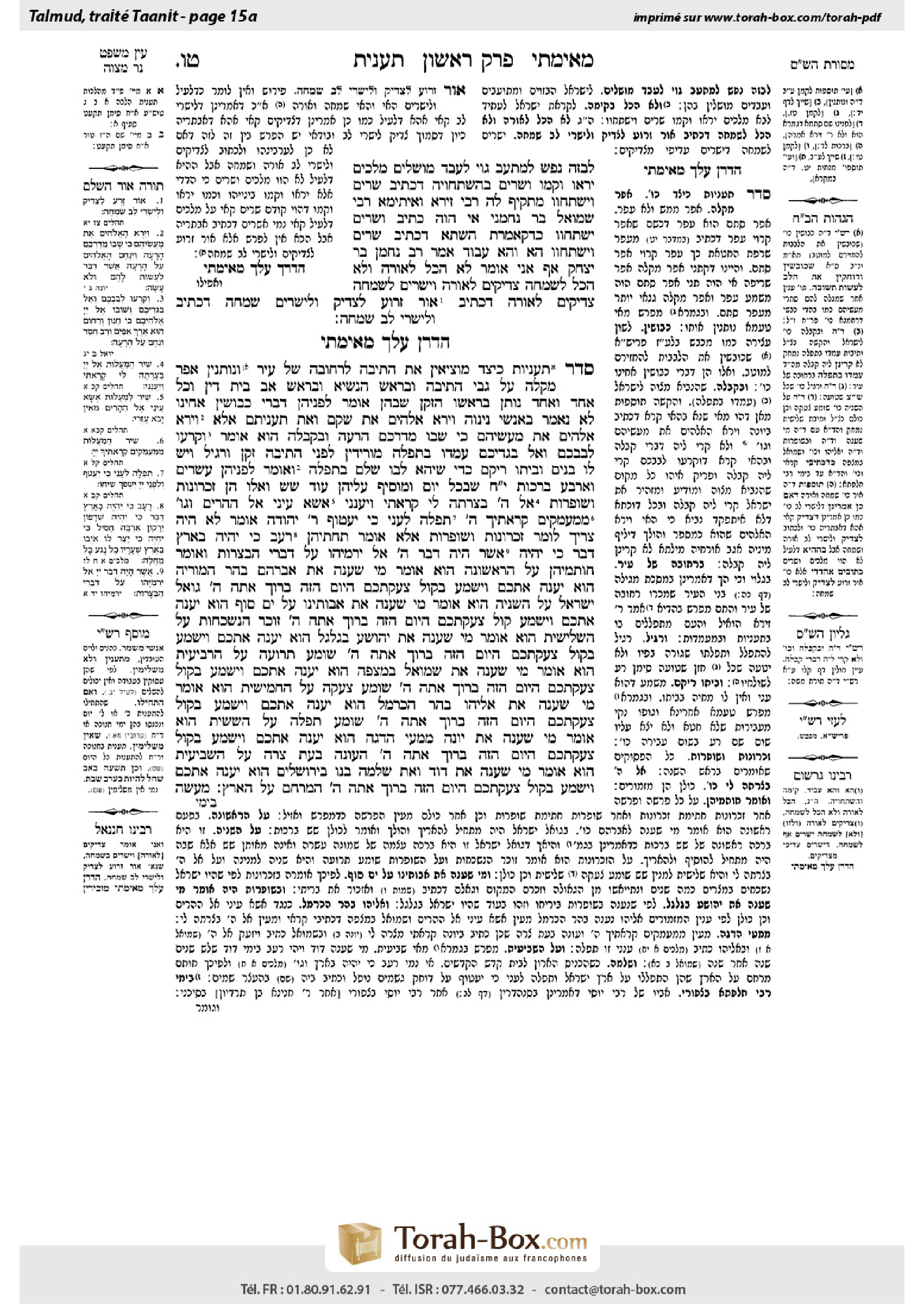
This page of Taanit includes the Aramaic text, an English translation and an AI-generated French translation, alongside the scan above.
תענית י״ה א · Aramaic and Hebrew text
לִבְזֹה נֶפֶשׁ לִמְתָעֵב גּוֹי לְעֶבֶד מֹשְׁלִים מְלָכִים יִרְאוּ וָקָמוּ״. וְשָׂרִים בְּהִשְׁתַּחֲוָיָה, דִּכְתִיב: ״שָׂרִים וְיִשְׁתַּחֲווּ״. מַתְקֵיף לַהּ רַבִּי זֵירָא, וְאִיתֵּימָא רַבִּי שְׁמוּאֵל בַּר נַחְמָנִי: אִי הֲוָה כְּתִיב ״וְשָׂרִים יִשְׁתַּחֲווּ״ — כִּדְקָאָמְרַתְּ, הַשְׁתָּא דִּכְתִיב ״שָׂרִים וְיִשְׁתַּחֲווּ״ — הָא וְהָא עֲבוּד.
אָמַר רַב נַחְמָן בַּר יִצְחָק, אַף אֲנִי אוֹמֵר: לֹא הַכֹּל לְאוֹרָה, וְלֹא הַכֹּל לְשִׂמְחָה. צַדִּיקִים — לְאוֹרָה, וִישָׁרִים — לְשִׂמְחָה. צַדִּיקִים לְאוֹרָה, דִּכְתִיב: ״אוֹר זָרֻעַ לַצַּדִּיק״. וְלִישָׁרִים שִׂמְחָה, דִּכְתִיב: ״וּלְיִשְׁרֵי לֵב שִׂמְחָה״.
הֲדַרַן עֲלָךְ מֵאֵימָתַי
סֵדֶר תַּעֲנִיּוֹת כֵּיצַד? מוֹצִיאִין אֶת הַתֵּיבָה, לִרְחוֹבָהּ שֶׁל עִיר, וְנוֹתְנִין אֵפֶר מִקְלֶה עַל גַּבֵּי הַתֵּיבָה, וּבְרֹאשׁ הַנָּשִׂיא, וּבְרֹאשׁ אַב בֵּית דִּין, וְכׇל אֶחָד וְאֶחָד נוֹתֵן בְּרֹאשׁוֹ.
הַזָּקֵן שֶׁבָּהֶן אוֹמֵר לִפְנֵיהֶן דִּבְרֵי כִבּוּשִׁין: אַחֵינוּ! לֹא נֶאֱמַר בְּאַנְשֵׁי נִינְוֵה ״וַיַּרְא אֱלֹהִים אֶת שַׂקָּם וְאֶת תַּעֲנִיתָם״, אֶלָּא: ״וַיַּרְא הָאֱלֹהִים אֶת מַעֲשֵׂיהֶם כִּי שָׁבוּ מִדַּרְכָּם הָרָעָה״, וּבַקַּבָּלָה הוּא אוֹמֵר: ״וְקִרְעוּ לְבַבְכֶם וְאַל בִּגְדֵיכֶם״.
עָמְדוּ בִּתְפִלָּה — מוֹרִידִין לִפְנֵי הַתֵּיבָה זָקֵן וְרָגִיל וְיֵשׁ לוֹ בָּנִים, וּבֵיתוֹ רֵיקָם, כְּדֵי שֶׁיְּהֵא לִבּוֹ שָׁלֵם בִּתְפִלָּה.
וְאוֹמֵר לִפְנֵיהֶן עֶשְׂרִים וְאַרְבַּע בְּרָכוֹת: שְׁמוֹנֶה עֶשְׂרֵה שֶׁבְּכָל יוֹם, וּמוֹסִיף עֲלֵיהֶן עוֹד שֵׁשׁ, וְאֵלּוּ הֵן: זִכְרוֹנוֹת וְשׁוֹפָרוֹת, ״אֶל ה׳ בַּצָּרָתָה לִּי קָרָאתִי וַיַּעֲנֵנִי״, ״אֶשָּׂא עֵינַי אֶל הֶהָרִים וְגוֹ׳״, ״מִמַּעֲמַקִּים קְרָאתִיךָ ה׳״, ״תְּפִלָּה לְעָנִי כִי יַעֲטֹף״.
רַבִּי יְהוּדָה אוֹמֵר: לֹא הָיָה צָרִיךְ לוֹמַר זִכְרוֹנוֹת וְשׁוֹפָרוֹת, אֶלָּא אוֹמֵר תַּחְתֵּיהֶן ״רָעָב כִּי יִהְיֶה בָאָרֶץ דֶּבֶר כִּי יִהְיֶה״, ״אֲשֶׁר הָיָה דְבַר ה׳ אֶל יִרְמְיָהוּ עַל דִּבְרֵי הַבַּצָּרוֹת״.
וְאוֹמֵר חוֹתְמֵיהֶן. עַל הָרִאשׁוֹנָה הוּא אוֹמֵר: ״מִי שֶׁעָנָה אֶת אַבְרָהָם בְּהַר הַמּוֹרִיָּה הוּא יַעֲנֶה אֶתְכֶם וְיִשְׁמַע בְּקוֹל צַעֲקַתְכֶם הַיּוֹם הַזֶּה. בָּרוּךְ אַתָּה ה׳ גּוֹאֵל יִשְׂרָאֵל״. עַל הַשְּׁנִיָּה הוּא אוֹמֵר: ״מִי שֶׁעָנָה אֶת אֲבוֹתֵינוּ עַל יַם סוּף הוּא יַעֲנֶה אֶתְכֶם וְיִשְׁמַע קוֹל צַעֲקַתְכֶם הַיּוֹם הַזֶּה, בָּרוּךְ אַתָּה ה׳ זוֹכֵר הַנִּשְׁכָּחוֹת״.
עַל הַשְּׁלִישִׁית הוּא אוֹמֵר: ״מִי שֶׁעָנָה אֶת יְהוֹשֻׁעַ בַּגִּלְגָּל הוּא יַעֲנֶה אֶתְכֶם וְיִשְׁמַע בְּקוֹל צַעֲקַתְכֶם הַיּוֹם הַזֶּה, בָּרוּךְ אַתָּה ה׳ שׁוֹמֵעַ תְּרוּעָה״. עַל הָרְבִיעִית הוּא אוֹמֵר: ״מִי שֶׁעָנָה אֶת שְׁמוּאֵל בַּמִּצְפָּה הוּא יַעֲנֶה אֶתְכֶם וְיִשְׁמַע בְּקוֹל צַעֲקַתְכֶם הַיּוֹם הַזֶּה, בָּרוּךְ אַתָּה ה׳ שׁוֹמֵעַ צְעָקָה״. עַל הַחֲמִישִׁית הוּא אוֹמֵר: ״מִי שֶׁעָנָה אֶת אֵלִיָּהוּ בְּהַר הַכַּרְמֶל הוּא יַעֲנֶה אֶתְכֶם וְיִשְׁמַע בְּקוֹל צַעֲקַתְכֶם הַיּוֹם הַזֶּה, בָּרוּךְ אַתָּה ה׳ שׁוֹמֵעַ תְּפִלָּה״.
עַל הַשִּׁשִּׁית הוּא אוֹמֵר: ״מִי שֶׁעָנָה אֶת יוֹנָה מִמְּעֵי הַדָּגָה, הוּא יַעֲנֶה אֶתְכֶם וְיִשְׁמַע בְּקוֹל צַעֲקַתְכֶם הַיּוֹם הַזֶּה, בָּרוּךְ אַתָּה ה׳ הָעוֹנֶה בְּעֵת צָרָה״. עַל הַשְּׁבִיעִית הוּא אוֹמֵר: ״מִי שֶׁעָנָה אֶת דָּוִד וְאֶת שְׁלֹמֹה בְּנוֹ בִּירוּשָׁלַיִם, הוּא יַעֲנֶה אֶתְכֶם וְיִשְׁמַע בְּקוֹל צַעֲקַתְכֶם הַיּוֹם הַזֶּה, בָּרוּךְ אַתָּה ה׳ הַמְרַחֵם עַל הָאָרֶץ״.
מַעֲשֶׂה
Taanit 15a · English translation
to he who is despised of men, to he who is abhorred of nations, to a servant of rulers: Kings shall see and arise” (Isaiah 49:7); and ministers by bowing, as it is written, in the same verse: “Ministers, and they shall bow.” Rabbi Zeira strongly objects to this interpretation, and some say it was Rabbi Shmuel bar Naḥmani who objected. Had the verse written: And ministers shall bow, the meaning would have been as you said. However, now that it is written: “Ministers, and they shall bow,” this indicates that ministers will do this and that, i.e., they will both arise and bow.
Rav Naḥman bar Yitzḥak said: I too say a similar idea. Not all are fit for light, and not all are fit for gladness. The righteous are fit to be rewarded with light, and the upright are fit to be rewarded with gladness. The righteous are fit to be rewarded with light, as it is written: “Light is sown for the righteous” (Psalms 97:11), and the upright are fit to be rewarded with gladness, as it is written, in the same verse: “And gladness for the upright in heart.”
MISHNA: What is the customary order of fast days? Normally the sacred ark in the synagogue, which was mobile, was kept in a locked room. However, on fast days they remove the ark to the main city square and place burnt ashes upon the ark, as a sign of mourning. And they also place ashes on the head of the Nasi, and on the head of the deputy Nasi, and each and every member of the community likewise places ashes upon his head.
The eldest member of the community says to the congregation statements of reproof, for example: Our brothers, it is not stated with regard to the people of Nineveh: And God saw their sackcloth and their fasting. Rather, the verse says: “And God saw their deeds, that they had turned from their evil way” (Jonah 3:10). And in the Prophets it says: “And rend your hearts and not your garments, and return to the Lord your God” (Joel 2:13). This teaches that prayer and fasting are insufficient, as one must also repent and amend his ways in practice.
They stood for prayer. The congregation appoints an elder, who is experienced in leading prayer, to descend before the ark as communal prayer leader. And this prayer leader must have children and must have an empty house, i.e., he must be poor, so that his heart will be fully concentrated on the prayer for the needs of his community.
And he recites twenty-four blessings before the congregation: The eighteen blessings of the everyday Amida prayer, to which he adds another six blessings, and they are as follows: The special series of blessings recited on Rosh HaShana, the Remembrances and Shofarot; and the sections of Psalms that begin with the verses: “In my distress I called to the Lord and He answered me” (Psalms 120:1), “I will lift up my eyes to the mountains; from where will my help come” (Psalms 121:1), “Out of the depths I have called You, O Lord” (Psalms 130:1), and “A prayer of the afflicted, when he faints” (Psalms 102:1).
Rabbi Yehuda says: The prayer leader did not need to recite the Remembrances and Shofarot passages. Rather, he recites instead of them the passage beginning with: “If there be famine in the land, if there be pestilence” (I Kings 8:37), followed by the verse “The word of the Lord that came to Jeremiah concerning the droughts” (Jeremiah 14:1).
And he recites at the end of all of these six blessing their unique conclusions. For the conclusion of the first blessing: Redeemer of Israel, he recites: He Who answered Abraham on Mount Moriah (see Genesis 22:11–18), He will answer you and hear the sound of your cry on this day. Blessed are You, Lord, Redeemer of Israel. For the second blessing, to which he adds the verses of Remembrances, he recites: He Who answered our forefathers at the Red Sea (see Exodus 14:15–31), He will answer you and hear the sound of your cry on this day. Blessed are You, Lord, Who remembers the forgotten.
For the third blessing, which includes the verses of Shofarot, he recites: He Who answered Joshua at Gilgal, when they sounded the shofar in Jericho (see Joshua 5:6), He will answer you and hear the sound of your cry on this day. Blessed are You, Lord, Who hears the terua. For the fourth blessing, he recites: He Who answered Samuel in Mizpah (see I Samuel, chapter 7), He will answer you and hear the sound of your cry on this day. Blessed are You, Lord, Who hears cries. For the fifth he recites: He Who answered Elijah on Mount Carmel (see I Kings, chapter 18), He will answer you and hear the sound of your cry on this day. Blessed are You, Lord, Who hears prayer.
For the sixth blessing he recites: He Who answered Jonah from within the innards of the fish (see Jonah 2:2–11), He will answer you and hear the sound of your cry on this day. Blessed are You, Lord, Who answers in a time of trouble. For the conclusion of the seventh blessing, which is actually the sixth additional blessing, as the first blessing listed here is an expanded version of a regular weekday blessing, he recites: He Who answered David and Solomon his son in Jerusalem (see I Kings 8:12–53), He will answer you and hear the sound of your cry on this day. Blessed are You, Lord, Who has mercy on the Land.
The mishna relates: An incident occurred
Taanit 15a · Traduction française (IA)
« À celui qui est méprisé des hommes, à celui qui est abhorré des nations, au serviteur des souverains : les rois verront et se lèveront » (Isaïe 49,7) ; et les ministres en s’inclinant, comme il est écrit dans le même verset : « Les ministres, et ils s’inclineront. » Rabbi Zeira s’oppose vivement à cette interprétation, et certains disent que c’est Rabbi Shmuel bar Naḥmani qui s’y est opposé. Si le verset avait dit : « Et les ministres s’inclineront », le sens aurait été celui que vous avez indiqué. Mais puisqu’il est écrit : « Les ministres, et ils s’inclineront », cela indique que les ministres feront l’une et l’autre chose, c’est-à-dire qu’ils se lèveront et s’inclineront.
Rav Naḥman bar Yitzḥak dit : « Moi aussi, je propose une idée semblable. Tous ne sont pas dignes de la lumière, et tous ne sont pas dignes de la joie. Les justes sont dignes d’être récompensés par la lumière, et les hommes droits sont dignes d’être récompensés par la joie. Les justes sont dignes d’être récompensés par la lumière, comme il est écrit : “La lumière est semée pour le juste” (Psaumes 97,11) ; et les hommes droits sont dignes d’être récompensés par la joie, comme il est écrit dans le même verset : “Et la joie pour les hommes droits de cœur.” »
MICHNA : Quel est l’ordre habituel des jours de jeûne ? En temps normal, l’arche sacrée de la synagogue, qui était mobile, était conservée dans une pièce fermée à clé. Mais les jours de jeûne, on sort l’arche sur la place principale de la ville et on dépose des cendres d’holocauste sur l’arche, en signe de deuil. On dépose aussi des cendres sur la tête du Nassi, sur celle du vice-Nassi, et chaque membre de la communauté en dépose également sur sa propre tête.
Le membre le plus âgé de la communauté adresse à l’assemblée des paroles de remontrance, par exemple : « Nos frères, il n’est pas dit au sujet des habitants de Ninive : “Dieu vit leur toile de sac et leur jeûne.” Le verset dit plutôt : “Dieu vit leurs actes, et qu’ils avaient renoncé à leur mauvaise conduite” » (Jonas 3,10). Et dans les Prophètes, il est dit : « Déchirez vos cœurs et non vos vêtements, et revenez au Seigneur votre Dieu » (Joël 2,13). Cela enseigne que la prière et le jeûne ne suffisent pas : il faut aussi se repentir et corriger concrètement sa conduite.
Ils se tiennent pour la prière. L’assemblée désigne un ancien, expérimenté dans la conduite de la prière, pour descendre devant l’arche et diriger la prière communautaire. Cet officiant doit avoir des enfants et une maison vide, c’est-à-dire être pauvre, afin que son cœur soit entièrement concentré sur la prière pour les besoins de sa communauté.
Il récite devant l’assemblée vingt-quatre bénédictions : les dix-huit bénédictions de la Amida des jours ordinaires, auxquelles il ajoute six autres bénédictions, à savoir les bénédictions particulières récitées à Roch Hachana, les Zikhronot et les Chofarot, ainsi que les passages des Psaumes qui commencent par les versets : « Dans ma détresse, j’ai appelé le Seigneur, et Il m’a répondu » (Psaumes 120,1), « Je lève les yeux vers les montagnes : d’où me viendra le secours ? » (Psaumes 121,1), « Du fond des abîmes, je T’appelle, Seigneur » (Psaumes 130,1), et « Prière du malheureux, lorsqu’il défaille » (Psaumes 102,1).
Rabbi Yehuda dit : « L’officiant n’avait pas besoin de réciter les passages des Zikhronot et des Chofarot. À leur place, il récite plutôt le passage qui commence par : “S’il y a famine dans le pays, s’il y a peste” (I Rois 8,37), puis le verset : “Parole du Seigneur adressée à Jérémie au sujet des sécheresses” (Jérémie 14,1). »
À la fin de chacune de ces six bénédictions, il récite une conclusion particulière. Pour conclure la première bénédiction, « Rédempteur d’Israël », il récite : « Celui qui a répondu à Abraham sur le mont Moriah (voir Genèse 22,11–18), qu’Il vous réponde et entende le son de vos cris en ce jour. Béni sois-Tu, Seigneur, Rédempteur d’Israël. » Pour la deuxième bénédiction, à laquelle il ajoute les versets des Zikhronot, il récite : « Celui qui a répondu à nos pères à la mer Rouge (voir Exode 14,15–31), qu’Il vous réponde et entende le son de vos cris en ce jour. Béni sois-Tu, Seigneur, qui te souviens des oubliés. »
Pour la troisième bénédiction, qui comprend les versets des Chofarot, il récite : « Celui qui a répondu à Josué à Guilgal, lorsqu’on sonna du chofar à Jéricho (voir Josué 5,6), qu’Il vous réponde et entende le son de vos cris en ce jour. Béni sois-Tu, Seigneur, qui entends la teroua. » Pour la quatrième bénédiction, il récite : « Celui qui a répondu à Samuel à Mitspa (voir I Samuel, chapitre 7), qu’Il vous réponde et entende le son de vos cris en ce jour. Béni sois-Tu, Seigneur, qui entends les cris. » Pour la cinquième, il récite : « Celui qui a répondu à Élie sur le mont Carmel (voir I Rois, chapitre 18), qu’Il vous réponde et entende le son de vos cris en ce jour. Béni sois-Tu, Seigneur, qui entends la prière. »
Pour la sixième bénédiction, il récite : « Celui qui a répondu à Jonas du ventre du poisson (voir Jonas 2,2–11), qu’Il vous réponde et entende le son de vos cris en ce jour. Béni sois-Tu, Seigneur, qui réponds au temps de la détresse. » Pour conclure la septième bénédiction, qui est en réalité la sixième bénédiction ajoutée, puisque la première bénédiction mentionnée ici est une version développée d’une bénédiction habituelle des jours de semaine, il récite : « Celui qui a répondu à David et à son fils Salomon à Jérusalem (voir I Rois 8,12–53), qu’Il vous réponde et entende le son de vos cris en ce jour. Béni sois-Tu, Seigneur, qui prends en pitié le Pays. »
La Michna rapporte : un événement se produisit.
Traduction française générée par IA à partir de l’édition anglaise de Sefaria. Vérifie toujours un passage avec le texte source.
Text from Sefaria: William Davidson Edition - Vocalized Aramaic (CC BY NC); William Davidson Edition - English (CC BY NC).