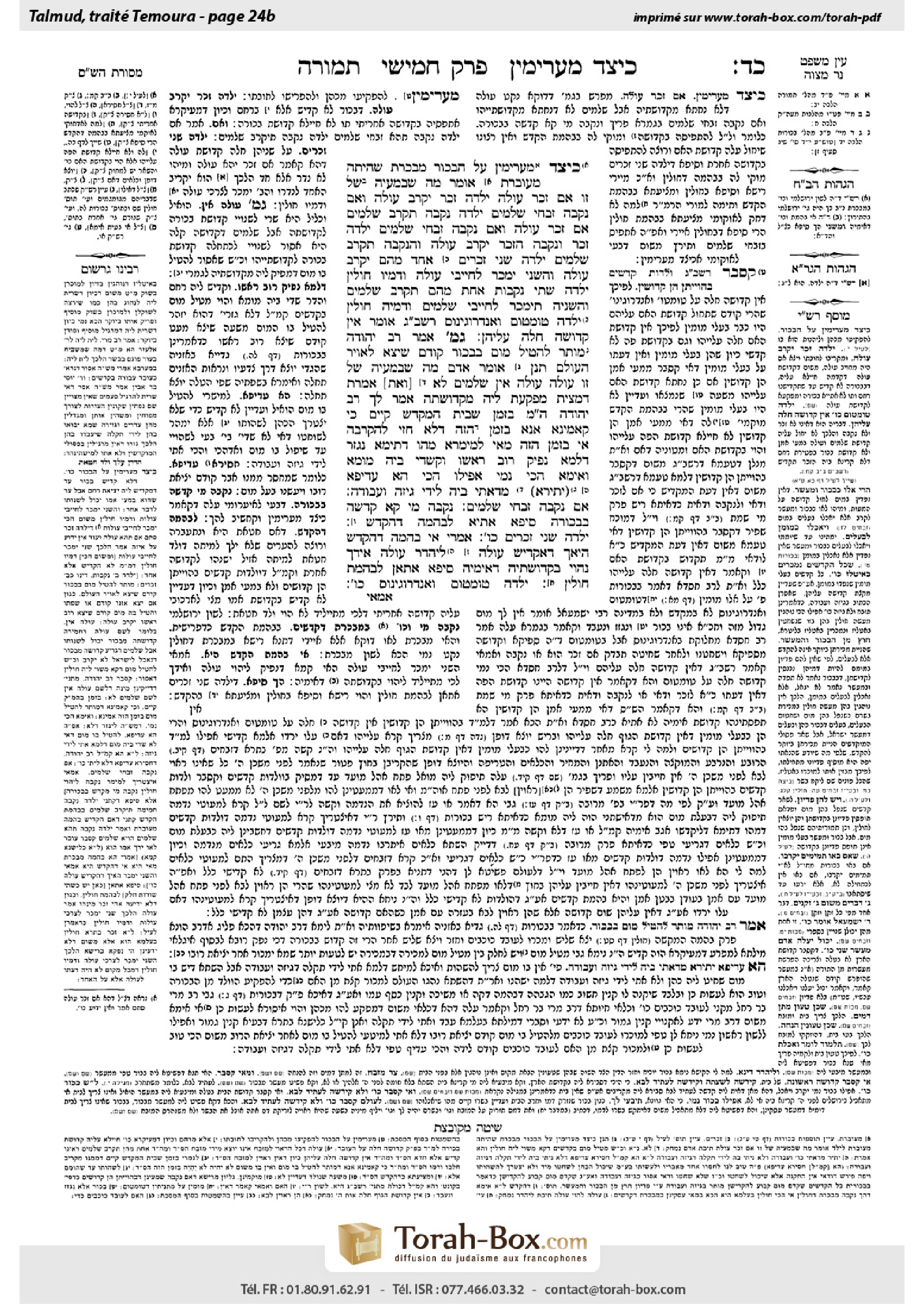
Temurah 24b: Talmud study for Daf Yomi
Daf Yomi is the daily study of one Talmud folio. Explore 37 tractates with scans, Hebrew text, Sefaria English and AI-generated French translations where annotated.
Passage selection and English or AI-generated French translation are available where the scan has annotations. Daf Study is independent of Torah-Box and Sefaria.
Browse Temurah · תמורה · All tractatesTemurah 24b text and translations
This page of Temurah includes the Aramaic text, an English translation and an AI-generated French translation, alongside the scan above.
תמורה כ״ד ב · Aramaic and Hebrew text
מַתְנִי׳ כֵּיצַד מַעֲרִימִין עַל הַבְּכוֹר? מְבַכֶּרֶת שֶׁהָיְתָה מְעוּבֶּרֶת, אוֹמֵר: ״מַה שֶּׁבְּמֵעֶיהָ שֶׁל זוֹ אִם זָכָר — עוֹלָה״, יָלְדָה זָכָר — יִקְרַב עוֹלָה, ״וְאִם נְקֵבָה — זִבְחֵי שְׁלָמִים״, יָלְדָה נְקֵבָה — תִּקְרַב שְׁלָמִים.
״אִם זָכָר — עוֹלָה, וְאִם נְקֵבָה — זִבְחֵי שְׁלָמִים״, יָלְדָה זָכָר וּנְקֵבָה — הַזָּכָר יִקְרַב עוֹלָה, וְהַנְּקֵבָה תִּקְרַב שְׁלָמִים. יָלְדָה שְׁנֵי זְכָרִים — אֶחָד מֵהֶם יִקְרַב עוֹלָה, וְהַשֵּׁנִי יִמָּכֵר לְחַיָּיבֵי עוֹלָה, וְדָמָיו חוּלִּין.
יָלְדָה שְׁתֵּי נְקֵבוֹת — אַחַת מֵהֶם תִּקְרַב שְׁלָמִים, וְהַשְּׁנִיָּה תִּימָּכֵר לְחַיָּיבֵי שְׁלָמִים, וְדָמֶיהָ חוּלִּין. יָלְדָה טוּמְטוּם וְאַנְדְּרוֹגִינוֹס — רַבָּן שִׁמְעוֹן בֶּן גַּמְלִיאֵל אוֹמֵר: אֵין קְדוּשָּׁה חָלָה עֲלֵיהֶן.
גְּמָ׳ אָמַר רַב יְהוּדָה: מוּתָּר לְהַטִּיל מוּם בִּבְכוֹר קוֹדֶם שֶׁיֵּצֵא לַאֲוִיר הָעוֹלָם. תְּנַן: אוֹמֵר אָדָם ״מַה שֶּׁבְּמֵעֶיהָ שֶׁל זוֹ עוֹלָה״ — עוֹלָה אִין, שְׁלָמִים לָא, וְאַתְּ אָמְרַתְּ דְּמָצֵית מַפְקְעַתְּ לֵיהּ מִקְּדוּשְּׁתַהּ!
אָמַר לָךְ רַב יְהוּדָה: הָנֵי מִילֵּי — בִּזְמַן שֶׁבֵּית הַמִּקְדָּשׁ קַיָּים, כִּי קָאָמֵינָא אֲנָא — בִּזְמַן הַזֶּה, דְּלָא חֲזֵי לְהַקְרָבָה.
אִי בִּזְמַן הַזֶּה, מַאי לְמֵימְרָא? מַהוּ דְּתֵימָא: נִגְזַר, דִּלְמָא נָפֵיק רוֹב רֹאשׁוֹ וְקָשָׁדֵי בֵּיהּ מוּמָא.
וְאֵימָא: הָכִי נָמֵי! אֲפִילּוּ הָכִי — הָא עֲדִיפָא יַתִּירָא, מִדְּאָתֵי בֵּיהּ לִידֵי גִּיזָּה וַעֲבוֹדָה.
אִם נְקֵבָה זִבְחֵי שְׁלָמִים — נְקֵבָה מִי קָא קָדְשָׁה בִּבְכוֹרָה? סֵיפָא אָתְיָא לִבְהֵמָה דְּהֶקְדֵּשׁ.
יָלְדָה שְׁנֵי זְכָרִים כּוּ׳. אָמְרִי: אִי בְּהֵמָה דְּהֶקְדֵּשׁ, הַיְאךְ דְּאַקְדֵּישׁ עוֹלָה — לֶיהְדַּר עוֹלָה, אִידַּךְ נֶהֱוֵי בִּקְדוּשְּׁתַיהּ דְּאִימֵּיהּ! סֵיפָא אֲתָאן לְבֶהֱמַת חוּלִּין.
יָלְדָה טוּמְטוּם וְאַנְדְּרוֹגִינוֹס כּוּ׳.
Temurah 24b · English translation
MISHNA: How may one employ artifice to circumvent the obligation to give the firstborn to the priest and utilize the animal for a different offering that he is obligated to bring? The owner approaches an animal that is going to give birth to its firstborn while that animal was still pregnant, and says: That which is in the womb of this animal, if it is male, is designated as a burnt offering. In that case, if the animal gave birth to a male, it will be sacrificed as a burnt offering. And in a case where he says: If it is female, it is designated as a peace offering, if the animal gave birth to a female, it will be sacrificed as a peace offering.
In a case where the owner says: If it is male it is designated as a burnt offering, and if it is female it is designated as a peace offering, and the animal gave birth to a male and a female, the male will be sacrificed as a burnt offering and the female will be sacrificed as a peace offering. If the animal gave birth to two males, one of them will be sacrificed as a burnt offering and the second will be sold to those obligated to bring a burnt offering, who will sacrifice it as a burnt offering; and the money received from its sale is non-sacred.
If the animal gave birth to two females, one of them will be sacrificed as a peace offering and the second will be sold to those obligated to bring a peace offering, who will sacrifice it as a peace offering, and the money received from its sale is non-sacred. If the animal gave birth to a tumtum, whose gender is unknown, or a hermaphrodite, which has both male and female sexual organs, both of which are unfit for sacrifice, Rabban Shimon ben Gamliel says: They are not imbued with sanctity.
GEMARA: Rav Yehuda says: It is permitted to inflict a blemish upon a firstborn before it left the womb and entered into the air of the world, as it has not yet become sanctified as a firstborn. The Gemara raises a difficulty: We learned in the mishna: A person says about an animal that is going to give birth to its firstborn: That which is in the womb of this animal, if it is male, is designated as a burnt offering. This indicates that as a burnt offering, yes, one may designate it in this manner, as the sanctity of a burnt offering is more stringent than that of a firstborn but as a peace offering, no. And yet you say that one may entirely abrogate the animal’s sanctity by inflicting a blemish upon it before it is born.
Rav Yehuda could have said to you: That statement, that one is permitted to consecrate a firstborn fetus only with a more stringent sanctity, applies when the Temple is standing and offerings are sacrificed upon the altar. By contrast, when I say that one is permitted to inflict a blemish upon a firstborn and abrogate the firstborn’s sanctity, I am referring to today, when offerings are not able to be sacrificed, and therefore the animal cannot be consumed until it becomes blemished.
The Gemara asks: If Rav Yehuda is referring only to today, what is the purpose of stating this halakha? Isn’t it obvious? The Gemara answers that Rav Yehuda’s statement is necessary, lest you say: Let us issue a decree against inflicting a blemish on a firstborn fetus, lest most of the fetus’s head emerge from the womb, which is when the sanctity of the firstborn takes effect, and then one inflicts a blemish upon the animal. That would constitute the unlawful infliction of a blemish upon a sacred animal. Rav Yehuda therefore teaches us that such a decree was not issued.
The Gemara raises a difficulty: But one can say that indeed, a decree should be issued prohibiting inflicting a blemish on a fetus due to that concern. The Gemara explains: Even so, inflicting the blemish on the fetus is preferable to leaving it alone, despite that concern, as otherwise one might come to transgress the prohibitions against shearing the firstborn or working with it. It is prohibited to work or shear a firstborn, even if it is blemished. If the firstborn is born blemished, it may be slaughtered and eaten immediately. By contrast, if it is unblemished, then one must wait for it to become blemished, and there is a concern that one might work or shear the animal in the meantime.
§ The latter clause of the mishna teaches that in a case where the owner of an animal that is going to give birth to its firstborn says: If it is female, it is designated as a peace offering, then if the animal gave birth to a female, it will be sacrificed as a peace offering. The Gemara asks: Does a female animal become consecrated with firstborn status, such that the owner must designate the fetus as a peace offering in order to circumvent the obligation of the firstborn? The sanctity of the firstborn takes effect only upon male animals. The Gemara answers: The latter clause of the mishna comes to discuss the offspring of an animal consecrated as a sin offering. Since the offspring of a sin offering is put to death, the owner may wish to employ artifice to circumvent the sanctity of the mother by consecrating the fetus with a different sanctity.
§ The mishna teaches: If the animal gave birth to two males, one of them will be sacrificed as a burnt offering and the second will be sold to those obligated to bring a burnt offering, who will sacrifice it as a burnt offering; and the money received from its sale is non-sacred. The Sages say: If the animal that gave birth to two males was consecrated as a sin offering, then it is understandable that the newborn animal which is consecrated to be a burnt offering should be a burnt offering. But with regard to the other, let it retain the sanctity of its mother. Why does the mishna rule that the money received from its sale is non-sacred? The Gemara answers: In the last clause of the mishna, we come to the case of a non-sacred animal that is about to give birth to its firstborn.
§ The mishna teaches: If the animal gave birth to a tumtum or a hermaphrodite, Rabban Shimon ben Gamliel says: They are not imbued with sanctity. This indicates that they are not imbued with sanctity in any case, even if they are the offspring of a consecrated animal.
Temurah 24b · Traduction française (IA)
MICHNA : Comment peut-on user d’un artifice pour se soustraire à l’obligation de remettre le premier-né au prêtre et utiliser l’animal pour un autre sacrifice que l’on est tenu d’offrir ? Le propriétaire s’approche d’une femelle qui va mettre bas son premier-né, alors qu’elle est encore gestante, et dit : « Ce qui se trouve dans le ventre de cet animal, si c’est un mâle, est désigné comme holocauste. » Ainsi, si l’animal met bas un mâle, celui-ci sera sacrifié comme holocauste. De même, s’il dit : « Si c’est une femelle, elle est désignée comme sacrifice de paix », alors, si l’animal met bas une femelle, celle-ci sera sacrifiée comme sacrifice de paix.
Si le propriétaire dit : « Si c’est un mâle, il est désigné comme holocauste, et si c’est une femelle, elle est désignée comme sacrifice de paix », et que l’animal met bas un mâle et une femelle, le mâle sera sacrifié comme holocauste et la femelle comme sacrifice de paix. Si l’animal met bas deux mâles, l’un sera sacrifié comme holocauste et l’autre sera vendu à des personnes tenues d’offrir un holocauste, qui le sacrifieront comme holocauste ; l’argent reçu de sa vente est profane.
Si l’animal met bas deux femelles, l’une sera sacrifiée comme sacrifice de paix et l’autre sera vendue à des personnes tenues d’offrir un sacrifice de paix, qui la sacrifieront comme sacrifice de paix ; l’argent reçu de sa vente est profane. Si l’animal met bas un tumtum, dont le sexe est indéterminé, ou un hermaphrodite, qui possède à la fois des organes sexuels mâles et femelles, tous deux étant impropres au sacrifice, Rabban Shimon ben Gamliel dit : ils ne sont pas investis de sainteté.
GUEMARA : Rav Yehouda dit : Il est permis d’infliger un défaut à un premier-né avant qu’il ne quitte la matrice et ne vienne à l’air du monde, car il n’est pas encore devenu saint en tant que premier-né. La Guemara soulève une difficulté : nous avons appris dans la Michna qu’une personne dit, au sujet d’un animal qui va mettre bas son premier-né : « Ce qui se trouve dans le ventre de cet animal, si c’est un mâle, est désigné comme holocauste. » Cela indique que l’on peut le désigner comme holocauste, oui, car la sainteté de l’holocauste est plus rigoureuse que celle du premier-né, mais pas comme sacrifice de paix. Pourtant, tu dis qu’on peut entièrement annuler la sainteté de l’animal en lui infligeant un défaut avant sa naissance.
Rav Yehouda aurait pu te répondre : cette affirmation, selon laquelle on ne peut consacrer un fœtus premier-né qu’à une sainteté plus rigoureuse, s’applique lorsque le Temple est debout et que des sacrifices sont offerts sur l’autel. En revanche, quand je dis qu’il est permis d’infliger un défaut à un premier-né et d’annuler sa sainteté de premier-né, je parle de notre époque, où les sacrifices ne peuvent pas être offerts et où l’animal ne peut donc pas être consommé tant qu’il n’a pas acquis un défaut.
La Guemara demande : si Rav Yehouda ne parle que de notre époque, à quoi bon énoncer cette halakha ? N’est-ce pas évident ? La Guemara répond que la déclaration de Rav Yehouda est nécessaire, de peur que tu ne dises : décrétons qu’il est interdit d’infliger un défaut à un fœtus premier-né, par crainte que la majeure partie de sa tête ne sorte de la matrice — moment où la sainteté de premier-né prend effet — et qu’on n’inflige alors un défaut à l’animal. Cela constituerait l’infliction illicite d’un défaut à un animal consacré. Rav Yehouda nous enseigne donc qu’un tel décret n’a pas été promulgué.
La Guemara soulève une difficulté : mais on pourrait dire qu’il faut effectivement promulguer un décret interdisant d’infliger un défaut au fœtus, en raison de cette crainte. La Guemara explique : malgré cela, mieux vaut infliger le défaut au fœtus que le laisser tel quel, en dépit de cette crainte, car autrement on pourrait en venir à transgresser les interdictions de tondre le premier-né ou de le faire travailler. Il est interdit de faire travailler ou de tondre un premier-né, même s’il porte un défaut. Si le premier-né naît avec un défaut, il peut être abattu et consommé immédiatement. En revanche, s’il est sans défaut, il faut attendre qu’il acquière un défaut, et l’on craint qu’entre-temps on ne fasse travailler l’animal ou qu’on ne le tonde.
§ La dernière clause de la Michna enseigne que, si le propriétaire d’un animal qui va mettre bas son premier-né dit : « Si c’est une femelle, elle est désignée comme sacrifice de paix », alors, si l’animal met bas une femelle, celle-ci sera sacrifiée comme sacrifice de paix. La Guemara demande : une femelle acquiert-elle le statut de premier-né, au point que le propriétaire doive désigner le fœtus comme sacrifice de paix pour se soustraire à l’obligation liée au premier-né ? La sainteté de premier-né ne prend effet que pour les animaux mâles. La Guemara répond : la dernière clause de la Michna traite de la progéniture d’un animal consacré comme sacrifice expiatoire. Puisque le petit d’un sacrifice expiatoire est mis à mort, le propriétaire peut souhaiter user d’un artifice pour se soustraire à la sainteté de la mère en consacrant le fœtus à une autre sainteté.
§ La Michna enseigne : si l’animal met bas deux mâles, l’un sera sacrifié comme holocauste et l’autre sera vendu à des personnes tenues d’offrir un holocauste, qui le sacrifieront comme holocauste ; l’argent reçu de sa vente est profane. Les Sages disent : si l’animal qui a mis bas deux mâles avait été consacré comme sacrifice expiatoire, on comprend que le nouveau-né consacré comme holocauste soit un holocauste. Mais l’autre, qu’il conserve la sainteté de sa mère ! Pourquoi la Michna statue-t-elle que l’argent reçu de sa vente est profane ? La Guemara répond : dans la dernière clause de la Michna, il s’agit du cas d’un animal profane sur le point de mettre bas son premier-né.
§ La Michna enseigne : si l’animal met bas un tumtum ou un hermaphrodite, Rabban Shimon ben Gamliel dit : ils ne sont pas investis de sainteté. Cela indique qu’ils ne sont investis de sainteté en aucun cas, même s’ils sont la progéniture d’un animal consacré.
Traduction française générée par IA à partir de l’édition anglaise de Sefaria. Vérifie toujours un passage avec le texte source.
Text from Sefaria: William Davidson Edition - Vocalized Aramaic (CC BY NC); William Davidson Edition - English (CC BY NC).