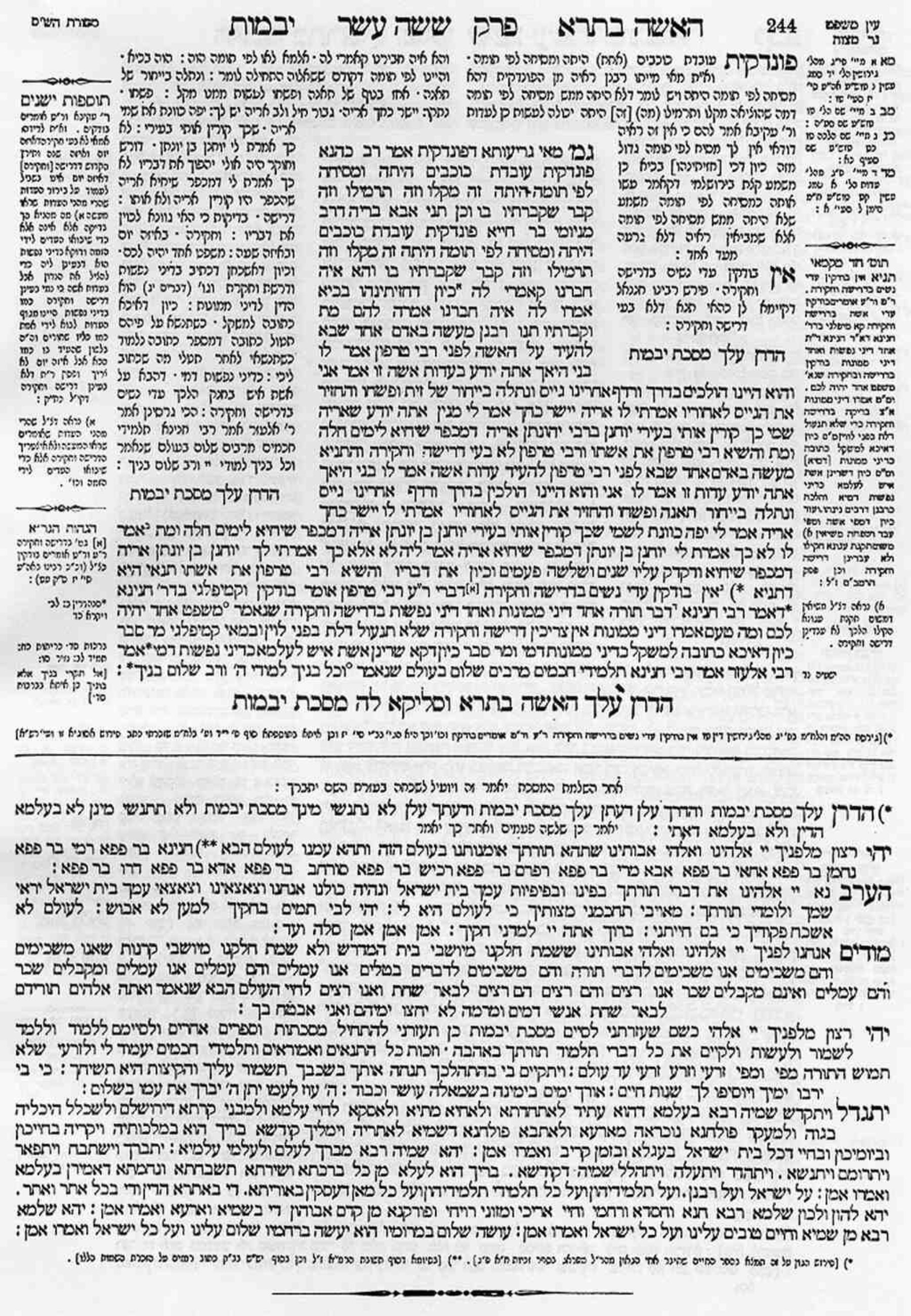
Yevamot 122b: Talmud study for Daf Yomi
Daf Yomi is the daily study of one Talmud folio. Explore 37 tractates with scans, Hebrew text, Sefaria English and AI-generated French translations where annotated.
Passage selection and English or AI-generated French translation are available where the scan has annotations. Daf Study is independent of Torah-Box and Sefaria.
Browse Yevamot · יבמות · All tractatesYevamot 122b text and translations
This page of Yevamot includes the Aramaic text, an English translation and an AI-generated French translation, alongside the scan above.
יבמות קכ״ב ב · Aramaic and Hebrew text
גְּמָ׳ מַאי גְּרִיעוּתָא דְּפוּנְדָּקִית? אָמַר רַב כָּהֲנָא: פּוּנְדָּקִית — גּוֹיָה הָיְתָה, וּמְסִיחָה לְפִי תּוּמָּה הָיְתָה: ״זֶה מַקְלוֹ, וְזֶה תַּרְמִילוֹ, וְזֶה קֶבֶר שֶׁקְּבַרְתִּיו בּוֹ״. וְכֵן תָּנֵי אַבָּא בְּרֵיהּ דְּרַב מִנְיוֹמֵי בַּר חִיָּיא: פּוּנְדָּקִית גּוֹיָה הָיְתָה, וּמְסִיחָה לְפִי תּוּמָּה הָיְתָה: ״זֶה מַקְלוֹ, וְזֶה תַּרְמִילוֹ, וְזֶה קֶבֶר שֶׁקְּבַרְתִּיו בּוֹ״.
וְהָא ״אַיֵּה חֲבֵרֵנוּ״ קָאָמְרִי לָהּ? כֵּיוָן דַּחֲזֵיתִינְהוּ, בָּכְיָא. אָמְרוּ לָהּ: ״אַיֵּה חֲבֵרֵנוּ?״ אָמְרָה לָהֶם: ״מֵת וּקְבַרְתִּיו״.
תָּנוּ רַבָּנַן: מַעֲשֶׂה בְּאָדָם אֶחָד שֶׁבָּא לְהָעִיד עַל הָאִשָּׁה לִפְנֵי רַבִּי טַרְפוֹן. אָמַר לוֹ: ״בְּנִי, הֵיאַךְ אַתָּה יוֹדֵעַ בְּעֵדוּת אִשָּׁה זוֹ?״ אָמַר: ״אֲנִי וָהוּא הָיִינוּ הוֹלְכִים בַּדֶּרֶךְ, וְרָדַף אַחֲרֵינוּ גַּיִיס, וְנִתְלָה בְּיִיחוּר שֶׁל זַיִת וּפְשָׁחוֹ, וְהֶחְזִיר אֶת הַגַּיִיס לַאֲחוֹרָיו״.
״אָמַרְתִּי לוֹ: ׳אַרְיֵה! יִישַׁר כֹּחֲךָ׳. אָמַר לִי: ׳מִנַּיִן אַתָּה יוֹדֵעַ שֶׁאַרְיֵה שְׁמִי? כָּךְ קוֹרִין אוֹתִי בְּעִירִי: יוֹחָנָן בְּרַבִּי יְהוֹנָתָן, אַרְיֵה דְּמִכְּפַר שִׁיחְיָא׳. לְיָמִים חָלָה וּמֵת.״ וְהִשִּׂיא רַבִּי טַרְפוֹן אֶת אִשְׁתּוֹ.
וְרַבִּי טַרְפוֹן לָא בָּעֵי דְּרִישָׁה וַחֲקִירָה? וְהָתַנְיָא: מַעֲשֶׂה בְּאָדָם אֶחָד שֶׁבָּא לִפְנֵי רַבִּי טַרְפוֹן לְהָעִיד עֵדוּת אִשָּׁה. אָמַר לוֹ: ״בְּנִי, הֵיאַךְ אַתָּה יוֹדֵעַ עֵדוּת זוֹ?״ אָמַר לוֹ: ״אֲנִי וָהוּא הָיִינוּ הוֹלְכִין בַּדֶּרֶךְ, וְרָדַף אַחֲרֵינוּ גַּיִיס, וְנִתְלָה בְּיִיחוּר תְּאֵנָה וּפְשָׁחוֹ. וְהֶחְזִיר אֶת הַגַּיִיס לַאֲחוֹרָיו. אָמַרְתִּי לוֹ: ׳יִישַׁר כֹּחֲךָ אַרְיֵה!׳ אָמַר לִי: ׳יָפֶה כִּוַּונְתָּ לִשְׁמִי, שֶׁכָּךְ קוֹרִין אוֹתִי בְּעִירִי: יוֹחָנָן בֶּן יוֹנָתָן אַרְיֵה דְּמִכְּפַר שִׁיחְיָא׳. לְיָמִים חָלָה וּמֵת״.
אָמַר לוֹ: ״לֹא כָּךְ אָמְרַתְּ לִי יוֹחָנָן בֶּן יוֹנָתָן דְּמִכְּפַר שִׁיחְיָא אַרְיֵה?״ אֲמַר לֵיהּ: ״לֹא, אֶלָּא כָּךְ אָמַרְתִּי לָךְ: יוֹחָנָן בֶּן יוֹנָתָן אַרְיֵה דְּמִכְּפַר שִׁיחְיָא״. וְדִקְדֵּק עָלָיו שְׁנַיִם וּשְׁלֹשָׁה פְּעָמִים, וְכִיוֵּן אֶת דְּבָרָיו, וְהִשִּׂיא רַבִּי טַרְפוֹן אֶת אִשְׁתּוֹ.
תַּנָּאֵי הִיא. דְּתַנְיָא: אֵין בּוֹדְקִין עֵדֵי נָשִׁים בִּדְרִישָׁה וַחֲקִירָה, דִּבְרֵי רַבִּי עֲקִיבָא. רַבִּי טַרְפוֹן אוֹמֵר: בּוֹדְקִין.
וְקָמִיפַּלְגִי בִּדְרַבִּי חֲנִינָא. דְּאָמַר רַבִּי חֲנִינָא: דְּבַר תּוֹרָה, אֶחָד דִּינֵי מָמוֹנוֹת וְאֶחָד דִּינֵי נְפָשׁוֹת בִּדְרִישָׁה וַחֲקִירָה. שֶׁנֶּאֱמַר: ״מִשְׁפַּט אֶחָד יִהְיֶה לָכֶם״.
וּמָה טַעַם אָמְרוּ דִּינֵי מָמוֹנוֹת אֵין צְרִיכִין דְּרִישָׁה וַחֲקִירָה — שֶׁלֹּא תִּנְעוֹל דֶּלֶת בִּפְנֵי לֹוִין.
וּבְמַאי קָמִיפַּלְגִי — מָר סָבַר: כֵּיוָן דְּאִיכָּא כְּתוּבָּה לְמִשְׁקַל — כְּדִינֵי מָמוֹנוֹת דָּמֵי, וּמָר סָבַר: כֵּיוָן דְּקָא שָׁרֵינַן אֵשֶׁת אִישׁ לְעָלְמָא — כְּדִינֵי נְפָשׁוֹת דָּמֵי.
אָמַר רַבִּי אֶלְעָזָר אָמַר רַבִּי חֲנִינָא: תַּלְמִידֵי חֲכָמִים מַרְבִּים שָׁלוֹם בָּעוֹלָם, שֶׁנֶּאֱמַר: ״וְכׇל בָּנַיִךְ לִמּוּדֵי ה׳ וְרַב שְׁלוֹם בָּנָיִךְ״.
הֲדַרַן עֲלָךְ הָאִשָּׁה בָּתְרָא וּסְלִיקָא לַהּ מַסֶּכֶת יְבָמוֹת
Yevamot 122b · English translation
GEMARA: The mishna assumed that an innkeeper is less trustworthy than an ordinary woman, such that the Rabbis argued that if the innkeeper was deemed credible, it should be obvious that an ordinary woman should be deemed credible. The Gemara asks: What was unfavorable about the innkeeper that made her less trustworthy than an ordinary woman? Rav Kahana said: She was a gentile innkeeper, and she was therefore deemed credible only because she was speaking offhandedly when she said that the man died and this is his staff, and this is his bag, and this is the grave in which I buried him. And similarly, Abba, son of Rav Minyumi, son of Ḥiyya, taught: She was a gentile innkeeper, and she was speaking offhandedly, saying that this is his staff, and this is his bag, and this is the grave in which I buried him.
But didn’t they say to her: Where is our friend? This indicates that she was answering their question rather than speaking offhandedly. The Gemara explains: Once she saw them, she cried. They said to her: Where is our friend? Then she said to them: He died, and I buried him. Since she cried before being questioned, the crying was considered the beginning of her account, and she is considered to have been speaking offhandedly.
§ The Sages taught: An incident occurred involving a certain individual who came to testify before Rabbi Tarfon with regard to a woman whose husband had died. He said to him: My son, how do you come to know testimony that the husband of this woman died? He said: He and I were traveling on the road together, and a troop of soldiers chased after us. He hung onto an olive branch, and tore it off to use as a heavy staff to intimidate the soldiers, and forced the troop to withdraw.
After this heroic act I said to him, admiring his bravery: Lion [arye], may your strength continue to be firm. He said to me: From where do you know that my name is Arye? That is what they call me in my city: Yoḥanan, son of Rabbi Yehonatan, the lion from the village Shiḥayya. After a while, he fell sick and died, and consequently the fellow traveler knew his name and could testify about him. And Rabbi Tarfon allowed his wife to marry based on this testimony.
The Gemara asks: But didn’t Rabbi Tarfon require inquiry and interrogation of the witness? Isn’t it taught in a baraita: An incident occurred involving a certain person who came before Rabbi Tarfon to present testimony that a woman’s husband died. He said to him: My son, how do you know this testimony? He told him: He and I were traveling on the road together, and a troop of soldiers chased after us. He hung onto a fig branch, and tore it off, and forced the troop to withdraw by intimidating the soldiers with the branch. I said to him: May your strength continue to be firm, lion. He said to me: You have intuited my name well, for that is what they call me in my city: Yoḥanan, son of Yonatan, the lion from the village Shiḥayya. The man concluded his story: After a while, he fell sick and died.
Rabbi Tarfon said to him, in order to check his story: Did you not tell me that the dead man said that his name was Yoḥanan, son of Yonatan, from the village Shiḥayya, which is called Lion? He replied to him: No. Rather, this is what I told you: He told me that he is called Yoḥanan, son of Yonatan, the lion from the village Shiḥayya. Then Rabbi Tarfon cross-examined him in this manner two or three times, and the witness repeatedly kept his statements consistent, so Rabbi Tarfon allowed his wife to marry. In this version of the story, the mere report of events does not seem sufficient. An interrogation of the witness is also necessary.
The Gemara answers: This is a dispute between tanna’im, as it is taught in a baraita: The court does not examine witnesses who give testimony concerning the marital status of women by means of the standard procedures of inquiry and interrogation; this is the statement of Rabbi Akiva. Rabbi Tarfon says: The court must examine them utilizing these means.
The Gemara comments: And they disagree about the statement of Rabbi Ḥanina, as Rabbi Ḥanina said: By Torah law, both cases of monetary law and cases of capital law require scrutiny by means of inquiry and interrogation of witnesses, as it is stated: “You shall have one law” (Leviticus 24:22), indicating that the legal procedures must be the same for each area of halakha. Consequently, since inquiry and interrogation are required for capital law (Deuteronomy 13:15), they are required for cases of monetary law as well.
And for what reason did the Sages say that cases of monetary law do not require inquiry and interrogation of witnesses? So as not to lock the door in the face of potential borrowers. If the procedures for litigation in cases of monetary law were too rigorous, people would be very hesitant to lend money.
And with regard to what do they disagree in the case of testimony that allows a woman to remarry? They disagree as follows: One Sage, Rabbi Akiva, holds that since there is the payment of the marriage contract for the woman to take when her husband dies, it is considered to be like cases of monetary law and does not require inquiry and interrogation procedures. And one Sage, Rabbi Tarfon, holds that since, based on this testimony, we permit a previously married woman to marry anyone in the world, and if her previous husband is still alive, her subsequent relationship will be considered adultery, which is a capital offense, it is considered to be like cases of capital law, which require the inquiry and interrogation procedures.
The tractate finishes on a positive note: Rabbi Elazar said that Rabbi Ḥanina said: Torah scholars increase peace in the world, as it is stated: “And all your children shall be taught of the Lord, and great shall be the peace of your children” (Isaiah 54:13). This indicates that because the children will be Torah scholars, who are taught of the Lord and His Torah, they will live in great peace, and peace will thereby be increased for the entire world.
Yevamot 122b · Traduction française (IA)
GUEMARA : La Michna supposait qu’une aubergiste est moins digne de confiance qu’une femme ordinaire, si bien que les Rabbins ont fait valoir que, si l’aubergiste était jugée digne de confiance, il allait de soi qu’une femme ordinaire le serait aussi. La Guemara demande : Qu’est-ce qui rendait l’aubergiste moins digne de confiance qu’une femme ordinaire ? Rav Kahana a dit : C’était une aubergiste non juive, et elle n’était jugée digne de confiance que parce qu’elle parlait spontanément, en disant que l’homme était mort, que voici son bâton, voici son sac et voici la tombe où je l’ai enterré. De même, Abba, fils de Rav Minyumi, fils de Ḥiyya, a enseigné : C’était une aubergiste non juive, qui parlait spontanément en disant : « Voici son bâton, voici son sac et voici la tombe où je l’ai enterré. »
Mais ne lui ont-ils pas demandé : « Où est notre ami ? » Cela indique qu’elle répondait à leur question au lieu de parler spontanément. La Guemara explique : Dès qu’elle les a vus, elle s’est mise à pleurer. Ils lui ont demandé : « Où est notre ami ? » Elle leur a alors répondu : « Il est mort et je l’ai enterré. » Puisqu’elle a pleuré avant qu’on l’interroge, ses pleurs ont été considérés comme le début de son récit, et l’on considère qu’elle parlait spontanément.
§ Les Sages ont enseigné : Un incident est arrivé lorsqu’un certain homme est venu témoigner devant Rabbi Tarfon au sujet d’une femme dont le mari était mort. Rabbi Tarfon lui a demandé : « Mon fils, comment sais-tu que le mari de cette femme est mort ? » Il a répondu : « Lui et moi voyagions ensemble sur la route, et une troupe de soldats s’est lancée à notre poursuite. Il s’est accroché à une branche d’olivier, l’a arrachée pour s’en servir comme d’un bâton massif afin d’intimider les soldats, et a contraint la troupe à battre en retraite. »
Après cet acte héroïque, admirant son courage, je lui ai dit : « Lion [arye], que ta force reste ferme ! » Il m’a répondu : « Comment sais-tu que je m’appelle Arye ? C’est ainsi qu’on m’appelle dans ma ville : Yoḥanan, fils de Rabbi Yehonatan, le lion du village de Shiḥayya. » Quelque temps après, il est tombé malade et est mort ; son compagnon de voyage connaissait donc son nom et pouvait témoigner à son sujet. Rabbi Tarfon a autorisé sa femme à se remarier sur la foi de ce témoignage.
La Guemara demande : Mais Rabbi Tarfon n’exigeait-il pas que le témoin soit soumis à une enquête et à un interrogatoire ? N’est-il pas enseigné dans une baraïta : Un incident est arrivé lorsqu’un certain homme est venu devant Rabbi Tarfon pour témoigner de la mort du mari d’une femme. Rabbi Tarfon lui a demandé : « Mon fils, comment le sais-tu ? » Il lui a raconté : « Lui et moi voyagions ensemble sur la route, et une troupe de soldats s’est lancée à notre poursuite. Il s’est accroché à une branche de figuier, l’a arrachée et a contraint la troupe à battre en retraite en intimidant les soldats avec la branche. Je lui ai dit : “Que ta force reste ferme, lion !” Il m’a répondu : “Tu as bien deviné mon nom, car c’est ainsi qu’on m’appelle dans ma ville : Yoḥanan, fils de Yonatan, le lion du village de Shiḥayya.” » L’homme a conclu son récit : « Quelque temps après, il est tombé malade et est mort. »
Rabbi Tarfon lui a dit, afin de vérifier son récit : « Ne m’as-tu pas dit que le défunt avait dit qu’il s’appelait Yoḥanan, fils de Yonatan, du village de Shiḥayya, appelé Lion ? » Il lui a répondu : « Non. Voici plutôt ce que je vous ai dit : il m’a dit qu’on l’appelait Yoḥanan, fils de Yonatan, le lion du village de Shiḥayya. » Rabbi Tarfon l’a alors contre-interrogé de cette manière deux ou trois fois, et le témoin a maintenu ses déclarations sans varier ; Rabbi Tarfon a donc autorisé sa femme à se remarier. Dans cette version du récit, le simple compte rendu des événements ne semble pas suffire. Il faut également interroger le témoin.
La Guemara répond : Il s’agit d’un désaccord entre des tannaïm, comme il est enseigné dans une baraïta : Le tribunal ne soumet pas aux procédures habituelles d’enquête et d’interrogatoire les témoins qui déposent au sujet du statut matrimonial des femmes ; telle est l’opinion de Rabbi Akiva. Rabbi Tarfon dit : Le tribunal doit les soumettre à ces procédures.
La Guemara commente : Leur désaccord porte sur l’enseignement de Rabbi Ḥanina. En effet, Rabbi Ḥanina a dit : Selon la Torah, les affaires pécuniaires comme les affaires capitales exigent que les témoignages soient examinés au moyen d’une enquête et d’un interrogatoire, comme il est écrit : « Vous aurez une seule loi » (Lévitique 24:22), ce qui indique que les procédures juridiques doivent être les mêmes dans chaque domaine de la halakha. Par conséquent, puisque l’enquête et l’interrogatoire sont requis dans les affaires capitales (Deutéronome 13:15), ils le sont également dans les affaires pécuniaires.
Pourquoi les Sages ont-ils donc dit que les affaires pécuniaires n’exigent ni enquête ni interrogatoire des témoins ? Afin de ne pas fermer la porte aux emprunteurs potentiels. Si les procédures judiciaires dans les affaires pécuniaires étaient trop rigoureuses, les gens hésiteraient beaucoup à prêter de l’argent.
Et sur quoi porte leur désaccord dans le cas d’un témoignage qui permet à une femme de se remarier ? Ils divergent de la manière suivante : un Sage, Rabbi Akiva, estime que, puisque la femme peut percevoir le montant de sa ketouba à la mort de son mari, cette affaire est assimilée aux affaires pécuniaires et n’exige donc pas les procédures d’enquête et d’interrogatoire. L’autre Sage, Rabbi Tarfon, estime que, puisque, sur la foi de ce témoignage, nous permettons à une femme précédemment mariée d’épouser qui elle veut, et que, si son précédent mari est encore vivant, sa nouvelle relation sera considérée comme un adultère, une infraction passible de la peine capitale, cette affaire est assimilée aux affaires capitales, qui exigent les procédures d’enquête et d’interrogatoire.
Le traité s’achève sur une note positive : Rabbi Elazar a dit au nom de Rabbi Ḥanina : Les érudits de la Torah accroissent la paix dans le monde, comme il est écrit : « Tous tes enfants seront instruits par le Seigneur, et grande sera la paix de tes enfants » (Isaïe 54:13). Cela indique que, parce que les enfants seront des érudits de la Torah, instruits par le Seigneur et par Sa Torah, ils vivront dans une grande paix, et la paix sera ainsi accrue dans le monde entier.
Traduction française générée par IA à partir de l’édition anglaise de Sefaria. Vérifie toujours un passage avec le texte source.
Text from Sefaria: William Davidson Edition - Vocalized Aramaic (CC BY NC); William Davidson Edition - English (CC BY NC).