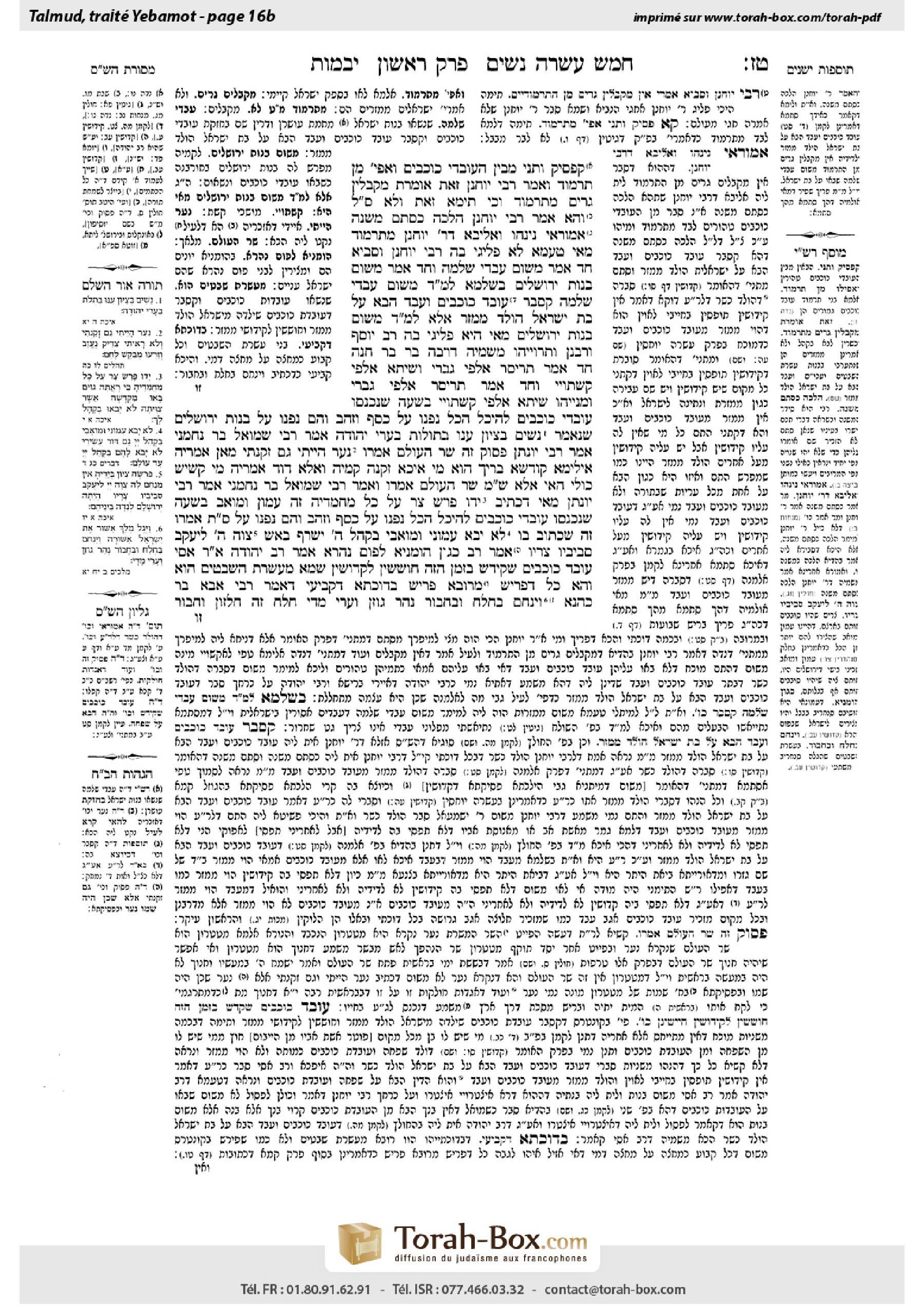
Yevamot 16b: Talmud study for Daf Yomi
Daf Yomi is the daily study of one Talmud folio. Explore 37 tractates with scans, Hebrew text, Sefaria English and AI-generated French translations where annotated.
Passage selection and English or AI-generated French translation are available where the scan has annotations. Daf Study is independent of Torah-Box and Sefaria.
Browse Yevamot · יבמות · All tractatesYevamot 16b text and translations
This page of Yevamot includes the Aramaic text, an English translation and an AI-generated French translation, alongside the scan above.
יבמות י״ו ב · Aramaic and Hebrew text
קָפָסֵיק וְתָנֵי: מִבֵּין הַגּוֹיִם, וַאֲפִילּוּ מִן תַּרְמוֹד. וְאָמַר רַבִּי יוֹחָנָן: זֹאת אוֹמֶרֶת מְקַבְּלִין גֵּרִים מִתַּרְמוֹד.
וְכִי תֵּימָא ״זֹאת״, וְלָא סְבִירָא לֵיהּ — וְהָא אָמַר רַבִּי יוֹחָנָן: הֲלָכָה כִּסְתַם מִשְׁנָה! אָמוֹרָאֵי נִינְהוּ, וְאַלִּיבָּא דְּרַבִּי יוֹחָנָן.
מִתַּרְמוֹד מַאי טַעְמָא לָא? פְּלִיגִי בַּהּ רַבִּי יוֹחָנָן וְסָבַיָּא, חַד אָמַר: מִשּׁוּם עַבְדֵי שְׁלֹמֹה, וְחַד אָמַר: מִשּׁוּם בְּנוֹת יְרוּשָׁלַיִם.
בִּשְׁלָמָא לְמַאן דְּאָמַר מִשּׁוּם עַבְדֵי שְׁלֹמֹה, קָסָבַר: גּוֹי וְעֶבֶד הַבָּא עַל בַּת יִשְׂרָאֵל — הַוָּלָד מַמְזֵר. אֶלָּא לְמַאן דְּאָמַר מִשּׁוּם בְּנוֹת יְרוּשָׁלַיִם, מַאי הִיא? פְּלִיגִי בַּהּ רַב יוֹסֵף וְרַבָּנַן, וְתַרְוַיְיהוּ מִשְּׁמֵיהּ דְּרַבָּה בַּר בַּר חָנָה.
חַד אָמַר: תְּרֵיסַר אַלְפֵי גַּבְרֵי וְשִׁיתָּא אַלְפֵי קַשְׁתּוֹיֵי, וְחַד אָמַר: תְּרֵיסַר אַלְפֵי גַּבְרֵי, וּמִנַּיְיהוּ שִׁיתָּא אַלְפֵי קַשְׁתּוֹיֵי, בְּשָׁעָה שֶׁנִּכְנְסוּ גּוֹיִם לַהֵיכָל, הַכֹּל נִפְנוּ עַל כֶּסֶף וְזָהָב, וְהֵם נִפְנוּ עַל בְּנוֹת יְרוּשָׁלַיִם, שֶׁנֶּאֱמַר: ״נָשִׁים בְּצִיּוֹן עִנּוּ בְּתוּלוֹת בְּעָרֵי יְהוּדָה״.
אָמַר רַבִּי שְׁמוּאֵל בַּר נַחְמָנִי אָמַר רַבִּי יוֹנָתָן, פָּסוּק זֶה שַׂר הָעוֹלָם אֲמָרוֹ: ״נַעַר הָיִיתִי גַּם זָקַנְתִּי״. מַאן אַמְרֵיהּ? אִילֵּימָא קוּדְשָׁא בְּרִיךְ הוּא — מִי אִיכָּא זִקְנָה קַמֵּיהּ? וְאֶלָּא דָּוִד אַמְרֵיהּ — מִי קַשִּׁישׁ כּוּלֵּי הַאי? אֶלָּא שְׁמַע מִינַּהּ שַׂר הָעוֹלָם אֲמָרוֹ.
וְאָמַר רַבִּי שְׁמוּאֵל בַּר נַחְמָנִי אָמַר רַבִּי יוֹנָתָן, מַאי דִּכְתִיב: ״יָדוֹ פָּרַשׂ צָר עַל כׇּל מַחֲמַדֶּיהָ״ — זֶה עַמּוֹן וּמוֹאָב. בְּשָׁעָה שֶׁנִּכְנְסוּ גּוֹיִם לַהֵיכָל, הַכֹּל נִפְנוּ עַל כֶּסֶף וְזָהָב, וְהֵם נִפְנוּ עַל סִפְרֵי תוֹרָה, אָמְרוּ: זֶה שֶׁכָּתוּב בּוֹ ״לֹא יָבֹא עַמּוֹנִי וּמוֹאָבִי בִּקְהַל ה׳״ — יִשָּׂרֵף בָּאֵשׁ!
״צִוָּה ה׳ לְיַעֲקֹב סְבִיבָיו צָרָיו״, אָמַר רַב: כְּגוֹן הוּמַנְיָא לְפוּם נַהֲרָא.
אָמַר רַב יְהוּדָה אָמַר רַב אַסִּי: גּוֹי שֶׁקִּידֵּשׁ בִּזְמַן הַזֶּה — חוֹשְׁשִׁין לְקִדּוּשִׁין, שֶׁמָּא מֵעֲשֶׂרֶת הַשְּׁבָטִים הוּא. וְהָא כֹּל דְּפָרֵישׁ — מֵרוּבָּא פָּרֵישׁ!
בְּדוּכְתָּא דִּקְבִיעִי. דְּאָמַר רַבִּי אַבָּא בַּר כָּהֲנָא: ״וַיַּנְחֵם בַּחְלַח וּבְחָבוֹר נְהַר גּוֹזָן וְעָרֵי מָדָי״, חֲלַח — זֶה חִלָּזוֹן, וְחָבוֹר —
Yevamot 16b · English translation
The tanna concluded and taught: All stains from among the gentiles are pure, from which it may be inferred: And even from Tarmod. This indicates that in all places inhabited by gentiles there is no need to be concerned about stains. And Rabbi Yoḥanan said: That is to say, one accepts converts from Tarmod without concern that they might be Jewish, albeit mamzerim. This contradicts the previous opinion attributed to Rabbi Yoḥanan that converts from the Tarmodim are not accepted.
And if you would say that Rabbi Yoḥanan specifically emphasized: That is to say, i.e., he meant that this conclusion may be logically inferred from the mishna, and yet he himself does not hold by this opinion, but didn’t Rabbi Yoḥanan state a principle that the halakha is in accordance with the ruling of an unattributed mishna, as is the case here? The Gemara answers: They are amora’im, and they disagree in accordance with the opinion of Rabbi Yoḥanan. Some Sages said in Rabbi Yoḥanan’s name that the Tarmodim are unfit, while others maintain that they are fit.
§ The Gemara asks: And what is the reason that the Sages do not accept converts from Tarmod? Rabbi Yoḥanan and the Elders disagree about this matter. Although they concur that converts from Tarmod are not accepted, they disagree with regard to the reason. One of them said that it is due to the servants of King Solomon. Solomon built a city in Tarmod (see I Kings 9:18), and his gentile servants, taking advantage of their status and power, married Jewish women unlawfully. Therefore, it is possible that the inhabitants of Tarmod and their descendants are mamzerim. And the other one said that it is due to the daughters of Jerusalem, who were taken captive and raped and gave birth to children among the gentiles.
The Gemara comments: Granted, according to the one who said that it is due to the servants of Solomon, this is logical, as he holds that in the case of a gentile or a slave who had intercourse with a Jewish woman, the offspring is a mamzer. Accordingly, as the servants of Solomon were slaves and they engaged in intercourse with Jewish women, their children are considered mamzerim. However, according to the one who said that it is due to the daughters of Jerusalem, what is the reason that the concern applied specifically to Tarmod and no other cities? Rav Yosef and the Rabbis disagree with regard to this question, and both stated their opinions in the name of Rabba bar bar Ḥana.
The Gemara elaborates: One of them said that twelve thousand men and six thousand archers came from Tarmod, and the other one said that there were twelve thousand men, of whom six thousand were archers. When the gentiles entered the Sanctuary during the conquest of Jerusalem, they all turned to plunder the silver and the gold they saw there, but the warriors of Tarmod turned to the daughters of Jerusalem, as it is stated: “They have ravished the women in Zion, the maidens in the cities of Judah” (Lamentations 5:11). According to the opinion that children born of relations between gentiles and Jewish women are mamzerim, all the children born to these women are mamzerim.
§ In relation to a verse cited earlier, Rabbi Shmuel bar Naḥmani said that Rabbi Yonatan said: This verse was stated by the ministering angel appointed over the world: “I have been young, and now am old; yet I have not seen the righteous forsaken, nor his seed begging bread” (Psalms 37:25). Who said this? If we say that it was the Holy One, Blessed be He, is there old age before Him? Could God possibly say: “I have been young, and now am old”? And rather, one could say that David himself said it, from his own experience; but was he indeed so old? After all, David died at the age of seventy. Rather, conclude from this that the ministering angel appointed over the world said it, as he can speak both of youth and old age, and it is he who reported his observations from around the world.
And Rabbi Shmuel bar Naḥmani further said that Rabbi Yonatan said: What is the meaning of that which is written: “The adversary has spread out his hand upon all her treasures; for she has seen that the heathens have entered into her Temple, concerning which You commanded that they should not enter into Your congregation” (Lamentations 1:10)? This is referring to Ammon and Moab. How so? When the gentiles entered the Sanctuary, all turned to plunder the silver and the gold, and the soldiers from Ammon and Moab turned to the scrolls of Torah to destroy them. They said: Is this the scroll in which it is written: “An Ammonite and a Moabite shall not enter into the assembly of the Lord” (Deuteronomy 23:4)? Let it be burnt by fire.
With regard to the Ammonites, the Gemara cites another verse: “The Lord has commanded against Jacob that they who are round about him should be his adversaries” (Lamentations 1:17). Rav said: For an example of this, there is the city Homanya in relation to the city Pum Nahara, as the descendants of the Ammonites live in Homanya, and they harass the Jews of Pum Nahara.
§ Rav Yehuda said that Rav Asi said: With regard to a gentile who betrothed a Jewish woman nowadays, we are concerned that the betrothal might be valid, despite the fact that a betrothal of a gentile is meaningless, lest he be from the ten tribes of Israel who intermingled with the gentiles. The Gemara raises an objection: But there is an important principle in halakha that any item separated, i.e., not fixed in its place, is presumed to have been separated from the majority. In this case, it can be assumed that any individual singled out from the gentiles belongs to the majority of gentiles and has no Jewish roots at all.
The Gemara responds: Rav Yehuda means that there is a concern only with regard to those who came from the permanent dwelling places of the ten tribes. As Rabbi Abba bar Kahana said that the verse states about those exiled from Samaria: “And he put them in Halah, and in Habor, on the river of Gozan, and in the cities of the Medes” (II Kings 18:11). Rabbi Abba bar Kahana proceeded to identify these places. Halah; this is the place called Ḥalzon. And Habor;
Yevamot 16b · Traduction française (IA)
Le tanna conclut et enseigne : « Toutes les taches provenant des nations sont pures. » On peut en déduire : même celles de Tarmod. Cela indique qu’en tout lieu habité par des non-Juifs, il n’est pas nécessaire de se préoccuper des taches. Et Rabbi Yoḥanan a dit : Cela signifie que l’on accepte les convertis de Tarmod sans craindre qu’ils soient juifs, mais mamzerim. Cela contredit l’opinion précédente attribuée à Rabbi Yoḥanan, selon laquelle on n’accepte pas les convertis de Tarmod.
Et si tu dis que Rabbi Yoḥanan a spécifiquement insisté sur « cela signifie », c’est-à-dire qu’il voulait dire que cette conclusion peut être déduite logiquement de la Michna, sans pour autant y adhérer lui-même, Rabbi Yoḥanan n’a-t-il pas énoncé le principe selon lequel la halakha suit la décision d’une Michna anonyme, comme c’est le cas ici ? La Guemara répond : Ce sont des amoraïm qui sont en désaccord au sujet de l’opinion de Rabbi Yoḥanan. Certains Sages ont dit au nom de Rabbi Yoḥanan que les Tarmodim sont inaptes, tandis que d’autres soutiennent qu’ils sont aptes.
§ La Guemara demande : Et pour quelle raison les Sages n’acceptent-ils pas les convertis de Tarmod ? Rabbi Yoḥanan et les Anciens sont en désaccord à ce sujet. Bien qu’ils conviennent que les convertis de Tarmod ne sont pas acceptés, ils divergent quant à la raison. L’un dit que c’est à cause des serviteurs du roi Salomon. Salomon bâtit une ville à Tarmod (voir I Rois 9:18), et ses serviteurs non juifs, profitant de leur statut et de leur pouvoir, eurent des rapports illicites avec des femmes juives. Il est donc possible que les habitants de Tarmod et leurs descendants soient des mamzerim. L’autre dit que c’est à cause des filles de Jérusalem, qui furent capturées et violées, puis mirent au monde des enfants parmi les nations.
La Guemara fait remarquer : C’est compréhensible selon celui qui dit que c’est à cause des serviteurs de Salomon, car il estime que, lorsqu’un non-Juif ou un esclave a des rapports avec une femme juive, l’enfant est un mamzer. Ainsi, puisque les serviteurs de Salomon étaient des esclaves et qu’ils eurent des rapports avec des femmes juives, leurs enfants sont considérés comme des mamzerim. Mais selon celui qui dit que c’est à cause des filles de Jérusalem, pourquoi cette préoccupation concernait-elle spécifiquement Tarmod, et non les autres villes ? Rav Yosef et les Rabbins sont en désaccord sur cette question, et tous deux ont exprimé leur opinion au nom de Rabba bar bar Ḥana.
La Guemara développe : Selon l’un, douze mille hommes et six mille archers venaient de Tarmod ; selon l’autre, il y avait douze mille hommes, dont six mille archers. Lorsque les non-Juifs pénétrèrent dans le Sanctuaire lors de la conquête de Jérusalem, ils se mirent tous à piller l’argent et l’or qu’ils y voyaient, mais les guerriers de Tarmod se tournèrent vers les filles de Jérusalem, comme il est dit : « Ils ont violé les femmes de Sion, les jeunes filles dans les villes de Juda » (Lamentations 5:11). Selon l’opinion selon laquelle les enfants issus de rapports entre des non-Juifs et des femmes juives sont des mamzerim, tous les enfants nés de ces femmes sont des mamzerim.
§ À propos d’un verset cité précédemment, Rabbi Shmuel bar Naḥmani a dit au nom de Rabbi Yonatan : Ce verset a été prononcé par l’ange tutélaire chargé du monde : « J’ai été jeune et me voici vieux ; pourtant, je n’ai pas vu le juste abandonné, ni sa descendance mendier du pain » (Psaumes 37:25). Qui a dit cela ? Si nous disons que c’est le Saint, béni soit-Il, peut-il vieillir ? Dieu pourrait-il dire : « J’ai été jeune et me voici vieux » ? On pourrait plutôt dire que David lui-même l’a dit, d’après sa propre expérience. Mais était-il donc si vieux ? Après tout, David mourut à l’âge de soixante-dix ans. Il faut donc en conclure que ces paroles ont été prononcées par l’ange tutélaire chargé du monde, qui peut parler de la jeunesse comme de la vieillesse, et qui a rapporté ce qu’il a observé dans le monde entier.
Et Rabbi Shmuel bar Naḥmani a également dit au nom de Rabbi Yonatan : Quel est le sens de ce qui est écrit : « L’adversaire a étendu la main sur tous ses trésors ; car elle a vu les nations entrer dans son Temple, alors que Tu leur avais interdit d’entrer dans Ton assemblée » (Lamentations 1:10) ? Cela fait référence à Ammon et Moab. Comment cela ? Lorsque les non-Juifs pénétrèrent dans le Sanctuaire, tous se mirent à piller l’argent et l’or, tandis que les soldats d’Ammon et de Moab se tournèrent vers les rouleaux de la Torah pour les détruire. Ils dirent : « Est-ce là le rouleau où il est écrit : “Un Ammonite et un Moabite n’entreront pas dans l’assemblée du Seigneur” » (Deutéronome 23:4) ? Qu’il soit brûlé par le feu !
Au sujet des Ammonites, la Guemara cite un autre verset : « Le Seigneur a ordonné contre Jacob que ceux qui l’entourent soient ses adversaires » (Lamentations 1:17). Rav dit : On peut en voir un exemple dans la relation entre la ville de Homanya et celle de Pum Nahara : les descendants des Ammonites vivent à Homanya et harcèlent les Juifs de Pum Nahara.
Rav Yehuda a dit au nom de Rav Asi : Concernant un non-Juif qui a contracté des fiançailles avec une femme juive de nos jours, nous craignons que ces fiançailles soient valides, bien que celles d’un non-Juif soient sans effet, de peur qu’il ne soit issu des dix tribus d’Israël qui se sont mêlées aux nations. La Guemara soulève une objection : Mais il existe un principe important en halakha selon lequel toute chose qui s’est détachée, c’est-à-dire qui n’est pas demeurée à son emplacement fixe, est présumée provenir de la majorité. En l’occurrence, on peut supposer que tout individu pris parmi les non-Juifs appartient à la majorité des non-Juifs et n’a aucune ascendance juive.
La Guemara répond : Rav Yehuda veut dire qu’il n’y a lieu de s’inquiéter qu’au sujet de ceux qui viennent des lieux de résidence permanents des dix tribus. Car Rabbi Abba bar Kahana a dit que le verset déclare au sujet de ceux qui furent exilés de Samarie : « Il les plaça à Halah, à Habor, sur le fleuve Gozan et dans les villes des Mèdes » (II Rois 18:11). Rabbi Abba bar Kahana entreprit ensuite d’identifier ces lieux. Halah : c’est l’endroit appelé Ḥalzon. Et Habor ;
Traduction française générée par IA à partir de l’édition anglaise de Sefaria. Vérifie toujours un passage avec le texte source.
Text from Sefaria: William Davidson Edition - Vocalized Aramaic (CC BY NC); William Davidson Edition - English (CC BY NC).