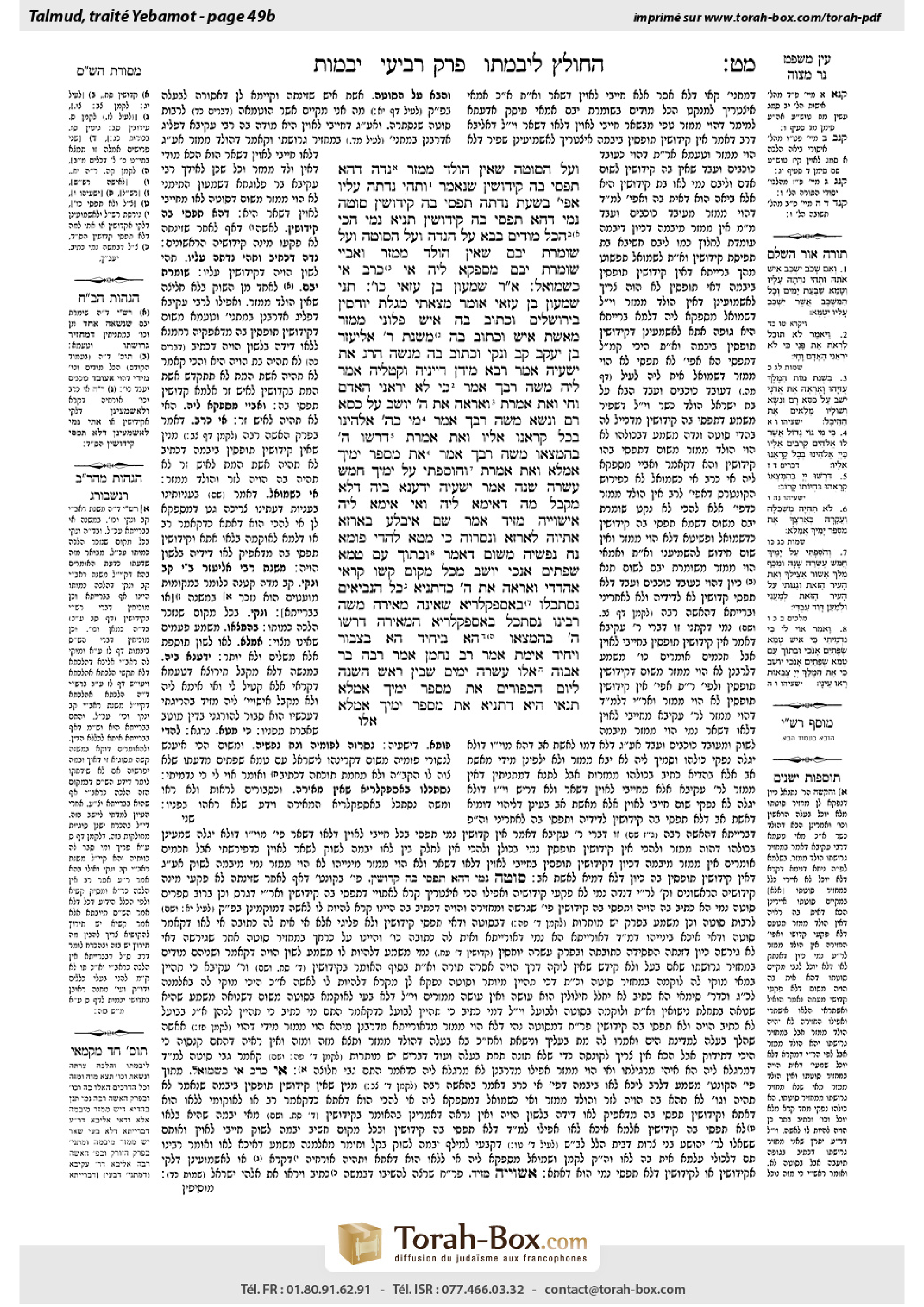
Yevamot 49b: Talmud study for Daf Yomi
Daf Yomi is the daily study of one Talmud folio. Explore 37 tractates with scans, Hebrew text, Sefaria English and AI-generated French translations where annotated.
Passage selection and English or AI-generated French translation are available where the scan has annotations. Daf Study is independent of Torah-Box and Sefaria.
Browse Yevamot · יבמות · All tractatesYevamot 49b text and translations
This page of Yevamot includes the Aramaic text, an English translation and an AI-generated French translation, alongside the scan above.
יבמות מ״ט ב · Aramaic and Hebrew text
וְעַל הַסּוֹטָה — שֶׁאֵין הַוָּלָד מַמְזֵר.
נִדָּה, דְּהָא תָּפְסִי בַּהּ קִידּוּשִׁין, שֶׁנֶּאֱמַר: ״וּתְהִי נִדָּתָהּ עָלָיו״, אֲפִילּוּ בִּשְׁעַת נִדָּתָהּ תָּפְסִי בַּהּ קִידּוּשִׁין.
סוֹטָה נָמֵי, דְּהָא תָּפְסִי בַּהּ קִידּוּשִׁין.
תַּנְיָא נָמֵי הָכִי: הַכֹּל מוֹדִים בְּבָא עַל הַנִּדָּה וְעַל הַסּוֹטָה וְעַל שׁוֹמֶרֶת יָבָם, שֶׁאֵין הַוָּלָד מַמְזֵר.
וְאַבָּיֵי, שׁוֹמֶרֶת יָבָם — מְסַפְּקָא לֵיהּ אִי כְּרַב אִי כִּשְׁמוּאֵל.
אָמַר רַבִּי שִׁמְעוֹן בֶּן עַזַּאי כּוּ׳. תָּנֵי, שִׁמְעוֹן בֶּן עַזַּאי אוֹמֵר: מָצָאתִי מְגִלַּת יוּחֲסִין בִּירוּשָׁלַיִם, וְכָתוּב בָּהּ: אִישׁ פְּלוֹנִי מַמְזֵר מֵאֵשֶׁת אִישׁ, וְכָתוּב בָּהּ: מִשְׁנַת רַבִּי אֱלִיעֶזֶר בֶּן יַעֲקֹב קַב וְנָקִי. וְכָתוּב בָּהּ: מְנַשֶּׁה הָרַג אֶת יְשַׁעְיָה.
אָמַר רָבָא: מֵידָן דַּיְינֵיהּ וְקַטְלֵיהּ. אֲמַר לֵיהּ, מֹשֶׁה רַבְּךָ אָמַר: ״כִּי לֹא יִרְאַנִי הָאָדָם וָחָי״, וְאַתְּ אָמְרַתְּ: ״וָאֶרְאֶה אֶת ה׳ יוֹשֵׁב עַל כִּסֵּא רָם וְנִשָּׂא״. מֹשֶׁה רַבְּךָ אָמַר: ״מִי כַּה׳ אֱלֹהֵינוּ בְּכׇל קׇרְאֵנוּ אֵלָיו״, וְאַתְּ אָמְרַתְּ: ״דִּרְשׁוּ ה׳ בְּהִמָּצְאוֹ״. מֹשֶׁה רַבְּךָ אָמַר: ״אֶת מִסְפַּר יָמֶיךָ אֲמַלֵּא״, וְאַתְּ אָמְרַתְּ: ״וְהוֹסַפְתִּי עַל יָמֶיךָ חֲמֵשׁ עֶשְׂרֵה שָׁנָה״!
אָמַר יְשַׁעְיָה: יָדַעְנָא בֵּיהּ דְּלָא מְקַבֵּל מָה דְּאֵימָא לֵיהּ, וְאִי אֵימָא לֵיהּ — אֶישַּׁוְּיֵיהּ מֵזִיד. אֲמַר שֵׁם אִיבְּלַע בְּאַרְזָא, אַתְיוּהּ לְאַרְזָא וְנַסְּרוּהּ. כִּי מְטָא לַהֲדֵי פּוּמָּא, נָח נַפְשֵׁיהּ. מִשּׁוּם דַּאֲמַר: ״וּבְתוֹךְ עַם טְמֵא שְׂפָתַיִם אָנֹכִי יוֹשֵׁב״.
מִכׇּל מָקוֹם קָשׁוּ קְרָאֵי אַהֲדָדֵי?
״וָאֶרְאֶה אֶת ה׳״, כִּדְתַנְיָא: כׇּל הַנְּבִיאִים נִסְתַּכְּלוּ בְּאַסְפַּקְלַרְיָא שֶׁאֵינָהּ מְאִירָה, מֹשֶׁה רַבֵּינוּ נִסְתַּכֵּל בְּאַסְפַּקְלַרְיָא הַמְּאִירָה.
״דִּרְשׁוּ ה׳ בְּהִמָּצְאוֹ״ — הָא בְּיָחִיד, הָא בְּצִבּוּר. וְיָחִיד אֵימַת? אָמַר רַב נַחְמָן אָמַר רַבָּה בַּר אֲבוּהּ: אֵלּוּ עֲשָׂרָה יָמִים שֶׁבֵּין רֹאשׁ הַשָּׁנָה לְיוֹם הַכִּפּוּרִים.
״אֶת מִסְפַּר יָמֶיךָ אֲמַלֵּא״ — תַּנָּאֵי הִיא, דְּתַנְיָא: ״אֶת מִסְפַּר יָמֶיךָ אֲמַלֵּא״,
Yevamot 49b · English translation
or with a sota, that the offspring is not a mamzer.
With regard to a menstruating woman the offspring is not a mamzer because one’s betrothal of her takes effect, as it is stated: “And her impurity shall be upon him” (Leviticus 15:24). The phrase “shall be” alludes to the fact that a betrothal with her takes effect. The verse teaches that even at the time of her menstrual impurity, betrothal with her takes effect.
With regard to a sota, too, the offspring is not a mamzer because one’s betrothal of her takes effect.
The Gemara notes: This teaching of Abaye is also taught in a baraita: All agree with regard to one who engages in sexual relations with a menstruating woman, or with a sota, or with a widow waiting for her yavam to perform levirate marriage, that the offspring is not a mamzer.
The Gemara explains: And Abaye did not mention the case of a widow waiting for her yavam because he is uncertain whether, if someone other than the yavam betrothed her, the halakha is in accordance with the opinion of Rav that it does not take effect or in accordance with the opinion of Shmuel that it might take effect.
§ The mishna states: Rabbi Shimon ben Azzai said: I found a scroll recording people’s lineages. The Gemara cites an expanded version of the contents of the scroll. It is taught in a baraita that Rabbi Shimon ben Azzai said: I found a scroll recording people’s lineages, in Jerusalem, and it was written in it that so-and-so is a mamzer from an adulterous union with a married woman. And it was also written in it: The teachings of Rabbi Eliezer ben Ya’akov measure only a kav but are clean and accurate, and so the halakha is decided in accordance with his opinions. And it was written in it: Manasseh, king of Israel, killed Isaiah the prophet.
The Gemara expands on the events surrounding Isaiah’s death: Rava said: Manasseh judged him as a false witness for issuing statements contradicting the Torah and only then killed him. Manasseh said to Isaiah: Moses your master said in the Torah: “And He said: You cannot see My face, for man cannot see Me and live” (Exodus 33:20), and yet you said: “I saw the Lord sitting upon a high and lofty throne” (Isaiah 6:1). Moses your master said: “For which great nation is there, that has God so near to it, as the Lord our God is, whenever we call upon Him?” (Deuteronomy 4:7), and yet you said: “Seek the Lord while He may be found, call upon Him while He is near” (Isaiah 55:6), which implies that God is not always near. Moses your master said: “I will fulfill the number of your days” (Exodus 23:26), which implies that each individual has a preordained allotted lifespan that he cannot outlive, and yet you said in a prophecy to King Hezekiah: “And I will add to your days, fifteen years” (II Kings 20:6).
Isaiah said to himself: I know him, i.e., Manasseh, that he will not accept whatever explanation that I will say to him to resolve my prophecies with the words of the Torah. And even if I say it to him, I will make him into an intentional transgressor since he will kill me anyway. Therefore, in order to escape, he uttered a divine name and was swallowed within a cedar tree. Manasseh’s servants brought the cedar tree and sawed through it in order to kill him. When the saw reached to where his mouth was, Isaiah died. He died specifically at this point due to that which he said: “In the midst of a people of unclean lips, I dwell” (Isaiah 6:5). He was punished for referring to the Jewish people in a derogatory manner.
The Gemara asks: In any case, as Manasseh pointed out, these verses contradict each other; how are these contradictions to be resolved?
The Gemara resolves the first contradiction: “I saw the Lord” is to be understood as it is taught in a baraita: All of the prophets observed their prophecies through an obscure looking glass [aspaklaria], i.e., their prophecies were given as metaphoric visions but were not a direct perception of the matter. However, Moses our master observed his prophecies through a clear looking glass, i.e., he gained a direct and accurate perception of the matter.
The Gemara resolves the second contradiction: Isaiah’s prophecy: “Seek the Lord while He may be found,” does not contradict the verse in the Torah that God is near to His nation “whenever we call upon Him,” because this prophecy of Isaiah was made with regard to the individual and this verse in the Torah is stated with regard to a community, as the prayer of the community is always accepted. The Gemara asks: And when is the time that God is to be found near the individual? Rav Naḥman said Rabba bar Avuh said: These are the ten days between Rosh HaShana and Yom Kippur.
The resolution of the third contradiction from the verse: “I will fulfill the number of your days,” is subject to a dispute between tanna’im, as it is taught in a baraita: The verse states: “I will fulfill the number of your days”;
Yevamot 49b · Traduction française (IA)
ou avec une sota, l’enfant n’est pas un mamzer.
Dans le cas d’une femme menstruée, l’enfant n’est pas un mamzer, car les kidouchin contractés avec elle prennent effet, comme il est dit : « Son impureté sera sur lui » (Lévitique 15, 24). L’expression « sera » fait allusion au fait que les kidouchin contractés avec elle prennent effet. Le verset enseigne que les kidouchin contractés avec elle prennent effet même pendant la période de son impureté menstruelle.
Dans le cas d’une sota également, l’enfant n’est pas un mamzer, car les kidouchin contractés avec elle prennent effet.
La Guemara remarque que cet enseignement d’Abayé est également rapporté dans une baraïta : tous conviennent que celui qui a des relations sexuelles avec une femme menstruée, une sota ou une veuve qui attend que son yavam contracte avec elle un mariage léviratique engendre un enfant qui n’est pas un mamzer.
La Guemara explique : Abayé n’a pas mentionné le cas d’une veuve qui attend son yavam, car il ne sait pas avec certitude si, lorsque quelqu’un d’autre que le yavam contracte avec elle des kidouchin, la halakha suit l’opinion de Rav, selon laquelle ceux-ci ne prennent pas effet, ou celle de Chmouel, selon laquelle ils pourraient prendre effet.
§ La Michna énonce : Rabbi Chimon ben Azaï a dit : « J’ai trouvé un rouleau consignant des généalogies. » La Guemara cite une version plus développée du contenu de ce rouleau. Il est enseigné dans une baraïta que Rabbi Chimon ben Azaï a dit : « J’ai trouvé à Jérusalem un rouleau consignant des généalogies, et il y était écrit qu’untel est un mamzer, issu d’une union adultère avec une femme mariée. » Il y était également écrit : « Les enseignements de Rabbi Éliézer ben Yaakov ne représentent qu’un kav, mais ils sont purs et exacts ; la halakha est donc tranchée conformément à ses opinions. » Il y était écrit : « Menaché, roi d’Israël, a tué le prophète Isaïe. »
La Guemara développe les circonstances de la mort d’Isaïe. Rava a dit : Menaché le jugea comme un faux témoin, au motif qu’il avait proféré des paroles contredisant la Torah, puis le tua. Menaché dit à Isaïe : « Moïse, ton maître, a dit dans la Torah : “Et Il dit : Tu ne peux pas voir Mon visage, car l’homme ne peut Me voir et vivre” » (Exode 33, 20), et pourtant tu as dit : « J’ai vu le Seigneur assis sur un trône élevé et sublime » (Isaïe 6, 1). « Moïse, ton maître, a dit : “Quelle est la grande nation qui ait un Dieu aussi proche d’elle que le Seigneur notre Dieu l’est de nous chaque fois que nous l’invoquons ?” » (Deutéronome 4, 7), et pourtant tu as dit : « Cherchez le Seigneur tant qu’Il se laisse trouver, invoquez-Le tant qu’Il est proche » (Isaïe 55, 6), ce qui implique que Dieu n’est pas toujours proche. « Moïse, ton maître, a dit : “J’accomplirai le nombre de tes jours” » (Exode 23, 26), ce qui implique que la durée de vie de chaque individu est fixée à l’avance et qu’il ne peut la dépasser, et pourtant tu as dit dans une prophétie adressée au roi Ézéchias : « J’ajouterai quinze années à tes jours » (II Rois 20, 6).
Isaïe se dit : « Je le connais, c’est-à-dire Menaché ; il n’acceptera aucune explication que je pourrais lui donner pour concilier mes prophéties avec les paroles de la Torah. Et même si je la lui donnais, je ferais de lui un transgresseur délibéré, puisqu’il me tuera de toute façon. » Aussi, pour s’échapper, prononça-t-il un nom divin et fut-il englouti dans un cèdre. Les serviteurs de Menaché apportèrent le cèdre et le scièrent afin de le tuer. Lorsque la scie atteignit l’endroit où se trouvait sa bouche, Isaïe mourut. Il mourut précisément à ce moment à cause de ces paroles : « Au milieu d’un peuple aux lèvres impures, j’habite » (Isaïe 6, 5). Il fut puni pour avoir parlé du peuple juif en termes dépréciatifs.
La Guemara demande : Quoi qu’il en soit, comme Menaché l’a fait remarquer, ces versets se contredisent ; comment résoudre ces contradictions ?
La Guemara résout la première contradiction : « J’ai vu le Seigneur » doit être compris à la lumière de l’enseignement d’une baraïta : tous les prophètes recevaient leurs prophéties au moyen d’un miroir obscur [aspaklaria], c’est-à-dire sous la forme de visions métaphoriques, sans perception directe de la réalité. En revanche, Moïse notre maître recevait ses prophéties au moyen d’un miroir clair, c’est-à-dire qu’il avait une perception directe et exacte de la réalité.
La Guemara résout la deuxième contradiction : la prophétie d’Isaïe « Cherchez le Seigneur tant qu’Il se laisse trouver » ne contredit pas le verset de la Torah selon lequel Dieu est proche de Son peuple « chaque fois que nous L’invoquons », car la prophétie d’Isaïe concerne l’individu, tandis que ce verset de la Torah concerne la communauté, dont la prière est toujours agréée. La Guemara demande : Quand Dieu se rend-Il proche de l’individu ? Rav Naḥman a dit au nom de Rabba bar Avouha : ce sont les dix jours entre Roch Hachana et Yom Kippour.
La résolution de la troisième contradiction, tirée du verset « J’accomplirai le nombre de tes jours », fait l’objet d’un désaccord entre les tannaïm, comme il est enseigné dans une baraïta : le verset énonce : « J’accomplirai le nombre de tes jours » ;
Traduction française générée par IA à partir de l’édition anglaise de Sefaria. Vérifie toujours un passage avec le texte source.
Text from Sefaria: William Davidson Edition - Vocalized Aramaic (CC BY NC); William Davidson Edition - English (CC BY NC).