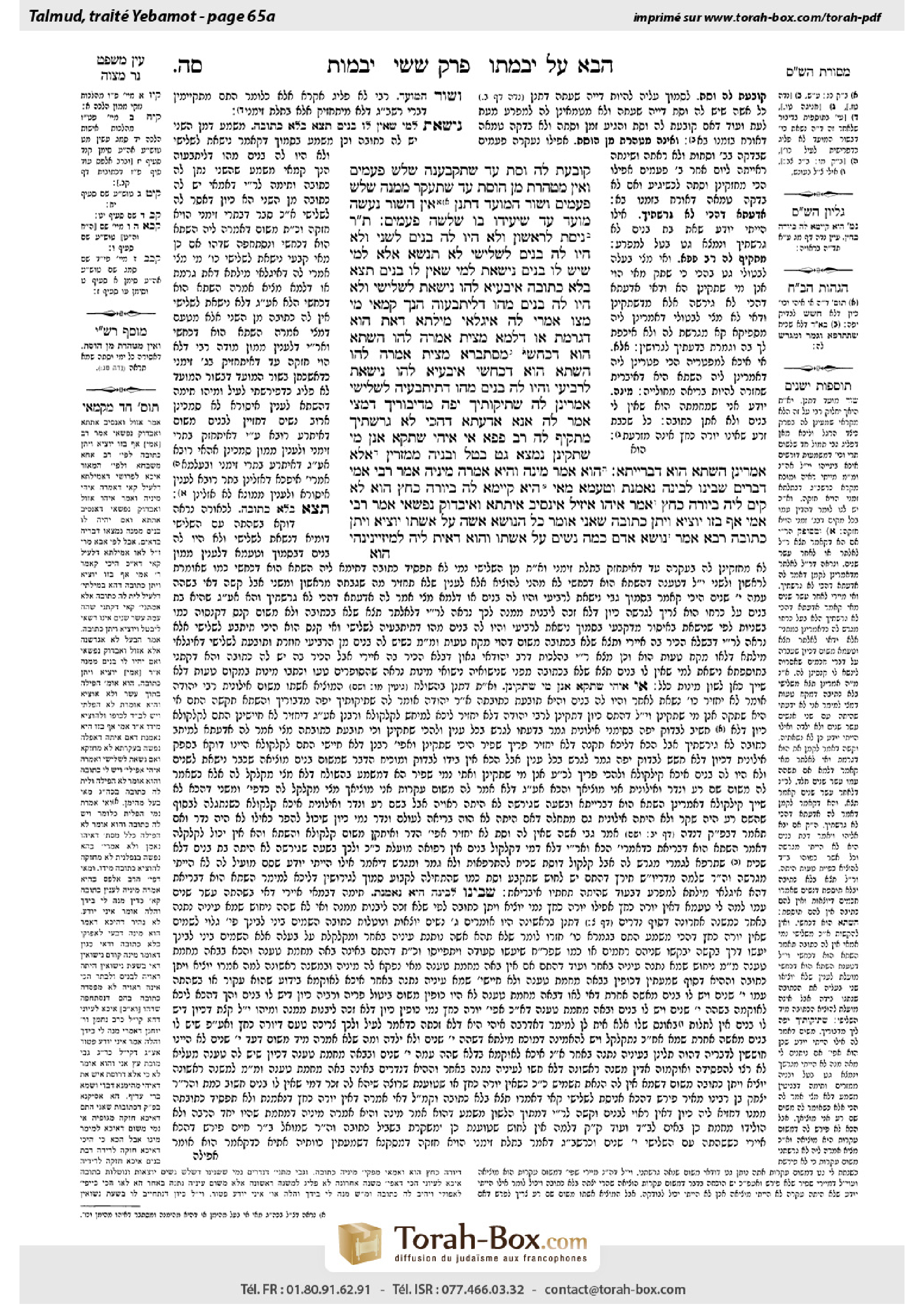
Yevamot 65a: Talmud study for Daf Yomi
Daf Yomi is the daily study of one Talmud folio. Explore 37 tractates with scans, Hebrew text, Sefaria English and AI-generated French translations where annotated.
Passage selection and English or AI-generated French translation are available where the scan has annotations. Daf Study is independent of Torah-Box and Sefaria.
Browse Yevamot · יבמות · All tractatesYevamot 65a text and translations
This page of Yevamot includes the Aramaic text, an English translation and an AI-generated French translation, alongside the scan above.
יבמות ס״ה א · Aramaic and Hebrew text
קוֹבַעַת לָהּ וֶסֶת, עַד שֶׁתִּקְבָּעֶנָּה שָׁלֹשׁ פְּעָמִים. וְאֵין מִטַּהֶרֶת מִן הַוֶּסֶת, עַד שֶׁתֵּעָקֵר מִמֶּנָּה שָׁלֹשׁ פְּעָמִים. וְשׁוֹר הַמּוּעָד — דִּתְנַן: אֵין הַשּׁוֹר נַעֲשֶׂה מוּעָד, עַד שֶׁיָּעִידוּ בּוֹ שְׁלֹשָׁה פְּעָמִים.
תָּנוּ רַבָּנַן: נִיסֵּת לָרִאשׁוֹן וְלֹא הָיוּ לָהּ בָּנִים, לַשֵּׁנִי וְלֹא הָיוּ לָהּ בָּנִים, לַשְּׁלִישִׁי לֹא תִּנָּשֵׂא אֶלָּא לְמִי שֶׁיֵּשׁ לוֹ בָּנִים. נִישֵּׂאת לְמִי שֶׁאֵין לוֹ בָּנִים — תֵּצֵא בְּלֹא כְּתוּבָּה.
אִיבַּעְיָא לְהוּ: נִישֵּׂאת לַשְּׁלִישִׁי וְלֹא הָיוּ לָהּ בָּנִים, מַהוּ דְּלִיתְבְּעוּהָ הָנָךְ קַמָּאֵי? מִי מָצוּ אָמְרִי לַהּ: אִיגַּלַּאי מִילְּתָא דְּאַתְּ הוּא דִּגְרַמְתְּ. אוֹ דִלְמָא מָצֵית אֲמַרָה לְהוּ: הַשְׁתָּא הוּא דִּכְחַשִׁי. מִסְתַּבְּרָא מָצְיָא אֲמַרָה לְהוּ הַשְׁתָּא הוּא דִּכְחַשִׁי.
אִיבַּעְיָא לְהוּ: נִישֵּׂאת לָרְבִיעִי וְהָיוּ לָהּ בָּנִים, מַהוּ דְּתִיתְבְּעֵיהּ לִשְׁלִישִׁי! אָמְרִינַן לַהּ: שְׁתִיקוּתִיךְ יָפָה מִדִּיבּוּרִיךְ. דְּמָצֵי אָמַר לַהּ: אֲנָא אַדַּעְתָּא דְּהָכִי לָא גָּרֵשְׁתִּיךְ.
מַתְקֵיף לַהּ רַב פָּפָּא: אִי אִיהִי שָׁתְקָא, אֲנַן מִי שָׁתְקִינַן?! נִמְצָא גֵּט בָּטֵל, וּבָנֶיהָ מַמְזֵרִין! אֶלָּא אָמְרִינַן: הַשְׁתָּא הוּא דִּבְרִיַּית.
הוּא אָמַר מִינַּהּ, וְהִיא אָמְרָה מִינֵּיהּ, אֲמַר רַבִּי אַמֵּי: דְּבָרִים שֶׁבֵּינוֹ לְבֵינָהּ — נֶאֱמֶנֶת, וְטַעְמָא מַאי? הִיא (קַיְימָא) [קִים] לַהּ בְּיוֹרֶה כְּחֵץ, הוּא לָא קִים לֵיהּ בְּיוֹרֶה כְּחֵץ.
אֲמַר אִיהוּ: אֵיזִיל אִינְּסִיב אִיתְּתָא וְאֶיבְדּוֹק נַפְשַׁאי. אָמַר רַבִּי אַמֵּי: אַף בָּזוֹ יוֹצִיא וְיִתֵּן כְּתוּבָּה. שֶׁאֲנִי אוֹמֵר: כׇּל הַנּוֹשֵׂא אִשָּׁה עַל אִשְׁתּוֹ — יוֹצִיא וְיִתֵּן כְּתוּבָּה. רָבָא אָמַר: נוֹשֵׂא אָדָם כַּמָּה נָשִׁים עַל אִשְׁתּוֹ, וְהוּא דְּאִית לֵיהּ לְמֵיזַיְינִינְהִי.
Yevamot 65a · English translation
establish a set pattern of menstrual bleeding for herself, so that it can be assumed that she will start bleeding at a particular time, until she has established it three times. Similarly, she is not purified from her set pattern until it is uprooted from her three times, i.e., until she did not experience menstrual bleeding at the expected time according to her pattern on three occasions. And the case of a forewarned ox is as we learned in a mishna (Bava Kamma 23b): An ox does not become forewarned until witnesses testify that it has gored three times. Consequently, in the cases of set patterns and a forewarned ox, a legal presumption is created only after three occurrences, in accordance with the opinion of Rabban Shimon ben Gamliel.
The Sages taught: If a woman was married to her first husband and she did not have children, and then she was married to her second husband and she did not have children, she may not get married to a third husband unless it is to one who already has children and has fulfilled the mitzva to be fruitful and multiply, as it is presumed that she is unable to have children. If she got married to one who does not have children and he had been unaware of her presumptive status, she is divorced without receiving payment for her marriage contract, as he married her erroneously.
A dilemma was raised before the Sages: If she was married to a third husband and she did not have children for ten years, what is the halakha with regard to whether those first husbands can demand the return of the money they paid for her marriage contracts? Can they say to her: It has been revealed retroactively that it was you who caused our inability to have children, and therefore we entered our marriages erroneously, or perhaps she can say to them: It is now that I am older that I have become weak, but in my youth I could have had children with a different husband. The Sages answer: It is reasonable that she can say to them: It is now that I have become weak.
Another dilemma was raised before the Sages: If she was married to a fourth husband and she had children with him, what is the halakha with regard to whether she can demand the payment of her marriage contract from her third husband by claiming that it is now evident that she was capable of having children? The Gemara answers: We say to her: Your silence is preferable to your speech, i.e., you are better off not making this claim, as he can say to her: I did not divorce you with this understanding, and now that I know you are capable of having children, I regret divorcing you. This would invalidate her divorce and, consequently, her marriage to her fourth husband, and would render her child a mamzer.
Rav Pappa strongly objects to this: If she was silent do we remain silent? If there is room for concern that the divorce might be invalid, the concern exists regardless of her claim, and therefore the bill of divorce should be found invalid and her children from her fourth husband should be rendered mamzerin. Rather, we say that it is now that she has become healthy. In other words, she was previously incapable of bearing children, but she has since recovered from that disability.
§ The Gemara addresses a related case. If he said that the cause for their failure to have children is from her, i.e., it is she who is infertile, and she said it is from him, Rabbi Ami said: With regard to such matters between him and her, she is believed. The Gemara inquires: What is the reason for this ruling? She is certain whether his semen shoots like an arrow, whereas he is not certain whether his semen shoots like an arrow.
If he says: I will go and marry a different woman and examine myself to see if I am indeed the cause, Rabbi Ami said: Even in this case he must divorce his first wife and give her the payment for her marriage contract, as I say that whoever marries a woman in addition to his first wife must divorce his first wife and give her the payment for her marriage contract. Conversely, Rava said that a man may marry several women in addition to his first wife, and there is nothing wrong with this practice as long as he has enough to support them all.
Yevamot 65a · Traduction française (IA)
établir pour elle-même un cycle régulier de saignements menstruels, de sorte que l’on puisse présumer qu’elle commencera à saigner à un moment déterminé, jusqu’à ce qu’elle l’ait établi trois fois. De même, elle n’est délivrée de son cycle régulier que lorsque celui-ci est déraciné trois fois, c’est-à-dire lorsqu’elle n’a pas eu de saignement menstruel au moment attendu selon son cycle à trois reprises. Quant au cas du bœuf devenu dangereux, il correspond à ce que nous avons appris dans une Michna (Bava Kamma 23b) : un bœuf ne devient dangereux que lorsque des témoins attestent qu’il a encorné trois fois. Par conséquent, dans les cas des cycles réguliers et du bœuf devenu dangereux, une présomption juridique ne s’établit qu’après trois occurrences, conformément à l’opinion de Rabban Shimon ben Gamliel.
Les Sages ont enseigné : si une femme a été mariée à son premier mari et n’a pas eu d’enfants, puis a été mariée à son deuxième mari et n’a pas eu d’enfants, elle ne peut épouser un troisième mari, à moins que celui-ci ait déjà des enfants et ait accompli la mitsva de procréer, car on présume qu’elle est incapable d’avoir des enfants. Si elle épouse un homme sans enfants qui ignorait cette présomption, il la répudie sans lui verser la somme due au titre de sa ketouba, car il l’a épousée par erreur.
Une question fut soulevée devant les Sages : si elle a épousé un troisième mari et n’a pas eu d’enfants pendant dix ans, quelle est la halakha quant à la possibilité pour ses premiers maris d’exiger le remboursement des sommes versées au titre de leurs ketoubot ? Peuvent-ils lui dire : il apparaît rétrospectivement que c’est toi qui as causé notre incapacité à avoir des enfants, et que nous nous sommes donc mariés par erreur ; ou bien peut-elle leur répondre : c’est maintenant, parce que j’ai vieilli, que je suis devenue faible, mais, dans ma jeunesse, j’aurais pu avoir des enfants avec un autre mari ? Les Sages répondent : il est raisonnable qu’elle puisse leur dire : c’est maintenant que je suis devenue faible.
Une autre question fut soulevée devant les Sages : si elle a épousé un quatrième mari et a eu des enfants avec lui, quelle est la halakha quant à la possibilité pour elle d’exiger de son troisième mari le paiement de sa ketouba, en soutenant qu’il est désormais évident qu’elle était capable d’avoir des enfants ? La Guemara répond : nous lui disons : mieux vaut pour toi garder le silence que parler, c’est-à-dire que tu as intérêt à ne pas avancer cette prétention, car il peut te dire : je ne t’ai pas répudiée en sachant cela ; et maintenant que je sais que tu es capable d’avoir des enfants, je regrette de t’avoir répudiée. Cela invaliderait son divorce et, par conséquent, son mariage avec son quatrième mari, et rendrait son enfant mamzer.
Rav Pappa s’y oppose vivement : si elle se tait, devons-nous nous taire ? S’il y a lieu de craindre que le divorce soit invalide, cette crainte existe indépendamment de sa prétention ; le guet doit donc être considéré comme invalide et ses enfants issus de son quatrième mari comme des mamzerim. Il faut plutôt dire que c’est maintenant qu’elle a recouvré la santé. Autrement dit, auparavant, elle était incapable d’avoir des enfants, mais elle s’est depuis remise de cette incapacité.
§ La Guemara examine un cas apparenté. S’il dit que leur incapacité à avoir des enfants vient d’elle, c’est-à-dire qu’elle est stérile, et qu’elle dit que cela vient de lui, Rabbi Ami a dit : dans les affaires de cette nature entre lui et elle, c’est elle que l’on croit. La Guemara demande : quelle est la raison de cette décision ? Elle sait avec certitude si son sperme jaillit comme une flèche, tandis que lui ne peut pas savoir avec certitude si son sperme jaillit comme une flèche.
S’il dit : je vais aller épouser une autre femme et vérifier si c’est bien moi qui suis en cause, Rabbi Ami a dit : même dans ce cas, il doit répudier sa première épouse et lui verser la somme due au titre de sa ketouba, car, selon moi, quiconque épouse une femme en plus de sa première épouse doit répudier celle-ci et lui verser la somme due au titre de sa ketouba. À l’inverse, Rava a dit qu’un homme peut épouser plusieurs femmes en plus de sa première épouse, et que cette pratique ne pose aucun problème tant qu’il a les moyens de subvenir aux besoins de toutes.
Traduction française générée par IA à partir de l’édition anglaise de Sefaria. Vérifie toujours un passage avec le texte source.
Text from Sefaria: William Davidson Edition - Vocalized Aramaic (CC BY NC); William Davidson Edition - English (CC BY NC).