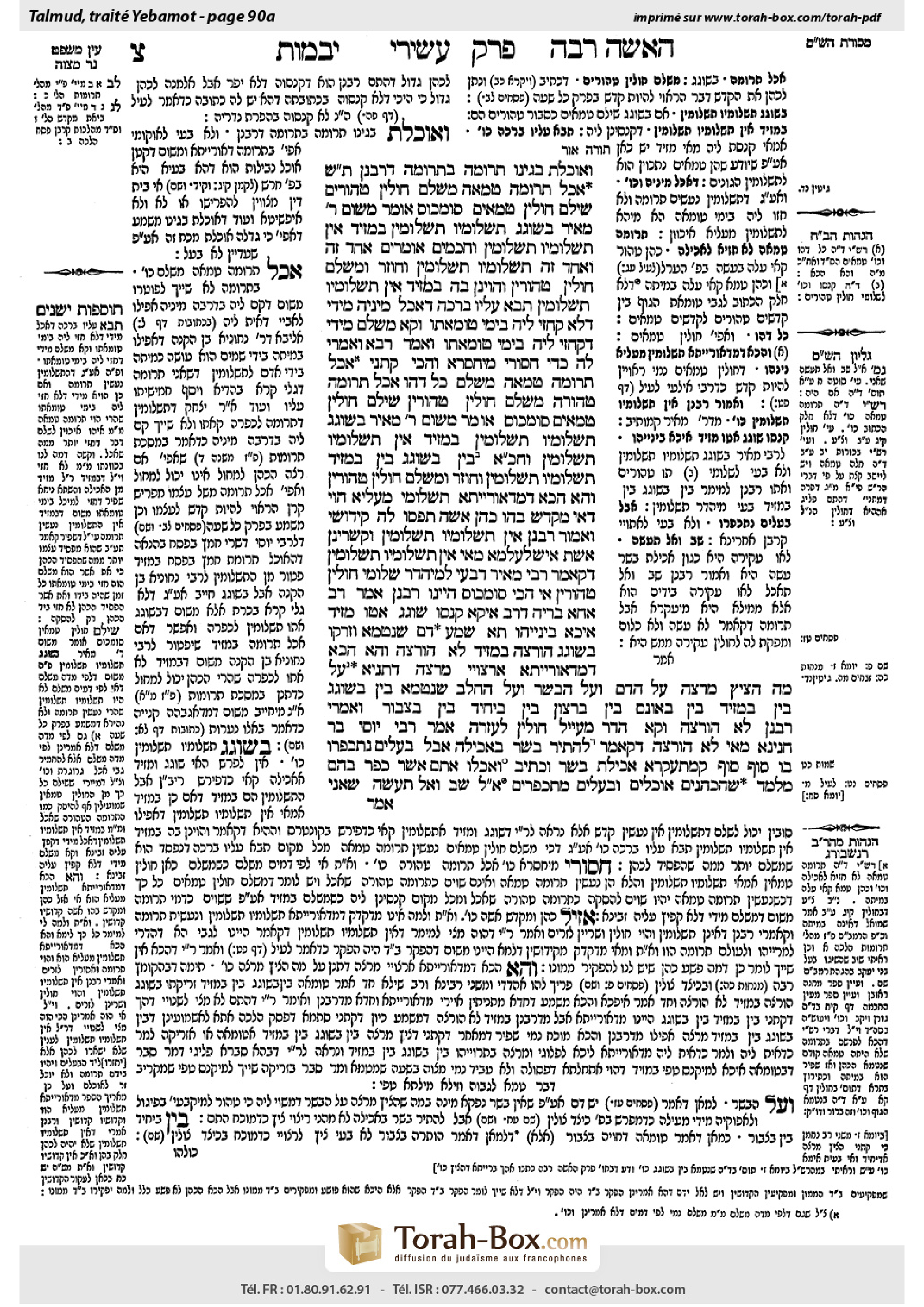
Yevamot 90a: Talmud study for Daf Yomi
Daf Yomi is the daily study of one Talmud folio. Explore 37 tractates with scans, Hebrew text, Sefaria English and AI-generated French translations where annotated.
Passage selection and English or AI-generated French translation are available where the scan has annotations. Daf Study is independent of Torah-Box and Sefaria.
Browse Yevamot · יבמות · All tractatesYevamot 90a text and translations
This page of Yevamot includes the Aramaic text, an English translation and an AI-generated French translation, alongside the scan above.
יבמות צ׳ א · Aramaic and Hebrew text
וְאוֹכֶלֶת בְּגִינוֹ תְּרוּמָה. בִּתְרוּמָה דְּרַבָּנַן. תָּא שְׁמַע: אָכַל תְּרוּמָה טְמֵאָה — מְשַׁלֵּם חוּלִּין טְהוֹרִים. שִׁילֵּם חוּלִּין טְמֵאִים, סוֹמְכוֹס אוֹמֵר מִשּׁוּם רַבִּי מֵאִיר: בְּשׁוֹגֵג — תַּשְׁלוּמָיו תַּשְׁלוּמִין, בְּמֵזִיד — אֵין תַּשְׁלוּמָיו תַּשְׁלוּמִין. וַחֲכָמִים אוֹמְרִים: אֶחָד זֶה וְאֶחָד זֶה — תַּשְׁלוּמָיו תַּשְׁלוּמִין, וְחוֹזֵר וּמְשַׁלֵּם חוּלִּין טְהוֹרִין.
וְהָוֵינַן בַּהּ: בְּמֵזִיד אֵין תַּשְׁלוּמָיו תַּשְׁלוּמִין? תָּבֹא עָלָיו בְּרָכָה, דַּאֲכַל מִינֵּיהּ מִידֵּי דְּלָא (קָ)חֲזֵי לֵיהּ בִּימֵי טוּמְאָתוֹ, וְקָא מְשַׁלֵּם מִידֵּי דְּ(קָ)חֲזֵי לֵיהּ בִּימֵי טוּמְאָתוֹ.
וְאָמַר רָבָא, וְאָמְרִי לַהּ כְּדִי: חַסּוֹרֵי מִיחַסְּרָא וְהָכִי קָתָנֵי: אָכַל תְּרוּמָה טְמֵאָה — מְשַׁלֵּם כָּל דְּהוּ. אָכַל תְּרוּמָה טְהוֹרָה — מְשַׁלֵּם חוּלִּין טְהוֹרִין, שִׁילֵּם חוּלִּין טְמֵאִים — סוֹמְכוֹס אוֹמֵר מִשּׁוּם רַבִּי מֵאִיר: בְּשׁוֹגֵג — תַּשְׁלוּמָיו תַּשְׁלוּמִין, בְּמֵזִיד — אֵין תַּשְׁלוּמָיו תַּשְׁלוּמִין. וַחֲכָמִים אוֹמְרִים: בֵּין בְּשׁוֹגֵג בֵּין בְּמֵזִיד — תַּשְׁלוּמָיו תַּשְׁלוּמִין, וְחוֹזֵר וּמְשַׁלֵּם חוּלִּין טְהוֹרִין.
וְהָא הָכָא, דְּמִדְּאוֹרָיְיתָא תַּשְׁלוּמֵי מְעַלְּיָא הָוֵי, דְּאִי מְקַדֵּשׁ בְּהוּ כֹּהֵן אִשָּׁה — תָּפְסוּ לַהּ קִידּוּשֵׁי, וַאֲמוּר רַבָּנַן אֵין תַּשְׁלוּמָיו תַּשְׁלוּמִין, וְקָשָׁרֵינַן אֵשֶׁת אִישׁ לְעָלְמָא!
מַאי אֵין תַּשְׁלוּמָיו תַּשְׁלוּמִין דְּקָאָמַר רַבִּי מֵאִיר — דְּבָעֵי לְמֶיהְדַּר שַׁלּוֹמֵי חוּלִּין טְהוֹרִין. אִי הָכִי, סוֹמְכוֹס הַיְינוּ רַבָּנַן!
אָמַר רַב אַחָא בְּרֵיהּ דְּרַב אִיקָא: קָנְסוּ שׁוֹגֵג אַטּוּ מֵזִיד אִיכָּא בֵּינַיְיהוּ.
תָּא שְׁמַע: דָּם שֶׁנִּטְמָא וּזְרָקוֹ, בְּשׁוֹגֵג — הוּרְצָה, בְּמֵזִיד — לֹא הוּרְצָה.
וְהָא הָכָא, דְּמִדְּאוֹרָיְיתָא אַרְצוֹיֵי מְרַצֵּה, דְּתַנְיָא: עַל מָה הַצִּיץ מְרַצֶּה — עַל הַדָּם, וְעַל הַבָּשָׂר, וְעַל הַחֵלֶב שֶׁנִּטְמָא, בֵּין בְּשׁוֹגֵג בֵּין בְּמֵזִיד, בֵּין בְּאוֹנֶס בֵּין בְּרָצוֹן, בֵּין בְּיָחִיד בֵּין בְּצִבּוּר. וְאָמְרִי רַבָּנַן: לֹא הוּרְצָה, וְקָא הָדַר מְעַיֵּיל חוּלִּין לָעֲזָרָה!
אָמַר רַבִּי יוֹסֵי בַּר חֲנִינָא: מַאי ״לֹא הוּרְצָה״ דְּקָאָמַר — לְהַתִּיר בָּשָׂר בַּאֲכִילָה, אֲבָל בְּעָלִים נִתְכַּפְּרוּ בּוֹ.
סוֹף סוֹף קָמִתְעַקְּרָא אֲכִילַת בָּשָׂר, וּכְתִיב: ״וְאָכְלוּ אֹתָם אֲשֶׁר כֻּפַּר בָּהֶם״, מְלַמֵּד שֶׁהַכֹּהֲנִים אוֹכְלִים וּבְעָלִים מִתְכַּפְּרִים! אֲמַר לֵיהּ: שֵׁב וְאַל תַּעֲשֶׂה שָׁאנֵי.
Yevamot 90a · English translation
It was further taught: And she eats teruma on his account. The Gemara explains: This is referring to teruma that applies by rabbinic law, not by Torah law. The Gemara attempts to offer a proof for this claim. Come and hear a baraita: If a non-priest ate ritually impure teruma of a priest, he must pay him with ritually pure, non-sacred produce. In a case where he paid with impure, non-sacred food, Sumakhos says in the name of Rabbi Meir that if he did so unwittingly, his payment is considered payment, but if he acted intentionally, his payment is not payment at all. And the Rabbis say: Both in this case and that one his payment is a valid payment, and the food has the sanctity of teruma, although it is ritually impure, and he must also go back and pay him again with pure, non-sacred food.
And we discussed this baraita with regard to the following question: Why is it that according to the opinion of Rabbi Meir, when the non-priest pays the priest with ritually impure, ordinary food intentionally, his payment is not considered payment? On the contrary, the non-priest should be blessed, as he ate something of his that is not fit for him even during the priest’s days of impurity, as impure teruma must be burned, and he pays him with impure, ordinary food, which is something that is fit for him during his days of impurity. Admittedly, once he gives it to him, the produce becomes impure teruma, but at the time of his payment the food was available to be eaten.
And Rava said, and some say this statement unattributed to any particular Sage: The baraita is incomplete, and this is what it is teaching: If he ate ritually impure teruma, he pays with anything, even impure, non-sacred produce. If he ate pure teruma he pays with pure, non-sacred food, and if he paid with impure, non-sacred produce, the Sages disagreed about this case: Sumakhos says in the name of Rabbi Meir: If done unwittingly, his payment is payment; if intentionally, his payment is not payment. And the Rabbis say: Whether unwittingly or intentionally, his payment is payment, and he must go back and pay with pure, non-sacred produce.
The Gemara returns to the issue at hand, whether the court can stipulate to uproot something prohibited by Torah law. And here it is a case where by Torah law the produce he gave him is proper payment, and is fully owned by the priest, to the extent that if a priest betroths a woman with them, the betrothal with her is valid. And yet the Sages said, i.e., it is a rabbinic law, according to Sumakhos in the name of Rabbi Meir, that his payment is not payment. And this means that we permit a married woman to all men, as she is betrothed by Torah law but in practice she is treated as an unmarried woman. Evidently, a rabbinical prohibition overrides a betrothal that is effective by Torah law.
The Gemara answers: What is the meaning of the phrase: His payment is not payment, that Rabbi Meir said? It means that he is required to go back and pay with ritually pure, non-sacred produce. However, the food he initially gave is also consecrated. The Gemara asks: If so, the opinion of Sumakhos is the same as that of the Rabbis.
The Gemara answers that Rav Aḥa, son of Rav Ika, said: The practical difference between them is whether they decreed against an unwitting sinner due to an intentional sinner. According to Sumakhos, if he unwittingly paid with impure, non-sacred produce his payment is valid and the Sages did not penalize him with a second payment, whereas the Rabbis maintain that even if his sin was accidental he must repay the priest, as the Sages issue the decree in a case of a mistaken transgression due to the case of one who sinned intentionally.
The Gemara further suggests: Come and hear another proof. With regard to blood that became ritually impure, and a priest sprinkled it on the altar, the following distinction applies: If he did so unwittingly, the offering is accepted. If he sprinkled the blood intentionally, the offering is not accepted.
And here it is a case where by Torah law the blood effects acceptance, as it is taught in a baraita: For what does the High Priest’s frontplate effect acceptance? For blood, for meat, and for fat that became impure, whether unwittingly or intentionally, whether by unavoidable accident or willingly, whether in the case of an individual offering or an offering of the community. And the Sages said that if a priest sprinkled impure blood intentionally the frontplate does not effect acceptance, and its owner must bring another offering. The Gemara infers: Since he is not obligated to bring this extra offering by Torah law, in essence he subsequently brings in a non-sacred animal to the Temple courtyard.
Rabbi Yosei bar Ḥanina said that there is no proof from here, as what is the meaning of the phrase: Does not effect acceptance, that the tanna of the baraita said? It means that it does not effect acceptance in the sense that it permits the meat of the offering to be eaten. However, the owners themselves attain atonement through it, and they do not have to bring another offering.
The Gemara raises a difficulty: Ultimately, the Torah mitzva of eating the meat of this offering is uprooted, and it is written: “And they shall eat those things with which atonement was made” (Exodus 29:33). This verse teaches that the priests eat the offering and the owner thereby gains atonement. He said to him: The case of sit and refrain from action [shev ve’al ta’aseh] is different. In other words, the Sages can uproot a Torah mitzva by instructing one to sit and refrain from action, i.e., to remain passive and do nothing. They cannot, however, uproot a mitzva by telling him to perform an action.
Yevamot 90a · Traduction française (IA)
On a également enseigné : « Et elle mange de la terouma de son fait. » La Guemara explique : cela concerne la terouma dont l’obligation relève de la loi rabbinique, et non de la Torah. La Guemara tente d’apporter une preuve à cette affirmation. Écoute : une baraïta enseigne que si un non-prêtre a mangé de la terouma impure appartenant à un prêtre, il doit l’indemniser avec des produits non consacrés et purs. S’il l’a indemnisé avec des aliments non consacrés et impurs, Soumakhos dit au nom de Rabbi Meïr que, s’il l’a fait par inadvertance, son paiement est considéré comme valable, mais que, s’il a agi intentionnellement, son paiement n’est pas valable du tout. Les Sages disent : dans les deux cas, son paiement est valable, et les aliments acquièrent la sainteté de la terouma, bien qu’ils soient impurs ; il doit également revenir et l’indemniser avec des produits non consacrés et purs.
Nous avons discuté de cette baraïta à propos de la question suivante : pourquoi, selon l’opinion de Rabbi Meïr, lorsque le non-prêtre indemnise intentionnellement le prêtre avec des aliments ordinaires impurs, son paiement n’est-il pas considéré comme valable ? Au contraire, le non-prêtre devrait être loué : il a mangé quelque chose qui ne lui était pas permis, même pendant les jours d’impureté du prêtre, puisque la terouma impure doit être brûlée ; et il l’indemnise avec des aliments ordinaires impurs, qui lui sont permis pendant ses jours d’impureté. Certes, dès qu’il les lui remet, les produits deviennent de la terouma impure, mais, au moment du paiement, ces aliments pouvaient être consommés.
Rava a dit — certains rapportent cette déclaration sans l’attribuer à un Sage en particulier : la baraïta est incomplète, et voici ce qu’elle enseigne : s’il a mangé de la terouma impure, il peut payer avec n’importe quoi, même avec des produits non consacrés et impurs. S’il a mangé de la terouma pure, il paie avec des aliments non consacrés et purs. S’il a payé avec des produits non consacrés et impurs, les Sages sont en désaccord sur ce cas. Soumakhos dit au nom de Rabbi Meïr : s’il l’a fait par inadvertance, son paiement est valable ; s’il l’a fait intentionnellement, son paiement n’est pas valable. Les Sages disent : qu’il l’ait fait par inadvertance ou intentionnellement, son paiement est valable, mais il doit revenir et payer avec des produits non consacrés et purs.
La Guemara revient à la question en débat : le tribunal peut-il stipuler de déroger à une interdiction de la Torah ? Ici, selon la Torah, les produits qu’il lui a remis constituent un paiement valable et appartiennent pleinement au prêtre, au point que si un prêtre épouse une femme en lui donnant ces produits, le mariage est valide. Pourtant, les Sages ont dit — autrement dit, une règle rabbinique prévoit — selon Soumakhos au nom de Rabbi Meïr, que son paiement n’est pas valable. Cela signifie que nous rendons une femme mariée accessible à tous les hommes : elle est mariée selon la Torah, mais, en pratique, elle est traitée comme une femme non mariée. Il apparaît donc qu’une interdiction rabbinique annule un mariage valide selon la Torah.
La Guemara répond : que signifie l’expression « son paiement n’est pas valable », employée par Rabbi Meïr ? Cela signifie qu’il doit revenir et payer avec des produits non consacrés et purs. Toutefois, les aliments qu’il a remis initialement sont eux aussi consacrés. La Guemara demande : dans ce cas, l’opinion de Soumakhos est identique à celle des Sages.
La Guemara répond que Rav Aḥa, fils de Rav Ika, a dit : la différence pratique entre eux est de savoir s’ils ont décrété contre celui qui pèche par inadvertance à cause de celui qui pèche intentionnellement. Selon Soumakhos, s’il a payé par inadvertance avec des produits non consacrés et impurs, son paiement est valable et les Sages ne lui imposent pas un second paiement. Les Sages, eux, estiment que même si sa faute était accidentelle, il doit rembourser le prêtre, car ils étendent le décret au cas de la transgression involontaire en raison du cas de celui qui a péché intentionnellement.
La Guemara propose encore : écoute une autre preuve. À propos du sang devenu impur qu’un prêtre a aspergé sur l’autel, la distinction suivante s’applique : s’il l’a fait par inadvertance, le sacrifice est agréé ; s’il a aspergé le sang intentionnellement, le sacrifice n’est pas agréé.
Ici, selon la Torah, le sang entraîne l’agrément, comme l’enseigne une baraïta : à quoi le pectoral du grand prêtre confère-t-il l’agrément ? Au sang, à la viande et à la graisse qui sont devenus impurs, que ce soit par inadvertance ou intentionnellement, à la suite d’un accident inévitable ou volontairement, dans le cas d’un sacrifice individuel comme dans celui d’un sacrifice communautaire. Les Sages ont dit que si un prêtre a aspergé intentionnellement du sang impur, le pectoral ne confère pas l’agrément et le propriétaire doit apporter un autre sacrifice. La Guemara en déduit : puisqu’il n’est pas tenu d’apporter ce sacrifice supplémentaire selon la Torah, il apporte en réalité par la suite un animal non consacré dans la cour du Temple.
Rabbi Yosei bar Ḥanina a dit qu’il n’y a pas de preuve à tirer de là. Que signifie l’expression « ne confère pas l’agrément », employée par le tanna de la baraïta ? Cela signifie que le pectoral ne confère pas l’agrément au sens où il ne permet pas de manger la viande du sacrifice. Toutefois, les propriétaires obtiennent eux-mêmes l’expiation grâce à ce sacrifice et n’ont pas à en apporter un autre.
La Guemara soulève une difficulté : en fin de compte, la mitsva de la Torah consistant à manger la viande de ce sacrifice est écartée, alors qu’il est écrit : « Ils mangeront ces choses par lesquelles l’expiation a été obtenue » (Exode 29:33). Ce verset enseigne que les prêtres mangent le sacrifice et que le propriétaire obtient ainsi l’expiation. Il lui répondit : le cas où l’on doit « s’asseoir et s’abstenir d’agir » [shev ve’al ta’aseh] est différent. Autrement dit, les Sages peuvent écarter une mitsva de la Torah en ordonnant de s’asseoir et de s’abstenir d’agir, c’est-à-dire de rester passif et de ne rien faire. Ils ne peuvent toutefois pas écarter une mitsva en ordonnant d’accomplir un acte.
Traduction française générée par IA à partir de l’édition anglaise de Sefaria. Vérifie toujours un passage avec le texte source.
Text from Sefaria: William Davidson Edition - Vocalized Aramaic (CC BY NC); William Davidson Edition - English (CC BY NC).