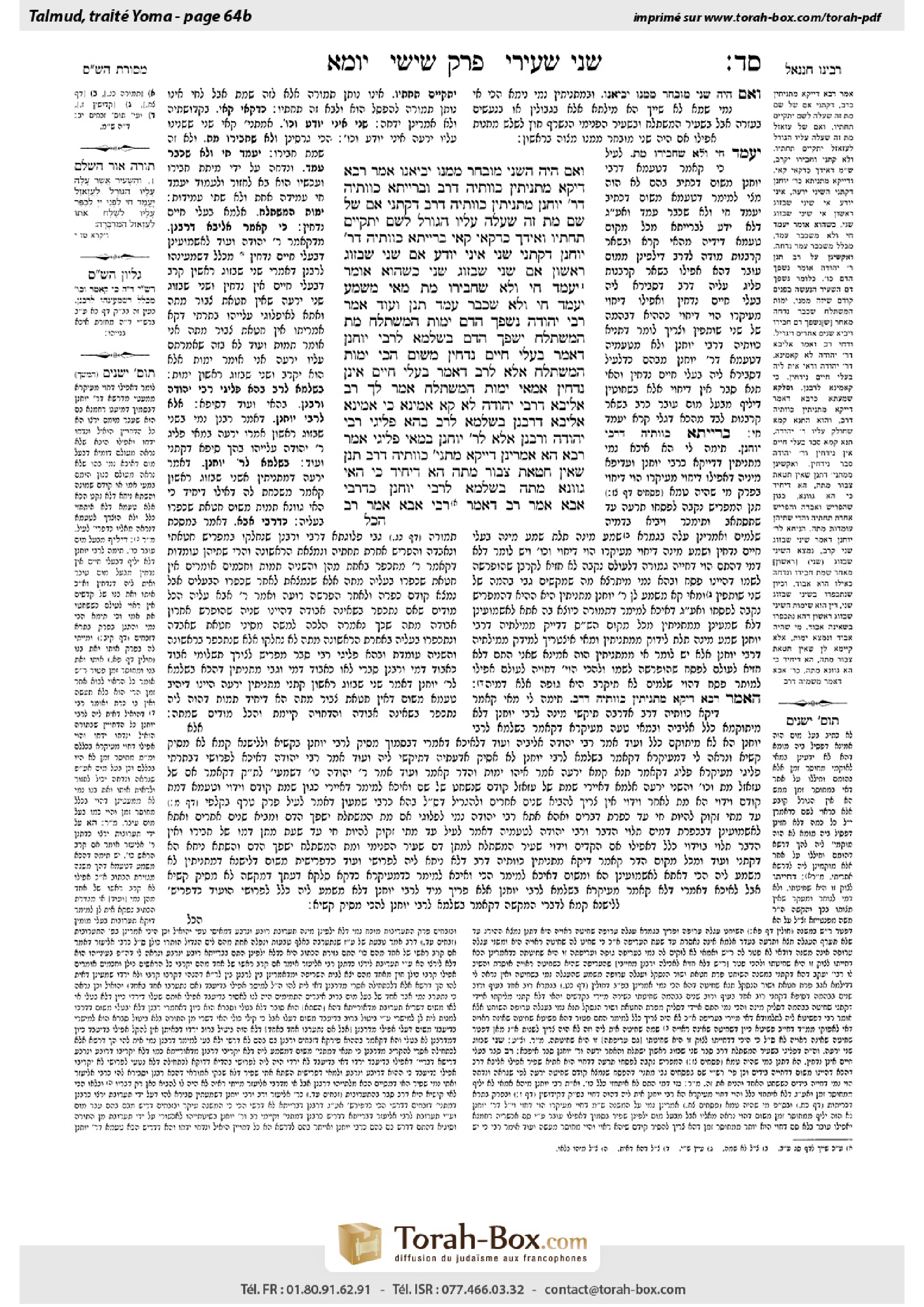
Yoma 64b: Talmud study for Daf Yomi
Daf Yomi is the daily study of one Talmud folio. Explore 37 tractates with scans, Hebrew text, Sefaria English and AI-generated French translations where annotated.
Passage selection and English or AI-generated French translation are available where the scan has annotations. Daf Study is independent of Torah-Box and Sefaria.
Browse Yoma · יומא · All tractatesYoma 64b text and translations
This page of Yoma includes the Aramaic text, an English translation and an AI-generated French translation, alongside the scan above.
יומא ס״ד ב · Aramaic and Hebrew text
וְאִם הָיָה הַשֵּׁנִי מוּבְחָר מִמֶּנּוּ — יְבִיאֶנּוּ.
אָמַר רָבָא: דַּיְקָא מַתְנִיתִין כְּווֹתֵיהּ דְּרַב, וּבָרַיְיתָא כְּווֹתֵיהּ דְּרַבִּי יוֹחָנָן. מַתְנִיתִין כְּווֹתֵיהּ דְּרַב, דְּקָתָנֵי: אִם שֶׁל שֵׁם מֵת — זֶה שֶׁעָלָה עָלָיו הַגּוֹרָל לַשֵּׁם יִתְקַיֵּים תַּחְתָּיו, וְאִידַּךְ כִּדְקָאֵי קָאֵי.
בָּרַיְיתָא כְּווֹתֵיהּ דְּרַבִּי יוֹחָנָן, דְּקָתָנֵי: ״שֵׁנִי״, אֵינִי יוֹדֵעַ אִם שֵׁנִי שֶׁבְּזוּג רִאשׁוֹן אִם שֵׁנִי שֶׁבְּזוּג שֵׁנִי, כְּשֶׁהוּא אוֹמֵר ״יׇעֳמַד חַי״, וְלֹא שֶׁחֲבֵירוֹ מֵת. מַאי מַשְׁמַע? ״יׇעֳמַד חַי״, וְלֹא שֶׁכְּבָר עָמַד.
תְּנַן, וְעוֹד אָמַר רַבִּי יְהוּדָה: נִשְׁפַּךְ הַדָּם — יָמוּת הַמִּשְׁתַּלֵּחַ, מֵת הַמִּשְׁתַּלֵּחַ — יִשָּׁפֵךְ הַדָּם. בִּשְׁלָמָא לְרַבִּי יוֹחָנָן, דְּאָמַר בַּעֲלֵי חַיִּים נִדְחִין — מִשּׁוּם הָכִי יָמוּת הַמִּשְׁתַּלֵּחַ. אֶלָּא לְרַב, דְּאָמַר בַּעֲלֵי חַיִּים אֵינָן נִדְחִין — אַמַּאי יָמוּת הַמִּשְׁתַּלֵּחַ?
אָמַר לְךָ רַב: אַלִּיבָּא דְּרַבִּי יְהוּדָה לָא קָא אָמֵינָא. כִּי אָמֵינָא, אַלִּיבָּא דְּרַבָּנַן.
בִּשְׁלָמָא לְרַב, בְּהָא פְּלִיגִי רַבִּי יְהוּדָה וְרַבָּנַן. אֶלָּא לְרַבִּי יוֹחָנָן, בְּמַאי פְּלִיגִי? אָמַר רָבָא: הָא אָמְרִינַן דַּיְיקָא מַתְנִיתִין כְּווֹתֵיהּ דְּרַב.
תְּנַן: שֶׁאֵין חַטַּאת צִבּוּר מֵתָה. הָא דְּיָחִיד כִּי הַאי גַוְונָא — מֵתָה. בִּשְׁלָמָא לְרַבִּי יוֹחָנָן, כִּדְרַבִּי אַבָּא אָמַר רַב. דְּאָמַר רַבִּי אַבָּא אָמַר רַב:
Yoma 64b · English translation
And if the second one was superior to it, he brings that one. This demonstrates that according to Rabbi Yosei, when the two animals become fit for sacrifice at the same time, preference should be given to the first one unless the second one is superior.
Rava said: The language of the mishna is precise in accordance with the opinion of Rav, and the language of the baraita is precise in accordance with the opinion of Rabbi Yoḥanan. The Gemara explains: The language of the mishna is precise in accordance with the opinion of Rav, as it teaches: If the one to be sacrificed to God died, that goat upon which the lot for God was drawn shall stand in its stead. And the other goat stands as it stood before, i.e., its status does not change, in accordance with the opinion of Rav.
The language of the baraita is precise in accordance with the opinion of Rabbi Yoḥanan, as it teaches: When the mishna says that the second goat is left to graze, I do not know whether it is referring to the second goat of the first pair, or the second goat of the second pair. When the verse states: “It shall be stood alive before the Lord, to make atonement over him, to send him away to Azazel into the wilderness” (Leviticus 16:10), it is not referring to the goat whose counterpart died. The Gemara asks: From where may it be inferred, i.e., how does the verse indicate this point? The Gemara answers that it states: “It shall be stood alive,” in the future tense, indicating that it is not referring to the one that already stood with its counterpart that died.
We learned in the mishna: And furthermore, Rabbi Yehuda said: If the blood of the goat sacrificed to God spilled before it was sprinkled, the scapegoat is left to die. Similarly, if the scapegoat dies, the blood of the goat sacrificed to God should be spilled, and two other goats are brought and lots are drawn. Granted, according to Rabbi Yoḥanan, who said that animals that become disqualified are permanently rejected, even after the source of their initial disqualification is no longer present, due to that reason the scapegoat is left to die. However, according to Rav, who said that animals are not permanently rejected, why is the scapegoat left to die?
Rav could have said to you: I did not state my opinion in accordance with the opinion of Rabbi Yehuda. I stated my opinion in accordance with the opinion of the Rabbis. Rabbi Yehuda holds that disqualified animals are permanently rejected and communal sin-offerings may be left to die. The Rabbis disagree with both issues and hold that disqualified animals are not permanently disqualified, and communal sin-offerings that are disqualified are not left to die, but rather graze until they develop a blemish, and then are sold. Rav, who holds that the remaining goat from the first pair is sacrificed, states his opinion in accordance with the opinion of the Rabbis, i.e., that disqualified animals are not permanently rejected.
The Gemara comments: Granted, according to the opinion of Rav, Rabbi Yehuda and the Rabbis disagree with regard to whether disqualified animals are permanently rejected. However, according to the opinion of Rabbi Yoḥanan, who holds that even according to the Rabbis the remaining goat of the first pair is left to graze, with regard to what principle do Rabbi Yehuda and the Rabbis disagree? Rava said: Didn’t we say that the language of the mishna is precise in accordance with the opinion of Rav, and it is difficult to explain the mishna’s language in accordance with the opinion of Rabbi Yoḥanan?
We learned in the mishna that a communal sin-offering is not left to die. This indicates that the sin-offering of an individual in a case like this is left to die. Granted, according to the opinion of Rabbi Yoḥanan, who holds that the remaining goat from the first pair is left to graze until it develops a blemish, it can be explained that the sin-offering of an individual in a comparable case is killed, in accordance with the opinion that Rabbi Abba said that Rav said. As Rabbi Abba said that Rav said:
Yoma 64b · Traduction française (IA)
Et si la seconde était supérieure à la première, il apporte celle-là. Cela montre que, selon Rabbi Yossé, lorsque les deux animaux deviennent aptes au sacrifice en même temps, il faut préférer le premier, à moins que le second ne soit supérieur.
Rava a dit : La formulation de la Michna est précise selon l’opinion de Rav, et celle de la baraïta est précise selon l’opinion de Rabbi Yoḥanan. La Guemara explique : la formulation de la Michna est précise selon l’opinion de Rav, puisqu’elle enseigne : « Si celui qui devait être offert à Dieu est mort, le bouc sur lequel le sort “pour Dieu” est tombé prendra sa place. » Et l’autre bouc reste dans son état antérieur, c’est-à-dire que son statut ne change pas, conformément à l’opinion de Rav.
La formulation de la baraïta est précise selon l’opinion de Rabbi Yoḥanan, puisqu’elle enseigne : lorsque la Michna dit que le second bouc est laissé au pâturage, je ne sais pas si elle parle du second bouc de la première paire ou du second bouc de la deuxième paire. Lorsque le verset dit : « Il sera maintenu vivant devant l’Éternel, afin de faire expiation sur lui et de l’envoyer à Azazel, dans le désert » (Lévitique 16, 10), il ne parle pas du bouc dont le partenaire est mort. La Guemara demande : Comment peut-on le déduire, c’est-à-dire comment le verset indique-t-il ce point ? La Guemara répond que le verset dit : « Il sera maintenu vivant », au futur, ce qui indique qu’il ne s’agit pas de celui qui avait déjà été maintenu vivant avec son partenaire, qui est mort.
Nous avons appris dans la Michna : « Et de plus, Rabbi Yehouda a dit : si le sang du bouc offert à Dieu s’est répandu avant d’avoir été aspergé, le bouc émissaire est laissé pour mourir. De même, si le bouc émissaire meurt, le sang du bouc offert à Dieu doit être répandu, et deux autres boucs sont apportés et tirés au sort. » Certes, selon Rabbi Yoḥanan, qui dit que les animaux devenus impropres sont définitivement rejetés, même lorsque la cause de leur disqualification initiale a disparu, c’est pour cette raison que le bouc émissaire est laissé pour mourir. Mais selon Rav, qui dit que les animaux ne sont pas définitivement rejetés, pourquoi le bouc émissaire est-il laissé pour mourir ?
Rav aurait pu te répondre : « Je n’ai pas formulé mon opinion conformément à celle de Rabbi Yehouda. Je l’ai formulée conformément à celle des Sages. » Rabbi Yehouda estime que les animaux disqualifiés sont définitivement rejetés et que les sacrifices expiatoires communautaires peuvent être laissés pour mourir. Les Sages sont en désaccord sur ces deux points : ils estiment que les animaux disqualifiés ne sont pas définitivement rejetés et que les sacrifices expiatoires communautaires disqualifiés ne sont pas laissés pour mourir, mais qu’ils paissent jusqu’à ce qu’ils développent un défaut, puis sont vendus. Rav, qui estime que le bouc restant de la première paire est sacrifié, exprime son opinion conformément à celle des Sages, c’est-à-dire que les animaux disqualifiés ne sont pas définitivement rejetés.
La Guemara fait remarquer : certes, selon Rav, Rabbi Yehouda et les Sages sont en désaccord sur la question de savoir si les animaux disqualifiés sont définitivement rejetés. Mais selon Rabbi Yoḥanan, qui estime que même d’après les Sages le bouc restant de la première paire est laissé au pâturage, sur quel principe Rabbi Yehouda et les Sages sont-ils en désaccord ? Rava a dit : N’avons-nous pas dit que la formulation de la Michna est précise selon l’opinion de Rav et qu’il est difficile d’expliquer la formulation de la Michna selon l’opinion de Rabbi Yoḥanan ?
Nous avons appris dans la Michna qu’un sacrifice expiatoire communautaire n’est pas laissé pour mourir. Cela indique que, dans un cas comparable, le sacrifice expiatoire d’un particulier est laissé pour mourir. Certes, selon Rabbi Yoḥanan, qui estime que le bouc restant de la première paire est laissé au pâturage jusqu’à ce qu’il développe un défaut, on peut expliquer que, dans un cas comparable, le sacrifice expiatoire d’un particulier est mis à mort, conformément à l’opinion rapportée par Rabbi Abba au nom de Rav. Car Rabbi Abba a rapporté au nom de Rav :
Traduction française générée par IA à partir de l’édition anglaise de Sefaria. Vérifie toujours un passage avec le texte source.
Text from Sefaria: William Davidson Edition - Vocalized Aramaic (CC BY NC); William Davidson Edition - English (CC BY NC).