Yoma 65b: Talmud study for Daf Yomi
Daf Yomi is the daily study of one Talmud folio. Explore 37 tractates with scans, Hebrew text, Sefaria English and AI-generated French translations where annotated.
Passage selection and English or AI-generated French translation are available where the scan has annotations. Daf Study is independent of Torah-Box and Sefaria.
Browse Yoma · יומא · All tractatesYoma 65b text and translations
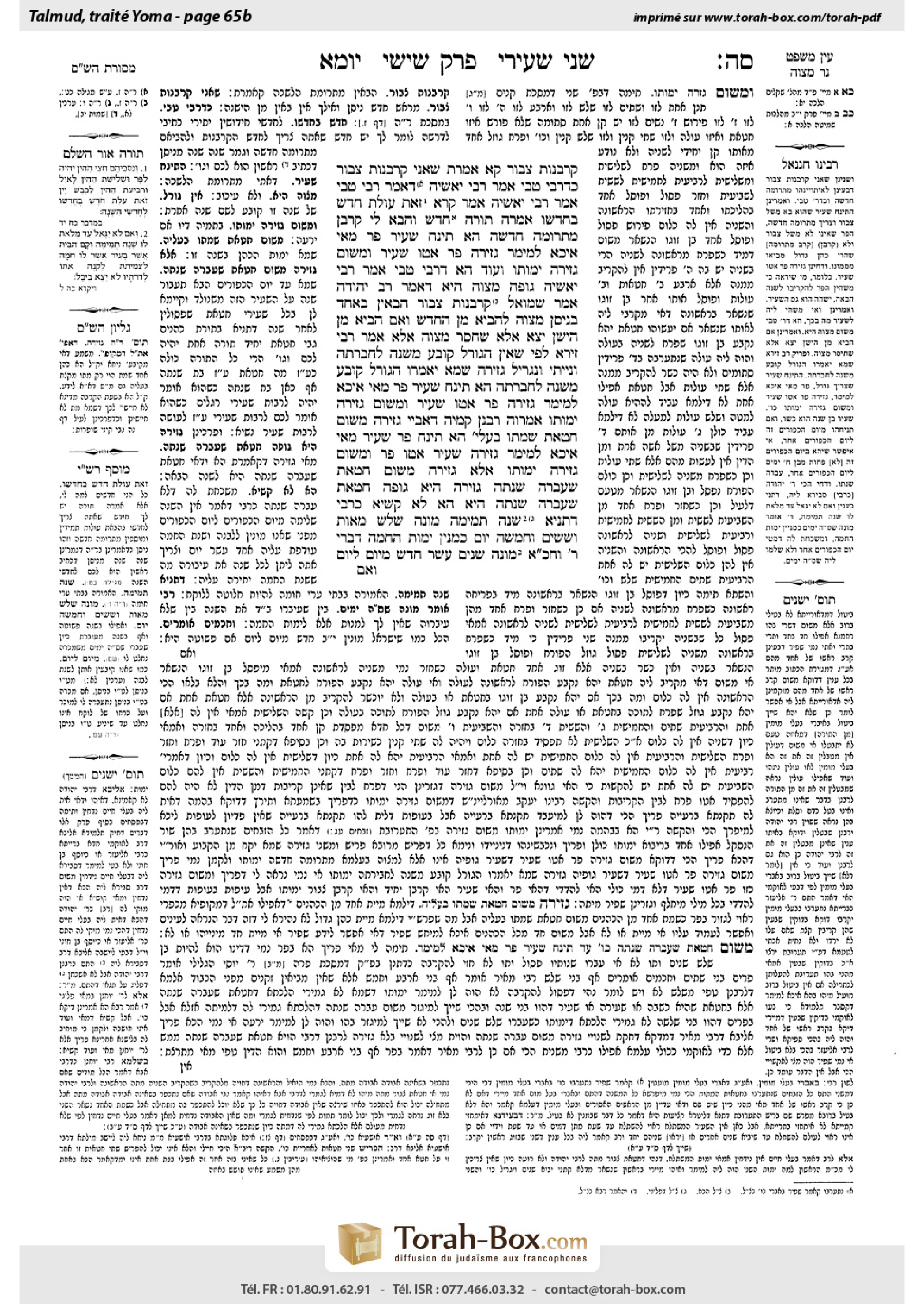
This page of Yoma includes the Aramaic text, an English translation and an AI-generated French translation, alongside the scan above.
יומא ס״ה ב · Aramaic and Hebrew text
קׇרְבְּנוֹת צִבּוּר קָא אָמְרַתְּ? שָׁאנֵי קׇרְבְּנוֹת צִבּוּר, כִּדְרַבִּי טָבִי אָמַר רַבִּי יֹאשִׁיָּה. דְּאָמַר רַבִּי טָבִי אָמַר רַבִּי יֹאשִׁיָּה: אָמַר קְרָא: ״זֹאת עוֹלַת חֹדֶשׁ בְּחׇדְשׁוֹ״, אָמְרָה תּוֹרָה: חַדֵּשׁ וְהָבֵא לִי קׇרְבָּן מִתְּרוּמָה חֲדָשָׁה.
תִּינַח שָׂעִיר, פַּר מַאי אִיכָּא לְמֵימַר? גְּזֵירָה פַּר אַטּוּ שָׂעִיר.
וּמִשּׁוּם גְּזֵירָה יָמוּתוּ? וְעוֹד: הָא דְּרַבִּי טָבִי אָמַר רַבִּי יֹאשִׁיָּה גּוּפַהּ מִצְוָה הִיא. דְּאָמַר רַב יְהוּדָה אָמַר שְׁמוּאֵל: קׇרְבְּנוֹת צִבּוּר הַבָּאִין בְּאֶחָד בְּנִיסָן — מִצְוָה לְהָבִיא מִן הֶחָדָשׁ, וְאִם הֵבִיא מִן הַיָּשָׁן — יָצָא, אֶלָּא שֶׁחִסֵּר מִצְוָה!
אֶלָּא אָמַר רַבִּי זֵירָא: לְפִי שֶׁאֵין הַגּוֹרָל קוֹבֵעַ מִשָּׁנָה לַחֲבֶרְתָּהּ. וְנַיְיתֵי וְנַגְרֵיל? גְּזֵירָה שֶׁמָּא יֹאמְרוּ הַגּוֹרָל קוֹבֵעַ מִשָּׁנָה לַחֲבֶרְתָּהּ.
הָא תִּינַח שָׂעִיר, פַּר מַאי אִיכָּא לְמֵימַר? גְּזֵירָה פַּר אַטּוּ שָׂעִיר. וּמִשּׁוּם גְּזֵירָה יָמוּתוּ?
אַמְרוּהָ רַבָּנַן קַמֵּיהּ דְּאַבָּיֵי: גְּזֵירָה מִשּׁוּם חַטָּאת שֶׁמֵּתוּ בְּעָלֶיהָ. הָא תִּינַח פַּר, שָׂעִיר מַאי אִיכָּא לְמֵימַר? גְּזֵירָה שָׂעִיר אַטּוּ פַּר.
וּמִשּׁוּם גְּזֵירָה יָמוּתוּ? אֶלָּא: גְּזֵירָה מִשּׁוּם חַטָּאת שֶׁעִבְּרָה שְׁנָתָהּ. גְּזֵירָה? הִיא גּוּפַהּ חַטָּאת שֶׁעִבְּרָה שְׁנָתָהּ הִיא!
הָא לָא קַשְׁיָא, כְּרַבִּי. דְּתַנְיָא: ״שָׁנָה תְּמִימָה״, מוֹנֶה שְׁלֹשׁ מֵאוֹת וְשִׁשִּׁים וַחֲמִשָּׁה יוֹם כְּמִנְיָן יְמוֹת הַחַמָּה, דִּבְרֵי רַבִּי. וַחֲכָמִים אוֹמְרִים: מוֹנֶה שְׁנֵים עָשָׂר חֹדֶשׁ מִיּוֹם לְיוֹם.
Yoma 65b · English translation
You speak of communal offerings? Communal offerings are different, in accordance with what Rabbi Tavi said in the name of Rabbi Yoshiya. As Rabbi Tavi said that Rabbi Yoshiya said that the verse states: “This is the burnt-offering for every New Moon upon its renewal throughout the months of the year” (Numbers 28:14). The Torah said: Renew and bring Me an offering from the new contribution. This indicates that communal offerings must be brought from the donations of the current year and not from the donations of the previous year.
The Gemara challenges this solution: This works out well with regard to the Yom Kippur goat, which is a communal offering and is purchased with money from the Temple treasury. However, with regard to the High Priest’s bull which he pays for himself and which is considered an individual offering, what is there to say? The Gemara answers: There is a rabbinic decree with regard to the bull due to the goat.
The Gemara expresses surprise: Is it right that due to a rabbinic decree the offerings should be left to die instead of being left to graze? And furthermore, this statement that Rabbi Tavi said in the name of Rabbi Yoshiya is itself a mitzva ab initio, but is not indispensable. As Rav Yehuda said that Shmuel said: With regard to communal offerings that are brought on the first of Nisan, it is a mitzva to bring them from the new year’s shekel contributions. However, if he brought them from the old shekels that were donated during the previous year he has fulfilled his obligation, but he lacked the mitzva, i.e., he did not perform the procedure in the proper manner. It is difficult to argue that due to this inessential detail the Sages would issue a decree that the High Priest’s bull should be left to die.
Rather, Rabbi Zeira said that the reason the bull and goat of Yom Kippur are left to die is because the lottery does not establish designations from one year to another. Therefore, a goat designated by the lottery one year is not eligible for use the next year. The Gemara challenges this explanation: But let us bring this goat and another one and draw lots again. The Gemara responds: It is a rabbinic decree that was enacted lest people say that the lottery establishes designations from one year to another.
The Gemara challenges: This works out well with regard to the goat, but with respect to the bull of the High Priest, which is not chosen by lottery, what is there to say? The Gemara answers: There is a rabbinic decree with regard to the bull due to the goat. The Gemara challenges further: Is it right that due to a rabbinic decree the offerings should be left to die instead of being left to graze? Therefore, this answer should be rejected.
The Rabbis stated another solution before Abaye: It is a rabbinic decree, due to a concern that the bull will become a sin-offering whose owners have died, since the High Priest might die during the year. The Gemara responds: This works out well with regard to the bull, but as for the goat, which is a communal offering, what is there to say? The Gemara answers: There is a rabbinic decree with regard to the goat due to the bull.
The Gemara asks: Is it right that due to a rabbinic decree the offerings should be left to die instead of being left to graze? Rather, it is a rabbinic decree due to a concern that the goat will become a sin-offering whose year has passed. A goat may not be brought as a sin-offering once it is more than a year old, and there is a concern that the goat will be too old by the Yom Kippur of the following year. The Gemara expresses surprise: Is this a rabbinic decree? It is certainly a sin-offering whose year has passed, as the goat will certainly be more than a year old by the following Yom Kippur.
The Gemara responds: This is not difficult, as it is possible that the goat will not be disqualified, in accordance with the opinion of Rabbi Yehuda HaNasi. As it was taught in a baraita: With regard to redeeming houses in a walled city the Torah states: “And if it not be redeemed within the space of a full year” (Leviticus 25:30), which indicates that he counts 365 days, in accordance with the number of days in a solar year; this is the statement of Rabbi Yehuda HaNasi. And the Rabbis say: He counts twelve months from day to day. Therefore, according to the opinion of Rabbi Yehuda HaNasi, if the goat was less than eleven days old on the first Yom Kippur, it will not be disqualified on the following Yom Kippur because it will still be less than 365 days old, as long as the first year was not a leap year. Nevertheless, it is disqualified by rabbinic decree due to a concern that other goats would be used in similar circumstances even if they were more than a year old.
Yoma 65b · Traduction française (IA)
Tu parles des sacrifices communautaires ? Ceux-ci font exception, conformément à ce que Rabbi Tavi a dit au nom de Rabbi Yoshiya. Rabbi Tavi a en effet rapporté que Rabbi Yoshiya avait dit que le verset énonce : « Tel est l’holocauste de chaque nouvelle lune, à son renouvellement, au cours des mois de l’année » (Nombres 28:14). La Torah dit : « Renouvelez et apportez-Moi une offrande provenant de la nouvelle contribution. » Cela indique que les sacrifices communautaires doivent être offerts avec les contributions de l’année en cours, et non avec celles de l’année précédente.
La Guemara objecte à cette réponse : cela convient pour le bouc de Yom Kippour, qui est un sacrifice communautaire acheté avec l’argent du trésor du Temple. Mais que peut-on dire du taureau du grand prêtre, qu’il paie lui-même et qui est considéré comme un sacrifice individuel ? La Guemara répond : un décret rabbinique a été institué au sujet du taureau en raison du bouc.
La Guemara s’étonne : Est-il logique qu’en raison d’un décret rabbinique, les sacrifices soient laissés à mourir au lieu d’être laissés à paître ? De plus, la règle énoncée par Rabbi Tavi au nom de Rabbi Yoshiya ne concerne qu’une mitsva a priori ; elle n’est pas indispensable. En effet, Rav Yehuda a dit au nom de Shmuel : pour les sacrifices communautaires offerts le premier Nissan, c’est une mitsva de les offrir avec les contributions en sicles de la nouvelle année. Toutefois, s’il les a offerts avec les anciens sicles, donnés au cours de l’année précédente, il s’est acquitté de son obligation, mais n’a pas accompli la mitsva, c’est-à-dire qu’il n’a pas procédé comme il convenait. Il est difficile de soutenir que les Sages auraient décrété, en raison de ce détail non indispensable, que le taureau du grand prêtre soit laissé à mourir.
Rabbi Zeira a plutôt dit que le taureau et le bouc de Yom Kippour sont laissés à mourir parce que le tirage au sort ne détermine pas l’affectation d’une année à l’autre. Par conséquent, un bouc désigné par tirage au sort une année ne peut pas être utilisé l’année suivante. La Guemara objecte : Pourquoi ne pas apporter ce bouc ainsi qu’un autre, puis procéder de nouveau au tirage au sort ? La Guemara répond : un décret rabbinique a été institué, de crainte que les gens ne disent que le tirage au sort détermine l’affectation d’une année à l’autre.
La Guemara objecte : cela convient pour le bouc, mais que peut-on dire du taureau du grand prêtre, qui n’est pas choisi par tirage au sort ? La Guemara répond : un décret rabbinique a été institué au sujet du taureau en raison du bouc. La Guemara objecte encore : Est-il logique qu’en raison d’un décret rabbinique, les sacrifices soient laissés à mourir au lieu d’être laissés à paître ? Il faut donc rejeter cette réponse.
Les Sages ont proposé une autre réponse à Abaye : un décret rabbinique a été institué par crainte que le taureau ne devienne un sacrifice expiatoire dont les propriétaires sont morts, puisque le grand prêtre pourrait mourir au cours de l’année. La Guemara objecte : cela convient pour le taureau, mais que peut-on dire du bouc, qui est un sacrifice communautaire ? La Guemara répond : un décret rabbinique a été institué au sujet du bouc en raison du taureau.
La Guemara demande : Est-il logique qu’en raison d’un décret rabbinique, les sacrifices soient laissés à mourir au lieu d’être laissés à paître ? Il s’agit plutôt d’un décret rabbinique institué par crainte que le bouc ne devienne un sacrifice expiatoire dont l’année de validité est écoulée. Un bouc ne peut pas être offert comme sacrifice expiatoire lorsqu’il a plus d’un an, et l’on craint qu’il soit trop âgé à Yom Kippour l’année suivante. La Guemara s’étonne : S’agit-il vraiment d’un décret rabbinique ? Il s’agit nécessairement d’un sacrifice expiatoire dont l’année de validité est écoulée, puisque le bouc aura assurément plus d’un an à Yom Kippour l’année suivante.
La Guemara répond : il n’y a pas de difficulté, car il est possible que le bouc ne soit pas disqualifié, conformément à l’opinion de Rabbi Yehuda HaNassi. En effet, il a été enseigné dans une baraïta : au sujet du rachat des maisons situées dans une ville fortifiée, la Torah dit : « Et s’il ne la rachète pas dans l’espace d’une année entière » (Lévitique 25:30), ce qui indique qu’on compte 365 jours, soit le nombre de jours d’une année solaire ; telle est l’opinion de Rabbi Yehuda HaNassi. Les Rabbins disent : on compte douze mois de date à date. Par conséquent, selon l’opinion de Rabbi Yehuda HaNassi, si le bouc avait moins de onze jours lors du premier Yom Kippour, il ne sera pas disqualifié au Yom Kippour suivant, car il aura encore moins de 365 jours, à condition que la première année n’ait pas été bissextile. Néanmoins, il est disqualifié par décret rabbinique, par crainte que d’autres boucs ne soient utilisés dans des circonstances similaires alors qu’ils auraient plus d’un an.
Traduction française générée par IA à partir de l’édition anglaise de Sefaria. Vérifie toujours un passage avec le texte source.
Text from Sefaria: William Davidson Edition - Vocalized Aramaic (CC BY NC); William Davidson Edition - English (CC BY NC).