Yoma 68a: Talmud study for Daf Yomi
Daf Yomi is the daily study of one Talmud folio. Explore 37 tractates with scans, Hebrew text, Sefaria English and AI-generated French translations where annotated.
Passage selection and English or AI-generated French translation are available where the scan has annotations. Daf Study is independent of Torah-Box and Sefaria.
Browse Yoma · יומא · All tractatesYoma 68a text and translations
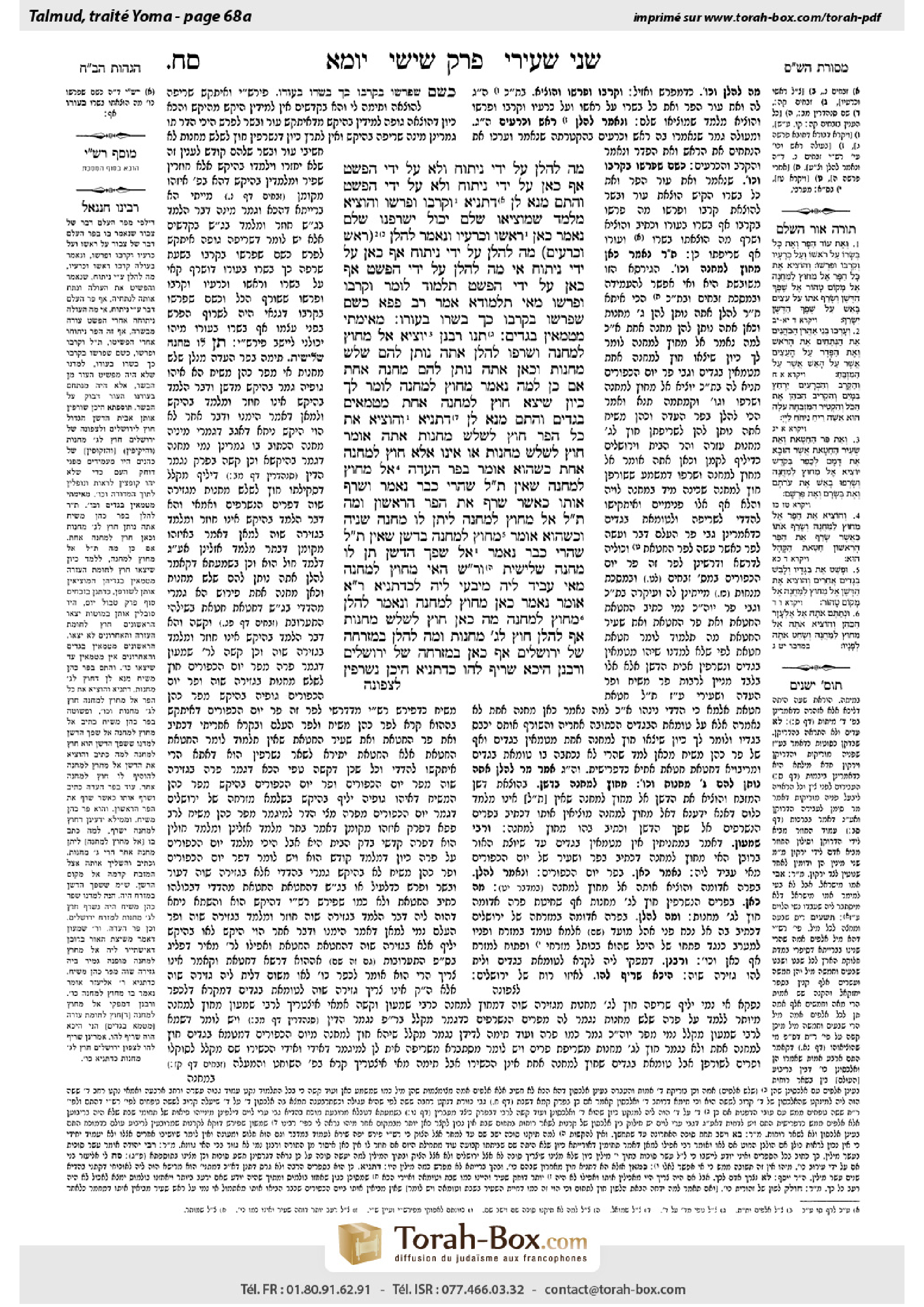
This page of Yoma includes the Aramaic text, an English translation and an AI-generated French translation, alongside the scan above.
יומא ס״ח א · Aramaic and Hebrew text
מָה לְהַלָּן, עַל יְדֵי נִיתּוּחַ וְלֹא עַל יְדֵי הֶפְשֵׁט, אַף כָּאן, עַל יְדֵי נִיתּוּחַ וְלֹא עַל יְדֵי הֶפְשֵׁט.
וְהָתָם מְנָא לַן? דְּתַנְיָא: ״וְקִרְבּוֹ וּפִרְשׁוֹ וְהוֹצִיא״ — מְלַמֵּד שֶׁמּוֹצִיאוֹ שָׁלֵם. יָכוֹל יִשְׂרְפֶנּוּ שָׁלֵם? נֶאֱמַר כָּאן: ״רֹאשׁוֹ וּכְרָעָיו״, וְנֶאֱמַר לְהַלָּן: (״רֹאשׁ וּכְרָעַיִם״), מָה לְהַלָּן עַל יְדֵי נִיתּוּחַ, אַף כָּאן עַל יְדֵי נִיתּוּחַ.
אִי מָה לְהַלָּן עַל יְדֵי הֶפְשֵׁט, אַף כָּאן עַל יְדֵי הֶפְשֵׁט, תַּלְמוּד לוֹמַר: ״וְקִרְבּוֹ וּפִרְשׁוֹ״. מַאי תַּלְמוּדָא? אָמַר רַב פָּפָּא: כְּשֵׁם שֶׁפִּרְשׁוֹ בְּקִרְבּוֹ, כָּךְ בְּשָׂרוֹ בְּעוֹרוֹ.
מֵאֵימָתַי מְטַמְּאִין בְּגָדִים. תָּנוּ רַבָּנַן: ״יוֹצִיא אֶל מִחוּץ לַמַּחֲנֶה וְשָׂרְפוּ״.
לְהַלָּן אַתָּה נוֹתֵן לָהֶם שָׁלֹשׁ מַחֲנוֹת, וְכָאן אַתָּה נוֹתֵן לָהֶם מַחֲנֶה אַחַת? אִם כֵּן לָמָּה נֶאֱמַר ״מִחוּץ לַמַּחֲנֶה״, לוֹמַר לָךְ: כֵּיוָן שֶׁיָּצָא חוּץ לְמַחֲנֶה אַחַת — מְטַמְּאִים בְּגָדִים.
וְהָתָם מְנָא לַן? דְּתַנְיָא: ״וְהוֹצִיא אֶת כׇּל הַפָּר״ — חוּץ לְשָׁלֹשׁ מַחֲנוֹת.
אַתָּה אוֹמֵר חוּץ לְשָׁלֹשׁ מַחֲנוֹת, אוֹ אֵינוֹ אֶלָּא חוּץ לְמַחֲנֶה אַחַת? כְּשֶׁהוּא אוֹמֵר בְּפַר הָעֵדָה ״אֶל מִחוּץ לַמַּחֲנֶה״, שֶׁאֵין תַּלְמוּד לוֹמַר, שֶׁהֲרֵי כְּבָר נֶאֱמַר ״וְשָׂרַף אוֹתוֹ כַּאֲשֶׁר שָׂרַף אֵת הַפָּר הָרִאשׁוֹן״, וּמָה תַּלְמוּד לוֹמַר ״אֶל מִחוּץ לַמַּחֲנֶה״ — לִיתֵּן לוֹ מַחֲנֶה שְׁנִיָּה.
וּכְשֶׁהוּא אוֹמֵר ״מִחוּץ לַמַּחֲנֶה״ בַּדֶּשֶׁן, שֶׁאֵין תַּלְמוּד לוֹמַר, שֶׁהֲרֵי כְּבָר נֶאֱמַר: ״אֶל שֶׁפֶךְ הַדֶּשֶׁן״, תֵּן לוֹ מַחֲנֶה שְׁלִישִׁית.
וְרַבִּי שִׁמְעוֹן, הַאי ״מִחוּץ לַמַּחֲנֶה״ מַאי עָבֵיד לֵיהּ? מִיבְּעֵי לֵיהּ לְכִדְתַנְיָא: רַבִּי אֱלִיעֶזֶר אוֹמֵר: נֶאֱמַר כָּאן ״מִחוּץ לַמַּחֲנֶה״ וְנֶאֱמַר לְהַלָּן ״מִחוּץ לַמַּחֲנֶה״, מָה כָּאן חוּץ לְשָׁלֹשׁ מַחֲנוֹת, אַף לְהַלָּן חוּץ לְשָׁלֹשׁ מַחֲנוֹת. וּמָה לְהַלָּן בְּמִזְרָחָהּ שֶׁל יְרוּשָׁלַיִם — אַף כָּאן בְּמִזְרָחָהּ שֶׁל יְרוּשָׁלַיִם.
וְרַבָּנַן, הֵיכָא שָׂרֵיף לְהוּ? כִּדְתַנְיָא: הֵיכָן נִשְׂרָפִין?
Yoma 68a · English translation
Just as below it is prepared for burning by means of dissection and not by means of skinning, so too here it is by means of dissection and not by means of skinning.
The Gemara asks: And there, with regard to bull sin-offerings that are burned, from where do we derive that they are cut but not skinned? The Gemara answers: As it was taught in a baraita: “And the skin of the bull and all its flesh, with its head and with its legs, and its innards, and its dung, even the whole bull shall he carry outside the camp to a clean place, where the ashes are poured out, and burn it on wood with fire” (Leviticus 4:11–12). This teaches that he brings it out whole. One might have thought that he should burn it whole. It is stated here: Its head and its legs, and it is stated there, with regard to burnt-offerings, head and legs. Just as there, the burnt-offering is performed by means of dissection, as explicitly stated in the verse, so too here it is by means of dissection.
The Gemara asks: If so, derive the following from the same verbal analogy: Just as there, in the case of burnt-offerings, the dissection is performed with skinning, so too here it is with skinning, and he must remove the skin of the animals before burning them. The Gemara answers: Therefore, the verse states “and its innards, and its dung.” The Gemara asks: What is the derivation from this phrase? Rav Pappa said: Just as its dung is within its innards and they do not remove it, so too, its flesh is in its skin and they do not separate the skin from the flesh.
§ It was taught in the mishna that the tanna’im disagree about the question of at what point the bull and goat render the garments of those who carried them impure. The Sages taught a baraita based on the verse: “The bull of the sin-offering and the goat of the sin-offering whose blood was brought in to gain atonement in the sacred place, shall be taken outside the camp and they shall burn” (Leviticus 16:27).
One might wonder: Below, with regard to other bull sin-offerings that are burned, you give them three camps, meaning that the bulls are burned outside the Israelite camp or, in the time of the Temple, outside Jerusalem. And here you give them only one camp, as they are burned as soon as they are taken out of the Temple courtyard, which is considered the camp of the Divine Presence. This seems unreasonable and is not to be accepted. If so, why is it stated: “Outside the camp”? The intention is not that they leave only one camp, but rather, to say to you: Once it has left one camp it immediately renders the garments of those carrying it impure.
The Gemara asks: And there, with regard to other bull sin-offerings that are burned, from where do we derive that they are removed from all three camps? The Gemara explains: As it was taught in a baraita: It is stated about the bull sin-offering of the High Priest: “Even the whole bull shall he carry outside the camp…and burn it” (Leviticus 4:12), meaning that he should take it outside of three camps.
Do you say that he takes it outside of three camps, or is he required to take it outside of only one camp? When it says with regard to the bull sin-offering brought for the sin of the community: “He shall carry the bull outside the camp” (Leviticus 4:21), that verse requires explanation, as there is no need for the verse to state this, since it was already stated: “And burn it as he burned the first bull” (Leviticus 4:21), which indicates that all the halakhot of the bull sin-offering of a High Priest apply to the bull sin-offering of the community as well. And what is the meaning when the verse states outside the camp? To give it a second camp, i.e., to indicate that it must be removed from the Levite camp in addition to the camp of the Divine Presence.
And when it says: “Outside the camp” (Leviticus 6:4) with regard to removal of the ash, that verse also requires explanation, as there is no need for the verse to state this, since it was already stated with regard to the bull sin-offering of a High Priest: “Even the whole bull shall he carry outside the camp to a clean place, where the ashes are poured out, and burn it on wood with fire; where the ashes are poured out shall it be burned” (Leviticus 4:12). Rather the repetition of the words: Outside the camp, indicates that he should give it a third camp, so that it is burned outside of the Israelite camp as well. Consequently, it has been derived that inner sin-offerings are burned outside of the three camps, and when the Torah states: Outside the camp, with regard to the bull and goat of Yom Kippur, it teaches that as soon as they are taken outside the Temple courtyard, the garments of those carrying them are rendered impure.
The Gemara asks: And what does Rabbi Shimon do with the phrase outside the camp, as he holds that those carrying the bull and goat are rendered impure only once they leave all three camps? The Gemara answers: He needs it for that which was taught in a baraita, that Rabbi Eliezer says: It is stated here, with regard to the bull of Yom Kippur, outside the camp, and it is stated there, with regard to the red heifer, “outside the camp” (Numbers 19:3). Just as here, it is burned outside three camps, so too there the heifer, it is burned outside three camps. And just as there it is burned east of Jerusalem, since the heifer must be burned “toward the front of the Tent of Meeting” (Numbers 19:4), opposite the entrance to the Temple to its east, so too here the bull and goat of Yom Kippur are burned east of Jerusalem.
The Gemara asks: And according to the Rabbis, where do they burn them? The Gemara answers: As it was taught in a baraita: Where are they burned?
Yoma 68a · Traduction française (IA)
De même que, dans le cas précédent, on le prépare à être brûlé en le découpant, et non en le dépouillant, de même ici, on le découpe sans le dépouiller.
La Guemara demande : Et là, concernant les sacrifices expiatoires de taureaux qui sont brûlés, d’où déduit-on qu’on les découpe sans les dépouiller ? La Guemara répond : Comme il a été enseigné dans une baraïta : « La peau du taureau, toute sa chair, sa tête et ses pattes, ses entrailles et ses excréments, bref, tout le taureau, il l’emportera hors du camp, en un lieu pur, où l’on déverse les cendres, et il le brûlera sur du bois, au feu » (Lévitique 4, 11-12). Cela enseigne qu’il le sort entier. On aurait pu penser qu’il fallait le brûler entier. Il est dit ici : « sa tête et ses pattes », et il est dit là, à propos des holocaustes : « tête et pattes ». De même que là, l’holocauste est préparé par découpage, comme le verset le précise explicitement, de même ici, il est préparé par découpage.
La Guemara demande : Si tel est le cas, déduis de cette même analogie verbale que, de même que là, dans le cas des holocaustes, on découpe en dépouillant, de même ici, on dépouille aussi et il faut retirer la peau des animaux avant de les brûler. La Guemara répond : C’est pourquoi le verset dit : « ses entrailles et ses excréments ». La Guemara demande : Que déduit-on de cette expression ? Rav Pappa dit : De même que les excréments se trouvent dans ses entrailles et qu’on ne les en retire pas, de même sa chair se trouve sous sa peau et on ne sépare pas la peau de la chair.
§ La Michna enseigne que les tannaïm sont en désaccord sur le moment où le taureau et le bouc rendent impurs les vêtements de ceux qui les transportent. Les Sages enseignèrent une baraïta à partir du verset : « Le taureau du sacrifice expiatoire et le bouc du sacrifice expiatoire, dont le sang a été introduit pour faire l’expiation dans le lieu saint, seront emportés hors du camp et on les brûlera » (Lévitique 16, 27).
On pourrait s’interroger : Dans le cas précédent, concernant les autres sacrifices expiatoires de taureaux qui sont brûlés, vous leur attribuez trois camps, c’est-à-dire que les taureaux sont brûlés hors du camp d’Israël ou, à l’époque du Temple, hors de Jérusalem. Et ici, vous ne leur attribuez qu’un seul camp, puisqu’ils sont brûlés dès qu’on les emporte hors du parvis du Temple, lequel est considéré comme le camp de la Présence divine. Cela semble déraisonnable et ne peut être accepté. Si tel est le cas, pourquoi est-il dit : « hors du camp » ? Il ne s’agit pas de dire qu’ils ne quittent qu’un seul camp, mais de t’enseigner que, dès qu’ils ont quitté un camp, les vêtements de ceux qui les transportent deviennent immédiatement impurs.
La Guemara demande : Et là, concernant les autres sacrifices expiatoires de taureaux qui sont brûlés, d’où déduit-on qu’on les sort des trois camps ? La Guemara explique : Comme il a été enseigné dans une baraïta : À propos du sacrifice expiatoire du taureau du Grand Prêtre, il est dit : « Tout le taureau, il l’emportera hors du camp… et le brûlera » (Lévitique 4, 12), ce qui signifie qu’il doit l’emporter hors des trois camps.
Entends-tu qu’il l’emporte hors des trois camps, ou doit-il l’emporter hors d’un seul camp seulement ? Lorsqu’il est dit, à propos du sacrifice expiatoire du taureau offert pour le péché de la communauté : « Il emportera le taureau hors du camp » (Lévitique 4, 21), ce verset doit être expliqué, car il n’était pas nécessaire de le mentionner : il a déjà été dit « et il le brûlera comme il a brûlé le premier taureau » (Lévitique 4, 21), ce qui indique que toutes les halakhot du sacrifice expiatoire du taureau du Grand Prêtre s’appliquent également au sacrifice expiatoire du taureau de la communauté. Quel est donc le sens de la mention « hors du camp » ? Elle ajoute un deuxième camp, c’est-à-dire qu’elle indique qu’il faut le sortir du camp des Lévites, en plus du camp de la Présence divine.
Et lorsque le verset dit « hors du camp » (Lévitique 6, 4) à propos de l’enlèvement des cendres, ce verset doit lui aussi être expliqué, car il n’était pas nécessaire de le mentionner : il a déjà été dit, à propos du sacrifice expiatoire du taureau du Grand Prêtre : « Tout le taureau, il l’emportera hors du camp, en un lieu pur, où l’on déverse les cendres, et il le brûlera sur du bois, au feu ; là où l’on déverse les cendres, il sera brûlé » (Lévitique 4, 12). La répétition des mots « hors du camp » indique plutôt qu’il faut lui attribuer un troisième camp, afin qu’il soit également brûlé hors du camp d’Israël. On a donc déduit que les sacrifices expiatoires intérieurs sont brûlés hors des trois camps et que, lorsque la Torah dit « hors du camp » à propos du taureau et du bouc de Yom Kippour, elle enseigne que, dès qu’on les emporte hors du parvis du Temple, les vêtements de ceux qui les transportent deviennent impurs.
La Guemara demande : Et que fait Rabbi Shimon de l’expression « hors du camp », puisqu’il estime que ceux qui transportent le taureau et le bouc ne deviennent impurs qu’après avoir quitté les trois camps ? La Guemara répond : Il en a besoin pour l’enseignement transmis dans une baraïta, où Rabbi Eliezer dit : Ici, à propos du taureau de Yom Kippour, il est dit « hors du camp », et là, à propos de la vache rousse, il est dit « hors du camp » (Nombres 19, 3). De même qu’ici, il est brûlé hors des trois camps, de même là, la vache est brûlée hors des trois camps. Et de même que là, elle est brûlée à l’est de Jérusalem, puisque la vache doit être brûlée « en direction de la façade de la Tente d’assignation » (Nombres 19, 4), face à l’entrée du Temple, à l’est, de même ici, le taureau et le bouc de Yom Kippour sont brûlés à l’est de Jérusalem.
La Guemara demande : Et selon les Rabbins, où les brûlent-ils ? La Guemara répond : Comme il a été enseigné dans une baraïta : Où les brûle-t-on ?
Traduction française générée par IA à partir de l’édition anglaise de Sefaria. Vérifie toujours un passage avec le texte source.
Text from Sefaria: William Davidson Edition - Vocalized Aramaic (CC BY NC); William Davidson Edition - English (CC BY NC).