Yoma 70b: Talmud study for Daf Yomi
Daf Yomi is the daily study of one Talmud folio. Explore 37 tractates with scans, Hebrew text, Sefaria English and AI-generated French translations where annotated.
Passage selection and English or AI-generated French translation are available where the scan has annotations. Daf Study is independent of Torah-Box and Sefaria.
Browse Yoma · יומא · All tractatesYoma 70b text and translations
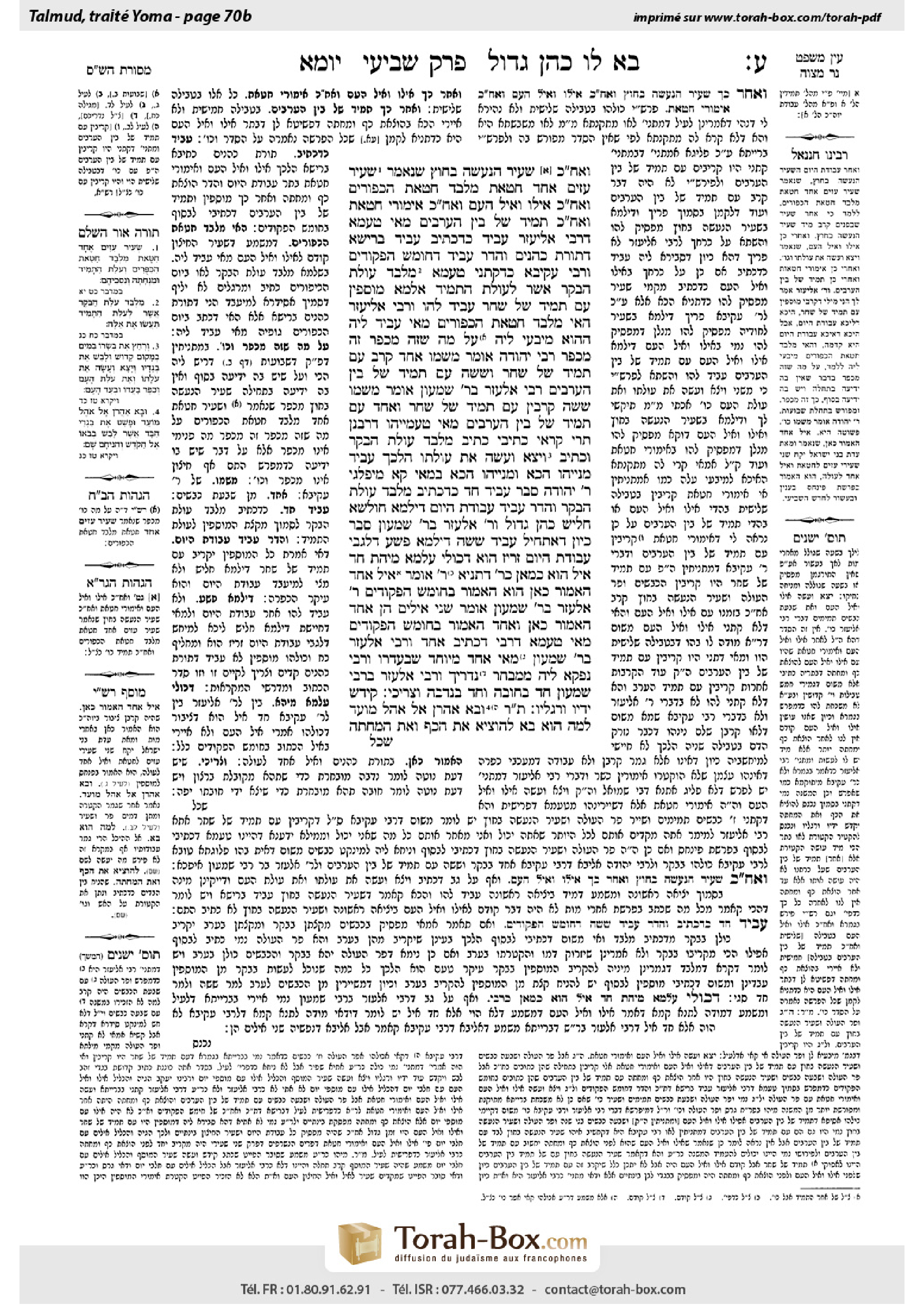
This page of Yoma includes the Aramaic text, an English translation and an AI-generated French translation, alongside the scan above.
יומא ע׳ ב · Aramaic and Hebrew text
וְאַחַר כָּךְ שָׂעִיר הַנַּעֲשֶׂה בַּחוּץ, שֶׁנֶּאֱמַר: ״שְׂעִיר עִזִּים אֶחָד חַטָּאת מִלְּבַד חַטַּאת הַכִּפּוּרִים״, וְאַחַר כָּךְ אֵילוֹ וְאֵיל הָעָם, וְאַחַר כָּךְ אֵימוּרֵי חַטָּאת, וְאַחַר כָּךְ תָּמִיד שֶׁל בֵּין הָעַרְבַּיִם.
מַאי טַעְמָא דְּרַבִּי אֱלִיעֶזֶר? עָבֵיד כְּדִכְתִיב: עָבֵיד בְּרֵישָׁא דְּתוֹרַת כֹּהֲנִים, וַהֲדַר עָבֵיד דְּחוֹמֶשׁ הַפְּקוּדִים.
וְרַבִּי עֲקִיבָא? כִּדְקָתָנֵי טַעְמָא: ״מִלְּבַד עוֹלַת הַבֹּקֶר אֲשֶׁר לְעוֹלַת הַתָּמִיד״, אַלְמָא מוּסָפִין עִם תָּמִיד שֶׁל שַׁחַר עָבֵיד לְהוּ.
וְרַבִּי אֱלִיעֶזֶר, הַאי ״מִלְּבַד חַטַּאת הַכִּפּוּרִים״ מַאי עָבֵיד לֵיהּ? הַהוּא מִיבְּעֵי לֵיהּ, עַל מָה שֶׁזֶּה מְכַפֵּר — זֶה מְכַפֵּר.
רַבִּי יְהוּדָה אוֹמֵר מִשְּׁמוֹ: אֶחָד קָרֵב עִם תָּמִיד שֶׁל שַׁחַר, וְשִׁשָּׁה עִם תָּמִיד שֶׁל בֵּין הָעַרְבַּיִם. רַבִּי אֶלְעָזָר בְּרַבִּי שִׁמְעוֹן אוֹמֵר מִשְּׁמוֹ: שִׁשָּׁה קְרֵבִין עִם תָּמִיד שֶׁל שַׁחַר, וְאֶחָד עִם תָּמִיד שֶׁל בֵּין הָעַרְבַּיִם.
מַאי טַעְמַיְיהוּ דְּרַבָּנַן? תְּרֵי קְרָאֵי כְּתִיבִי. כְּתִיב: ״מִלְּבַד עוֹלַת הַבֹּקֶר״, וּכְתִיב: ״וְיָצָא וְעָשָׂה אֶת עוֹלָתוֹ״, הִלְכָּךְ, עָבֵיד מִנַּיְיהוּ הָכָא וּמָנַיְיהוּ הָכָא.
בְּמַאי קָא מִיפַּלְגִי? רַבִּי יְהוּדָה סָבַר: עָבֵיד חַד כְּדִכְתִיב: ״מִלְּבַד עוֹלַת הַבֹּקֶר״, וַהֲדַר עָבֵיד עֲבוֹדַת הַיּוֹם — דִּילְמָא חוּלְשָׁא חָלֵישׁ כֹּהֵן גָּדוֹל.
וְרַבִּי אֶלְעָזָר בְּרַבִּי שִׁמְעוֹן סָבַר: כֵּיוָן דְּאַתְחֵיל — עָבֵיד שִׁשָּׁה, דִּילְמָא פָּשַׁע. דִּלְגַבֵּי עֲבוֹדַת הַיּוֹם — זָרִיז הוּא.
דְּכוּלֵּי עָלְמָא מִיהַת, חַד אַיִל הוּא. כְּמַאן — כְּרַבִּי. דְּתַנְיָא, רַבִּי אוֹמֵר: אַיִל אֶחָד הָאָמוּר כָּאן, הוּא הָאָמוּר בְּחוֹמֶשׁ הַפְּקוּדִים. רַבִּי אֶלְעָזָר בְּרַבִּי שִׁמְעוֹן אוֹמֵר: שְׁנֵי אֵילִים הֵן, אֶחָד הָאָמוּר כָּאן, וְאֶחָד הָאָמוּר בְּחוֹמֶשׁ הַפְּקוּדִים.
מַאי טַעְמָא דְּרַבִּי? דִּכְתִיב: ״אֶחָד״. וְרַבִּי אֶלְעָזָר בְּרַבִּי שִׁמְעוֹן, מַאי ״אֶחָד״? מְיוּחָד שֶׁבְּעֶדְרוֹ.
וְרַבִּי? נָפְקָא לֵיהּ: מִ״מִּבְחַר נְדָרֶיךָ״. וְרַבִּי אֶלְעָזָר בְּרַבִּי שִׁמְעוֹן? חַד בְּחוֹבָה, וְחַד בִּנְדָבָה. וּצְרִיכִי.
קִידֵּשׁ יָדָיו וְרַגְלָיו. תָּנוּ רַבָּנַן: ״וּבָא אַהֲרֹן אֶל אֹהֶל מוֹעֵד״. לָמָה הוּא בָּא? לְהוֹצִיא אֶת הַכַּף וְאֶת הַמַּחְתָּה,
Yoma 70b · English translation
And afterward, the goat whose services are performed outside is sacrificed, as it is stated: “One goat for a sin-offering besides the sin-offering of atonement and the daily burnt-offering, and its meal-offering, and their libations” (Numbers 29:11), indicating that the goat sin-offering is sacrificed after the other offerings of the day. And afterward he offers his ram and the ram of the people, and afterward he places upon the altar the portions of the sin-offering to be consumed on the altar, and afterward he sacrifices the daily afternoon offering.
What is the reason for the opinion of Rabbi Eliezer? The High Priest acts in accordance with the order in which it is written in the Torah: First he performs the services described in Leviticus, and afterward he performs the additional offerings mentioned in the book of Numbers.
And what is Rabbi Akiva’s reasoning? His reasoning is that as the Tosefta teaches that the verse states: “Besides the morning burnt-offering which is the daily burnt-offering you shall sacrifice these” (Numbers 28:23), it is apparent that the sacrifice of the additional offerings should be performed together with the daily morning offering.
The Gemara asks: And Rabbi Eliezer, what does he do with this verse: “Besides the sin-offering of atonement,” which was the basis for Rabbi Akiva’s opinion? That verse is necessary for him to derive from it that for what this one, the goat sin-offering whose blood is sprinkled inside the Holy of Holies, atones, that one, the goat sin-offering of the additional offerings whose services are performed in the Temple courtyard, also atones.
§ The Tosefta cited above, which recorded the opinion of Rabbi Akiva, also records additional versions of his view: Rabbi Yehuda says in the name of Rabbi Akiva: One of the seven lambs is sacrificed with the daily morning offering, and the other six are sacrificed with the daily afternoon offering. Rabbi Elazar, son of Rabbi Shimon, says in the name of Rabbi Akiva: Six are sacrificed with the daily morning offering and one with the daily afternoon offering.
What is the rationale of the Rabbis, i.e., Rabbi Yehuda and Rabbi Elazar, son of Rabbi Shimon, who divide the sacrifice of the seven lambs into two parts? Two verses are written that suggest different times at which the additional offerings are sacrificed: It is written with regard to the additional offerings: “Besides the morning burnt-offering which is the daily burnt-offering you shall sacrifice these” (Numbers 28:23), implying that the additional offerings are sacrificed in the morning. But it is also written that upon concluding the service of the day: “And he shall exit and make his burnt-offering and the burnt-offering of the people” (Leviticus 16:24). As the phrase: “The burnt-offering of the people,” is referring to the additional offerings, this verse implies that the additional offerings are sacrificed in the afternoon. Therefore, in order to fulfill both verses, he performs the sacrifice of some of them here, in the morning, and some of them there, in the afternoon.
With regard to what do Rabbi Yehuda and Rabbi Elazar disagree? Rabbi Yehuda holds that the High Priest performs the sacrifice of one lamb in the morning, as it is written: “Besides the morning burnt-offering,” and then he performs the service of the day before he proceeds to sacrifice the other six lambs. Initially, only the minimum possible number of lambs is sacrificed lest the High Priest become weak by doing more. He might then be unable to complete the service of the day, which cannot be performed by anyone else and without which atonement cannot be achieved.
And Rabbi Elazar, son of Rabbi Shimon, holds: Since he has begun to sacrifice the lambs he performs the sacrifice of six of them, leaving over only one until the afternoon. He sacrifices the maximum possible number of lambs now lest he be negligent later and fail to sacrifice so many at the close of the day. There is no concern that by doing so he might become weak and be unable to perform the service of the day, because with regard to the service of the day, the High Priest is diligent and will always muster the energy needed.
The Gemara notes: Despite their disagreements, everyone agrees, however, that there is only one ram for the people. In accordance with whose opinion is this? It is in accordance with the opinion of Rabbi Yehuda HaNasi. As it was taught in a baraita that Rabbi Yehuda HaNasi says: Only one ram for the people is sacrificed, as the one stated here in Leviticus: “With this shall Aaron come into the Sanctuary: With a young bull for a sin-offering, and a ram for a burnt-offering” (Leviticus 16:3), is the same one that is stated in the Book of Numbers: “And you shall sacrifice a burnt-offering to the Lord of pleasing odor: One young bull, one ram, seven unblemished year-old lambs shall be unto you” (Numbers 29:8). Rabbi Elazar, son of Rabbi Shimon, says: There are two rams for the people: One that is stated here in Leviticus, which is part of the service of the day, and one stated in the Book of Numbers, which is part of the day’s additional offerings.
What is the rationale of Rabbi Yehuda HaNasi? As it is written: “One,” implying one ram, not two. And according to Rabbi Elazar, son of Rabbi Shimon, what is the meaning of “one”? “One” indicates that the ram used should be the unique one, i.e., the best, of its flock.
And from where does Rabbi Yehuda HaNasi derive the requirement that the ram be of the best stock? He derives it from the verse: “Your choice vows” (Deuteronomy 12:11), which teaches that all offerings must be from the choicest animals. And according to Rabbi Elazar, son of Rabbi Shimon, why is this additional verse necessary? One verse refers to obligatory offerings, and the other one refers to free-will offerings. And both are necessary because the requirement in one case cannot be learned from the other. It is reasonable that a free-will offering must be from the choicest animal since it is a voluntary gift; and it is also reasonable that an obligatory offering should be the choicest, since an obligation must be fulfilled in the finest possible way.
§ It was taught in the mishna: The High Priest sanctified his hands and feet and entered the Holy of Holies to take out the incense spoon and the coal pan. The Gemara cites a related baraita. The Sages taught: The verse states: “And Aaron shall come into the Tent of Meeting” (Leviticus 16:23), which is taken to mean that he enters the Holy of Holies. Why does he come? He comes in order to take out the incense spoon and the coal pan
Yoma 70b · Traduction française (IA)
Ensuite, on sacrifie le bouc dont le service s’accomplit à l’extérieur, comme il est dit : « Un bouc en sacrifice expiatoire, outre le sacrifice expiatoire d’expiation, l’holocauste quotidien, son offrande de farine et leurs libations » (Nombres 29:11), ce qui indique que le bouc en sacrifice expiatoire est sacrifié après les autres offrandes de la journée. Ensuite, il offre son bélier et le bélier du peuple, puis il dépose sur l’autel les portions du sacrifice expiatoire qui doivent y être consumées, et enfin il sacrifie l’offrande quotidienne de l’après-midi.
Quelle est la raison de l’opinion de Rabbi Eliezer ? Le grand prêtre agit selon l’ordre dans lequel les éléments sont énoncés dans la Torah : il accomplit d’abord les services décrits dans le Lévitique, puis les offrandes supplémentaires mentionnées dans le livre des Nombres.
Et quel est le raisonnement de Rabbi Akiva ? Il se fonde sur ce qu’enseigne la Tossefta : le verset dit : « Outre l’holocauste du matin, qui est l’holocauste quotidien, vous sacrifierez ces offrandes » (Nombres 28:23). Il en ressort que les offrandes supplémentaires doivent être sacrifiées avec l’offrande quotidienne du matin.
La Guemara demande : et Rabbi Eliezer, que fait-il de ce verset : « outre le sacrifice expiatoire d’expiation », qui servait de fondement à l’opinion de Rabbi Akiva ? Ce verset lui est nécessaire pour en déduire que ce que celui-ci expie — le bouc en sacrifice expiatoire dont le sang est aspergé à l’intérieur du Saint des Saints —, celui-là l’expie également : le bouc en sacrifice expiatoire des offrandes supplémentaires, dont le service s’accomplit dans la cour du Temple.
§ La Tossefta citée plus haut, qui rapportait l’opinion de Rabbi Akiva, rapporte également d’autres versions de son avis. Rabbi Yehouda dit au nom de Rabbi Akiva : l’un des sept agneaux est sacrifié avec l’offrande quotidienne du matin, et les six autres avec l’offrande quotidienne de l’après-midi. Rabbi Elazar, fils de Rabbi Shimon, dit au nom de Rabbi Akiva : six sont sacrifiés avec l’offrande quotidienne du matin et un avec l’offrande quotidienne de l’après-midi.
Quel est le raisonnement des Sages, c’est-à-dire de Rabbi Yehouda et de Rabbi Elazar, fils de Rabbi Shimon, qui répartissent le sacrifice des sept agneaux en deux parties ? Deux versets sont écrits et suggèrent des moments différents pour le sacrifice des offrandes supplémentaires. À propos de celles-ci, il est écrit : « Outre l’holocauste du matin, qui est l’holocauste quotidien, vous sacrifierez ces offrandes » (Nombres 28:23), ce qui implique que les offrandes supplémentaires sont sacrifiées le matin. Mais il est aussi écrit, à propos de la fin du service de la journée : « Il sortira et offrira son holocauste et l’holocauste du peuple » (Lévitique 16:24). Puisque l’expression « l’holocauste du peuple » désigne les offrandes supplémentaires, ce verset implique qu’elles sont sacrifiées l’après-midi. Par conséquent, afin de respecter les deux versets, il en sacrifie une partie ici, le matin, et une partie là, l’après-midi.
Sur quoi Rabbi Yehouda et Rabbi Elazar sont-ils en désaccord ? Rabbi Yehouda considère que le grand prêtre sacrifie un agneau le matin, comme il est écrit : « outre l’holocauste du matin », puis accomplit le service de la journée avant de sacrifier les six autres agneaux. Au début, on ne sacrifie que le nombre minimum d’agneaux possible, de peur que le grand prêtre ne s’affaiblisse en en sacrifiant davantage. Il pourrait alors être incapable d’achever le service de la journée, que personne d’autre ne peut accomplir et sans lequel l’expiation ne peut être obtenue.
Rabbi Elazar, fils de Rabbi Shimon, considère que, puisqu’il a commencé à sacrifier les agneaux, il en sacrifie six, n’en laissant qu’un seul pour l’après-midi. Il en sacrifie maintenant le nombre maximal possible, de peur de faire preuve de négligence plus tard et de ne pas en sacrifier autant à la fin de la journée. Il ne craint pas qu’il s’affaiblisse ainsi et soit incapable d’accomplir le service de la journée, car le grand prêtre est diligent dans l’accomplissement de ce service et trouvera toujours l’énergie nécessaire.
La Guemara fait remarquer que, malgré leurs désaccords, tous conviennent qu’il n’y a qu’un seul bélier pour le peuple. De quelle opinion s’agit-il ? De celle de Rabbi Yehouda HaNassi. En effet, il a été enseigné dans une baraïta que Rabbi Yehouda HaNassi dit : on ne sacrifie qu’un seul bélier pour le peuple, car celui qui est mentionné ici dans le Lévitique : « C’est avec cela qu’Aaron entrera dans le Sanctuaire : avec un jeune taureau en sacrifice expiatoire et un bélier en holocauste » (Lévitique 16:3), est le même que celui qui est mentionné dans le livre des Nombres : « Vous offrirez au Seigneur un holocauste d’odeur agréable : un jeune taureau, un bélier et sept agneaux d’un an sans défaut » (Nombres 29:8). Rabbi Elazar, fils de Rabbi Shimon, dit : il y a deux béliers pour le peuple : l’un est mentionné ici dans le Lévitique et fait partie du service de la journée, l’autre est mentionné dans le livre des Nombres et fait partie des offrandes supplémentaires de la journée.
Quel est le raisonnement de Rabbi Yehouda HaNassi ? Il est écrit : « un », ce qui implique un seul bélier, et non deux. Et selon Rabbi Elazar, fils de Rabbi Shimon, que signifie « un » ? « Un » indique que le bélier utilisé doit être le meilleur de son troupeau.
Et d’où Rabbi Yehouda HaNassi déduit-il que le bélier doit provenir du meilleur cheptel ? Il le déduit du verset : « tes vœux de choix » (Deutéronome 12:11), qui enseigne que toutes les offrandes doivent provenir des meilleurs animaux. Et selon Rabbi Elazar, fils de Rabbi Shimon, pourquoi ce verset supplémentaire est-il nécessaire ? Un verset concerne les offrandes obligatoires et l’autre les offrandes volontaires. Les deux sont nécessaires, car la règle applicable à l’un des cas ne peut être déduite de l’autre. Il est logique qu’une offrande volontaire provienne du meilleur animal, puisqu’il s’agit d’un don volontaire ; il est également logique qu’une offrande obligatoire soit de la meilleure qualité, puisqu’une obligation doit être accomplie de la manière la plus parfaite possible.
§ La Michna enseignait : le grand prêtre sanctifiait ses mains et ses pieds, puis entrait dans le Saint des Saints pour en retirer la cuillère à encens et le brasier. La Guemara cite une baraïta sur le même sujet. Les Sages ont enseigné : le verset dit : « Aaron entrera dans la Tente d’assignation » (Lévitique 16:23), ce qui signifie qu’il entre dans le Saint des Saints. Pourquoi y entre-t-il ? Il y entre afin d’en retirer la cuillère à encens et le brasier.
Traduction française générée par IA à partir de l’édition anglaise de Sefaria. Vérifie toujours un passage avec le texte source.
Text from Sefaria: William Davidson Edition - Vocalized Aramaic (CC BY NC); William Davidson Edition - English (CC BY NC).