Yoma 74a: Talmud study for Daf Yomi
Daf Yomi is the daily study of one Talmud folio. Explore 37 tractates with scans, Hebrew text, Sefaria English and AI-generated French translations where annotated.
Passage selection and English or AI-generated French translation are available where the scan has annotations. Daf Study is independent of Torah-Box and Sefaria.
Browse Yoma · יומא · All tractatesYoma 74a text and translations
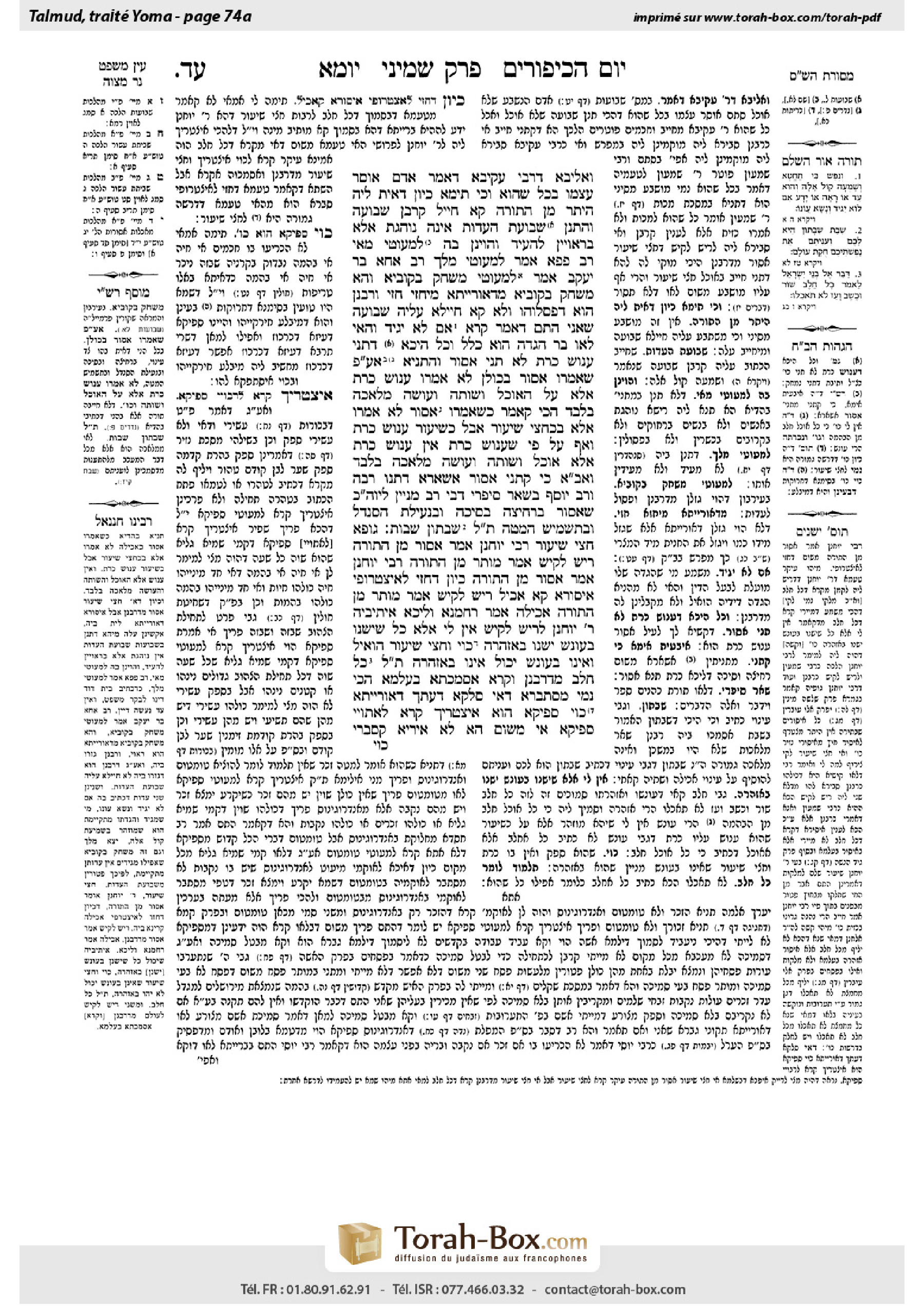
This page of Yoma includes the Aramaic text, an English translation and an AI-generated French translation, alongside the scan above.
יומא ע״ד א · Aramaic and Hebrew text
וְאַלִּיבָּא דְּרַבִּי עֲקִיבָא דְּאָמַר: אָדָם אוֹסֵר עַצְמוֹ בְּכׇל שֶׁהוּא!
וְכִי תֵּימָא: כֵּיוָן דְּאִית לֵיהּ הֶיתֵּר מִן הַתּוֹרָה, קָא חָיֵיל קׇרְבַּן שְׁבוּעָה, וְהָתְנַן: שְׁבוּעַת הָעֵדוּת אֵינָהּ נוֹהֶגֶת אֶלָּא בִּרְאוּיִין לְהָעִיד. וְהָוֵינַן בַּהּ: לְמַעוֹטֵי מַאי? רַב פָּפָּא אָמַר: לְמַעוֹטֵי מֶלֶךְ.
רַב אַחָא בַּר יַעֲקֹב אָמַר: לְמַעוֹטֵי מְשַׂחֵק בְּקוּבְיָא. וְהָא מְשַׂחֵק בְּקוּבְיָא — מִדְּאוֹרָיְיתָא מִיחְזֵי חֲזֵי, וְרַבָּנַן הוּא דְּפַסְלוּהוּ, וְלָא קָא חָיְילָא עֲלֵיהּ שְׁבוּעָה!
שָׁאנֵי הָתָם דְּאָמַר קְרָא: ״אִם לֹא יַגִּיד״, וְהַאי לָאו בַּר הַגָּדָה הוּא כְּלָל.
וְכׇל הֵיכָא דְּתָנֵי עָנוּשׁ כָּרֵת, לָא תָּנֵי אָסוּר? וְהָתַנְיָא: אַף עַל פִּי שֶׁאָמְרוּ אָסוּר בְּכוּלָּן — לֹא אָמְרוּ עָנוּשׁ כָּרֵת אֶלָּא עַל הָאוֹכֶל וְשׁוֹתֶה וְעוֹשֶׂה מְלָאכָה בִּלְבַד. הָכִי קָאָמַר: כְּשֶׁאָמְרוּ אָסוּר — לָא אָמְרוּ אֶלָּא בְּכַחֲצִי שִׁיעוּר, אֲבָל כְּשִׁיעוּר — עָנוּשׁ כָּרֵת. וְאַף עַל פִּי שֶׁעָנוּשׁ כָּרֵת — אֵין עָנוּשׁ כָּרֵת אֶלָּא אוֹכֵל וְשׁוֹתֶה וְעוֹשֶׂה מְלָאכָה בִּלְבַד.
וְאִי בָּעֵית אֵימָא: כִּי קָתָנֵי אָסוּר — אַשְּׁאָרָא. דְּתָנוּ רַבָּה וְרַב יוֹסֵף בִּשְׁאָר סִיפְרֵי דְבֵי רַב: מִנַּיִין לְיוֹם הַכִּפּוּרִים שֶׁאָסוּר בִּרְחִיצָה בְּסִיכָה וּבִנְעִילַת הַסַּנְדָּל וּבְתַשְׁמִישׁ הַמִּטָּה, תַּלְמוּד לוֹמַר: ״שַׁבָּתוֹן״ — שְׁבוּת.
גּוּפָא. חֲצִי שִׁיעוּר, רַבִּי יוֹחָנָן אָמַר: אָסוּר מִן הַתּוֹרָה, רֵישׁ לָקִישׁ אָמַר: מוּתָּר מִן הַתּוֹרָה. רַבִּי יוֹחָנָן אָמַר אָסוּר מִן הַתּוֹרָה: כֵּיוָן דַּחֲזִי לְאִיצְטְרוֹפֵי, אִיסּוּרָא קָא אָכֵיל. רֵישׁ לָקִישׁ אָמַר מוּתָּר מִן הַתּוֹרָה: אֲכִילָה אָמַר רַחֲמָנָא, וְלֵיכָּא.
אֵיתִיבֵיהּ רַבִּי יוֹחָנָן לְרֵישׁ לָקִישׁ: אֵין לִי אֶלָּא כֹּל שֶׁיֶּשְׁנוֹ בְּעוֹנֶשׁ יֶשְׁנוֹ בְּאַזְהָרָה, כּוֹי וַחֲצִי שִׁיעוּר, הוֹאִיל וְאֵינוֹ בְּעוֹנֶשׁ — יָכוֹל אֵינוֹ בְּאַזְהָרָה, תַּלְמוּד לוֹמַר: ״כׇּל חֵלֶב״! מִדְּרַבָּנַן, וּקְרָא — אַסְמַכְתָּא בְּעָלְמָא.
הָכִי נָמֵי מִסְתַּבְּרָא, דְּאִי סָלְקָא דַעְתָּךְ דְּאוֹרָיְיתָא, כּוֹי סְפֵיקָא הוּא, אִיצְטְרִיךְ קְרָא לְאֵתוֹיֵי סְפֵיקָא? אִי מִשּׁוּם הָא — לָא אִירְיָא, קָסָבְרִי
Yoma 74a · English translation
and the mishna is in accordance with the opinion of Rabbi Akiva, who said: A man prohibits himself from any amount. If a man swears that he will not eat, he thereby prohibits himself from eating even the smallest amount of food. Therefore, Reish Lakish himself maintains that eating a half-measure does not constitute a prohibition.
And if you say: Perhaps Reish Lakish maintains that since a half-measure is permitted by Torah law, despite the fact that it is prohibited by rabbinic law, one is liable to bring an offering for violating an oath, then there is the following problem: Didn’t we learn in a mishna: An oath of testimony where one is sworn to give testimony on something that he saw or knew, applies only to those who are eligible to give testimony. If one who is ineligible to testify swears an oath to give testimony, the oath is invalid even if he does not testify. And we discussed it: The statement: Those who are eligible to give testimony, comes to exclude what? After all, it was already said that the oath does not apply to women, relatives, and other disqualified people. Rav Pappa said: It comes to exclude a king. A king is not disqualified from giving testimony, but he does not testify before a court, due to the requirement to give respect to a king.
Rav Aḥa bar Ya’akov said: It comes to exclude one who plays with dice, whom the Sages disqualified from giving testimony. But surely one who plays with dice is eligible by Torah law to give testimony, and it is the Sages who disqualified him. Despite this, an oath of testimony does not apply to him by Torah law, even though the prohibition on his testifying is rabbinic.
The Gemara rejects this by distinguishing between the two cases: It is different there, in the case of testimony, where the verse states: “If he does not utter it, then he shall bear his iniquity” (Leviticus 5:1), i.e., a man who can testify but doesn’t do so should be punished. But this person cannot ever give testimony since the court will not accept his testimony. The Torah makes liability for an oath of testimony contingent on one’s ability to testify. Therefore, an oath of testimony would not apply to someone unable to testify. However, one who takes an oath not to eat is liable if he breaks that oath, notwithstanding the rabbinic prohibition against eating less than a measure of forbidden food. Consequently, this rejection does not stand, and the first explanation remains.
§ The Gemara’s initial assumption is that the mishna’s use of the word prohibited is referring to a transgression not punishable by karet. The Gemara asks: And anywhere that it teaches that transgressing is punishable by karet, does it never teach using the word prohibited? Was it not taught in a baraita: Although they said the word prohibited with all of the five Yom Kippur afflictions, they said that the punishment of karet applies only to one who eats, or drinks, or performs prohibited labor. This means that the word prohibit is used with transgressions punishable by karet as well. The Gemara rejects this. This is what the baraita is saying: When they said that those five activities are prohibited, they said that only with regard to a half-measure; but a full measure is punishable by karet. And although a violation is punishable by karet, it is punishable by karet only if one eats, or drinks, or performs prohibited labor; these alone are the cases where karet is incurred.
And if you wish, say instead that when it is taught in the mishna using the language of prohibited, it is referring to the other transgressions, which do not incur karet. As Rabba and Rav Yosef taught this in other books of Rav’s school, i.e., the Sifrei, the halakhic midrash on Numbers and Deuteronomy: From where is it derived that it is prohibited to engage in bathing, and in smearing oil on one’s body, and in wearing shoes, and in having relations on Yom Kippur? The verse states: “Shabbaton” (Leviticus 16:31), meaning resting and refraining from certain activities. Therefore, the word prohibit is used with these activities, but they are not punishable by karet.
§ Apropos the dispute between Rabbi Yoḥanan and Reish Lakish, the Gemara deals with the matter itself: What is the law with regard to a half-measure? Rabbi Yoḥanan said: It is prohibited by Torah law. Reish Lakish said: It is permitted by Torah law. The Gemara elaborates: Rabbi Yoḥanan said it is prohibited by Torah law because it is fit to combine with another half-measure. If one continues to eat more, he will eat a whole measure, which is punishable by Torah law. Therefore, even when he eats the first half-measure he is eating forbidden food. Reish Lakish said it is permitted by Torah law. His reason is as follows: With regard to all forbidden foods, the Merciful One states in the Torah: “Eat,” for example in the verse: “You shall eat neither fat nor blood” (Leviticus 3:17). Eating is defined as consuming a minimum of an olive-bulk, and there is no prohibition if one eats less than an olive-bulk.
Rabbi Yoḥanan raised an objection to the opinion of Reish Lakish from what was taught in a baraita with regard to the prohibition of forbidden fat: I have derived only that anything that is included in the punishment of karet is included in the prohibition. However, one might have thought that there is no prohibition to eat fat of a koy, or a half-measure of forbidden fat, since there is no punishment for those. Therefore, the verse states: “All fat” (Leviticus 7:23), indicating that there is a prohibition to eat any kind of fat, including fat of uncertain status and a half-measure of fat. Therefore, a half-measure of fat is prohibited by Torah law. Reish Lakish rejects this argument: This prohibition is rabbinic, and the verse brought as a proof is a mere support. It cannot be claimed that there is such a prohibition by Torah law.
The Gemara comments: So too, it is reasonable to say that the baraita cites only the verse as a support and not as a source to prove the prohibition. For if it could enter your mind that this teaching constitutes a prohibition by Torah law, there is uncertainty whether a koy is a wild beast or a domestic animal. Is a verse necessary to include an uncertainty? There is no doubt before God and therefore no purpose in writing a case of doubt in the Torah. Consequently, the baraita cites the verse only as a support. The Gemara answers: If that is the reason, there is no conclusive argument. The Sages of the baraita might have thought
Yoma 74a · Traduction française (IA)
Et la Michna suit l’opinion de Rabbi Akiva, qui a dit : Un homme s’interdit même la plus petite quantité. Si un homme jure qu’il ne mangera pas, il s’interdit ainsi de manger même la plus petite quantité de nourriture. Par conséquent, Reish Lakish lui-même soutient que manger une demi-mesure ne constitue pas une interdiction.
Et si tu dis : Peut-être Reish Lakish soutient-il que, puisqu’une demi-mesure est permise par la Torah, bien qu’elle soit interdite par décret rabbinique, on est passible d’apporter un sacrifice pour avoir transgressé un serment, alors le problème suivant se pose : N’avons-nous pas appris dans une Michna : Le serment de témoignage, par lequel on jure de témoigner au sujet d’une chose que l’on a vue ou dont on a eu connaissance, ne s’applique qu’à ceux qui sont habilités à témoigner. Si une personne qui n’est pas habilitée à témoigner jure de témoigner, le serment est invalide, même si elle ne témoigne pas. Et nous avons discuté de cela : Qu’est-ce que l’expression « ceux qui sont habilités à témoigner » vient exclure ? Après tout, il a déjà été dit que le serment ne s’applique pas aux femmes, aux proches parents et aux autres personnes disqualifiées. Rav Pappa a dit : Elle vient exclure un roi. Un roi n’est pas disqualifié pour témoigner, mais il ne témoigne pas devant un tribunal, par égard au respect dû au roi.
Rav Aḥa bar Ya’akov a dit : Elle vient exclure celui qui joue aux dés, que les Sages ont disqualifié pour témoigner. Pourtant, celui qui joue aux dés est bien habilité à témoigner selon la Torah, et ce sont les Sages qui l’ont disqualifié. Malgré cela, le serment de témoignage ne s’applique pas à lui selon la Torah, bien que l’interdiction de témoigner soit d’ordre rabbinique.
La Guemara rejette cette objection en distinguant les deux cas : le cas du témoignage est différent, car le verset dit : « S’il ne le déclare pas, il portera sa faute » (Lévitique 5:1), c’est-à-dire qu’un homme qui peut témoigner, mais ne le fait pas, doit être puni. Or, cette personne ne peut en aucun cas témoigner, puisque le tribunal n’acceptera pas son témoignage. La Torah subordonne la responsabilité liée à un serment de témoignage à la capacité de témoigner. Par conséquent, le serment de témoignage ne s’applique pas à quelqu’un qui est incapable de témoigner. En revanche, celui qui jure de ne pas manger est passible d’une sanction s’il rompt ce serment, malgré l’interdiction rabbinique de manger moins que la mesure d’un aliment interdit. Par conséquent, cette réfutation ne tient pas, et la première explication demeure.
§ La supposition initiale de la Guemara est que l’emploi du terme « interdit » dans la Michna désigne une transgression qui n’est pas passible de retranchement. La Guemara demande : Chaque fois qu’elle enseigne qu’une transgression est passible de retranchement, n’emploie-t-elle jamais le terme « interdit » ? N’a-t-on pas enseigné dans une baraïta : Bien qu’ils aient dit que les cinq afflictions de Yom Kippour sont interdites, ils ont dit que la peine de retranchement ne s’applique qu’à celui qui mange, boit ou accomplit un travail interdit. Cela signifie que le terme « interdit » est également employé pour des transgressions passibles de retranchement. La Guemara rejette cette interprétation. Voici ce que dit la baraïta : Lorsqu’ils ont dit que ces cinq activités sont interdites, ils ne parlaient que d’une demi-mesure ; une mesure entière, elle, est passible de retranchement. Et bien qu’une transgression soit passible de retranchement, cette peine ne s’applique que si l’on mange, boit ou accomplit un travail interdit ; seuls ces cas entraînent le retranchement.
Et si tu le souhaites, dis plutôt que, lorsque la Michna emploie le terme « interdit », elle parle des autres transgressions, qui n’entraînent pas le retranchement. En effet, Rabba et Rav Yosef ont enseigné cela dans d’autres recueils de l’école de Rav, c’est-à-dire les Sifrei, le midrash halakhique sur les Nombres et le Deutéronome : D’où apprend-on qu’il est interdit de se baigner, de s’enduire le corps d’huile, de porter des chaussures et d’avoir des relations conjugales à Yom Kippour ? Le verset dit : « Shabbaton » (Lévitique 16:31), c’est-à-dire qu’il faut se reposer et s’abstenir de certaines activités. Le terme « interdit » est donc employé à propos de ces activités, mais elles ne sont pas passibles de retranchement.
§ À propos du différend entre Rabbi Yoḥanan et Reish Lakish, la Guemara aborde la question elle-même : Quel est le statut d’une demi-mesure ? Rabbi Yoḥanan a dit : Elle est interdite par la Torah. Reish Lakish a dit : Elle est permise par la Torah. La Guemara développe : Rabbi Yoḥanan a dit qu’elle est interdite par la Torah parce qu’elle peut s’ajouter à une autre demi-mesure. Si l’on continue à manger, on consommera une mesure entière, ce qui est passible d’une sanction selon la Torah. Par conséquent, dès la première demi-mesure, on mange un aliment interdit. Reish Lakish a dit qu’elle est permise par la Torah. Voici son raisonnement : Pour tous les aliments interdits, le Miséricordieux dit dans la Torah : « manger », comme dans le verset : « Vous ne mangerez ni graisse ni sang » (Lévitique 3:17). Manger signifie consommer au minimum le volume d’une olive, et il n’y a pas d’interdiction si l’on mange moins que le volume d’une olive.
Rabbi Yoḥanan a soulevé une objection à l’opinion de Reish Lakish à partir de ce qui a été enseigné dans une baraïta au sujet de l’interdiction de consommer de la graisse interdite : J’ai appris uniquement que tout ce qui entraîne la peine de retranchement est également inclus dans l’interdiction. Cependant, on aurait pu penser qu’il n’est pas interdit de manger la graisse d’un koy, ni une demi-mesure de graisse interdite, puisqu’il n’y a pas de peine pour ces cas. Le verset dit donc : « Toute graisse » (Lévitique 7:23), ce qui indique qu’il est interdit de manger toute sorte de graisse, y compris la graisse dont le statut est incertain et une demi-mesure de graisse. Par conséquent, une demi-mesure de graisse est interdite par la Torah. Reish Lakish rejette cet argument : Cette interdiction est d’ordre rabbinique, et le verset invoqué comme preuve ne constitue qu’un appui. On ne peut pas prétendre qu’une telle interdiction existe selon la Torah.
La Guemara fait remarquer : Il est également raisonnable de dire que la baraïta cite le verset comme un simple appui, et non comme une source établissant l’interdiction. En effet, si tu pouvais envisager que cet enseignement établit une interdiction selon la Torah, il y aurait une incertitude quant à savoir si un koy est un animal sauvage ou un animal domestique. Faut-il un verset pour inclure un cas incertain ? Il n’y a aucun doute devant Dieu, et il n’y aurait donc aucune raison d’inscrire dans la Torah un cas incertain. Par conséquent, la baraïta ne cite le verset que comme un appui. La Guemara répond : Si c’est là la raison, l’argument n’est pas concluant. Les Sages de la baraïta ont peut-être pensé
Traduction française générée par IA à partir de l’édition anglaise de Sefaria. Vérifie toujours un passage avec le texte source.
Text from Sefaria: William Davidson Edition - Vocalized Aramaic (CC BY NC); William Davidson Edition - English (CC BY NC).