Yoma 9a: Talmud study for Daf Yomi
Daf Yomi is the daily study of one Talmud folio. Explore 37 tractates with scans, Hebrew text, Sefaria English and AI-generated French translations where annotated.
Passage selection and English or AI-generated French translation are available where the scan has annotations. Daf Study is independent of Torah-Box and Sefaria.
Browse Yoma · יומא · All tractatesYoma 9a text and translations
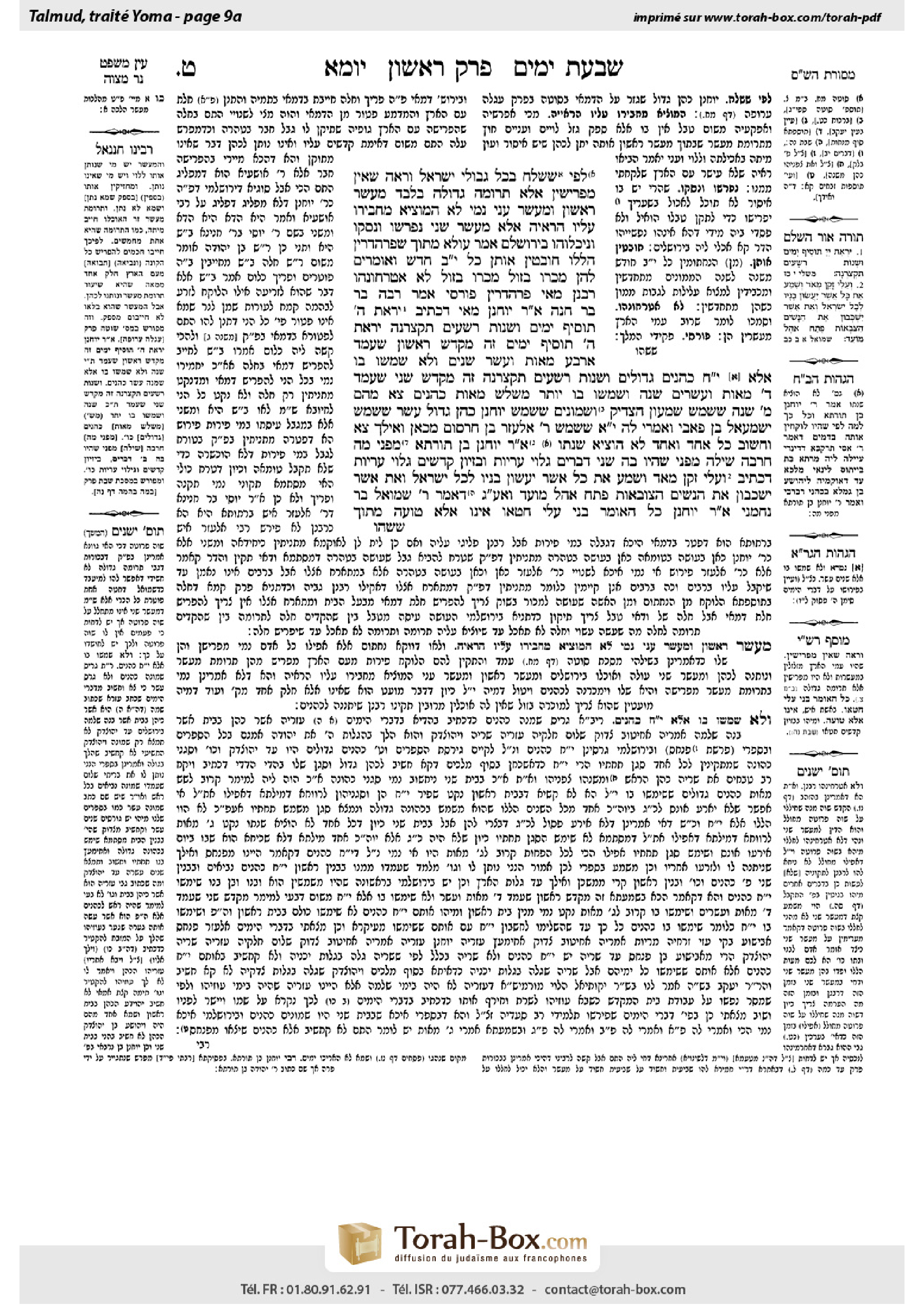
This page of Yoma includes the Aramaic text, an English translation and an AI-generated French translation, alongside the scan above.
יומא ט׳ א · Aramaic and Hebrew text
לְפִי שֶׁשָּׁלַח בְּכׇל גְּבוּלֵי יִשְׂרָאֵל, וְרָאָה שֶׁאֵין מַפְרִישִׁין אֶלָּא תְּרוּמָה גְּדוֹלָה בִּלְבָד.
מַעֲשֵׂר רִאשׁוֹן וּמַעְשַׂר עָנִי נָמֵי לָא, הַמּוֹצִיא מֵחֲבֵירוֹ עָלָיו הָרְאָיָה. אֶלָּא מַעֲשֵׂר שֵׁנִי, נַפְרְשׁוּ וְנַסְּקוּ וְנֵיכְלוּהּ בִּירוּשָׁלַיִם?
אָמַר עוּלָּא: מִתּוֹךְ שֶׁפַּרְהֶדְרִין הַלָּלוּ חוֹבְטִין אוֹתָן כׇּל שְׁנֵים עָשָׂר חֹדֶשׁ, וְאוֹמְרִים לָהֶן: מִכְרוּ בְּזוֹל! מִכְרוּ בְּזוֹל! לָא אַטְרְחוּנְהוּ רַבָּנַן. מַאי פַּרְהֶדְרִין? פּוּרְסֵי.
אָמַר רַבָּה בַּר בַּר חָנָה אָמַר רַבִּי יוֹחָנָן, מַאי דִּכְתִיב: ״יִרְאַת ה׳ תּוֹסִיף יָמִים וּשְׁנוֹת רְשָׁעִים תִּקְצֹרְנָה״, ״יִרְאַת ה׳ תּוֹסִיף יָמִים״ זֶה מִקְדָּשׁ רִאשׁוֹן שֶׁעָמַד אַרְבַּע מֵאוֹת וְעֶשֶׂר שָׁנִים, וְלֹא שִׁמְּשׁוּ בּוֹ אֶלָּא שְׁמוֹנָה עָשָׂר כֹּהֲנִים גְּדוֹלִים,
״וּשְׁנוֹת רְשָׁעִים תִּקְצֹרְנָה״ זֶה מִקְדָּשׁ שֵׁנִי, שֶׁעָמַד אַרְבַּע מֵאוֹת וְעֶשְׂרִים שָׁנָה וְשִׁמְּשׁוּ בּוֹ יוֹתֵר מִשְּׁלֹשׁ מֵאוֹת כֹּהֲנִים. צֵא מֵהֶם אַרְבָּעִים שָׁנָה שֶׁשִּׁמֵּשׁ שִׁמְעוֹן הַצַּדִּיק, וּשְׁמוֹנִים שֶׁשִּׁמֵּשׁ יוֹחָנָן כֹּהֵן גָּדוֹל, עֶשֶׂר שֶׁשִּׁמֵּשׁ יִשְׁמָעֵאל בֶּן פִּאָבִי, וְאָמְרִי לַהּ אַחַת עֶשְׂרֵה שֶׁשִּׁמֵּשׁ רַבִּי אֶלְעָזָר בֶּן חַרְסוֹם, מִכָּאן וְאֵילָךְ צֵא וַחֲשׁוֹב: כׇּל אֶחָד וְאֶחָד לֹא הוֹצִיא שְׁנָתוֹ.
אָמַר רַבִּי יוֹחָנָן בֶּן תּוֹרְתָּא: מִפְּנֵי מָה חָרְבָה שִׁילֹה — מִפְּנֵי שֶׁהָיוּ בָּהּ שְׁנֵי דְבָרִים: גִּלּוּי עֲרָיוֹת, וּבִזְיוֹן קֳדָשִׁים. גִּלּוּי עֲרָיוֹת דִּכְתִיב: ״וְעֵלִי זָקֵן מְאֹד וְשָׁמַע אֵת כׇּל אֲשֶׁר יַעֲשׂוּן בָּנָיו לְכׇל יִשְׂרָאֵל וְאֵת אֲשֶׁר יִשְׁכְּבוּן אֶת הַנָּשִׁים הַצּוֹבְאוֹת פֶּתַח אֹהֶל מוֹעֵד״. וְאַף עַל גַּב דְּאָמַר רַבִּי שְׁמוּאֵל בַּר נַחְמָנִי אָמַר רַבִּי יוֹחָנָן: כׇּל הָאוֹמֵר בְּנֵי עֵלִי חָטְאוּ אֵינוֹ אֶלָּא טוֹעֶה, מִתּוֹךְ
Yoma 9a · English translation
This is because Yoḥanan the High Priest sent emissaries throughout all the areas located within the borders of Eretz Yisrael to assess the situation and saw that the people were separating only teruma gedola and were neglecting to separate tithes. Therefore, he issued a decree that anyone who purchases produce from an am ha’aretz must be concerned about the possibility that it was not tithed and is required to tithe it. Since even an am ha’aretz separates teruma gedola, the bakers who purchased grain from them were not required to do so.
And granted, bakers need not separate first tithe and poor man’s tithe due to the principle: The burden of proof rests upon the claimant. Neither first tithe, given to Levites, nor poor man’s tithe, given to the poor, is sacred. It is merely the property of the Levite and the pauper, respectively. Since with regard to doubtfully tithed produce, by definition, there is no certainty that one is actually required to tithe it, if the Levite or the pauper should seek to take possession of the gifts, they must first prove that in fact the produce was not tithed. However, with regard to second tithe, why are the bakers exempt? Let them separate second-tithe from the produce, take it up to Jerusalem, and eat it in Jerusalem, which is the halakha with regard to anyone else who purchases doubtfully tithed produce.
Ulla said: It is because these parhedrin, government appointees, beat the bakers throughout the entire twelve months of their tenure and tell them: Sell your baked goods cheaply, sell them cheaply. Since the officers insist that the bakers refrain from raising their prices, the Sages did not further burden them with the exertion of separating second tithe from a large quantity of grain and taking it to Jerusalem, as they would be unable to raise their prices to cover the cost of the lost grain and the trip to Jerusalem. Since the presumptive status of the grain is that it was tithed, and the obligation to tithe doubtfully tithed produce is a stringency, the Sages exempted the baker from the obligation to do so. What is the meaning of parhedrin? These are royal appointees [pursei] charged with performance of different tasks.
§ Apropos the Second Temple period, when High Priests were frequently replaced, the Gemara cites that Rabba bar bar Ḥana said that Rabbi Yoḥanan said: What is the meaning of that which is written: “The fear of the Lord prolongs days, but the years of the wicked will be shortened” (Proverbs 10:27)? The fear of the Lord prolongs days; that is a reference to the First Temple, which stood for four hundred and ten years and in which only eighteen High Priests served, as is written in the lists of the genealogy of the priests in the Bible.
But the years of the wicked will be shortened; that is a reference to the Second Temple, which stood for four hundred and twenty years and in which over three hundred High Priests served. In calculating the tenures of the High Priests, deduct from the figure of four hundred and twenty years forty years that Shimon HaTzaddik served, and eighty years that Yoḥanan the High Priest served, ten years that Yishmael ben Pavi served, and some say eleven years that Rabbi Elazar ben Ḥarsum served. These men were all righteous and were privileged to serve extended terms. After deducting those one hundred and thirty or one hundred and forty-one years, go out and calculate from this point forward and conclude: Each and every one of the remaining High Priests did not complete his year in office, as the number of remaining High Priests is greater than the number of years remaining.
§ Apropos the sins of the High Priests in the Second Temple, the Gemara cites that Rabbi Yoḥanan ben Torta said: Due to what reason was the Tabernacle in Shiloh destroyed in the time of the prophet Samuel? It was destroyed due to the fact that there were two matters that existed in the Tabernacle: Forbidden sexual relations and degradation of consecrated items. There were forbidden sexual relations, as it is written: “Now Eli was very old and he heard what his sons were doing to all of Israel, how they lay with the women who did service at the opening of the Tent of Meeting” (I Samuel 2:22). And although Rabbi Shmuel bar Naḥmani said that Rabbi Yoḥanan said: Anyone who says that the sons of Eli sinned by engaging in forbidden sexual relations is nothing other than mistaken, even according to the alternative interpretation of the verse that it was due to the fact
Yoma 9a · Traduction française (IA)
C’est parce que Yoḥanan le Grand Prêtre envoya des émissaires dans toutes les régions situées à l’intérieur des frontières d’Eretz Israël pour évaluer la situation et constata que les gens ne prélevaient que la terouma gedola et négligeaient de prélever les dîmes. Il décréta donc que quiconque achète des produits agricoles à un am ha’aretz doit tenir compte de la possibilité qu’ils n’aient pas été soumis à la dîme et est tenu de les dîmer. Puisque même un am ha’aretz prélève la terouma gedola, les boulangers qui leur achetaient du grain n’étaient pas tenus de le faire.
Et il est vrai que les boulangers n’ont pas à prélever la première dîme ni la dîme du pauvre, en vertu du principe suivant : la charge de la preuve incombe au demandeur. Ni la première dîme, remise aux Lévites, ni la dîme du pauvre, remise aux pauvres, ne sont sacrées. Elles sont simplement la propriété du Lévite et du pauvre, respectivement. Puisque, par définition, lorsqu’il s’agit de produits dont le statut au regard de la dîme est douteux, rien ne garantit qu’on soit effectivement tenu de les dîmer, si le Lévite ou le pauvre cherche à prendre possession des dons, il doit d’abord prouver que les produits n’ont effectivement pas été soumis à la dîme. Cependant, en ce qui concerne la seconde dîme, pourquoi les boulangers en sont-ils exemptés ? Qu’ils prélèvent la seconde dîme sur les produits, la portent à Jérusalem et la consomment à Jérusalem, comme le prescrit la halakha pour toute autre personne qui achète des produits dont le statut au regard de la dîme est douteux.
Ulla dit : C’est parce que ces parhedrin, des fonctionnaires nommés par le gouvernement, frappaient les boulangers pendant toute la durée de leur mandat de douze mois et leur disaient : « Vendez vos produits de boulangerie à bas prix, vendez-les à bas prix. » Puisque les fonctionnaires exigeaient des boulangers qu’ils s’abstiennent d’augmenter leurs prix, les Sages ne leur imposèrent pas en plus la peine de prélever la seconde dîme sur une grande quantité de grain et de la transporter à Jérusalem ; ils n’auraient pas pu augmenter leurs prix pour compenser le coût du grain perdu et du voyage à Jérusalem. Puisque le grain était présumé avoir été soumis à la dîme et que l’obligation de dîmer des produits dont le statut au regard de la dîme est douteux constitue une rigueur, les Sages exemptèrent le boulanger de cette obligation. Que signifie le terme parhedrin ? Ce sont des fonctionnaires royaux [pursei] chargés d’accomplir différentes tâches.
§ À propos de la période du Second Temple, où les Grands Prêtres étaient fréquemment remplacés, la Guemara cite cette déclaration de Rabba bar bar Ḥana, qui a dit au nom de Rabbi Yoḥanan : Que signifie ce qui est écrit : « La crainte de l’Éternel prolonge les jours, mais les années des méchants seront abrégées » (Proverbes 10:27) ? « La crainte de l’Éternel prolonge les jours » fait référence au Premier Temple, qui subsista pendant quatre cent dix ans et où seuls dix-huit Grands Prêtres officièrent, comme l’indiquent les listes généalogiques des prêtres dans la Bible.
« Mais les années des méchants seront abrégées » fait référence au Second Temple, qui subsista pendant quatre cent vingt ans et où plus de trois cents Grands Prêtres officièrent. Pour calculer la durée des fonctions des Grands Prêtres, déduisez des quatre cent vingt ans les quarante années pendant lesquelles Shimon HaTzaddik officia, les quatre-vingts années pendant lesquelles Yoḥanan le Grand Prêtre officia, les dix années pendant lesquelles Yishmael ben Pavi officia et, selon certains, les onze années pendant lesquelles Rabbi Elazar ben Ḥarsum officia. Tous ces hommes étaient justes et eurent le mérite d’exercer leur fonction pendant de longues périodes. Après avoir déduit ces cent trente ou cent quarante et une années, poursuivez le calcul à partir de là et concluez que chacun des Grands Prêtres restants ne termina pas son année de fonction, puisque leur nombre est supérieur au nombre d’années restantes.
§ À propos des fautes des Grands Prêtres au cours de la période du Second Temple, la Guemara cite cette déclaration de Rabbi Yoḥanan ben Torta : Pour quelle raison le Tabernacle de Shiloh fut-il détruit à l’époque du prophète Samuel ? Il fut détruit parce que deux choses s’y produisaient : des relations sexuelles interdites et le mépris des objets consacrés. Il y avait des relations sexuelles interdites, comme il est écrit : « Éli était très âgé et il apprit tout ce que ses fils faisaient à tout Israël, et comment ils couchaient avec les femmes qui accomplissaient leur service à l’entrée de la Tente d’assignation » (I Samuel 2:22). Et bien que Rabbi Shmuel bar Naḥmani ait dit au nom de Rabbi Yoḥanan : Quiconque affirme que les fils d’Éli ont péché en ayant des relations sexuelles interdites se trompe, même selon l’autre interprétation du verset, selon laquelle cela était dû au fait
Traduction française générée par IA à partir de l’édition anglaise de Sefaria. Vérifie toujours un passage avec le texte source.
Text from Sefaria: William Davidson Edition - Vocalized Aramaic (CC BY NC); William Davidson Edition - English (CC BY NC).