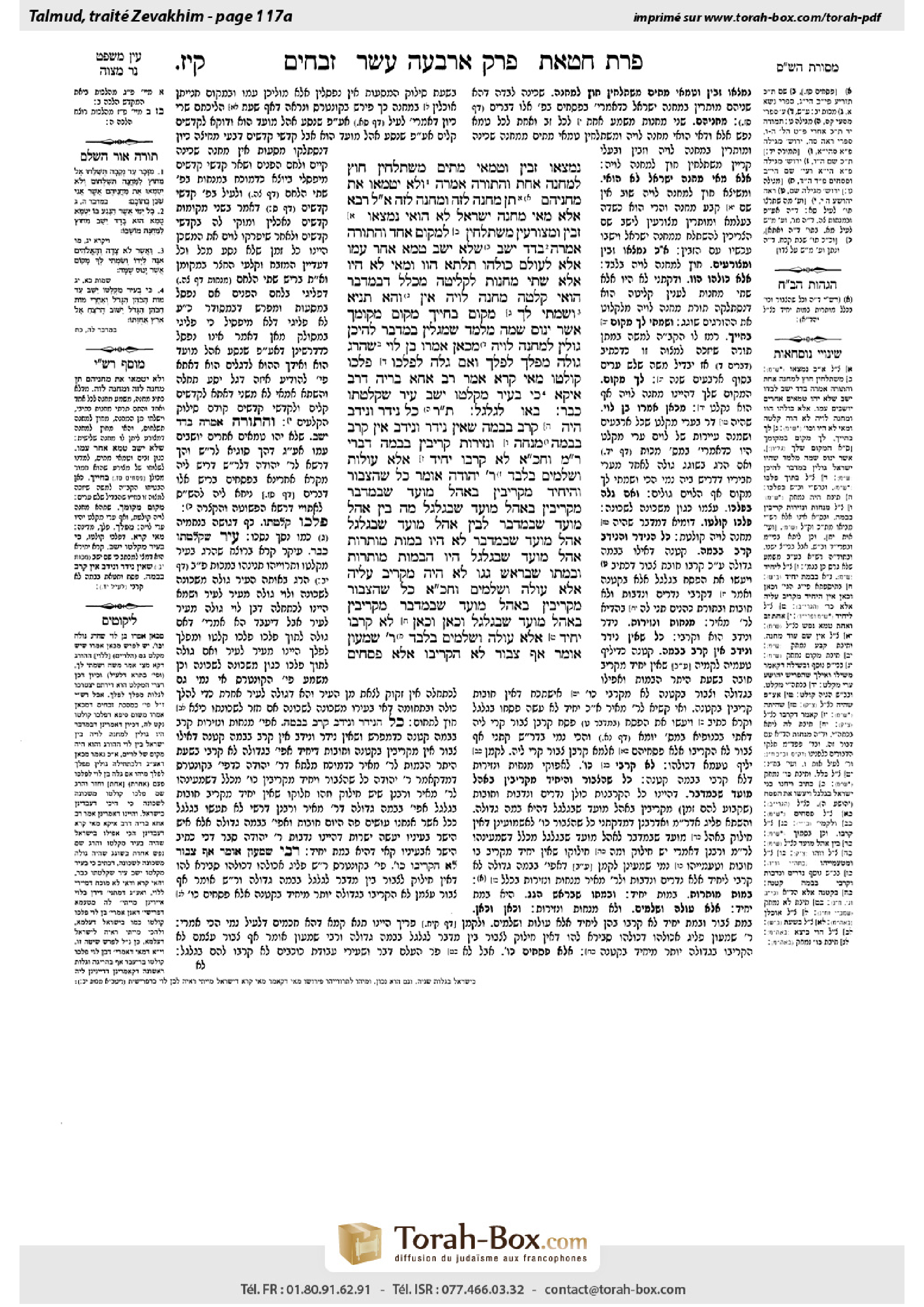
Zevachim 117a: Talmud study for Daf Yomi
Daf Yomi is the daily study of one Talmud folio. Explore 37 tractates with scans, Hebrew text, Sefaria English and AI-generated French translations where annotated.
Passage selection and English or AI-generated French translation are available where the scan has annotations. Daf Study is independent of Torah-Box and Sefaria.
Browse Zevachim · זבחים · All tractatesZevachim 117a text and translations
This page of Zevachim includes the Aramaic text, an English translation and an AI-generated French translation, alongside the scan above.
זבחים קי״ז א · Aramaic and Hebrew text
נִמְצְאוּ זָבִין וּטְמֵאֵי מֵתִים מִשְׁתַּלְּחִין חוּץ לְמַחֲנֶה אַחַת, וְהַתּוֹרָה אָמְרָה: ״וְלֹא יְטַמְּאוּ אֶת מַחֲנֵיהֶם״ –
תֵּן מַחֲנֶה לָזֶה וּמַחֲנֶה לָזֶה.
אֲמַר לֵיהּ רָבָא: אֶלָּא מַאי, מַחֲנֵה יִשְׂרָאֵל לָא הֲוַאי?! נִמְצְאוּ זָבִין וּמְצוֹרָעִין מִשְׁתַּלְּחִין לְמָקוֹם אֶחָד, וְהַתּוֹרָה אָמְרָה: ״בָּדָד יֵשֵׁב״ – שֶׁלֹּא יֵשֵׁב טָמֵא אַחֵר עִמּוֹ!
אֶלָּא לְעוֹלָם כּוּלְּהוּ תְּלָתָא הָווּ; וּמַאי לֹא הָיוּ אֶלָּא שְׁתֵּי מַחֲנוֹת – לִקְלִיטָה. מִכְּלָל דִּבְמִדְבָּר הֲוַאי קָלְטָה מַחֲנֵה לְוִיָּה?
אִין; וְהָא תַּנְיָא: ״וְשַׂמְתִּי לְךָ מָקוֹם״ – בְּחַיֶּיךָ מָקוֹם, מְקוֹמֶךָ; ״אֲשֶׁר יָנוּס שָׁמָּה״. מְלַמֵּד שֶׁמַּגְלִין בַּמִּדְבָּר. לְהֵיכָן גּוֹלִין? לְמַחֲנֵה לְוִיָּה.
מִכָּאן אָמְרוּ: בֶּן לֵוִי שֶׁהָרַג – גּוֹלֶה מִפֶּלֶךְ לְפֶלֶךְ, וְאִם גָּלָה לְפִלְכּוֹ – פִּלְכּוֹ קוֹלְטוֹ.
מַאי קְרָא? אָמַר רַב אַחָא בְּרֵיהּ דְּרַב אִיקָא: ״כִּי בְעִיר מִקְלָטוֹ יֵשֵׁב״ – עִיר שֶׁקְּלָטַתּוּ כְּבָר.
בָּאוּ לַגִּלְגָּל. תָּנוּ רַבָּנַן: כׇּל נִידָּר וְנִידָּב – הָיָה קָרֵב בְּבָמָה, שֶׁאֵין נִידָּר וְנִידָּב – אֵין קָרֵב בְּבָמָה. מִנְחָה וּנְזִירוּת – קְרֵיבִין בְּבָמָה. דִּבְרֵי רַבִּי מֵאִיר. וַחֲכָמִים אוֹמְרִים: לֹא קֵרְבוּ יָחִיד אֶלָּא עוֹלוֹת וּשְׁלָמִים בִּלְבָד.
רַבִּי יְהוּדָה אוֹמֵר: כֹּל שֶׁהַצִּבּוּר וְהַיָּחִיד מַקְרִיבִין בְּאֹהֶל מוֹעֵד שֶׁבַּמִּדְבָּר – מַקְרִיבִין בְּאֹהֶל מוֹעֵד שֶׁבַּגִּלְגָּל. וּמַה בֵּין אֹהֶל מוֹעֵד שֶׁבַּמִּדְבָּר לְבֵין אֹהֶל מוֹעֵד שֶׁבַּגִּלְגָּל? אֹהֶל מוֹעֵד שֶׁבַּמִּדְבָּר לֹא הָיוּ בָּמוֹת מוּתָּרוֹת, אֹהֶל מוֹעֵד שֶׁבַּגִּלְגָּל הָיוּ הַבָּמוֹת מוּתָּרוֹת. וּבָמָתוֹ שֶׁבְּרֹאשׁ גַּגּוֹ לֹא הָיָה מַקְרִיב עָלֶיהָ אֶלָּא עוֹלָה וּשְׁלָמִים.
וַחֲכָמִים אוֹמְרִים: כֹּל שֶׁהַצִּבּוּר מַקְרִיבִין בְּאֹהֶל מוֹעֵד שֶׁבַּמִּדְבָּר – מַקְרִיבִין בְּאֹהֶל מוֹעֵד שֶׁבַּגִּלְגָּל; וְכָאן וְכָאן לֹא קָרְבוּ יָחִיד אֶלָּא עוֹלָה וּשְׁלָמִים בִּלְבַד. רַבִּי שִׁמְעוֹן אוֹמֵר: אַף צִבּוּר לֹא הִקְרִיבוּ אֶלָּא פְּסָחִים
Zevachim 117a · English translation
it would consequently be found that both zavim and those who are ritually impure from impurity imparted by a corpse are sent out of one camp, i.e., the camp of the Divine Presence, and both are permitted in the Israelite camp. But the Torah said with regard to sending the ritually impure out of the camp: “Outside the camp you shall put them; that they will not defile their camps” (Numbers 5:3).
The use of the plural “camps” indicates: Give a specific camp to this group, i.e., those who are ritually impure from impurity imparted by a corpse, who may enter the Levite camp but are forbidden to enter the camp of the Divine Presence, and give a specific camp to this group, i.e., those who are zavim, who may enter the Israelite camp but are forbidden to enter the camp of the Divine presence or the Levite camp. If there were no Levite camp in Shiloh, it would follow that both a zav and one who is ritually impure from the impurity imparted by a corpse are sent out of only one camp, and there is no distinction between them.
Rava said to him: Rather, what would you say instead? Would you say that the Israelite camp was not present in Shiloh? If so, it would be found that zavim and lepers are both sent to one place, i.e., outside the Levite camp. But the Torah said with regard to the leper: “He shall dwell alone; outside the camp shall his dwelling be” (Leviticus 13:46). The word “alone” teaches that another ritually impure person should not dwell with him.
Rather, it must be that actually, all three camps were present in Shiloh, and what is the meaning of that which was taught with regard to Shiloh: There were only two camps? It is with regard to the fact that the Levite camp did not provide refuge to one who unintentionally killed another. The Gemara asks: By inference, does this mean that in the wilderness the Levite camp did provide refuge to those who unintentionally killed others?
The Gemara replies: Yes, and so it is taught in a baraita with regard to the verse concerning the cities of refuge. The verse states: “And one who did not lie in wait…and I will appoint for you a place where he may flee” (Exodus 21:13). The phrase “I will appoint for you” teaches that God said to Moses: There will be a place that provides refuge for unintentional murderers even during your lifetime. The term “a place” means that it will be from your place, meaning the Levite camp served as the place that provided refuge in the wilderness. “Where he may flee” teaches that the Jews would exile unintentional murderers in the wilderness as well, before they entered the land. To where did they exile unintentional murderers when they were in the wilderness? They exiled them to the Levite camp, which provided refuge.
From here the Sages said: A Levite who killed unintentionally is exiled from one Levite city to another Levite city. And if he was exiled to another area within his city, he is admitted to his city, i.e., it provides him with refuge.
The Gemara asks: What is the verse from which the principle is derived that one who was already exiled to a city of refuge and who then killed another person is exiled to another area in that same city? Rav Aḥa, son of Rav Ika, says that the verse: “For in his city of refuge he shall dwell” (Numbers 35:28), indicates that he can be exiled to a city in which he was already admitted, as the verse is referring to it as his city, and he shall continue to reside there.
§ The mishna teaches that when the Jewish people arrived at Gilgal private altars were permitted. The Gemara elaborates: The Sages taught in a baraita: Any offering that was brought due to a vow, or contributed voluntarily, was sacrificed on a private altar; and any offering that is neither brought due to a vow nor contributed voluntarily, but rather is compulsory, was not sacrificed on a private altar. Therefore, a meal offering, which is generally brought voluntarily, and offerings of a nazirite, which have the status of vow offerings as no one is compelled to become a nazirite, were sacrificed upon a private altar. This is the statement of Rabbi Meir. And the Rabbis say: Only burnt offerings and peace offerings were sacrificed upon a private altar, not meal offerings or offerings of a nazirite.
Rabbi Yehuda says: Any offering that the public or an individual could sacrifice in the Tent of Meeting in the wilderness could also be sacrificed in the Tent of Meeting in Gilgal. What, then, is the difference between the Tent of Meeting in the wilderness and the Tent of Meeting in Gilgal? During the period of the Tent of Meeting in the wilderness private altars were not permitted and offerings could be sacrificed only in the Tabernacle, while during the period of the Tent of Meeting in Gilgal private altars were permitted. But even if one desired to sacrifice an offering upon his private altar on his roof, he could still sacrifice upon it only burnt offerings and peace offerings.
And the Rabbis say: Any offering that the public could sacrifice in the Tent of Meeting in the wilderness could also be sacrificed in the Tent of Meeting in Gilgal, and here, in the Tabernacle in Gilgal, and there, upon private altars, only burnt offerings and peace offerings were sacrificed for an individual. Rabbi Shimon says: Even the public did not sacrifice every type of offering in the Tent of Meeting in Gilgal; they sacrificed only Paschal offerings
Zevachim 117a · Traduction française (IA)
Il s’ensuivrait donc que les zavim comme ceux qui sont rituellement impurs en raison d’une impureté transmise par un cadavre sont tous renvoyés hors d’un seul camp, c’est-à-dire le camp de la Présence divine, et que tous sont autorisés à entrer dans le camp d’Israël. Or la Torah dit, au sujet de l’expulsion des personnes rituellement impures hors du camp : « Vous les mettrez hors du camp, afin qu’ils ne souillent pas leurs camps » (Nombres 5:3).
L’emploi du pluriel « camps » indique : attribuez un camp particulier à ce groupe, c’est-à-dire à ceux qui sont rituellement impurs en raison d’une impureté transmise par un cadavre, qui peuvent entrer dans le camp des Lévites, mais non dans celui de la Présence divine ; et attribuez un camp particulier à ce groupe, c’est-à-dire aux zavim, qui peuvent entrer dans le camp d’Israël, mais ni dans celui de la Présence divine ni dans celui des Lévites. S’il n’y avait pas eu de camp des Lévites à Silo, il s’ensuivrait qu’un zav et une personne rituellement impure en raison d’une impureté transmise par un cadavre seraient tous deux renvoyés hors d’un seul camp, sans distinction entre eux.
Rava lui dit : « Que dirais-tu plutôt ? Dirais-tu que le camp d’Israël n’existait pas à Silo ? » Dans ce cas, il s’ensuivrait que les zavim et les lépreux seraient envoyés au même endroit, c’est-à-dire hors du camp des Lévites. Or la Torah dit, au sujet du lépreux : « Il habitera seul ; sa demeure sera hors du camp » (Lévitique 13:46). Le mot « seul » enseigne qu’une autre personne rituellement impure ne doit pas habiter avec lui.
Il faut donc plutôt dire qu’en réalité, les trois camps existaient tous à Silo. Que signifie alors l’enseignement relatif à Silo selon lequel il n’y avait que deux camps ? Il concerne le fait que le camp des Lévites n’offrait pas refuge à celui qui avait tué quelqu’un involontairement. La Guemara demande : Faut-il en déduire que, dans le désert, le camp des Lévites offrait effectivement refuge à ceux qui avaient tué involontairement ?
La Guemara répond : Oui. C’est ce qui est enseigné dans une baraïta au sujet du verset concernant les villes de refuge. Le verset dit : « Et celui qui ne lui a pas tendu d’embuscade… et je te désignerai un lieu où il pourra fuir » (Exode 21:13). L’expression « je te désignerai » enseigne que Dieu dit à Moïse : « De ton vivant, il y aura un lieu qui offrira refuge aux meurtriers involontaires. » Le terme « un lieu » signifie qu’il sera pris dans ton domaine, c’est-à-dire que le camp des Lévites servait de lieu de refuge dans le désert. Les mots « où il pourra fuir » enseignent que les Juifs exilaient également les meurtriers involontaires dans le désert, avant même leur entrée dans le pays. Où les exilaient-ils dans le désert ? Ils les exilaient dans le camp des Lévites, qui leur servait de refuge.
C’est de là que les Sages ont déduit : un Lévite qui a tué involontairement est exilé d’une ville lévitique à une autre. Et s’il est exilé dans un autre secteur de sa propre ville, il est accueilli dans sa ville, c’est-à-dire que celle-ci lui sert de refuge.
La Guemara demande : De quel verset déduit-on le principe selon lequel celui qui a déjà été exilé dans une ville de refuge et qui tue ensuite une autre personne est exilé dans un autre secteur de cette même ville ? Rav Aḥa, fils de Rav Ika, dit que le verset « Car il demeurera dans sa ville de refuge » (Nombres 35:28) indique qu’il peut être exilé dans une ville où il a déjà été accueilli, puisque le verset la désigne comme sa ville et dit qu’il continuera d’y résider.
§ La Michna enseigne que lorsque le peuple juif arriva à Guilgal, les autels privés furent autorisés. La Guemara développe : Les Sages enseignèrent dans une baraïta : toute offrande apportée à la suite d’un vœu ou offerte volontairement était sacrifiée sur un autel privé ; toute offrande qui n’était ni apportée à la suite d’un vœu ni offerte volontairement, mais qui était obligatoire, n’était pas sacrifiée sur un autel privé. Ainsi, une offrande de farine, généralement apportée volontairement, et les offrandes d’un nazir, qui ont le statut d’offrandes votives puisque nul n’est contraint de devenir nazir, étaient sacrifiées sur un autel privé. Telle est la déclaration de Rabbi Meïr. Les Rabbins disent : seules les offrandes d’holocauste et les offrandes de paix étaient sacrifiées sur un autel privé, et non les offrandes de farine ni celles d’un nazir.
Rabbi Yehouda dit : toute offrande que le public ou un particulier pouvait sacrifier dans la Tente d’assignation, dans le désert, pouvait également être sacrifiée dans la Tente d’assignation à Guilgal. Quelle était donc la différence entre la Tente d’assignation dans le désert et celle de Guilgal ? Durant la période de la Tente d’assignation dans le désert, les autels privés n’étaient pas autorisés et les offrandes ne pouvaient être sacrifiées que dans le Tabernacle ; en revanche, durant la période de la Tente d’assignation à Guilgal, les autels privés étaient autorisés. Mais même si quelqu’un souhaitait sacrifier une offrande sur son autel privé, installé sur son toit, il ne pouvait y sacrifier que des holocaustes et des offrandes de paix.
Les Rabbins disent : toute offrande que le public pouvait sacrifier dans la Tente d’assignation, dans le désert, pouvait également être sacrifiée dans la Tente d’assignation à Guilgal ; et ici, dans le Tabernacle de Guilgal, comme là, sur les autels privés, un particulier ne sacrifiait que des holocaustes et des offrandes de paix. Rabbi Shimon dit : même le public ne sacrifiait pas tous les types d’offrandes dans la Tente d’assignation à Guilgal ; il ne sacrifiait que des offrandes pascales
Traduction française générée par IA à partir de l’édition anglaise de Sefaria. Vérifie toujours un passage avec le texte source.
Text from Sefaria: William Davidson Edition - Vocalized Aramaic (CC BY NC); William Davidson Edition - English (CC BY NC).