Zevachim 12a: Talmud study for Daf Yomi
Daf Yomi is the daily study of one Talmud folio. Explore 37 tractates with scans, Hebrew text, Sefaria English and AI-generated French translations where annotated.
Passage selection and English or AI-generated French translation are available where the scan has annotations. Daf Study is independent of Torah-Box and Sefaria.
Browse Zevachim · זבחים · All tractatesZevachim 12a text and translations
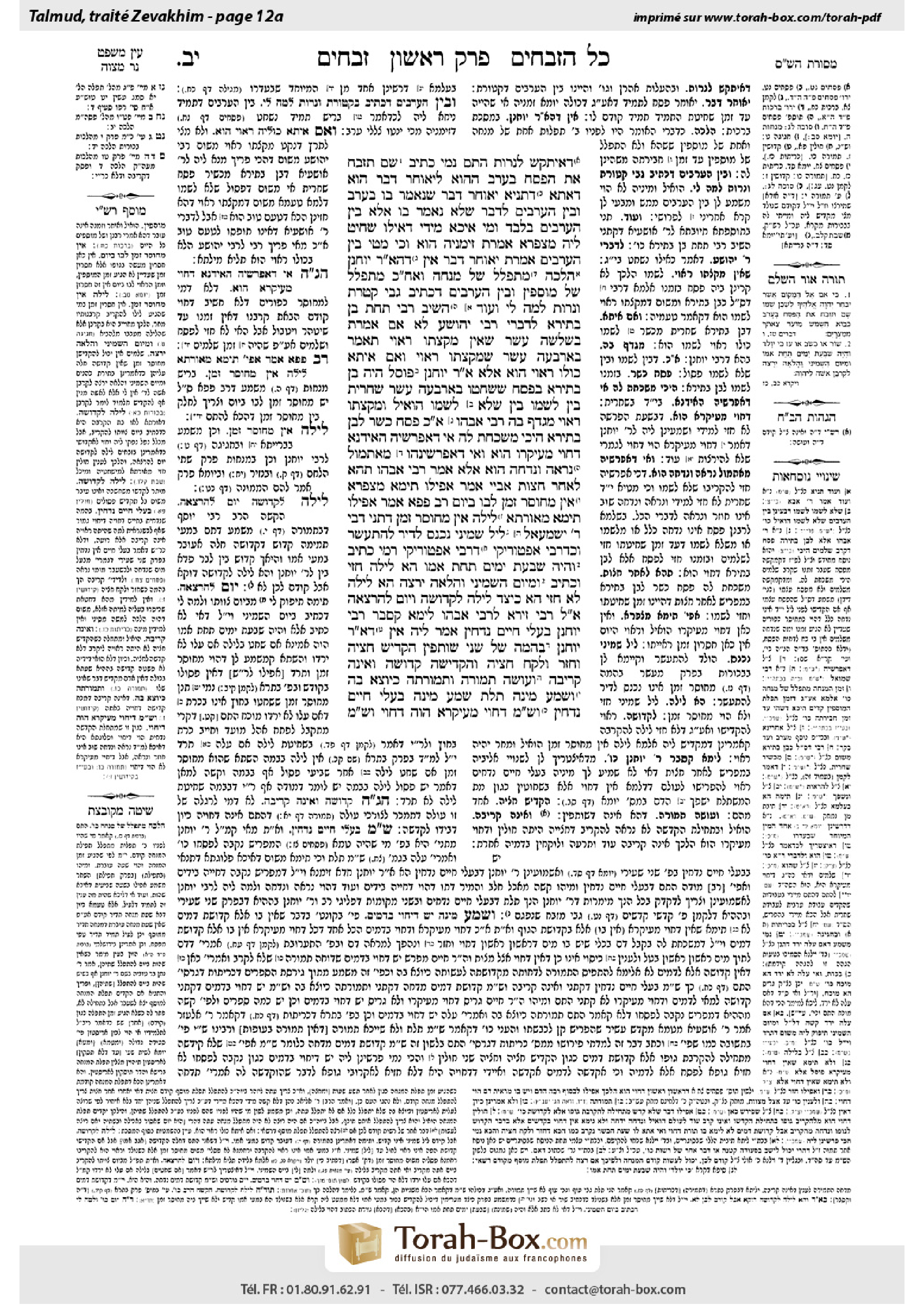
This page of Zevachim includes the Aramaic text, an English translation and an AI-generated French translation, alongside the scan above.
זבחים י״ב א · Aramaic and Hebrew text
דְּאִיתַּקַּשׁ לְנֵרוֹת.
הָתָם נָמֵי, כְּתִיב: ״שָׁם תִּזְבַּח אֶת הַפֶּסַח בָּעָרֶב״!
הָהוּא לִ״יאוּחַר דָּבָר״ הוּא דַּאֲתָא, דְּתַנְיָא: יְאוּחַר דָּבָר שֶׁנֶּאֱמַר בּוֹ ״בָּעָרֶב״ וּ״בֵין הָעַרְבָּיִם״, לְדָבָר שֶׁלֹּא נֶאֱמַר בּוֹ אֶלָּא ״בֵּין הָעַרְבָּיִם״ בִּלְבַד.
וּמִי אִיכָּא מִידֵּי דְּאִילּוּ שָׁחֵיט לֵיהּ מִצַּפְרָא – אָמְרַתְּ זִימְנֵיהּ הוּא, וְכִי מָטֵי בֵּין הָעַרְבַּיִם – אָמְרַתְּ ״יְאוּחַר דָּבָר״?
אִין; דְּהָאָמַר רַבִּי יוֹחָנָן: הֲלָכָה – מִתְפַּלֵּל שֶׁל מִנְחָה, וְאַחַר כָּךְ מִתְפַּלֵּל שֶׁל מוּסָפִין.
וּ״בֵין הָעַרְבַּיִם״ דִּכְתִיב גַּבֵּי קְטֹרֶת וְנֵרוֹת, לְמָה לִי?
וְעוֹד הֵשִׁיב רַבִּי – תַּחַת בֶּן בְּתִירָא – לְדִבְרֵי רַבִּי יְהוֹשֻׁעַ: לֹא; אִם אָמַרְתָּ בִּשְׁלֹשָׁה עָשָׂר – שֶׁאֵין מִקְצָתוֹ רָאוּי, תֹּאמַר בְּאַרְבָּעָה עָשָׂר – שֶׁמִּקְצָתוֹ רָאוּי?!
וְאִם אִיתָא, כּוּלּוֹ רָאוּי הוּא!
אֶלָּא אָמַר רַבִּי יוֹחָנָן: פּוֹסֵל הָיָה בֶּן בְּתִירָא בְּפֶסַח שֶׁשְּׁחָטוֹ בְּאַרְבָּעָה עָשָׂר שַׁחֲרִית, בֵּין לִשְׁמוֹ בֵּין שֶׁלֹּא לִשְׁמוֹ, הוֹאִיל וּמִקְצָתוֹ רָאוּי.
מְגַדֵּף בַּהּ רַבִּי אֲבָהוּ: אִם כֵּן, פֶּסַח כָּשֵׁר לְבֶן בְּתִירָא – הֵיכִי מַשְׁכַּחַתְּ לַהּ? אִי דְּאַפְרְשֵׁיהּ הָאִידָּנָא – דָּחוּי מֵעִיקָּרוֹ הוּא, וְאִי דְּאַפְרְשִׁינְהוּ מֵאֶתְמוֹל – נִרְאֶה וְנִדְחֶה הוּא!
אֶלָּא אָמַר רַבִּי אֲבָהוּ: תְּהֵא לְאַחַר חֲצוֹת.
אַבָּיֵי אָמַר: אֲפִילּוּ תֵּימָא מִצַּפְרָא – אֵין מְחוּסַּר זְמַן לְבוֹ בַּיּוֹם.
רַב פָּפָּא אָמַר: אֲפִילּוּ תֵּימָא מֵאוּרְתָּא – לַיְלָה אֵין מְחוּסָּר זְמַן; דְּתָנֵי דְּבֵי רַבִּי יִשְׁמָעֵאל: לֵיל שְׁמִינִי נִכְנָס לַדִּיר לְהִתְעַשֵּׂר.
וְכִדְרַבִּי אַפְטוֹרִיקִי, דְּרַבִּי אַפְטוֹרִיקִי רָמֵי: כְּתִיב ״וְהָיָה שִׁבְעַת יָמִים תַּחַת אִמּוֹ״ – הָא לַיְלָה חֲזֵי; וּכְתִיב ״וּמִיּוֹם הַשְּׁמִינִי וָהָלְאָה יֵרָצֶה״ – הָא לַיְלָה לָא חֲזֵי!
הָא כֵּיצַד? לַיְלָה לִקְדוּשָּׁה, וְיוֹם לְהַרְצָאָה.
אֲמַר לֵיהּ רַבִּי זֵירָא לְרַבִּי אֲבָהוּ: לֵימָא קָסָבַר רַבִּי יוֹחָנָן בַּעֲלֵי חַיִּים נִדְחִין?!
אֲמַר לֵיהּ: אִין; דְּאָמַר רַבִּי יוֹחָנָן: בְּהֵמָה שֶׁל שְׁנֵי שׁוּתָּפִין – הִקְדִּישׁ חֶצְיָהּ, וְחָזַר וְלָקַח חֶצְיָהּ וְהִקְדִּישָׁהּ – קְדוֹשָׁה, וְאֵינָהּ קְרֵיבָה.
וְעוֹשֶׂה תְּמוּרָה, וּתְמוּרָתָהּ כְּיוֹצֵא בָּהּ.
וּשְׁמַע מִינַּהּ תְּלָת: שְׁמַע מִינַּהּ בַּעֲלֵי חַיִּים נִדְחִין, וּשְׁמַע מִינַּהּ דָּחוּי מֵעִיקָּרָא הָוֵה דָּחוּי, וּשְׁמַע מִינַּהּ
Zevachim 12a · English translation
as it is juxtaposed with the lighting of the lamps (see Exodus 30:8). Evidently, it is burned in the afternoon as well.
The Gemara asks: Just as it is written explicitly that the Candelabrum must be lit in the evening, there too, with regard to a Paschal offering, it is written: “There you shall sacrifice the Passover offering at evening” (Deuteronomy 16:6). How can ben Beteira claim that it may be sacrificed all day long?
The Gemara answers: That verse comes to teach a different halakha, that a certain item should be sacrificed after another item. As it is taught in a baraita with regard to the order of precedence between the Paschal offering and the daily afternoon offering: An item, i.e., the Paschal offering, with regard to which both the expressions: “In the evening,” and: “Bein ha’arbayim,” are stated, should be sacrificed after an item, the daily afternoon offering, with regard to which only “bein ha’arbayim” is stated.
The Gemara asks: But is there anything comparable to ben Beteira’s suggestion, that if one slaughters it in the morning, you say that it is its designated time and it is fit; but when afternoon comes, you say that the item should be sacrificed only after the daily afternoon offering?
The Gemara answers: Yes, there is a precedent; as Rabbi Yoḥanan says: If one did not recite the additional prayers of Shabbat, the New Moon, or a Festival, which should be recited in the morning, until it is time for the afternoon prayer, the halakha is that he should first recite the afternoon prayer, and recite the additional prayers thereafter.
The Gemara asks: But if the term “bein ha’arbayim” is referring to the entire day, as ben Beteira maintains, why do I need those instances of the expression that are written with regard to burning incense and lighting the lamps, which are not performed all day?
Furthermore, this interpretation of the opinion of ben Beteira is difficult, as Rabbi Yehuda HaNasi responded on behalf of ben Beteira to the statement of Rabbi Yehoshua that a Paschal offering slaughtered not for its sake on the morning of the fourteenth of Nisan is fit, as though it were slaughtered on the thirteenth: No, if you said that this is the halakha with regard to the thirteenth, as no part of the day is fit for sacrificing the Paschal offering, shall you also say that this is the halakha with regard to the fourteenth, part of which is fit for sacrificing the Paschal offering? Since it can be sacrificed in the afternoon of the fourteenth, if it is slaughtered in the morning not for its sake, it is disqualified.
The Gemara concludes: And if it is so that a Paschal offering can be sacrificed throughout the day of the fourteenth, all of it is fit, not only part of it.
Rather, Rabbi Oshaya’s interpretation of ben Beteira’s opinion is rejected. Instead, Rabbi Yoḥanan says: With regard to a Paschal offering that one slaughtered on the fourteenth in the morning, ben Beteira would deem it unfit, whether it was slaughtered for its sake or not for its sake. It is unfit even if it was slaughtered not for its sake, since part of the day is fit for its sacrifice as a Paschal offering.
Rabbi Abbahu ridiculed [megaddef ] this interpretation: If so, how can you find a fit Paschal offering according to ben Beteira? If its owner designated an animal now, on the morning of the fourteenth, as a Paschal offering, it is disqualified from the outset, as it cannot be sacrificed at all, either for its sake or not for its sake. And even if its owner designated it the previous day, when it was fit to be sacrificed not for its sake, it was fit and then disqualified the next morning, when it was no longer fit to be sacrificed until the afternoon. Once an offering is disqualified, it can no longer become fit.
Rather, Rabbi Abbahu says: Let the Paschal offering be fit when it is designated on the fourteenth after noon, when it may already be sacrificed as a Paschal offering.
Abaye says: You may even say that it is fit if designated in the morning, as an offering is not disqualified due to the fact that it is an offering whose time has not yet arrived if its time will arrive on that same day.
Rav Pappa says: You may even say that it is fit if designated from the previous night, as an offering that was designated at night and may be sacrificed the following day is not considered an offering whose time has not yet arrived, as it is taught in the school of Rabbi Yishmael: Although an animal is unfit for sacrifice until its eighth day, on the night before its eighth day it may already enter the den to be tithed.
And this is in accordance with the statement of Rabbi Appetoriki, as Rabbi Appetoriki raises a contradiction: It is written: “When a bull or a sheep or a goat is born, then it shall be seven days with its mother” (Leviticus 22:27); consequently, on the following night, i.e., the night before the eighth day, it is fit for sacrifice. And it is written subsequently in that verse: “But from the eighth day and on it may be accepted for an offering made by fire unto the Lord”; consequently, on the previous night, i.e., the night before the eighth day, it is not yet fit.
How can these texts be reconciled? At night it is fit for consecration, and the following day it is fit for effecting acceptance, i.e., for sacrifice. Apparently, an offering that may be sacrificed the following day can be consecrated the previous night, even though it may not be sacrificed at night, and it is not considered an offering whose time has not yet arrived.
§ Rabbi Abbahu presumes that an animal consecrated before it may be sacrificed is disqualified. With regard to this, Rabbi Zeira said to Rabbi Abbahu: Shall we say that Rabbi Yoḥanan holds that consecrated animals that cannot be sacrificed at any given moment are disqualified from ever being sacrificed?
Rabbi Abbahu said to him: Yes, as Rabbi Yoḥanan says: With regard to an animal belonging to two partners, if one of them consecrated the half of it that belongs to him, and then purchased the other half of it from his partner and consecrated it, it is consecrated, despite the fact that it was consecrated piecemeal. But it may not be sacrificed, since when he first consecrated it, the consecration did not extend to his partner’s half. Since the animal was not fit to be sacrificed then, it is disqualified permanently.
But as it is consecrated now, it can render consecrated as a substitute a non-sacred animal that is exchanged for it. If the owner substitutes a non-sacred animal for this one, the second animal becomes consecrated as well. And yet its substitute is like it; it too is consecrated but cannot be sacrificed.
And one can conclude three points from this statement: Conclude from it that animals that cannot be sacrificed are permanently disqualified; and conclude from it that disqualification from the outset, i.e., from the time the offering is consecrated, is permanent disqualification; and conclude from it that
Zevachim 12a · Traduction française (IA)
car elle est juxtaposée à l’allumage des lampes (voir Exode 30,8). Il apparaît donc qu’on la brûle également l’après-midi.
La Guemara demande : De même qu’il est explicitement écrit que le candélabre doit être allumé le soir, il est également écrit, au sujet du sacrifice pascal : « C’est là que tu sacrifieras le sacrifice de Pessa’h, le soir » (Deutéronome 16,6). Comment ben Beteira peut-il affirmer qu’on peut le sacrifier toute la journée ?
La Guemara répond : Ce verset vient enseigner une autre halakha : un sacrifice doit être offert après un autre. En effet, il est enseigné dans une baraïta, au sujet de l’ordre de priorité entre le sacrifice pascal et l’offrande quotidienne de l’après-midi : un sacrifice — le sacrifice pascal — à propos duquel figurent les expressions « le soir » et « entre les soirs » doit être offert après un sacrifice — l’offrande quotidienne de l’après-midi — à propos duquel seule figure l’expression « entre les soirs ».
La Guemara demande : Existe-t-il un précédent comparable à la proposition de ben Beteira, selon laquelle, si on l’abat le matin, on dit que c’est le moment qui lui est réservé et qu’il est valide, mais que, lorsque l’après-midi arrive, on dit qu’il ne doit être offert qu’après l’offrande quotidienne de l’après-midi ?
La Guemara répond : Oui, il existe un précédent. Rabbi Yoḥanan dit en effet que si quelqu’un n’a pas récité les prières supplémentaires du Chabbat, de la nouvelle lune ou d’une fête, qui doivent être récitées le matin, avant l’heure de la prière de l’après-midi, la halakha veut qu’il récite d’abord la prière de l’après-midi, puis les prières supplémentaires.
La Guemara demande : Mais si l’expression « entre les soirs » désigne toute la journée, comme le soutient ben Beteira, pourquoi ces occurrences de l’expression, qui figurent à propos de la combustion de l’encens et de l’allumage des lampes, sont-elles nécessaires, alors que ces actes ne sont pas accomplis toute la journée ?
En outre, cette interprétation de l’opinion de ben Beteira est difficile, car Rabbi Yehuda HaNasi répondit au nom de ben Beteira à l’affirmation de Rabbi Yehoshua selon laquelle un sacrifice pascal abattu sans être destiné à cet usage le matin du quatorze nissan est valide, comme s’il avait été abattu le treize : Non. Si tu disais que telle est la halakha concernant le treize, puisqu’aucun moment de cette journée ne convient pour offrir le sacrifice pascal, dirais-tu aussi que telle est la halakha concernant le quatorze, dont une partie convient pour offrir le sacrifice pascal ? Puisqu’on peut l’offrir l’après-midi du quatorze, s’il est abattu le matin sans être destiné à cet usage, il est invalide.
La Guemara conclut : Or, s’il en est ainsi et que le sacrifice pascal peut être offert tout au long du quatorze, toute la journée convient, et pas seulement une partie.
L’interprétation de l’opinion de ben Beteira proposée par Rabbi Oshaya est donc rejetée. Rabbi Yoḥanan dit plutôt : ben Beteira déclarerait invalide un sacrifice pascal abattu le matin du quatorze, qu’il ait été abattu pour cet usage ou non. Il est invalide même s’il a été abattu sans être destiné à cet usage, puisque seule une partie de la journée convient pour l’offrir en tant que sacrifice pascal.
Rabbi Abbahu tourna [megaddef ] cette interprétation en dérision : Dans ce cas, comment peut-on trouver un sacrifice pascal valide selon ben Beteira ? Si son propriétaire désigne maintenant un animal comme sacrifice pascal, le matin du quatorze, celui-ci est invalide d’emblée, car il ne peut être offert à aucun moment, ni pour cet usage ni pour un autre. Même si son propriétaire l’a désigné la veille, alors qu’il pouvait être offert sans être destiné à cet usage, il était valide, puis est devenu invalide le lendemain matin, puisqu’il ne pouvait plus être offert avant l’après-midi. Une fois qu’un sacrifice est invalidé, il ne peut plus redevenir valide.
Rabbi Abbahu dit plutôt : Le sacrifice pascal est valide s’il est désigné le quatorze après midi, moment où il peut déjà être offert en tant que sacrifice pascal.
Abaye dit : On peut même dire qu’il est valide s’il est désigné le matin, car un sacrifice n’est pas invalidé au motif que son heure n’est pas encore arrivée lorsque cette heure arrive le même jour.
Rav Pappa dit : On peut même dire qu’il est valide s’il est désigné la nuit précédente, car un sacrifice désigné la nuit et pouvant être offert le lendemain n’est pas considéré comme un sacrifice dont l’heure n’est pas encore arrivée. En effet, il est enseigné dans l’école de Rabbi Yishmael : bien qu’un animal ne soit pas apte au sacrifice avant son huitième jour, il peut déjà entrer dans l’enclos destiné à la dîme la nuit qui précède ce jour.
Cela est conforme à l’enseignement de Rabbi Appetoriki, qui soulève une contradiction : il est écrit : « Lorsqu’un taureau, un mouton ou une chèvre naît, il restera sept jours auprès de sa mère » (Lévitique 22,27) ; par conséquent, la nuit suivante, c’est-à-dire la nuit qui précède le huitième jour, l’animal est apte au sacrifice. Or, il est écrit ensuite dans ce verset : « Mais à partir du huitième jour, il pourra être agréé comme offrande consumée par le feu pour le Seigneur » ; par conséquent, la nuit précédente, c’est-à-dire celle qui précède le huitième jour, il n’est pas encore apte.
Comment concilier ces textes ? La nuit, l’animal peut être consacré ; le lendemain, il peut être agréé, c’est-à-dire offert en sacrifice. Il apparaît donc qu’un sacrifice pouvant être offert le lendemain peut être consacré la nuit précédente, même s’il ne peut pas être offert la nuit, et qu’il n’est pas considéré comme un sacrifice dont l’heure n’est pas encore arrivée.
§ Rabbi Abbahu estime qu’un animal consacré avant de pouvoir être offert est invalidé. À ce sujet, Rabbi Zeira lui dit : Faut-il en conclure que, selon Rabbi Yoḥanan, les animaux consacrés qui ne peuvent être offerts à un moment donné sont invalidés définitivement ?
Rabbi Abbahu lui dit : Oui, car Rabbi Yoḥanan dit : si un animal appartient à deux associés, que l’un d’eux consacre la moitié qui lui appartient, puis achète à son associé l’autre moitié et la consacre, l’animal est consacré, bien qu’il ait été consacré par étapes. Mais il ne peut pas être offert, car, lorsqu’il en a consacré la première moitié, la consécration ne s’étendait pas à la moitié de son associé. Puisque l’animal ne pouvait alors pas être offert, il est définitivement invalide.
Mais, puisqu’il est maintenant consacré, il peut rendre consacré, en tant que substitut, un animal non consacré échangé contre lui. Si le propriétaire substitue un animal non consacré à celui-ci, le second animal est lui aussi consacré. Et pourtant, son substitut est comme lui : il est également consacré, mais ne peut pas être offert.
Et l’on peut tirer de cet enseignement trois conclusions : les animaux qui ne peuvent pas être offerts sont invalidés définitivement ; l’invalidation d’emblée, c’est-à-dire dès le moment où le sacrifice est consacré, est définitive ; et l’on peut en conclure que
Traduction française générée par IA à partir de l’édition anglaise de Sefaria. Vérifie toujours un passage avec le texte source.
Text from Sefaria: William Davidson Edition - Vocalized Aramaic (CC BY NC); William Davidson Edition - English (CC BY NC).