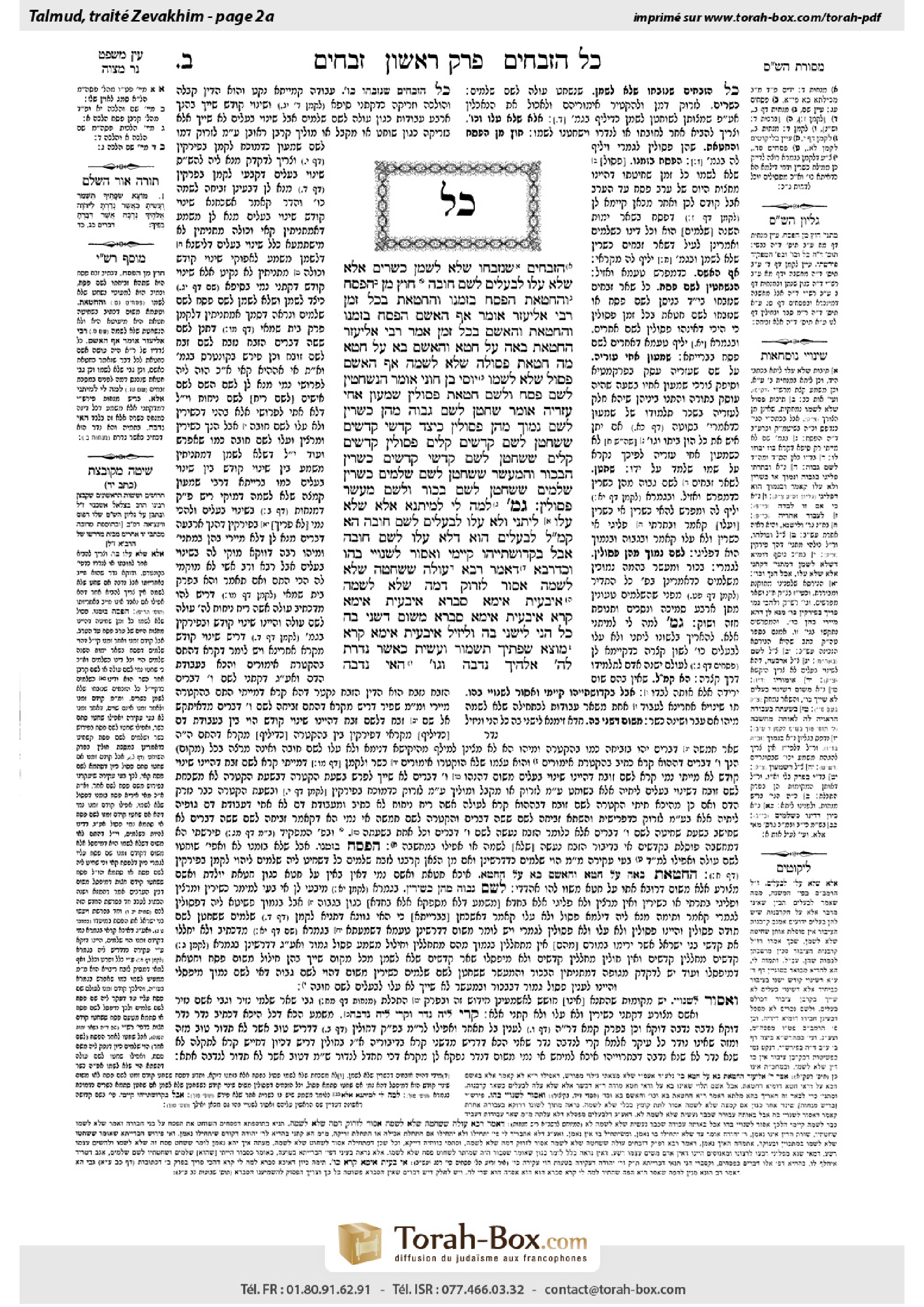
Zevachim 2a: Talmud study for Daf Yomi
Daf Yomi is the daily study of one Talmud folio. Explore 37 tractates with scans, Hebrew text, Sefaria English and AI-generated French translations where annotated.
Passage selection and English or AI-generated French translation are available where the scan has annotations. Daf Study is independent of Torah-Box and Sefaria.
Browse Zevachim · זבחים · All tractatesZevachim 2a text and translations
This page of Zevachim includes the Aramaic text, an English translation and an AI-generated French translation, alongside the scan above.
זבחים ב׳ א · Aramaic and Hebrew text
מַתְנִי׳ כׇּל הַזְּבָחִים שֶׁנִּזְבְּחוּ שֶׁלֹּא לִשְׁמָן – כְּשֵׁרִים, אֶלָּא שֶׁלֹּא עָלוּ לַבְּעָלִים לְשֵׁם חוֹבָה; חוּץ מִן הַפֶּסַח וְהַחַטָּאת – הַפֶּסַח בִּזְמַנּוֹ, וְהַחַטָּאת בְּכׇל זְמַן.
רַבִּי אֱלִיעֶזֶר אוֹמֵר: אַף הָאָשָׁם – הַפֶּסַח בִּזְמַנּוֹ, וְהַחַטָּאת וְהָאָשָׁם בְּכׇל זְמַן. אָמַר רַבִּי אֱלִיעֶזֶר: הַחַטָּאת בָּאָה עַל חֵטְא, וְהָאָשָׁם בָּא עַל חֵטְא; מָה חַטָּאת – פְּסוּלָה שֶׁלֹּא לִשְׁמָהּ, אַף הָאָשָׁם – פָּסוּל שֶׁלֹּא לִשְׁמוֹ.
יוֹסֵי בֶּן חוֹנִי אוֹמֵר: הַנִּשְׁחָטִין לְשֵׁם פֶּסַח וּלְשֵׁם חַטָּאת – פְּסוּלִין.
שִׁמְעוֹן אֲחִי עֲזַרְיָה אוֹמֵר: שְׁחָטָן לְשֵׁם גָּבוֹהַּ מֵהֶן – כְּשֵׁרִין, לְשֵׁם נָמוּךְ מֵהֶן – פְּסוּלִין.
כֵּיצַד? קָדְשֵׁי קָדָשִׁים שֶׁשְּׁחָטָן לְשֵׁם קֳדָשִׁים קַלִּים – פְּסוּלִין, קֳדָשִׁים קַלִּים שֶׁשְּׁחָטָן לְשֵׁם קׇדְשֵׁי קֳדָשִׁים – כְּשֵׁרִין. הַבְּכוֹר וְהַמַּעֲשֵׂר שֶׁשְּׁחָטָן לְשֵׁם שְׁלָמִים – כְּשֵׁרִין, שְׁלָמִים שֶׁשְּׁחָטָן לְשֵׁם בְּכוֹר וּלְשֵׁם מַעֲשֵׂר – פְּסוּלִין.
גְּמָ׳ לְמָה לִי לְמִיתְנָא ״אֶלָּא שֶׁלֹּא עָלוּ״? לִיתְנֵי ״וְלֹא עָלוּ לַבְּעָלִים לְשֵׁם חוֹבָה״!
הָא קָא מַשְׁמַע לַן: לַבְּעָלִים הוּא דְּלָא עָלוּ לְשֵׁם חוֹבָה – אֲבָל בִּקְדוּשְׁתַּיְיהוּ קָיְימִי, וְאָסוּר לְשַׁנּוֹיֵי בְּהוּ.
וְכִדְרָבָא, דְּאָמַר רָבָא: עוֹלָה שֶׁשְּׁחָטָהּ שֶׁלֹּא לִשְׁמָהּ – אָסוּר לִזְרוֹק דָּמָהּ שֶׁלֹּא לִשְׁמָהּ.
אִיבָּעֵית אֵימָא סְבָרָא, אִיבָּעֵית אֵימָא קְרָא. אִיבָּעֵית אֵימָא סְבָרָא: מִשּׁוּם דְּשַׁנִּי בַּהּ – כָּל הָנֵי לִישַׁנֵּי בַּהּ וְלֵיזִיל?!
אִיבָּעֵית אֵימָא קְרָא: ״מוֹצָא שְׂפָתֶיךָ תִּשְׁמֹר וְעָשִׂיתָ, כַּאֲשֶׁר נָדַרְתָּ לַה׳ אֱלֹהֶיךָ נְדָבָה וְגוֹ׳״ – הַאי נְדָבָה?!
Zevachim 2a · English translation
MISHNA: All slaughtered offerings that were slaughtered not for their own sake, i.e., during the slaughtering the slaughterer’s intent was to sacrifice a different offering, are fit, and one may continue their sacrificial rites and partake of their meat where that applies. But these offerings did not satisfy the obligation of the owner, who is therefore required to bring another offering. This is the halakha with regard to all offerings except for the Paschal offering and the sin offering. In those cases, if the owner sacrificed them not for their own sake, they are unfit. But there is a difference between the two exceptions. The Paschal offering is unfit only when sacrificed not for its sake at its appointed time, on the fourteenth day of Nisan after noon, while the sin offering is unfit any time that it is sacrificed not for its sake.
Rabbi Eliezer says: The guilt offering too is unfit when sacrificed not for its sake. According to his opinion, the correct reading of the mishna is: The Paschal offering is unfit only at its appointed time, while the sin offering and the guilt offering are unfit at all times. Rabbi Eliezer said in explanation: The sin offering is brought for performance of a transgression and the guilt offering is brought for performance of a transgression. Just as a sin offering is unfit when sacrificed not for its sake, so too, the guilt offering is unfit when sacrificed not for its sake.
Yosei ben Ḥoni says: Not only are the Paschal offering and the sin offering unfit when slaughtered not for their sake, but also other offerings that are slaughtered for the sake of a Paschal offering and for the sake of a sin offering are unfit.
Shimon, brother of Azarya, says that this is the distinction: With regard to all offerings, if one slaughtered them for the sake of an offering whose level of sanctity is greater than theirs, they are fit; if one slaughtered them for the sake of an offering whose level of sanctity is less than theirs, they are unfit.
How so? Offerings of the most sacred order, e.g., sin offerings and burnt offerings, that one slaughtered for the sake of offerings of lesser sanctity, e.g., peace offerings, are unfit. Offerings of lesser sanctity that one slaughtered for the sake of offerings of the most sacred order are fit. Likewise, there is a distinction between different offerings of lesser sanctity. The firstborn animal and the animal tithe that one slaughtered for the sake of a peace offering are fit, as the sanctity of peace offerings is greater. Peace offerings that one slaughtered for the sake of a firstborn animal or for the sake of an animal tithe are unfit.
GEMARA: The mishna teaches: All slaughtered offerings that were slaughtered not for their sake are fit, but they did not satisfy the obligation of the owner. The Gemara asks: Why do I need the mishna to teach this halakha using the language: But they did not [ella shelo] satisfy the obligation of the owner? Let it teach simply: And they did not [velo] satisfy the obligation of the owner. What does the word: But [ella], add?
The Gemara responds: By adding this word, the mishna teaches us that the only deficiency with regard to these offerings is that they did not satisfy the obligation of the owner, but they retain their sanctity, and it is still prohibited to deviate from the protocol of their sacrificial process, i.e., the remaining rites must be performed with proper intent.
And this halakha is in accordance with the statement of Rava, as Rava says: With regard to a burnt offering that one slaughtered not for its sake, it is still prohibited to sprinkle its blood on the altar not for its sake.
The Gemara adds: If you wish, propose a logical argument to support this statement, and if you wish, cite a verse as proof. The Gemara elaborates: If you wish, propose a logical argument: Just because one deviated from protocol in its sacrifice once, i.e., in its slaughter, could it be that he should continue to deviate from protocol in all the rest of the sacrificial rites? One deviation does not justify additional deviations.
And if you wish, cite a verse: “That which has gone out of your lips you shall observe and do; according to what you have vowed [nadarta] freely [nedava] to the Lord your God, even that which you have promised with your mouth” (Deuteronomy 23:24). The Gemara interprets the words nadarta and nedava exegetically: Can this verse be referring to a gift offering [nedava]?
Zevachim 2a · Traduction française (IA)
MICHNA : Tous les sacrifices abattus sans intention conforme à leur désignation, c’est-à-dire lorsque, pendant l’abattage, celui qui abat avait l’intention d’offrir un autre sacrifice, restent valides et leur service sacrificiel peut se poursuivre ; leur viande peut être consommée lorsque cela s’applique. Cependant, ces sacrifices n’ont pas acquitté le propriétaire de son obligation, qui doit donc en apporter un autre. Cette halakha concerne tous les sacrifices, à l’exception du sacrifice pascal et du sacrifice expiatoire. Dans ces cas, s’ils ont été offerts sans intention conforme à leur désignation, ils sont invalides. Il existe toutefois une différence entre ces deux exceptions. Le sacrifice pascal n’est invalide que s’il est offert sans intention conforme à sa désignation au moment prescrit, le quatorzième jour de Nissan après midi, tandis que le sacrifice expiatoire est invalide chaque fois qu’il est offert sans intention conforme à sa désignation.
Rabbi Eliezer dit : Le sacrifice de culpabilité aussi est invalide s’il est offert sans intention conforme à sa désignation. Selon son opinion, il faut lire la Michna ainsi : Le sacrifice pascal n’est invalide qu’au moment prescrit, tandis que le sacrifice expiatoire et le sacrifice de culpabilité sont invalides en tout temps. Rabbi Eliezer expliqua : Le sacrifice expiatoire est apporté à la suite d’une transgression, et le sacrifice de culpabilité est apporté à la suite d’une transgression. De même qu’un sacrifice expiatoire est invalide s’il est offert sans intention conforme à sa désignation, de même le sacrifice de culpabilité est invalide s’il est offert sans intention conforme à sa désignation.
Yosei ben Ḥoni dit : Non seulement le sacrifice pascal et le sacrifice expiatoire sont invalides lorsqu’ils sont abattus sans intention conforme à leur désignation, mais les autres sacrifices aussi sont invalides lorsqu’ils sont abattus avec l’intention de les offrir comme sacrifices pascals ou comme sacrifices expiatoires.
Shimon, frère d’Azarya, dit que la distinction est la suivante : pour tous les sacrifices, si on les abat avec l’intention de les offrir comme un sacrifice dont le degré de sainteté est supérieur au leur, ils restent valides ; si on les abat avec l’intention de les offrir comme un sacrifice dont le degré de sainteté est inférieur au leur, ils sont invalides.
Comment cela ? Les sacrifices de sainteté éminente, par exemple les sacrifices expiatoires et les holocaustes, qu’on abat avec l’intention de les offrir comme des sacrifices de moindre sainteté, par exemple des sacrifices de paix, sont invalides. Les sacrifices de moindre sainteté qu’on abat avec l’intention de les offrir comme des sacrifices de sainteté éminente restent valides. De même, il existe une distinction entre différents sacrifices de moindre sainteté. Le premier-né et la dîme animale qu’on abat avec l’intention de les offrir comme sacrifices de paix restent valides, car le degré de sainteté des sacrifices de paix est supérieur. Les sacrifices de paix qu’on abat avec l’intention de les offrir comme premier-né ou comme dîme animale sont invalides.
GUEMARA : La Michna enseigne : Tous les sacrifices abattus sans intention conforme à leur désignation restent valides, mais ils n’ont pas acquitté le propriétaire de son obligation. La Guemara demande : Pourquoi la Michna enseigne-t-elle cette halakha en disant : « mais [ella shelo] ils n’ont pas acquitté le propriétaire de son obligation » ? Qu’elle dise simplement : « et [velo] ils n’ont pas acquitté le propriétaire de son obligation ». Qu’ajoute le mot « mais [ella] » ?
La Guemara répond : En ajoutant ce mot, la Michna nous enseigne que le seul défaut de ces sacrifices est qu’ils n’ont pas acquitté le propriétaire de son obligation ; toutefois, ils conservent leur sainteté et il reste interdit de s’écarter du protocole de leur service sacrificiel, c’est-à-dire que les rites restants doivent être accomplis avec l’intention appropriée.
Cette halakha est conforme à l’enseignement de Rava, car Rava dit : Pour un holocauste qu’on a abattu sans intention conforme à sa désignation, il reste interdit d’en asperger le sang sur l’autel sans intention conforme à sa désignation.
La Guemara ajoute : Si tu le souhaites, avance un raisonnement logique à l’appui de cet enseignement, et si tu le souhaites, cite un verset comme preuve. La Guemara développe : Si tu le souhaites, avance un raisonnement logique : sous prétexte qu’on s’est écarté une fois du protocole de son sacrifice, c’est-à-dire lors de son abattage, peut-on continuer à s’écarter du protocole dans tous les autres rites sacrificiels ? Un écart ne justifie pas d’autres écarts.
Et si tu le souhaites, cite un verset : « Tu observeras et tu accompliras ce qui est sorti de tes lèvres ; selon ce que tu as voué [nadarta] librement [nedava] à l’Éternel ton Dieu, même ce que tu as promis de ta bouche » (Deutéronome 23, 24). La Guemara interprète les mots nadarta et nedava par exégèse : Ce verset pourrait-il parler d’une offrande volontaire [nedava] ?
Traduction française générée par IA à partir de l’édition anglaise de Sefaria. Vérifie toujours un passage avec le texte source.
Text from Sefaria: William Davidson Edition - Vocalized Aramaic (CC BY NC); William Davidson Edition - English (CC BY NC).