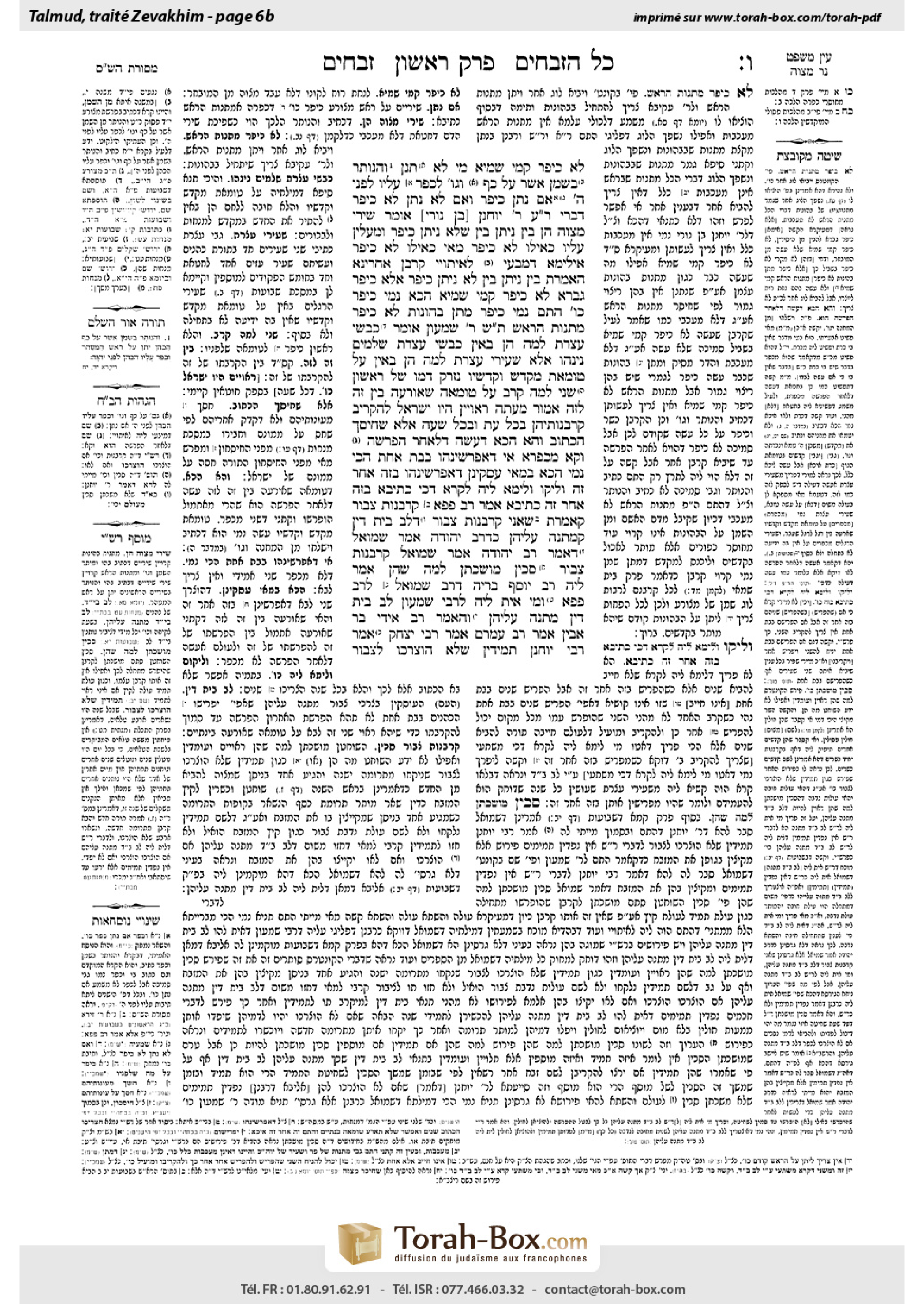
Zevachim 6b: Talmud study for Daf Yomi
Daf Yomi is the daily study of one Talmud folio. Explore 37 tractates with scans, Hebrew text, Sefaria English and AI-generated French translations where annotated.
Passage selection and English or AI-generated French translation are available where the scan has annotations. Daf Study is independent of Torah-Box and Sefaria.
Browse Zevachim · זבחים · All tractatesZevachim 6b text and translations
This page of Zevachim includes the Aramaic text, an English translation and an AI-generated French translation, alongside the scan above.
זבחים ו׳ ב · Aramaic and Hebrew text
לֹא כִּיפֵּר – קַמֵּי שְׁמַיָּא!
מִי לָא תְּנַן: ״וְהַנּוֹתָר בַּשֶּׁמֶן אֲשֶׁר עַל כַּף וְגוֹ׳ לְכַפֵּר עָלָיו לִפְנֵי ה׳״ – אִם נָתַן, כִּיפֵּר; וְאִם לֹא נָתַן, לֹא כִּיפֵּר. דִּבְרֵי רַבִּי עֲקִיבָא. רַבִּי יוֹחָנָן [בֶּן נוּרִי] אוֹמֵר: שְׁיָרֵי מִצְוָה הֵן; בֵּין נִיתַּן בֵּין שֶׁלֹּא נִיתַּן – כִּיפֵּר, וּמַעֲלִין עָלָיו כְּאִילּוּ לֹא כִּיפֵּר.
מַאי ״כְּאִילּוּ לֹא כִּיפֵּר״? אִילֵּימָא דְּמִבְּעֵי לְאֵיתוֹיֵי קׇרְבָּן אַחֲרִינָא, הָאָמְרַתְּ: בֵּין נִיתַּן בֵּין לֹא נִיתַּן כִּיפֵּר! אֶלָּא כִּיפֵּר – גַּבְרָא, לֹא כִּיפֵּר – קַמֵּי שְׁמַיָּא; הָכָא נָמֵי כִּיפֵּר כּוּ׳!
הָתָם נָמֵי, כִּיפֵּר – מַתַּן בְּהוֹנוֹת, לֹא כִּיפֵּר – מַתְּנוֹת הָרֹאשׁ.
תָּא שְׁמַע, רַבִּי שִׁמְעוֹן אוֹמֵר: כִּבְשֵׂי עֲצֶרֶת לָמָה הֵן בָּאִין?
כִּבְשֵׂי עֲצֶרֶת שְׁלָמִים נִינְהוּ! אֶלָּא שְׂעִירֵי עֲצֶרֶת לָמָה הֵן בָּאִין?
עַל טוּמְאַת מִקְדָּשׁ וְקָדָשָׁיו.
נִזְרַק דָּמוֹ שֶׁל רִאשׁוֹן, שֵׁנִי לָמָּה קָרֵב? עַל טוּמְאָה שֶׁאוֹרְעָה בֵּין זֶה לָזֶה. אֱמוֹר מֵעַתָּה: רְאוּיִין הָיוּ יִשְׂרָאֵל לְהַקְרִיב קׇרְבְּנוֹתֵיהֶן בְּכׇל עֵת וּבְכׇל שָׁעָה, אֶלָּא שֶׁחִיסֵּךְ הַכָּתוּב.
וְהָא הָכָא דַּעֲשֵׂה דִּלְאַחַר הַפְרָשָׁה, וְקָא מְכַפְּרָא!
אִי דְּאַפְרְשִׁינְהוּ בְּבַת אַחַת – הָכִי נָמֵי; הָכָא בְּמַאי עָסְקִינַן – דְּאַפְרְשִׁינְהוּ בְּזֶה אַחַר זֶה.
וְלֵיקוֹ וְלֵימָא לֵיהּ לִקְרָא, דְּכִי כְּתִיבָא – בְּזֶה אַחַר זֶה כְּתִיבָא?!
אָמַר רַב פָּפָּא: קׇרְבְּנוֹת צִבּוּר קָאָמְרַתְּ?! שָׁאנֵי קׇרְבְּנוֹת צִבּוּר – דְּלֵב בֵּית דִּין קָמַתְנֶה עֲלֵיהֶן, כִּדְרַב יְהוּדָה אָמַר שְׁמוּאֵל; דְּאָמַר רַב יְהוּדָה אָמַר שְׁמוּאֵל: קׇרְבְּנוֹת צִבּוּר – סַכִּין מוֹשַׁכְתָּן לְמַה שֶּׁהֵן.
אֲמַר לֵיהּ רַב יוֹסֵף בְּרֵיהּ דְּרַב שְׁמוּאֵל לְרַב פָּפָּא: וּמִי אִית לֵיהּ לְרַבִּי שִׁמְעוֹן לֵב בֵּית דִּין מַתְנֶה עֲלֵיהֶן?! הָאָמַר רַב אִידִי בַּר אָבִין אָמַר רַב עַמְרָם אָמַר רַבִּי יִצְחָק אָמַר רַבִּי יוֹחָנָן: תְּמִידִין שֶׁלֹּא הוּצְרְכוּ לַצִּבּוּר –
Zevachim 6b · English translation
but it did not atone for him before Heaven, i.e., it is not accepted by God as a perfect offering.
Didn’t we learn in a mishna with regard to the purification process of a leper (Nega’im 14:10): The verse states: “And the rest of the oil that is in the priest’s hand he shall put upon the head of the one that is to be purified, to make atonement for him before the Lord” (Leviticus 14:18). This teaches that if the priest placed the oil on the leper’s head, it atoned for him, and he is purified, but if he did not place the oil on his head, it did not atone for him; this is the statement of Rabbi Akiva. Rabbi Yoḥanan ben Nuri says: Placement of the oil on the leper’s head is a non-essential mitzva. Therefore, whether the oil was placed on his head or whether it was not placed on his head, it atoned for him, but the verse ascribes the leper blame as though it did not atone for him.
The Gemara comments: What is the meaning of the phrase: As though it did not atone for him? If we say that it is necessary for the leper to bring another offering of oil, didn’t you say that whether the oil was placed on his head or whether it was not placed on his head, it atoned for him? Rather, the meaning of the statement is as follows: It atoned for the person, but did not atone for him before Heaven. Here too, with regard to one who sacrificed an offering without placing hands on its head, the baraita apparently means that the offering atoned for the owner’s transgression, even if it did not atone for him before Heaven.
The Gemara rejects this suggestion: There too, with regard to the purification process of a leper, one can explain that the oil atoned for one matter and did not atone for another: It atoned; in other words, the placement of oil on the leper’s right thumb and big toe, which was performed, effected its atonement. But it did not atone, i.e., there still needs to be an atonement effected by placement of oil on the leper’s head, and another log of oil must be brought for the performance of that act.
The Gemara returns to the matter of atonement for transgressions committed after the offering’s designation. Come and hear another proof from a baraita: Rabbi Shimon says: With regard to the communal peace offering of two lambs that accompanies the two loaves on Shavuot, for what sin are they brought?
The Gemara interrupts the citation of the baraita: The two lambs sacrificed on Shavuot are not brought for a sin; they are peace offerings brought with the annual public offering of two loaves of new wheat. Rather, the baraita should be emended as follows: For what sin are the goats sacrificed on Shavuot as a sin offering brought?
Rabbi Shimon answers: They are brought for the defiling of the Temple, by entering it while ritually impure, or for defiling its sacrificial foods, by partaking of them while ritually impure.
Rabbi Shimon continues: Once the blood of the first goat is sprinkled on the altar, thereby atoning for this defilement, for what sin is the second one sacrificed? It is sacrificed for any incident involving impurity that may have occurred between the sacrifice of that first goat and the sacrifice of this second goat. Based on this, say that the Jewish people should have had to sacrifice their offerings at all times and at every moment, as perhaps they sinned in the interim; but the verse spared them of this obligation.
The Gemara infers: And here, where an incident involving impurity occurred between the sacrifice of the two goats, is a case where the positive mitzva of distancing ritually impure people from the Temple was violated after the designation of the offering, as both goats were designated in advance. And nevertheless, the second goat atones for the violation. Evidently, an offering can atone for transgressions committed after its designation.
The Gemara rejects this inference: If both goats were designated simultaneously, this would indeed be evidence to that effect. But here we are dealing with a case where they were designated sequentially, and an incident involving impurity may have occurred between their respective designations.
The Gemara challenges this assertion: But shall we stand and say about the verse mandating these two sin offerings that when it is written, it is written specifically with regard to a case where they are designated sequentially?
Rav Pappa said the inference can be rejected for a different reason: Do you say that evidence can be adduced from communal offerings? Communal offerings are different, as the court makes a non-verbal stipulation about them, in accordance with what Rav Yehuda says that Shmuel says. As Rav Yehuda says that Shmuel says: With regard to communal offerings, the slaughtering knife, i.e., the act of slaughter, designates them for what they are. The court stipulates that the second goat be consecrated as it is sacrificed, and it therefore atones for incidents of impurity that occur beforehand. Individual offerings, by contrast, are all designated in advance.
Rav Yosef, son of Rav Shmuel, said to Rav Pappa: But does Rabbi Shimon accept the opinion that the court can make a non-verbal stipulation about communal offerings? Doesn’t Rav Idi bar Avin say that Rav Amram says that Rabbi Yitzḥak says that Rabbi Yoḥanan says: With regard to animals designated as daily offerings but which in the end were not necessary for use by the public,
Zevachim 6b · Traduction française (IA)
mais elle ne lui a pas obtenu l’expiation devant le Ciel, c’est-à-dire qu’elle n’est pas agréée par Dieu comme une offrande parfaite.
N’avons-nous pas appris dans une Michna, au sujet du processus de purification d’un lépreux (Nega’im 14:10) : le verset déclare : « Et le reste de l’huile qui est dans la main du prêtre, il le mettra sur la tête de celui qui doit être purifié, afin de faire expiation pour lui devant le Seigneur » (Lévitique 14:18). Cela enseigne que si le prêtre a mis l’huile sur la tête du lépreux, elle lui a obtenu l’expiation et il est purifié ; mais s’il ne l’a pas mise sur sa tête, elle ne lui a pas obtenu l’expiation. Telle est l’opinion de Rabbi Akiva. Rabbi Yoḥanan ben Nuri dit : mettre l’huile sur la tête du lépreux est une mitsva qui n’est pas indispensable. Par conséquent, que l’huile ait été mise sur sa tête ou non, elle lui a obtenu l’expiation ; toutefois, le verset impute au lépreux une faute, comme si elle ne lui avait pas obtenu l’expiation.
La Guemara commente : que signifie l’expression « comme si elle ne lui avait pas obtenu l’expiation » ? Si l’on dit que le lépreux doit apporter une autre offrande d’huile, n’as-tu pas dit que, que l’huile ait été mise sur sa tête ou non, elle lui avait obtenu l’expiation ? Il faut plutôt comprendre l’énoncé ainsi : elle a obtenu l’expiation pour la personne, mais pas devant le Ciel. Ici aussi, au sujet de celui qui a offert un sacrifice sans poser les mains sur sa tête, la baraïta semble vouloir dire que l’offrande a expié la faute de son propriétaire, même si elle ne lui a pas obtenu l’expiation devant le Ciel.
La Guemara rejette cette suggestion : là aussi, au sujet du processus de purification d’un lépreux, on peut expliquer que l’huile a obtenu l’expiation pour une chose, mais pas pour une autre : elle a obtenu l’expiation — autrement dit, le fait d’avoir mis de l’huile sur le pouce et le gros orteil droits du lépreux, geste qui a été accompli, a produit son effet expiatoire. Mais elle n’a pas obtenu l’expiation, c’est-à-dire qu’il faut encore obtenir l’expiation en mettant de l’huile sur la tête du lépreux, et apporter un autre log d’huile pour accomplir ce geste.
La Guemara revient à la question de l’expiation des transgressions commises après la désignation de l’offrande. Viens et entends une autre preuve tirée d’une baraïta : Rabbi Shimon dit : au sujet du sacrifice de paix communautaire composé de deux agneaux qui accompagne les deux pains à Chavouot, pour quelle faute ces agneaux sont-ils offerts ?
La Guemara interrompt la citation de la baraïta : les deux agneaux sacrifiés à Chavouot ne sont pas offerts pour une faute ; ce sont des sacrifices de paix qui accompagnent l’offrande publique annuelle des deux pains de blé nouveau. Il faut plutôt corriger la baraïta ainsi : pour quelle faute les boucs sacrifiés à Chavouot comme sacrifice expiatoire sont-ils offerts ?
Rabbi Shimon répond : ils sont offerts pour avoir rendu le Temple impur en y entrant en état d’impureté rituelle, ou pour avoir rendu impurs ses aliments sacrificiels en les consommant alors qu’on était en état d’impureté rituelle.
Rabbi Shimon poursuit : une fois que le sang du premier bouc a été aspergé sur l’autel, obtenant ainsi l’expiation pour cette impureté, pour quelle faute le second bouc est-il sacrifié ? Il est sacrifié pour tout cas d’impureté rituelle qui aurait pu survenir entre le sacrifice du premier bouc et celui du second. Sur cette base, disons que le peuple juif aurait dû offrir des sacrifices en tout temps et à chaque instant, car il se peut qu’il ait commis une faute entre-temps ; mais le verset l’a dispensé de cette obligation.
La Guemara en déduit : ici, lorsqu’un cas d’impureté rituelle s’est produit entre le sacrifice des deux boucs, la mitsva positive consistant à tenir les personnes rituellement impures à l’écart du Temple a été transgressée après la désignation de l’offrande, puisque les deux boucs avaient été désignés à l’avance. Pourtant, le second bouc expie cette transgression. Il est donc évident qu’une offrande peut expier les transgressions commises après sa désignation.
La Guemara rejette cette déduction : si les deux boucs avaient été désignés simultanément, cela constituerait effectivement une preuve en ce sens. Mais il s’agit ici d’un cas où ils ont été désignés successivement, et un cas d’impureté rituelle a pu se produire entre leurs désignations respectives.
La Guemara conteste cette affirmation : allons-nous donc dire, à propos du verset qui prescrit ces deux sacrifices expiatoires, que lorsqu’il a été écrit, il l’a été précisément pour un cas où ils sont désignés successivement ?
Rav Pappa dit qu’on peut rejeter la déduction pour une autre raison : prétends-tu qu’on peut tirer une preuve des sacrifices communautaires ? Les sacrifices communautaires sont différents, car le tribunal formule à leur sujet une stipulation tacite, conformément à ce que Rav Yehouda rapporte au nom de Shmuel. En effet, Rav Yehouda rapporte au nom de Shmuel : s’agissant des sacrifices communautaires, c’est le couteau d’abattage, c’est-à-dire l’acte d’abattage, qui les désigne comme tels. Le tribunal stipule que le second bouc ne sera consacré qu’au moment où il est sacrifié ; il expie donc les cas d’impureté rituelle survenus auparavant. En revanche, les sacrifices individuels sont tous désignés à l’avance.
Rav Yosef, fils de Rav Shmuel, dit à Rav Pappa : mais Rabbi Shimon admet-il l’opinion selon laquelle le tribunal peut formuler une stipulation tacite au sujet des sacrifices communautaires ? Rav Idi bar Avin ne dit-il pas que Rav Amram dit que Rabbi Yitzḥak dit que Rabbi Yoḥanan dit : au sujet des animaux désignés comme offrandes quotidiennes, mais dont le public n’a finalement pas eu besoin,
Traduction française générée par IA à partir de l’édition anglaise de Sefaria. Vérifie toujours un passage avec le texte source.
Text from Sefaria: William Davidson Edition - Vocalized Aramaic (CC BY NC); William Davidson Edition - English (CC BY NC).