Zevachim 92a: Talmud study for Daf Yomi
Daf Yomi is the daily study of one Talmud folio. Explore 37 tractates with scans, Hebrew text, Sefaria English and AI-generated French translations where annotated.
Passage selection and English or AI-generated French translation are available where the scan has annotations. Daf Study is independent of Torah-Box and Sefaria.
Browse Zevachim · זבחים · All tractatesZevachim 92a text and translations
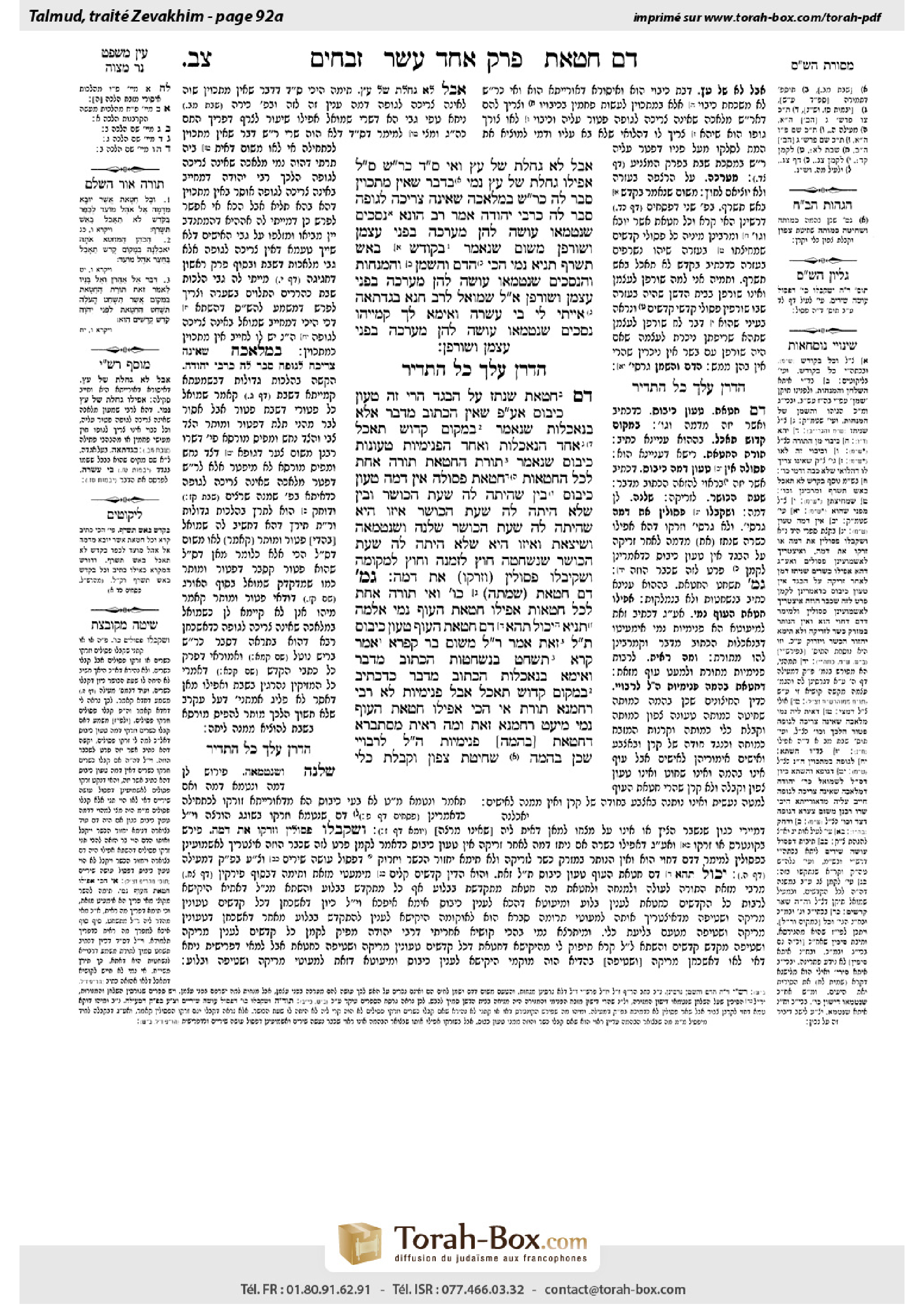
This page of Zevachim includes the Aramaic text, an English translation and an AI-generated French translation, alongside the scan above.
זבחים צ״ב א · Aramaic and Hebrew text
אֲבָל לֹא גַּחֶלֶת שֶׁל עֵץ. וְאִי סָלְקָא דַעְתָּךְ כְּרַבִּי שִׁמְעוֹן סְבִירָא לֵיהּ, אֲפִילּוּ גַּחֶלֶת שֶׁל עֵץ נָמֵי!
בְּדָבָר שֶׁאֵין מִתְכַּוֵּין – סָבַר לַהּ כְּרַבִּי שִׁמְעוֹן, בִּמְלָאכָה שֶׁאֵינָהּ צְרִיכָה לְגוּפָהּ – סָבַר לַהּ כְּרַבִּי יְהוּדָה.
אָמַר רַב הוּנָא: נְסָכִים שֶׁנִּטְמְאוּ – עוֹשֶׂה לָהֶן מַעֲרָכָה בִּפְנֵי עַצְמָן וְשׂוֹרְפָן, מִשּׁוּם שֶׁנֶּאֱמַר: ״בַּקֹּדֶשׁ בָּאֵשׁ תִּשָּׂרֵף״. תַּנְיָא נָמֵי הָכִי: הַדָּם וְהַשֶּׁמֶן וְהַמְּנָחוֹת וְהַנְּסָכִים שֶׁנִּטְמְאוּ – עוֹשֶׂה לָהֶן מַעֲרָכָה בִּפְנֵי עַצְמָן וְשׂוֹרְפָן.
אֲמַר לֵיהּ שְׁמוּאֵל לְרַב חָנָא בַּגְדָּתָאָה: אַיְיתִי לִי בֵּי עַשְׂרָה, וְאֵימָא לָךְ קַמַּיְיהוּ: נְסָכִים שֶׁנִּטְמְאוּ, עוֹשֶׂה לָהֶן מַעֲרָכָה בִּפְנֵי עַצְמָן וְשׂוֹרְפָן.
הֲדַרַן עֲלָךְ כׇּל הַתָּדִיר
מַתְנִי׳ דַּם חַטָּאת שֶׁנִּתַּז עַל הַבֶּגֶד – הֲרֵי זֶה טָעוּן כִּיבּוּס, אַף עַל פִּי שֶׁאֵין הַכָּתוּב מְדַבֵּר אֶלָּא בְּנֶאֱכָלוֹת – שֶׁנֶּאֱמַר: ״בְּמָקוֹם קָדוֹשׁ תֵּאָכֵל״. אֶחָד הַנֶּאֱכָלוֹת וְאֶחָד הַפְּנִימִיּוֹת טְעוּנוֹת כִּיבּוּס, שֶׁנֶּאֱמַר: ״תּוֹרַת הַחַטָּאת״ – תּוֹרָה אַחַת לְכׇל הַחַטָּאוֹת.
חַטָּאת פְּסוּלָה – אֵין דָּמָהּ טָעוּן כִּיבּוּס, בֵּין שֶׁהָיְתָה לָהּ שְׁעַת הַכּוֹשֶׁר וּבֵין שֶׁלֹּא הָיְתָה לָהּ שְׁעַת הַכּוֹשֶׁר. אֵיזוֹ הִיא שֶׁהָיְתָה לָהּ שְׁעַת הַכּוֹשֶׁר? שֶׁלָּנָה, וְשֶׁנִּטְמְאָה, וְשֶׁיָּצָאת. וְאֵיזוֹ הִיא שֶׁלֹּא הָיְתָה לָהּ שְׁעַת הַכּוֹשֶׁר? שֶׁנִּשְׁחֲטָה חוּץ לִזְמַנָּהּ וְחוּץ לִמְקוֹמָהּ, וְשֶׁקִּיבְּלוּ פְּסוּלִין (וְזָרְקוּ) אֶת דָּמָהּ.
גְּמָ׳ דַּם חַטָּאת (שֶׁמֵּתָה) [שֶׁנִּתַּז] כּוּ׳. וְאִי תּוֹרָה אַחַת לְכׇל חַטָּאוֹת, אֲפִילּוּ חַטַּאת הָעוֹף נָמֵי! אַלְּמָה תַּנְיָא: יָכוֹל תְּהֵא דַּם חַטַּאת הָעוֹף טָעוּן כִּיבּוּס? תַּלְמוּד לוֹמַר ״זֹאת״.
אָמַר רֵישׁ לָקִישׁ מִשּׁוּם בַּר קַפָּרָא, אָמַר קְרָא: ״תִּשָּׁחֵט״ – בְּנִשְׁחָטוֹת הַכָּתוּב מְדַבֵּר.
וְאֵימָא בְּנֶאֱכָלוֹת הַכָּתוּב מְדַבֵּר – כְּדִכְתִיב: ״בְּמָקוֹם קָדוֹשׁ תֵּאָכֵל״, אֲבָל פְּנִימִיּוֹת לָא! רַבִּי רַחֲמָנָא ״תּוֹרַת״.
אִי הָכִי, אֲפִילּוּ חַטַּאת הָעוֹף נָמֵי! מִיעֵט רַחֲמָנָא ״זֹאת״.
וּמָה רָאִיתָ? מִסְתַּבְּרָא דְּחַטַּאת [בְּהֵמָה] פְּנִימִיּוֹת הֲוָה לֵיהּ לְרַבּוֹיֵי – שֶׁכֵּן בְּהֵמָה, שְׁחִיטַת צָפוֹן, וְקַבָּלַת כְּלִי,
Zevachim 92a · English translation
but one may not extinguish a wood coal, because extinguishing it is prohibited by Torah law? And if it enters your mind that Shmuel holds in accordance with the opinion of Rabbi Shimon, it should be permitted to extinguish even a wood coal. Rabbi Shimon maintains that extinguishing a coal is prohibited by Torah law only when one intends to use the extinguished coal. Otherwise, this constitutes a labor performed on Shabbat which is not necessary for its own sake, which is not prohibited by Torah law.
The Gemara answers: Shmuel’s statements are not contradictory, as with regard to an unintentional act, he holds in accordance with the opinion of Rabbi Shimon. But with regard to labor not necessary for its own sake, he holds that it is prohibited by Torah law, in accordance with the opinion of Rabbi Yehuda.
§ Rav Huna says: With regard to wine libations that became ritually impure, one prepares for them an arrangement of wood by themselves and burns them there, without removing them from the Temple courtyard. This is due to the fact that it is stated with regard to a disqualified sin offering: “In the sacred place…it shall be burned with fire” (Leviticus 6:23). This requirement of burning in the sacred place applies to all offerings that are meant to be sacrificed on an altar and became disqualified. This is also taught in a baraita: With regard to the blood, the oil, the meal offerings, and the libations that became ritually impure, one prepares for them an arrangement of wood by themselves and burns them there.
The Gemara relates: Shmuel said to Rav Ḥana of Baghdad: Bring me an assembly of ten men and I will tell you in their presence this halakha that I wish to disseminate: With regard to libations that became ritually impure, one prepares for them an arrangement of wood by themselves and burns them there.
MISHNA: In the case of the blood of a sin offering designated for presentation that was sprayed on a garment, that garment requires laundering, as is stated with regard to a sin offering: “And when any of its blood shall be sprinkled on a garment, you shall launder that on which it shall be sprinkled in a sacred place” (Leviticus 6:20). Although the verse is speaking only of sin offerings that are eaten and whose blood is presented on the outer altar, as it is stated: “In a sacred place shall it be eaten” (Leviticus 6:19), the principle is not exclusive to eaten sin offerings. With regard to the blood of both the sin offerings that are eaten and the sin offerings that are wholly burned and not eaten and whose blood is presented on the inner altar, garments sprayed with blood from each of these offerings require laundering. As it is stated at the start of that passage: “This is the law of the sin offering” (Leviticus 6:18), it is understood: There is one law for all the sin offerings.
That is the halakha with regard to sin offerings fit for sacrifice. With regard to a disqualified sin offering, its blood does not cause a garment to require laundering whether the offering had a period of fitness when its blood was fit for presentation or whether it did not have a period of fitness. Which offering is the disqualified sin offering that had a period of fitness? It is one that was left overnight and then became disqualified; or it is one that became ritually impure; or it is one that emerged from the Temple courtyard. Which offering is the disqualified sin offering that did not have a period of fitness? It is one that was slaughtered with the intent to eat it or present its blood beyond its designated time or outside its designated area; or it is one whose blood was collected by people disqualified for Temple service and they sprinkled its blood.
GEMARA: The mishna teaches: In the case of the blood of a sin offering that was sprayed on a garment, the garment must be laundered, and this is the halakha concerning the blood of sin offerings that are eaten and sin offerings that are wholly burned, as it is stated: “This is the law of the sin offering”; there is one law for all sin offerings. The Gemara asks: And if there is one law for all sin offerings, even the blood of a bird sin offering should also require laundering. If so, why is it taught in a baraita: One might have thought that the blood of a bird sin offering requires laundering. To counter this, the verse states: “This is the law of the sin offering.” The word “this” teaches that the halakha is to be restricted to the blood of an animal sin offering and it does not apply to the bird sin offering.
Reish Lakish said in the name of bar Kappara: The verse states: “This is the law of the sin offering…shall the sin offering be slaughtered” (Leviticus 6:18). The verse is speaking specifically of sin offerings that are slaughtered and not of bird offerings, which are killed by pinching the nape of the neck, rather than slaughtering with a knife.
The Gemara challenges: And I might say that the halakha is to be learned in another manner, and the verse is speaking specifically of sin offerings that are eaten, as it is written: “In a sacred place shall it be eaten” (Leviticus 6:19); but internal sin offerings, which are not eaten, should not be included. The Gemara explains: The Merciful One amplifies the halakha by stating: “This is the law of the sin offering,” which includes all sin offerings, even those that are not eaten.
The Gemara suggests: If so, then even the blood of the bird sin offering should be included. The Gemara explains: The Merciful One restricts the halakha by stating: “This is the law,” which excludes bird offerings.
The Gemara asks: And what did you see that indicated that the verse is to be understood as including internal sin offerings and excluding bird offerings, and not the opposite? The Gemara answers: It stands to reason that internal animal sin offerings should have been included by the inclusive language of the verse, as internal sin offerings resemble eaten animal sin offerings in several ways: Each variety is a large animal and not a bird; each variety is subject to slaughter on the north side of the Temple courtyard; and the blood of each requires collection in a vessel;
Zevachim 92a · Traduction française (IA)
mais on ne peut pas éteindre un charbon de bois, car son extinction est interdite par la Torah. Et si tu penses que Chmouel est d’avis comme Rabbi Chimon, il devrait être permis d’éteindre même un charbon de bois. Rabbi Chimon soutient que l’extinction d’un charbon n’est interdite par la Torah que si l’on a l’intention d’utiliser le charbon éteint. Sinon, il s’agit d’un travail accompli pendant Chabbat qui n’est pas nécessaire en lui-même, ce qui n’est pas interdit par la Torah.
La Guemara répond : les propos de Chmouel ne sont pas contradictoires, car, en matière d’acte involontaire, il est d’avis comme Rabbi Chimon. Mais, en matière de travail qui n’est pas nécessaire en lui-même, il considère que celui-ci est interdit par la Torah, conformément à l’avis de Rabbi Yehouda.
§ Rav Houna dit : lorsque des libations de vin deviennent rituellement impures, on dispose pour elles un bûcher à part et on les y brûle, sans les sortir de la cour du Temple. En effet, il est écrit au sujet d’un sacrifice expiatoire invalide : « Dans le lieu saint… il sera brûlé au feu » (Lévitique 6:23). L’obligation de brûler dans le lieu saint s’applique à toutes les offrandes destinées à être offertes sur l’autel et qui sont devenues invalides. C’est également ce qu’enseigne une baraïta : lorsque le sang, l’huile, les offrandes de farine et les libations deviennent rituellement impurs, on dispose pour eux un bûcher à part et on les y brûle.
La Guemara rapporte : Chmouel dit à Rav Ḥana de Bagdad : « Réunis-moi une assemblée de dix hommes et je vous enseignerai en leur présence cette halakha que je souhaite diffuser : lorsque des libations deviennent rituellement impures, on dispose pour elles un bûcher à part et on les y brûle. »
MICHNA : Si le sang d’un sacrifice expiatoire destiné à être présenté est projeté sur un vêtement, celui-ci doit être lavé, comme il est écrit au sujet d’un sacrifice expiatoire : « Si du sang en est projeté sur un vêtement, tu laveras dans un lieu saint ce sur quoi il aura été projeté » (Lévitique 6:20). Bien que le verset ne parle que des sacrifices expiatoires qui sont consommés et dont le sang est présenté sur l’autel extérieur, comme il est écrit : « On le mangera dans un lieu saint » (Lévitique 6:19), ce principe ne se limite pas aux sacrifices expiatoires consommés. Les vêtements éclaboussés par le sang de sacrifices expiatoires consommés comme par celui de sacrifices expiatoires entièrement brûlés, qui ne sont pas consommés et dont le sang est présenté sur l’autel intérieur, doivent être lavés. Car il est écrit au début de ce passage : « Voici la loi du sacrifice expiatoire » (Lévitique 6:18), ce qui signifie qu’il existe une seule loi pour tous les sacrifices expiatoires.
Telle est la halakha concernant les sacrifices expiatoires aptes à être offerts. En ce qui concerne un sacrifice expiatoire invalide, son sang n’impose pas le lavage du vêtement, que l’offrande ait connu une période où elle était apte à être offerte et où son sang pouvait être présenté, ou qu’elle n’ait pas connu une telle période. Quel est le sacrifice expiatoire invalide qui a connu une période où il était apte ? C’est celui qui est resté toute la nuit avant de devenir invalide, celui qui est devenu rituellement impur ou celui qui est sorti de la cour du Temple. Quel est le sacrifice expiatoire invalide qui n’a pas connu de période où il était apte ? C’est celui qui a été égorgé avec l’intention de le consommer ou de présenter son sang après le temps prescrit ou en dehors de l’endroit prescrit ; ou celui dont le sang a été recueilli par des personnes inaptes au service du Temple, qui l’ont ensuite aspergé.
GUEMARA : La Michna enseigne que, lorsque le sang d’un sacrifice expiatoire est projeté sur un vêtement, celui-ci doit être lavé, et que cette halakha concerne le sang des sacrifices expiatoires consommés comme celui des sacrifices expiatoires entièrement brûlés, puisqu’il est écrit : « Voici la loi du sacrifice expiatoire » ; il existe une seule loi pour tous les sacrifices expiatoires. La Guemara demande : s’il existe une seule loi pour tous les sacrifices expiatoires, le sang d’un sacrifice expiatoire d’oiseau devrait lui aussi imposer le lavage. Pourquoi une baraïta enseigne-t-elle alors : « On aurait pu penser que le sang d’un sacrifice expiatoire d’oiseau impose le lavage. Pour écarter cette possibilité, le verset dit : “Voici la loi du sacrifice expiatoire.” » Le mot « voici » enseigne que cette halakha se limite au sang d’un sacrifice expiatoire animal et ne s’applique pas au sacrifice expiatoire d’oiseau.
Reich Lakich dit au nom de bar Kappara : le verset dit : « Voici la loi du sacrifice expiatoire… le sacrifice expiatoire sera égorgé » (Lévitique 6:18). Le verset parle précisément des sacrifices expiatoires qui sont égorgés, et non des offrandes d’oiseaux, dont on pince la nuque au lieu de les égorger au couteau.
La Guemara objecte : je pourrais dire que la halakha doit être déduite autrement, et que le verset parle précisément des sacrifices expiatoires consommés, comme il est écrit : « On le mangera dans un lieu saint » (Lévitique 6:19) ; les sacrifices expiatoires intérieurs, qui ne sont pas consommés, ne devraient donc pas être inclus. La Guemara explique : le Miséricordieux élargit la halakha en disant : « Voici la loi du sacrifice expiatoire », ce qui inclut tous les sacrifices expiatoires, même ceux qui ne sont pas consommés.
La Guemara suggère : dans ce cas, le sang du sacrifice expiatoire d’oiseau devrait lui aussi être inclus. La Guemara explique : le Miséricordieux restreint la halakha en disant : « Voici la loi », ce qui exclut les offrandes d’oiseaux.
La Guemara demande : qu’as-tu vu qui indique que le verset doit être compris comme incluant les sacrifices expiatoires intérieurs et excluant les sacrifices expiatoires d’oiseaux, et non l’inverse ? La Guemara répond : il est logique que les sacrifices expiatoires animaux intérieurs soient inclus par la formulation englobante du verset, car ils ressemblent à plusieurs égards aux sacrifices expiatoires animaux consommés : chaque catégorie consiste en un grand animal et non en un oiseau ; chaque catégorie doit être égorgée du côté nord de la cour du Temple ; et le sang de chacune doit être recueilli dans un récipient ;
Traduction française générée par IA à partir de l’édition anglaise de Sefaria. Vérifie toujours un passage avec le texte source.
Text from Sefaria: William Davidson Edition - Vocalized Aramaic (CC BY NC); William Davidson Edition - English (CC BY NC).