Baba Batra 39b en français · בבא בתרא ל״ט ב
Traduction française du daf 39b du traité Baba Batra (Bava Batra 39b en anglais), avec le texte araméen, l’anglais de Sefaria et le scan de la page, pour étudier le Daf Yomi.
Ouvrir dans le lecteur interactifLire le daf du jour
Traduction française de Baba Batra 39b
Les traductions françaises de Daf Study sont générées par IA à partir de l’édition anglaise de Sefaria. Elles peuvent contenir des erreurs : vérifie toujours un passage avec le texte source.
n’est pas soumise à l’interdiction de la médisance, car elle est déjà de notoriété publique. La Guemara développe l’hypothèse selon laquelle le désaccord porte sur ce point : celui qui affirme qu’une protestation peut être faite en présence de deux personnes ne pense pas que la halakha suive l’opinion de Rabba bar Rav Huna ; il considère que même si seulement deux personnes entendent parler d’une affaire, celle-ci devient de notoriété publique. Il suffit donc de protester en présence de deux témoins. Quant à celui qui affirme qu’une protestation doit être faite en présence de trois personnes, il pense que la halakha suit l’opinion de Rabba bar Rav Huna.
La Guemara rejette cette hypothèse : non, tous pensent que la halakha suit l’opinion de Rabba bar Rav Huna, et leur désaccord porte sur le point suivant : celui qui affirme qu’une protestation peut être faite en présence de deux personnes considère qu’une protestation faite en son absence n’est pas valable. Deux témoins suffisent donc, car ils doivent seulement attester que le propriétaire a protesté. Quant à celui qui affirme qu’une protestation doit être faite en présence de trois personnes, il considère qu’une protestation faite en son absence est valable. Puisqu’elle peut être faite en l’absence du détenteur, trois personnes sont nécessaires pour que la nouvelle de la protestation lui parvienne.
Si tu le souhaites, dis plutôt que tous considèrent qu’une protestation faite en son absence est valable, et que leur désaccord porte sur le point suivant : celui qui affirme qu’une protestation peut être faite en présence de deux personnes seulement considère que l’on exige un témoignage, et deux personnes suffisent pour témoigner. Quant à celui qui affirme qu’une protestation doit être faite en présence de trois personnes, il considère que l’on exige que la protestation soit rendue publique, et trois personnes sont nécessaires à cette fin.
§ La Guemara rapporte : Giddel bar Minyumi avait à protester au sujet de son bien. Il trouva Rav Huna, Ḥiyya bar Rav et Rav Ḥilkiya bar Tuvi assis, et protesta devant eux. Un an plus tard, il revint auprès d’eux pour protester. Ils lui dirent : « Tu n’as pas besoin de le faire ; voici ce que dit Rav : une fois que le propriétaire a protesté la première année, il n’a plus besoin de protester. » Certains disent que c’est Ḥiyya bar Rav qui lui dit cela, et non Rav : « Une fois que le propriétaire a protesté la première année, il n’a plus besoin de protester. »
Reish Lakish dit au nom de bar Kappara : le propriétaire doit protester à la fin de chaque période de trois ans, afin que le détenteur ne possède pas son bien pendant trois années consécutives sans contestation. Rabbi Yoḥanan s’étonna de cette décision de Reish Lakish et dit : « Mais un voleur peut-il acquérir une présomption de propriété ? » Dès lors que le propriétaire a protesté une fois, il a montré que le détenteur occupait son terrain illégalement. Le détenteur ne devrait donc jamais pouvoir acquérir une présomption de propriété. La Guemara précise : « Te vient-il à l’esprit que le détenteur soit réellement un voleur ? » Rien ne prouve qu’il ait volé ; il n’y a que la protestation de l’ancien propriétaire. Il faut plutôt reformuler sa question ainsi : « Celui qui est semblable à un voleur peut-il acquérir une présomption de propriété ? »
Rava dit que la halakha est la suivante : le propriétaire doit protester à la fin de chaque période de trois ans. Bar Kappara enseigne : si le propriétaire a protesté, est revenu protester, puis est revenu protester encore, et que, lors de ses protestations ultérieures, il a avancé le même argument que lors de la protestation initiale, le détenteur n’acquiert pas de présomption de propriété. Mais si les protestations ultérieures ne reposaient pas sur le même argument que la protestation initiale, le détenteur acquiert une présomption de propriété, car chaque fois que le propriétaire a avancé un nouvel argument, il a ainsi annulé ses arguments précédents.
§ Rava dit au nom de Rav Naḥman : une protestation peut être faite en présence de deux témoins,
Texte source et traduction anglaise
בבא בתרא ל״ט ב · texte araméen et hébreu
לֵית בָּהּ מִשּׁוּם לִישָּׁנָא בִּישָׁא; מַאן דְּאָמַר בִּפְנֵי שְׁנַיִם – לֵית לֵיהּ דְּרַבָּה בַּר רַב הוּנָא, וּמַאן דְּאָמַר בִּפְנֵי שְׁלֹשָׁה – אִית לֵיהּ דְּרַבָּה בַּר רַב הוּנָא?
לָא, דְּכוּלֵּי עָלְמָא אִית לְהוּ דְּרַבָּה בַּר רַב הוּנָא; וְהָכָא בְּהָא קָא מִיפַּלְגִי – מַאן דְּאָמַר בִּפְנֵי שְׁנַיִם, קָסָבַר: מֶחָאָה שֶׁלֹּא בְּפָנָיו לָא הָוְיָא מֶחָאָה. וּמַאן דְּאָמַר בִּפְנֵי שְׁלֹשָׁה, קָסָבַר: מֶחָאָה שֶׁלֹּא בְּפָנָיו הָוְיָא מֶחָאָה.
אִי בָּעֵית אֵימָא: דְּכוּלֵּי עָלְמָא – מֶחָאָה שֶׁלֹּא בְּפָנָיו הָוְיָא מֶחָאָה; וְהָכָא בְּהָא קָמִיפַּלְגִי – מַאן דְּאָמַר בִּפְנֵי שְׁנַיִם, סָבַר: סָהֲדוּתָא בָּעֵינַן. וּמַאן דְּאָמַר בִּפְנֵי שְׁלֹשָׁה, קָסָבַר: גַּלּוֹיֵי מִילְּתָא בָּעֵינַן.
גִּידֵּל בַּר מִנְיוֹמֵי הֲוָה לֵיהּ מַחוּיָאתָה לְמַחוֹיֵי. אַשְׁכְּחִינְהוּ לְרַב הוּנָא וּלְחִיָּיא בַּר רַב וּלְרַב חִלְקִיָּה בַּר טוֹבִי דַּהֲווֹ יָתְבִי, וּמַחָה קַמַּיְיהוּ. לְשָׁנָה – הֲדַר אֲתָא לְמַחוֹיֵי, אֲמַרוּ לֵיהּ: לָא צְרִיכַתְּ, הָכִי אָמַר רַב: כֵּיוָן שֶׁמִּיחָה שָׁנָה רִאשׁוֹנָה, שׁוּב אֵינוֹ צָרִיךְ לְמַחוֹת. וְאִיכָּא דְאָמְרִי, אֲמַר לֵיהּ חִיָּיא בַּר רַב: כֵּיוָן שֶׁמִּיחָה שָׁנָה רִאשׁוֹנָה, שׁוּב אֵין צָרִיךְ לְמַחוֹת.
אָמַר רֵישׁ לָקִישׁ מִשּׁוּם בַּר קַפָּרָא: וְצָרִיךְ לְמַחוֹת בְּסוֹף כׇּל שָׁלֹשׁ וְשָׁלֹשׁ. תָּהֵי בַּהּ רַבִּי יוֹחָנָן: וְכִי גַּזְלָן יֵשׁ לוֹ חֲזָקָה?! ״גַּזְלָן״ סָלְקָא דַּעְתָּךְ?! אֶלָּא ״כְּגַזְלָן״ יֵשׁ לוֹ חֲזָקָה.
אָמַר רָבָא: הִלְכְתָא – צָרִיךְ לְמַחוֹת בְּסוֹף כׇּל שָׁלֹשׁ וְשָׁלֹשׁ. תָּנֵי בַּר קַפָּרָא: עִרְעֵר, חָזַר וְעִרְעֵר, חָזַר וְעִרְעֵר – אִם מֵחֲמַת טַעֲנָה רִאשׁוֹנָה עִרְעֵר, אֵין לוֹ חֲזָקָה. וְאִם לָאו – יֵשׁ לוֹ חֲזָקָה.
אָמַר רָבָא אָמַר רַב נַחְמָן: מֶחָאָה – בִּפְנֵי שְׁנַיִם,
Bava Batra 39b · traduction anglaise de Sefaria
is not subject to the prohibition of malicious speech, as it is already public knowledge. The Gemara elaborates on the suggestion that the dispute hinges upon this point: The one who says that a protest can be lodged in the presence of two people is not of the opinion that the ruling is in accordance with the opinion of Rabba bar Rav Huna and holds that even if only two people hear of a matter it will become a matter of public knowledge. Therefore, it is sufficient to protest in the presence of two witnesses. And the one who says that a protest must be lodged in the presence of three people is of the opinion that the ruling is in accordance with the opinion of Rabba bar Rav Huna.
The Gemara rejects this suggestion: No, everyone is of the opinion that the ruling is in accordance with the opinion of Rabba bar Rav Huna, and here they disagree with regard to this: The one who says that a protest can be lodged in the presence of two people holds that a protest that is lodged not in his presence is not a valid protest. Therefore, two witnesses suffice, as they are needed to attest only to the fact that the owner protested. And the one who says that a protest must be lodged in the presence of three people holds that a protest that is lodged not in his presence is a valid protest. Since the protest can be lodged not in the possessor’s presence, three people are needed to ensure that word of the protest will reach him.
If you wish, say instead that everyone holds that a protest that is lodged not in his presence is a valid protest, and here they disagree with regard to this: The one who says that a protest can be lodged in the presence of only two people holds that we require testimony, and two are sufficient for testimony. And the one who says that a protest must be lodged in the presence of three people holds that we require that the matter of the protest be revealed, and for that purpose three people are needed.
§ The Gemara relates: Giddel bar Minyumi had a protest to lodge with regard to his property. He found Rav Huna and Ḥiyya bar Rav and Rav Ḥilkiya bar Tuvi, who were sitting, and he protested before them. After a year, he came to them again to protest. They said to him: You do not need to do so; this is what Rav says: Once the owner protested in the first year, he no longer needs to protest. And there are those who say that Ḥiyya bar Rav said to him, not in the name of Rav: Once the owner protested in the first year, he no longer needs to protest.
Reish Lakish says in the name of bar Kappara: And he needs to protest at the end of each and every period of three years, so that the possessor will not hold his property for three consecutive years uncontested. Rabbi Yoḥanan expressed surprise at this ruling of Reish Lakish and said: But does a robber have the ability to establish the presumption of ownership? Once the owner lodged one protest, he demonstrated that the possessor occupied his land unlawfully. Therefore, the possessor should never be able to establish the presumption of ownership. The Gemara clarifies: Does it enter your mind that the possessor is actually a robber? There is no evidence that he robbed, there is only a protest by the prior owner. Rather, emend his question as follows: Does one who is akin to a robber have the ability to establish the presumption of ownership?
Rava says that the halakha is: The owner needs to protest at the end of each and every period of three years. Bar Kappara teaches: If the owner protested, returned and protested, and then returned and protested, if, when he protested the later times, his protest was based on the same claim as the initial claim, the possessor has no presumptive ownership. But if the later protests were not based on the same claim as the initial protest, the possessor has presumptive ownership since each time the owner advanced a new claim, he thereby nullified his earlier claims.
§ Rava says that Rav Naḥman says: A protest can be lodged in the presence of two witnesses,
Texte de Sefaria : William Davidson Edition - Vocalized Aramaic (CC BY NC) ; William Davidson Edition - English (CC BY NC).
Scan de Baba Batra 39b
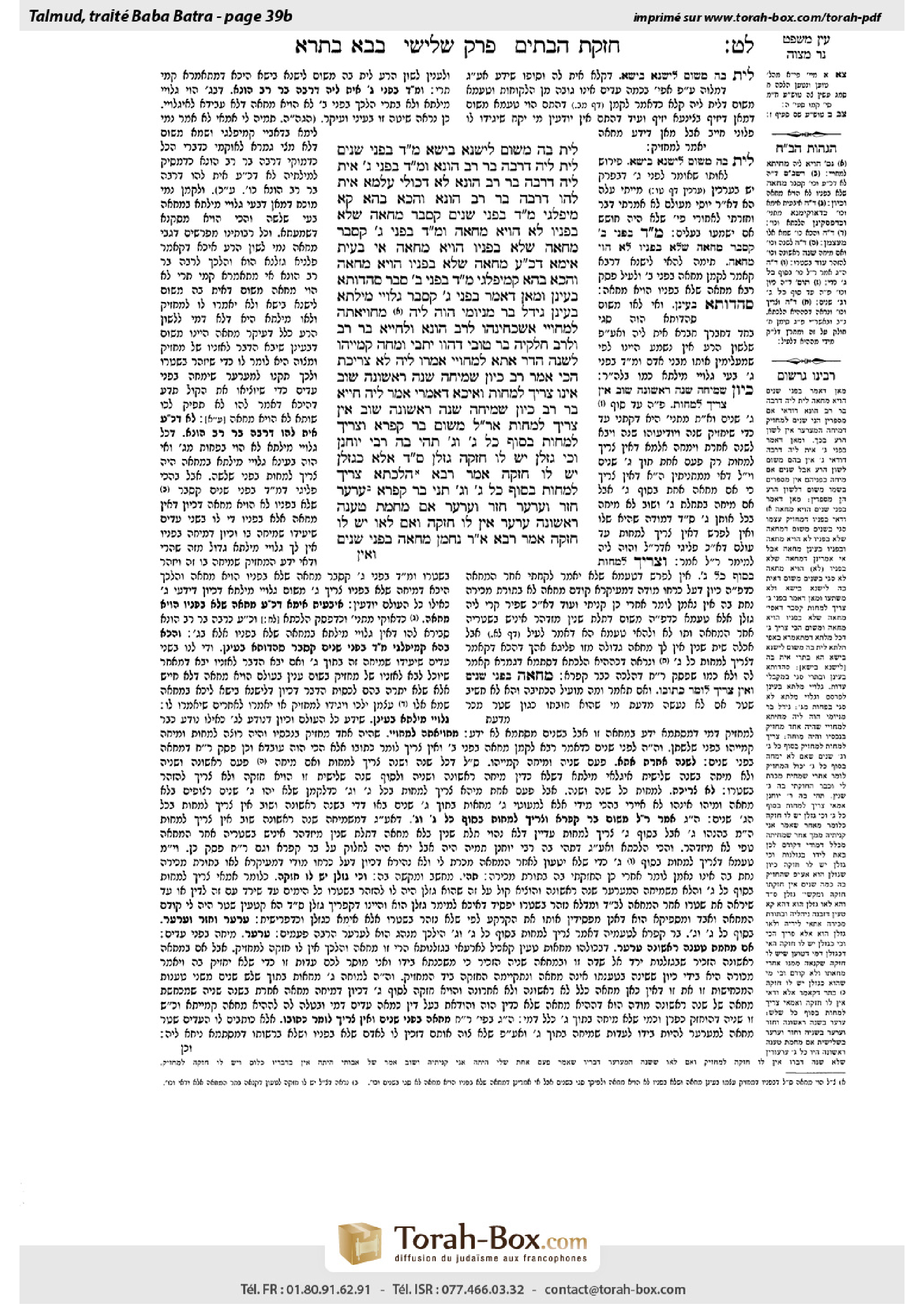
Scan : Torah-Box. Daf Study est un projet indépendant, sans affiliation ni approbation de Torah-Box ou de Sefaria.