Baba Batra 93a en français · בבא בתרא צ״ג א
Traduction française du daf 93a du traité Baba Batra (Bava Batra 93a en anglais), avec le texte araméen, l’anglais de Sefaria et le scan de la page, pour étudier le Daf Yomi.
Ouvrir dans le lecteur interactifLire le daf du jour
Traduction française de Baba Batra 93a
Les traductions françaises de Daf Study sont générées par IA à partir de l’édition anglaise de Sefaria. Elles peuvent contenir des erreurs : vérifie toujours un passage avec le texte source.
Quelle est la raison pour laquelle la vente n’est pas considérée comme une transaction conclue par erreur ? N’est-ce pas parce que la majorité des esclaves sont ainsi, c’est-à-dire voleurs ou joueurs ? Il apparaît donc que l’on suit la majorité en matière pécuniaire.
La Guemara rejette cette preuve : non, c’est parce que tous les esclaves sont ainsi. On ne peut donc tirer aucune preuve quant à la question de savoir si l’on suit la majorité en matière pécuniaire.
Viens entendre une autre objection à l’opinion de Rav, tirée d’une Michna (Bava Kamma 46a) : dans le cas d’un bœuf inoffensif qui encorne et tue une vache, dont on trouve le fœtus mort à côté d’elle, sans savoir si la vache avait mis bas avant que le bœuf ne l’encorne, auquel cas la mort du fœtus n’est pas liée à l’encornement, ou si elle avait mis bas après que le bœuf l’eut encornée, auquel cas le fœtus est mort à cause de l’encornement, le propriétaire du bœuf paie la moitié du montant des dommages causés à la vache, conformément à la halakha applicable à un bœuf inoffensif (voir Exode 21:35), et un quart du montant des dommages causés au petit. Puisqu’il est incertain que le bœuf ait causé la mort du fœtus, son propriétaire paie la moitié de la responsabilité habituelle, qui correspond à la moitié du montant des dommages.
La Guemara explique la preuve tirée de la baraïta : mais pourquoi, selon Rav, ne paie-t-il qu’un quart des dommages causés au fœtus ? En cas de doute, ne devrions-nous pas dire : suivons la majorité des vaches ; puisque la majorité des vaches mettent bas des petits vivants, concluons que cette vache a certainement fait une fausse couche à cause de l’encornement du bœuf, et que le propriétaire du bœuf doit donc payer la moitié du montant des dommages causés au fœtus. Puisque ce raisonnement n’est pas appliqué ici, il apparaît que l’on ne suit pas la majorité en matière pécuniaire.
La Guemara rejette cette preuve : dans ce cas, si le propriétaire du bœuf ne paie qu’un quart des dommages causés au fœtus, c’est parce que nous ne savons pas comment celui-ci est mort. On peut en effet dire que le bœuf s’est approché de la vache par-devant et que celle-ci a fait une fausse couche sous l’effet de la peur, et non à cause de l’encornement, ce qui signifierait que le propriétaire du bœuf n’est pas responsable ; mais on peut aussi dire que le bœuf s’est approché de la vache par-derrière et l’a encornée, raison pour laquelle elle a fait une fausse couche. Par conséquent, le paiement de tels dommages relève d’un bien dont la propriété est incertaine, et la halakha veut que tout bien dont la propriété est incertaine soit partagé à parts égales entre les deux parties.
La Guemara propose : disons que cette controverse entre Rav et Chmouel correspond à une controverse entre tannaïm, car il est enseigné dans une baraïta : dans le cas d’un bœuf qui paissait et d’un autre bœuf retrouvé mort à côté de lui, même si le bœuf mort a été encorné et que le bœuf qui paissait est réputé encorner, ou si le bœuf mort a été mordu et que le bœuf qui paissait est réputé mordre, on ne dit néanmoins pas qu’il est évident que ce bœuf qui paissait a encorné ou mordu le bœuf mort, malgré le fait qu’un tel comportement soit habituel chez lui ; on ne peut plutôt tirer aucune conclusion certaine. Rabbi Aḥa dit que, dans le cas d’un chameau mâle en rut qui sème le désordre parmi d’autres chameaux et d’un autre chameau retrouvé mort à côté de lui, il est évident que le chameau en rut l’a tué, car un tel comportement est habituel chez un chameau en rut. Le propriétaire de ce chameau est donc responsable.
Ceux qui ont proposé de faire correspondre la controverse entre les tannaïm à celle entre Rav et Chmouel ont supposé qu’une majorité et une présomption logique quant à la survenue d’un événement ont la même valeur pour établir les faits d’un cas. Disons donc que Rav, qui affirme que l’on suit la majorité en matière pécuniaire, est conforme à l’opinion de Rabbi Aḥa, qui s’appuie sur une présomption pour établir les faits d’un cas ; et que Chmouel, qui affirme que l’on ne suit pas la majorité en matière pécuniaire, est conforme à l’opinion du premier tanna, qui ne s’appuie pas sur une présomption.
La Guemara rejette cette interprétation : Rav aurait pu te dire : j’énonce ma décision même conformément à l’opinion du premier tanna, car celui-ci dit qu’on ne peut tirer de conclusion certaine que dans ce cas, celui du bœuf qui paissait, parce qu’on ne s’appuie pas sur une présomption en matière pécuniaire ; mais il reconnaît que l’on suit la majorité en matière pécuniaire.
Et Chmouel aurait pu te dire : j’énonce ma décision même conformément à l’opinion de Rabbi Aḥa, car Rabbi Aḥa dit que l’on peut tirer une conclusion certaine uniquement dans ce cas, celui des chameaux, puisqu’on s’appuie sur une présomption en matière pécuniaire : ce chameau lui-même est présumé, d’après son comportement, être celui qui a tué. Mais il reconnaît que l’on ne suit pas la majorité pour trancher les questions pécuniaires.
La Guemara propose : viens entendre une autre objection à l’opinion de Rav, tirée de la Michna : celui qui vend à un autre des produits qui servent parfois à la consommation et parfois à la plantation, et que l’acheteur plante sans qu’ils germent, n’engage pas la responsabilité financière du vendeur à leur égard ; cela vaut même s’il lui a vendu des graines de lin, qui sont rarement vendues comme denrée alimentaire.
La Guemara explique la preuve : quelle nouveauté y a-t-il à dire : « même s’il lui a vendu des graines de lin » ? N’est-ce pas que, même lorsqu’il lui a vendu des graines de lin, dont la majorité est achetée pour être plantée, et qu’elles n’étaient pas adaptées à cet usage, la vente reste néanmoins valable, car on ne suit pas la majorité en matière pécuniaire ?
La Guemara reconnaît que la Michna ne peut être conciliée avec l’opinion de Rav, mais propose qu’il existe d’autres tannaïm qui partagent son opinion. C’est une controverse entre tannaïm, comme il est enseigné dans une baraïta : celui qui vend des produits à un autre, et que l’acheteur les plante sans qu’ils germent, si les produits étaient des graines de plantes potagères, qui ne se mangent jamais, le vendeur en assume la responsabilité financière. Si les produits étaient des graines de lin, qui ne sont consommées qu’occasionnellement, le vendeur n’en assume pas la responsabilité financière. Rabbi Yossei dit :
Texte source et traduction anglaise
בבא בתרא צ״ג א · texte araméen et hébreu
מַאי טַעְמָא? לָאו מִשּׁוּם דְּרוּבָּא הָכִי אִיתַנְהוּ?
לָא, כּוּלְּהוּ הָכִי אִיתַנְהוּ.
תָּא שְׁמַע: שׁוֹר שֶׁנָּגַח אֶת הַפָּרָה, וְנִמְצָא עוּבָּרָהּ בְּצִדָּהּ, וְאֵינוֹ יָדוּעַ אִם עַד שֶׁלֹּא נְגָחָהּ יָלְדָה, אוֹ אִם מִשֶּׁנְּגָחָהּ יָלְדָה – מְשַׁלֵּם חֲצִי נֶזֶק לַפָּרָה, וּרְבִיעַ לַוָּלָד.
וְאַמַּאי? לֵימָא: הַלֵּךְ אַחַר רוֹב פָּרוֹת, וְרוֹב פָּרוֹת מִתְעַבְּרוֹת וְיוֹלְדוֹת; וְהָא וַדַּאי מֵחֲמַת נְגִיחָה הִפִּילָה!
הָתָם, מִשּׁוּם דִּמְסַפְּקָא לַן, דְּאִיכָּא לְמֵימַר: מִקַּמַּהּ אֲתָא, וּמִבִּיעֲתוּתָא הִפִּילָה; וְאִיכָּא לְמֵימַר: מֵאֲחוֹרַהּ אֲתָא, וּמִינְגָּח נַגְחַהּ וְהִפִּילָה; הָוֵי מָמוֹן הַמּוּטָּל בְּסָפֵק, וְכׇל מָמוֹן הַמּוּטָּל בְּסָפֵק – חוֹלְקִין.
לֵימָא כְּתַנָּאֵי: שׁוֹר שֶׁהָיָה רוֹעֶה, וְנִמְצָא שׁוֹר הָרוּג בְּצִדּוֹ; אַף עַל פִּי שֶׁזֶּה מְנוּגָּח וְזֶה מוּעָד לִיגַּח, זֶה מְנוּשָּׁךְ וְזֶה מוּעָד לִישּׁוֹךְ; אֵין אוֹמְרִים: בְּיָדוּעַ שֶׁזֶּה נְגָחוֹ וְזֶה נְשָׁכוֹ. רַבִּי אַחָא אוֹמֵר: גָּמָל הָאוֹחֵר בֵּין הַגְּמַלִּים, וְנִמְצָא גָּמָל הָרוּג בְּצִדּוֹ – בְּיָדוּעַ שֶׁזֶּה הֲרָגוֹ.
סַבְרוּהָ דְּרוּבָּא וַחֲזָקָה כִּי הֲדָדֵי נִינְהוּ; לֵימָא רַב דְּאָמַר כְּרַבִּי אַחָא, וּשְׁמוּאֵל דְּאָמַר כְּתַנָּא קַמָּא?
אָמַר לְךָ רַב: אֲנָא דַּאֲמַרִי אֲפִילּוּ לְתַנָּא קַמָּא; עַד כָּאן לָא קָאָמַר תַּנָּא קַמָּא הָתָם – אֶלָּא דְּלָא אָזְלִינַן בָּתַר חֲזָקָה, אֲבָל בָּתַר רוּבָּא – אָזְלִינַן.
וּשְׁמוּאֵל אָמַר לָךְ: אֲנָא דַּאֲמַרִי אֲפִילּוּ לְרַבִּי אַחָא; עַד כָּאן לָא קָאָמַר רַבִּי אַחָא הָתָם – אֶלָּא דְּאָזְלִינַן בָּתַר חֲזָקָה, דְּהוּא גּוּפֵיהּ מוּחְזָק; אֲבָל בָּתַר רוּבָּא – לָא אָזְלִינַן.
תָּא שְׁמַע: הַמּוֹכֵר פֵּירוֹת לַחֲבֵרוֹ, וּזְרָעָן וְלֹא צִמֵּחוּ; וַאֲפִילּוּ זֶרַע פִּשְׁתָּן – אֵינוֹ חַיָּיב בְּאַחְרָיוּתָן.
מַאי ״אֲפִילּוּ״? לָאו אֲפִילּוּ זֶרַע פִּשְׁתָּן, דְּרוּבָּא לִזְרִיעָה זָבְנִי, וַאֲפִילּוּ הָכִי לָא אָזְלִינַן בָּתַר רוּבָּא?
תַּנָּאֵי הִיא, דְּתַנְיָא: הַמּוֹכֵר פֵּירוֹת לַחֲבֵרוֹ וּזְרָעָן וְלֹא צִמֵּחוּ; זֵרְעוֹנֵי גִינָּה שֶׁאֵין נֶאֱכָלִין – חַיָּיב בְּאַחְרָיוּתָן, זֶרַע פִּשְׁתָּן – אֵינוֹ חַיָּיב בְּאַחְרָיוּתָן. רַבִּי יוֹסֵי אוֹמֵר:
Bava Batra 93a · traduction anglaise de Sefaria
what is the reason that the sale is not considered to be a mistaken transaction? Is it not because a majority of slaves are like this, i.e., either thieves or gamblers? Apparently, the majority is followed in monetary matters.
The Gemara rejects the proof: No, it is because all slaves are like this. Accordingly, no proof can be drawn as to whether we follow the majority in monetary matters.
Come and hear another challenge to Rav’s opinion from a mishna (Bava Kamma 46a): In the case of an innocuous ox that gored and killed a cow, and the cow’s fetus was found dead at its side, and it is not known whether the cow calved before the ox gored it and the fetus’ death was unrelated to the goring, or whether it calved after the ox gored it and the fetus died on account of the goring, the ox’s owner pays half the cost of the damage for the cow, as is the halakha for an innocuous ox (see Exodus 21:35), and one-quarter of the cost of the damage for the offspring. Since it is uncertain whether the ox caused the death of the fetus, its owner pays for half of the standard liability of half the cost of the damage.
The Gemara explains the proof from the baraita: But why, according to Rav, should he only pay for one-quarter of the damage to the fetus? Since there is an uncertainty, let us say: Follow the majority of cows, and since the majority of cows become pregnant and calve live offspring, one should conclude that this cow, which did not, certainly miscarried due to the ox goring it, and the ox’s owner should be liable for half the cost of the fetus. Since that line of reasoning is not applied here, it is apparent that the majority is not followed in monetary matters.
The Gemara rejects the proof: There, the reason that the ox’s owner pays for only one-quarter of the damage for the fetus is due to the fact that we are uncertain about how it died, as it is possible to say that the ox approached the cow from its front and it was due to the cow’s fright, not due to the goring, that it miscarried, meaning that the ox’s owner would not be liable; and it is also possible to say that the ox approached the cow from behind it and gored it, and that is why the cow miscarried. Accordingly, the payment for such damage constitutes property of uncertain ownership, and the halakha is that all property of uncertain ownership is divided equally between the two parties.
The Gemara suggests: Let us say that this dispute between Rav and Shmuel is parallel to a dispute between tanna’im, as it is taught in a baraita: In the case of an ox that was grazing and another ox that was found killed at its side, even though this dead ox has been gored and that grazing ox is forewarned with regard to goring, or this dead ox has been bitten and that grazing ox is forewarned with regard to biting, nevertheless one does not say that it is evident that this grazing ox gored the dead ox or that grazing ox bit it, despite the fact such behavior is typical for the ox; rather, one cannot draw any definite conclusions. Rabbi Aḥa says that in the case of a rutting male camel that is rampaging among other camels and another camel that was found killed at its side, it is evident that this rampaging camel killed it, as such behavior is typical for a rutting camel. Therefore, the owner of that camel is liable.
Those who suggested the parallel between the tannaitic dispute and the dispute between Rav and Shmuel assumed that a majority and a logical presumption about whether an event will happen are equivalent in their capacity to determine the facts of a case. Consequently, let us say that Rav, who says that one follows the majority in monetary matters, holds in accordance with the opinion of Rabbi Aḥa, who follows a presumption to determine the facts of a case, and that Shmuel, who says that one does not follow the majority in monetary matters, holds in accordance with the opinion of the first tanna, who does not follow a presumption.
The Gemara rejects this: Rav could have said to you: I am stating my ruling even in accordance with the opinion of the first tanna, as the first tanna says that one cannot draw a definite conclusion only there, in the case of the grazing ox, as we do not follow a presumption in monetary matters, but he concedes that we follow the majority in monetary matters.
And Shmuel could have said to you: I am stating my ruling even in accordance with the opinion of Rabbi Aḥa, as Rabbi Aḥa says that one can draw a definite conclusion only there, in the case of the camels, since we follow a presumption in monetary matters, as this camel itself is presumed, based on its behavior, to be the killer. But he concedes that we do not follow the majority in deciding monetary matters.
The Gemara suggests: Come and hear another challenge to Rav’s opinion from the mishna: With regard to one who sells produce to another that is sometimes purchased for consumption and sometimes for planting, and the buyer planted it and it did not sprout, and even if he had sold flaxseeds, which are rarely sold as food, the seller does not bear financial responsibility for them.
The Gemara explains the proof: What novelty is indicated by saying: Even if he had sold flaxseeds? Is it not that even where he sold flaxseeds, of which the majority is purchased for planting, and they were not suitable for that purpose, nevertheless the sale stands because we do not follow the majority in monetary matters?
The Gemara concedes that the mishna cannot be reconciled with Rav’s opinion, but suggests that there are other tanna’im who hold in accordance with his opinion. It is a dispute between tanna’im, as it is taught in a baraita: With regard to one who sells produce to another, and the buyer planted it and it did not sprout, if the produce was seeds for garden plants, which are not eaten at all, then the seller bears financial responsibility for them. If the produce was flaxseeds, which are only occasionally eaten, then the seller does not bear financial responsibility for them. Rabbi Yosei says:
Texte de Sefaria : William Davidson Edition - Vocalized Aramaic (CC BY NC) ; William Davidson Edition - English (CC BY NC).
Scan de Baba Batra 93a
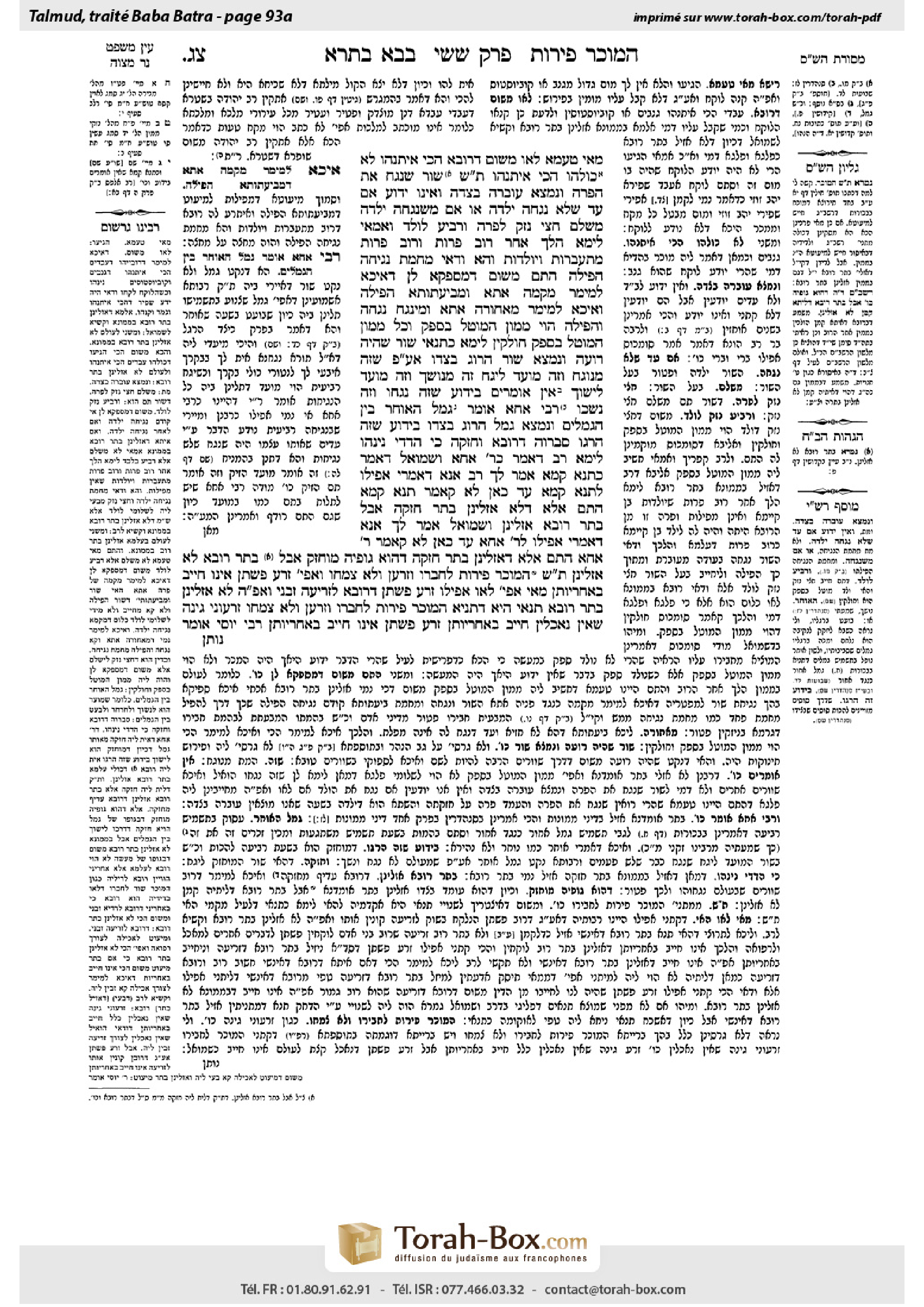
Scan : Torah-Box. Daf Study est un projet indépendant, sans affiliation ni approbation de Torah-Box ou de Sefaria.