Baba Metsia 112b en français · בבא מציעא קי״ב ב
Traduction française du daf 112b du traité Baba Metsia (Bava Metzia 112b en anglais), avec le texte araméen, l’anglais de Sefaria et le scan de la page, pour étudier le Daf Yomi.
Ouvrir dans le lecteur interactifLire le daf du jour
Traduction française de Baba Metsia 112b
Les traductions françaises de Daf Study sont générées par IA à partir de l’édition anglaise de Sefaria. Elles peuvent contenir des erreurs : vérifie toujours un passage avec le texte source.
§ La Michna enseigne : Si un salarié réclame son salaire à l’échéance et que l’employeur affirme le lui avoir déjà versé, le salarié prête serment qu’il n’a pas reçu son salaire, puis le perçoit de l’employeur. La Guemara demande : Pourquoi les Sages ont-ils institué que le salarié, qui est le demandeur, prête serment et reçoive son salaire, à l’encontre du principe selon lequel, dans un litige pécuniaire entre deux parties, le défendeur prête serment qu’il n’est pas tenu de payer et se trouve ainsi libéré ?
Rav Yehouda dit au nom de Chmouel : Ils ont enseigné ici de grandes halakhot. La Guemara s’étonne de ce choix de mots : S’agit-il de halakhot ? Ce sont des règles instituées pour le bon déroulement des transactions, et non des halakhot qui s’appliquent à tous en tout temps. La Guemara corrige alors la formulation : Rav Yehouda dit plutôt au nom de Chmouel : Ils ont enseigné ici de grandes ordonnances. La Guemara n’est toujours pas satisfaite de cette terminologie : Le mot « grandes » implique-t-il qu’il existe des ordonnances mineures ? Lesquelles sont considérées comme peu importantes ?
Rav Naḥman dit au nom de Chmouel : Ils ont enseigné ici des ordonnances établies, nécessaires à la vie pratique. En effet, c’est en réalité à l’employeur qu’il incombe de prêter serment, mais les Sages ont transféré le serment de l’employeur au salarié et l’ont imposé à celui-ci, par considération pour ses moyens de subsistance. Le salarié a besoin de son salaire pour vivre ; par conséquent, si l’employeur était autorisé à se libérer en prêtant serment, le salarié se retrouverait sans rien. La Guemara demande : Et pour préserver les moyens de subsistance du salarié, devrait-on faire perdre de l’argent à l’employeur ? Si celui-ci a le droit de prêter serment pour se libérer, pourquoi devrait-il pâtir des besoins du salarié ?
La Guemara répond : Il est dans l’intérêt de l’employeur lui-même que le salarié prête serment et perçoive son salaire, afin que les salariés acceptent de travailler pour lui en sachant que leur salaire est garanti. La Guemara demande : Pourquoi ne pas soutenir l’inverse, à savoir qu’il est dans l’intérêt du salarié lui-même que l’employeur prête serment et soit libéré de son obligation, afin que le salarié puisse être embauché ? Si les conditions de travail sont trop contraignantes, les employeurs n’embaucheront pas de salariés. La Guemara répond : L’employeur doit nécessairement trouver un salarié à embaucher. La Guemara rétorque : Le salarié, lui aussi, doit nécessairement se faire embaucher.
La Guemara revient sur l’explication précédente : L’employeur est plutôt accaparé par les nombreux salariés qu’il emploie, et il est donc plus probable qu’il ait oublié et cru par erreur avoir déjà versé le salaire de ce salarié. La Guemara demande : Dans ce cas, c’est-à-dire s’il est plausible que l’employeur ait oublié, ne devrait-on pas verser son salaire au salarié sans qu’il prête serment, puisqu’il y a lieu de présumer que l’employeur s’est trompé ? La Guemara répond : Le salarié prête serment afin de dissiper les inquiétudes de l’employeur ; en effet, s’il n’était pas tenu de prêter serment, l’employeur aurait le sentiment d’avoir été trompé.
La Guemara demande : Mais pourquoi l’employeur ne lui verserait-il pas son salaire chaque fois en présence de témoins, ce qui éliminerait toute incertitude ? La Guemara répond : Cela serait contraignant pour tous deux, puisqu’ils devraient trouver des témoins avant chaque paiement. La Guemara demande : Mais pourquoi l’employeur ne lui verserait-il pas son salaire d’avance, avant qu’il ne commence à travailler, lorsqu’il est moins accaparé ? La Guemara répond : Tous deux souhaitent que le paiement soit différé, c’est-à-dire que le salaire ne soit pas versé d’avance. L’employeur préfère cet arrangement au cas où il ne disposerait pas d’argent liquide, tandis que le salarié préfère lui aussi être payé à la fin de la journée, afin de ne pas risquer de perdre son argent entre-temps.
La Guemara demande : Dans ce cas, même si leur désaccord porte sur le montant convenu du salaire, le salarié devrait aussi prêter serment. Pourquoi avons-nous appris dans une baraïta : Si l’artisan dit : « Tu m’as fixé deux pièces comme rémunération », et que l’autre, c’est-à-dire l’employeur, dit : « Je ne t’en ai fixé qu’une », alors la charge de la preuve incombe au demandeur. Pourquoi ne présume-t-on pas que l’employeur était accaparé et a oublié, comme dans le cas précédent ? La Guemara répond : La fixation du salaire est assurément un événement dont on se souvient, et il n’y a pas lieu de craindre que l’employeur ait oublié le montant convenu.
La Guemara demande : Dans ce cas, c’est-à-dire s’il est à craindre que l’employeur ait oublié, même si le délai pour réclamer son salaire était passé, le salarié devrait avoir le droit de prêter serment et de réclamer son salaire. Pourquoi avons-nous appris dans la Michna : Si le délai est passé, il ne prête pas serment et ne perçoit pas son salaire ? La Guemara répond : Dans ce cas, la raison est qu’il existe une présomption selon laquelle un employeur ne transgresse généralement pas l’interdiction de retarder le paiement des salaires.
La Guemara demande : Mais n’as-tu pas dit que l’employeur est accaparé par ses salariés ? La Guemara répond : Cette affirmation ne s’applique qu’avant l’échéance de son obligation de payer, car il est possible que ses préoccupations par d’autres affaires lui aient fait oublier s’il l’avait déjà payé,
Texte source et traduction anglaise
בבא מציעא קי״ב ב · texte araméen et hébreu
שָׂכִיר בִּזְמַנּוֹ נִשְׁבָּע וְנוֹטֵל וְכוּ׳. שָׂכִיר אַמַּאי תַּקִּינוּ לֵיה רַבָּנַן (לְמִשְׁתְּבַע) [דְּמִשְׁתְּבַע] וְשָׁקֵיל?
אָמַר רַב יְהוּדָה אָמַר שְׁמוּאֵל: הֲלָכוֹת גְּדוֹלוֹת שָׁנוּ כָּאן. הָנֵי הִלְכְתָא נִינְהוּ? הָנֵי תַּקָּנוֹת נִינְהוּ! אֶלָּא אָמַר רַב יְהוּדָה אָמַר שְׁמוּאֵל: תַּקָּנוֹת גְּדוֹלוֹת שָׁנוּ כָּאן. ״גְּדוֹלוֹת״, מִכְּלָל דְּאִיכָּא קְטַנּוֹת?
אֶלָּא אָמַר רַב נַחְמָן אָמַר שְׁמוּאֵל: תַּקָּנוֹת קְבוּעוֹת שָׁנוּ כָּאן. שְׁבוּעָה דְּבַעַל הַבַּיִת הִיא, וְעַקְרוּהָ רַבָּנַן לִשְׁבוּעָה דְּבַעַל הַבַּיִת וְשַׁדְיוּהָ אַשָּׂכִיר, מִשּׁוּם כְּדֵי חַיָּיו דְּשָׂכִיר. וּמִשּׁוּם כְּדֵי חַיָּיו דְּשָׂכִיר (מַפְסֵדְנָא) [מַפְסְדִינַן] לֵיהּ לְבַעַל הַבַּיִת?
בַּעַל הַבַּיִת גּוּפֵיהּ נִיחָא לֵיהּ דְּמִשְׁתְּבַע שָׂכִיר וְשָׁקֵיל, כִּי הֵיכִי דְּלִיתַּגְרוּ לֵיהּ פּוֹעֲלִים. שָׂכִיר גּוּפֵיהּ נִיחָא לֵיהּ דְּמִשְׁתְּבַע בַּעַל הַבַּיִת וְנִפְקַע, כִּי הֵיכִי דְּלִיגְרוּהּ בַּעַל הַבַּיִת? עַל כֻּרְחֵיהּ אָגַר. שָׂכִיר נָמֵי בְּעַל כֻּרְחֵיהּ (אִיתְּגַר)!
אֶלָּא בַּעַל הַבַּיִת טָרוּד בְּפוֹעֲלִים הוּא. אִי הָכִי נִיתֵּב לֵיהּ בְּלָא שְׁבוּעָה! כְּדֵי לְהָפִיס דַּעְתּוֹ שֶׁל בַּעַל הַבַּיִת.
וְנִיתֵּב לֵיהּ בְּעֵדִים? טְרִיחָא לְהוּ מִילְּתָא. וְנִיתֵּב לֵיהּ מֵעִיקָּרָא? שְׁנֵיהֶם רוֹצִים בְּהַקָּפָה.
אִי הָכִי, אֲפִילּוּ קָצַץ נָמֵי! אַלְּמָה תַּנְיָא, אוּמָּן אוֹמֵר: שְׁתַּיִם קָצַצְתָּ לִי, וְהַלָּה אוֹמֵר: לֹא קָצַצְתִּי לְךָ אֶלָּא אַחַת – הַמּוֹצִיא מֵחֲבֵירוֹ עָלָיו הָרְאָיָה. קְצִיצָה וַדַּאי מִידְכָּר דְּכִירִי לַהּ אִינָשֵׁי.
אִי הָכִי, אֲפִילּוּ עָבַר זְמַנּוֹ נָמֵי, אַלְּמָה תְּנַן: עָבַר זְמַנּוֹ – אֵינוֹ נִשְׁבָּע וְנוֹטֵל? חֲזָקָה: אֵין בַּעַל הַבַּיִת עוֹבֵר מִשּׁוּם ״בַּל תָּלִין״.
וְהָא אָמְרַתְּ בַּעַל הַבַּיִת טָרוּד בְּפוֹעֲלָיו הוּא! הָנֵי מִילֵּי – מִקַּמֵּי דְּלִימְטְיֵיהּ זְמַן חִיּוּבֵיהּ,
Bava Metzia 112b · traduction anglaise de Sefaria
§ The mishna teaches: If a hired laborer requests payment at the proper time and the employer claims he already paid him, the laborer takes an oath that he did not receive his wages and then receives the wages from the employer. The Gemara asks: Why did the Sages institute for a hired laborer, who is the plaintiff, to take an oath and receive his wages, in opposition to the principle that in the case of a monetary dispute between two parties, the defendant takes an oath that he is not liable and thereby exempts himself from payment?
Rav Yehuda says that Shmuel says: They taught great halakhot here. The Gemara is puzzled by this choice of words: Are these halakhot? They are ordinances designed for the proper running of business transactions, not halakhot that apply to everyone at all times. The Gemara emends the above statement: Rather, Rav Yehuda says that Shmuel says: They taught great ordinances here. The Gemara is still unsatisfied with the terminology: Does the word great indicate by inference that there are minor ordinances? Which ordinances are considered of minor importance?
Rather, Rav Naḥman says that Shmuel says: They taught fixed ordinances here that are necessary for practical life. The reason is that taking the oath is actually the duty of the employer, but the Sages transferred the oath of the employer and imposed it upon the hired laborer due to the livelihood of the hired laborer. The laborer requires his wages to survive, and therefore if the employer is allowed to exempt himself by taking an oath, the laborer will be left with nothing. The Gemara asks: And simply due to the livelihood of the hired laborer should we cause the employer to lose out? If the employer is entitled to take an oath to exempt himself, why should he suffer due to the laborer’s needs?
The Gemara answers: It is preferable for the employer himself that the hired laborer should take an oath and receive his wages so that laborers will hire themselves out to him with the knowledge that their wages are secure. The Gemara asks: Why not argue the reverse, that it is preferable for the hired laborer himself that the employer should take an oath and be exempt so that he should be hired? If the terms of labor are too imposing, people will not hire laborers. The Gemara responds: The employer must perforce find a laborer to hire. The Gemara retorts: A hired laborer, too, must perforce allow himself to be hired out.
The Gemara now retracts the previous explanation: Rather, the employer is preoccupied with many laborers, and it is more likely that he forgot and mistakenly believed that he already paid this laborer’s wages. The Gemara asks: If so, i.e., if it is reasonable that the employer forgot, we should give the laborer his wages without him taking an oath, as there are grounds to presume that the employer erred. The Gemara responds: The laborer takes an oath in order to alleviate the concerns of the employer, as, if he is not required to take an oath, the employer will feel that he has been cheated.
The Gemara asks: But why not have the employer instead give him his wages in the presence of witnesses each time, which would remove any uncertainty? The Gemara answers: The matter would be an inconvenience to them both if they needed to find witnesses before each payment. The Gemara asks: But why not have the employer give him the wages at the outset, before he starts working, when he is less preoccupied? The Gemara answers: Both of them want the payment to be in the form of credit, i.e., that the wages not be paid in advance. The employer prefers this arrangement in case he has no ready cash at his disposal, while the laborer also prefers to be paid at the end of the day so that he does not lose his money in the meantime.
The Gemara asks: If so, then even if the dispute between them concerns a fixed amount of payment as well, the laborer should take an oath. Why did we learn in a baraita: If the craftsman says: You fixed two coins for me as my payment, and the other, i.e., the employer, says: I fixed only one coin for you, then the burden of proof rests upon the claimant. Why is it not assumed that the employer was preoccupied and forgot, as in the previous case? The Gemara answers: The fixing of wages is certainly an event that people remember, and there is no concern that the employer forgot how much he stipulated.
The Gemara asks: If so, i.e., if the concern exists that the employer might have forgotten, then even if his time had passed for claiming his wages, the laborer should be entitled to take an oath and claim his wages. Why did we learn in the mishna: If the time had passed he does not take an oath and receive the wages? The Gemara answers: The reason in that case is that a presumption exists that an employer does not generally violate the prohibition of delaying payment of wages.
The Gemara asks: But didn’t you say that the employer is preoccupied with his laborers? The Gemara answers: This statement applies only before the time of his obligation to pay arrives, as it is possible that his preoccupation with other matters caused him to forget whether he had already paid him,
Texte de Sefaria : William Davidson Edition - Vocalized Aramaic (CC BY NC) ; William Davidson Edition - English (CC BY NC).
Scan de Baba Metsia 112b
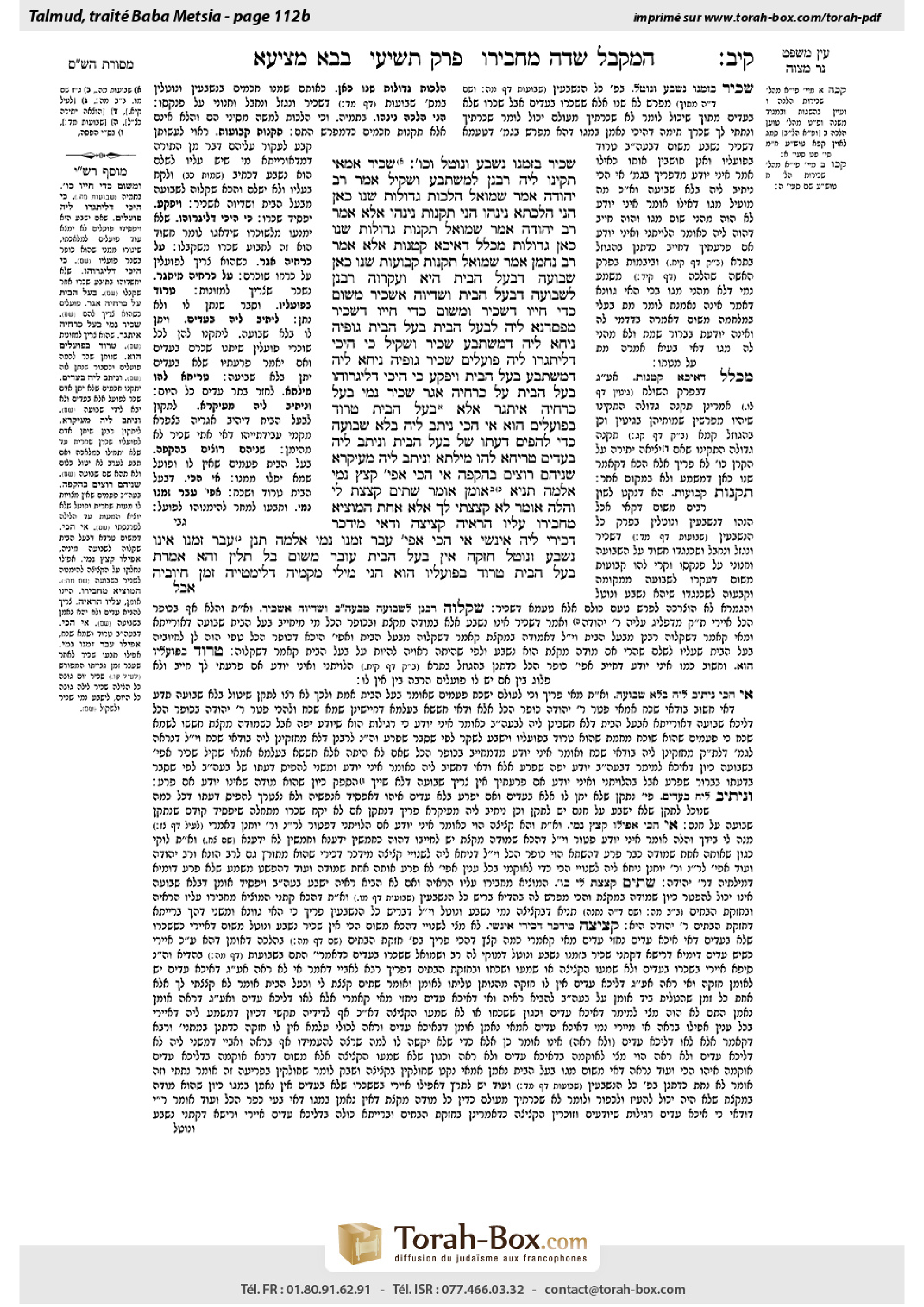
Scan : Torah-Box. Daf Study est un projet indépendant, sans affiliation ni approbation de Torah-Box ou de Sefaria.