Baba Metsia 24a en français · בבא מציעא כ״ד א
Traduction française du daf 24a du traité Baba Metsia (Bava Metzia 24a en anglais), avec le texte araméen, l’anglais de Sefaria et le scan de la page, pour étudier le Daf Yomi.
Ouvrir dans le lecteur interactifLire le daf du jour
Traduction française de Baba Metsia 24a
Les traductions françaises de Daf Study sont générées par IA à partir de l’édition anglaise de Sefaria. Elles peuvent contenir des erreurs : vérifie toujours un passage avec le texte source.
Il peut aussi mentir au sujet d’un hôte [ushpiza], en disant qu’un certain hôte ne l’a pas bien accueilli, afin d’empêcher tout le monde de profiter de son hospitalité. Quelle conséquence pratique découle de cette déclaration concernant les domaines dans lesquels les érudits en Torah s’écartent de la vérité ? Mar Zutra dit : la conséquence pratique concerne la restitution d’un objet perdu sur la base d’une reconnaissance visuelle. Si nous savons qu’il ne modifie ses propos que dans ces trois domaines, nous lui restituons l’objet perdu ; mais s’il les modifie dans d’autres domaines, nous ne le lui restituons pas.
La Guemara rapporte : une coupe d’argent fut dérobée à l’hôte de Mar Zutra Ḥasida. Mar Zutra vit un étudiant en Torah se laver les mains et les essuyer sur le manteau d’un autre. Mar Zutra dit : « Voilà quelqu’un qui ne se soucie pas des biens d’autrui. » Il fit ligoter cet étudiant, qui avoua alors avoir volé la coupe.
Il est enseigné dans une baraïta : bien que Rabbi Shimon ben Elazar estime qu’il n’est pas nécessaire de proclamer la trouvaille de récipients anpourya, il admet que celui qui trouve des récipients neufs dont l’acheteur a suffisamment examiné l’aspect doit proclamer sa trouvaille. Voici des récipients neufs dont l’acheteur n’a pas encore suffisamment examiné l’aspect et pour lesquels celui qui les trouve n’est pas tenu de proclamer sa trouvaille : par exemple, des branches [badei] auxquelles sont suspendues des aiguilles ou des ustensiles de filage, ou encore des files de haches. Quand celui qui trouve tous les objets mentionnés par le tanna dans la baraïta est-il autorisé à les garder ? Lorsqu’il les a trouvés un par un. Mais s’il en a trouvé deux à la fois, il est tenu de proclamer sa trouvaille.
La Guemara précise : que signifie le terme badei ? Il signifie « branches ». Et pourquoi le tanna les a-t-il appelées « branches » ? Parce qu’il appelle branche l’objet auquel on suspend quelque chose [davar detalu bei midei], comme nous l’avons appris là-bas (Soukka 44b) : une feuille sur une branche.
§ La baraïta poursuit : de même, Rabbi Shimon ben Elazar disait : celui qui sauve un objet perdu d’un lion, d’un ours, d’un léopard, d’un guépard [bardelas], de la marée ou de la crue d’un fleuve, ainsi que celui qui trouve un objet perdu sur une grande voie [seratya], sur une vaste place [pelatya] ou en tout lieu fréquenté par les foules, peut le garder, car son propriétaire renonce à le récupérer.
Un dilemme fut soumis aux Sages : lorsque Rabbi Shimon ben Elazar dit que celui qui trouve un objet perdu en un lieu fréquenté par les foules peut le garder, parle-t-il uniquement d’un lieu où les non-Juifs sont majoritaires, tandis qu’en un lieu où les Juifs sont majoritaires, le propriétaire ne renonce pas à récupérer l’objet, car il compte sur les Juifs pour le lui restituer ? Ou bien dit-il aussi que l’objet appartient à celui qui l’a trouvé, même en un lieu où les Juifs sont majoritaires ?
Et si tu dis qu’il a également dit que l’objet appartient à celui qui l’a trouvé, même en un lieu où les Juifs sont majoritaires, les Rabbins sont-ils en désaccord avec lui ou non ?
Et si tu dis que les Rabbins sont en désaccord avec lui, ils le sont certainement en un lieu où les Juifs sont majoritaires. Mais en un lieu où les non-Juifs sont majoritaires, les Rabbins sont-ils en désaccord ou non ?
Et si tu dis que les Rabbins sont en désaccord avec lui même en un lieu où les non-Juifs sont majoritaires, la halakha suit-elle l’opinion de Rabbi Shimon ben Elazar ou non ?
Et si tu dis que la halakha suit l’opinion de Rabbi Shimon ben Elazar, cette halakha s’applique-t-elle uniquement en un lieu où les non-Juifs sont majoritaires, ou suit-elle son opinion même en un lieu où les Juifs sont majoritaires ?
La Guemara propose : viens et écoute une preuve tirée d’une baraïta : celui qui trouve des pièces dans des synagogues [bevatei khenesiyyot], des maisons d’étude ou tout lieu fréquenté par les foules peut les garder, car leur propriétaire renonce à les récupérer. Qui est celui dont tu as entendu qu’il tient compte des foules, c’est-à-dire qu’il accorde de l’importance au fait qu’un objet ait été perdu dans un lieu fréquenté par elles ? C’est Rabbi Shimon ben Elazar. Déduis de la baraïta que, selon Rabbi Shimon ben Elazar, l’objet perdu appartient à celui qui l’a trouvé même en un lieu où les Juifs sont majoritaires, puisque les synagogues et les maisons d’étude sont fréquentées exclusivement par des Juifs.
La Guemara rejette cette preuve. De quel cas s’agit-il ici ? D’un cas où les pièces sont dispersées et ne portent aucun signe distinctif. La Guemara demande : s’il s’agit d’un cas où les pièces sont dispersées, pourquoi la baraïta situe-t-elle le cas précisément en un lieu fréquenté par les foules ? Même en un lieu où elles ne se trouvent pas, les pièces appartiennent à celui qui les a trouvées.
En réalité, la baraïta parle d’un cas où les pièces sont attachées. Et de quel cas s’agit-il ici ? De pièces trouvées dans des maisons de réunion [bevatei khenesiyyot] appartenant à des non-Juifs, et non dans des synagogues. Cela règle la question des synagogues ; mais que peut-on dire des maisons d’étude, qui sont réservées aux Juifs ? La Guemara répond : la baraïta parle de nos maisons d’étude, où se trouvent des gardes ou des intendants non juifs. La Guemara relève : maintenant que cette explication a été avancée, les batei khenesiyyot de la baraïta peuvent désigner nos synagogues, où se trouvent des non-Juifs.
Viens et écoute une preuve tirée d’une Michna (Makhshirin 2:8) : si quelqu’un trouve un objet perdu dans une ville où résident des Juifs et des non-Juifs, il est tenu de proclamer sa trouvaille si les Juifs y sont majoritaires. Si les non-Juifs y sont majoritaires, il n’est pas tenu de proclamer sa trouvaille. Qui est celui dont tu as entendu qu’il tient compte des foules, c’est-à-dire qu’il accorde de l’importance au fait qu’un objet ait été perdu dans un lieu fréquenté par elles ? C’est Rabbi Shimon ben Elazar. Déduis de cette Michna que, lorsque Rabbi Shimon ben Elazar dit que l’objet appartient à celui qui l’a trouvé, il vise précisément un lieu où les non-Juifs sont majoritaires ; mais en un lieu où les Juifs sont majoritaires, l’objet n’appartient pas à celui qui l’a trouvé.
La Guemara rejette cette preuve : selon l’opinion de qui cette Michna a-t-elle été enseignée ? Selon celle des Rabbins. La Guemara propose : quoi qu’il en soit, déduis de la Michna que les Rabbins admettent l’opinion de Rabbi Shimon ben Elazar dans un lieu où les non-Juifs sont majoritaires.
La Guemara rejette cette explication : en réalité, la Michna suit l’opinion de Rabbi Shimon ben Elazar, qui a exprimé son opinion même dans un lieu où les Juifs sont majoritaires. Et de quel cas s’agit-il ici ? D’un cas où l’objet trouvé est caché. La Guemara demande : si l’objet est caché, pourquoi celui qui l’a trouvé le garde-t-il ? De toute évidence, il a été déposé là et son propriétaire reviendra le récupérer. N’avons-nous pas appris dans une Michna (25b) que, si quelqu’un trouve un récipient dans un dépotoir, il ne doit pas y toucher s’il est caché ; mais s’il est exposé, celui qui l’a trouvé le prend et proclame sa trouvaille ?
La Guemara répond : cela peut s’expliquer comme Rav Pappa le dit ailleurs : il s’agit d’un dépotoir qui n’est pas destiné à être débarrassé, mais dont le propriétaire du terrain a changé d’avis et décidé de le faire vider. Si quelqu’un y trouve des récipients cachés, il doit proclamer sa trouvaille, car sinon ils seront emportés avec le reste du dépotoir. Ici aussi, la Michna parle d’un dépotoir qui n’est pas destiné à être débarrassé, mais dont le propriétaire du terrain a changé d’avis et décidé de le faire vider. Si quelqu’un y trouve des objets cachés, la conduite à suivre dépend de l’identité du groupe majoritaire parmi les habitants de la ville. Si les Juifs sont majoritaires, il doit proclamer sa trouvaille ; sinon, il n’est pas tenu de le faire. Aucune preuve ne peut être invoquée pour trancher le dilemme.
Texte source et traduction anglaise
בבא מציעא כ״ד א · texte araméen et hébreu
וּבְאוּשְׁפִּיזָא. מַאי נָפְקָא מִינַּהּ? אָמַר מָר זוּטְרָא: לְאַהְדּוֹרֵי לֵיהּ אֲבֵידְתָּא בִּטְבִיעוּת עֵינָא. אִי יָדְעִינַן בֵּיהּ דְּלָא מְשַׁנֵּי אֶלָּא בְּהָנֵי תְּלָת – מַהְדְּרִינַן לֵיהּ, וְאִי מְשַׁנֵּי בְּמִילֵּי אַחֲרִינֵי – לָא מַהְדְּרִינַן לֵיהּ.
מָר זוּטְרָא חֲסִידָא אִגְּנִיב לֵיהּ כָּסָא דְכַסְפָּא מֵאוּשְׁפִּיזָא. חַזְיֵאּ לְהָהוּא בַּר בֵּי רַב דְּמָשֵׁי יְדֵיהּ וְנָגֵיב בִּגְלִימָא דְחַבְרֵיהּ. אֲמַר: הַיְינוּ הַאי דְּלָא אִיכְפַּת לֵיהּ אַמָּמוֹנָא דְחַבְרֵיהּ. כַּפְתֵיהּ וְאוֹדִי.
תַּנְיָא: מוֹדֶה רַבִּי שִׁמְעוֹן בֶּן אֶלְעָזָר בְּכֵלִים חֲדָשִׁים שֶׁשְּׂבָעָתַן הָעַיִן שֶׁחַיָּיב לְהַכְרִיז. וְאֵלּוּ הֵן כֵּלִים חֲדָשִׁים שֶׁלֹּא שְׂבָעָתַן הָעַיִן שֶׁאֵינוֹ חַיָּיב לְהַכְרִיז, כְּגוֹן בַּדֵּי מְחָטִין, וְצִינּוֹרִיּוֹת, וּמַחְרוֹזוֹת שֶׁל קַרְדּוּמּוֹת. כׇּל אֵלּוּ שֶׁאָמְרוּ, אֵימָתַי מוּתָּרִים? בִּזְמַן שֶׁמְּצָאָן אֶחָד אֶחָד, אֲבָל מְצָאָן שְׁנַיִם שְׁנַיִם – חַיָּיב לְהַכְרִיז.
מַאי ״בַּדֵּי״? שׂוֹכֵי. וְאַמַּאי קָרוּ לֵיהּ ״בַּדֵּי״? דָּבָר דְּתָלוּ בֵּיהּ מִידֵּי, ״בַּד״ קָרוּ לֵיהּ. כִּי הַהוּא דִּתְנַן הָתָם: עָלֶה אֶחָד בְּבַד אֶחָד.
וְכֵן הָיָה רַבִּי שִׁמְעוֹן בֶּן אֶלְעָזָר אוֹמֵר: הַמַּצִּיל מִן הָאֲרִי וּמִן הַדּוֹב וּמִן הַנָּמֵר וּמִן הַבַּרְדְּלָס וּמִן זוֹטוֹ שֶׁל יָם וּמִשְּׁלוּלִיתוֹ שֶׁל נָהָר, הַמּוֹצֵא בִּסְרַטְיָא וּפְלַטְיָא גְּדוֹלָה, וּבְכׇל מָקוֹם שֶׁהָרַבִּים מְצוּיִין שָׁם – הֲרֵי אֵלּוּ שֶׁלּוֹ, מִפְּנֵי שֶׁהַבְּעָלִים מִתְיָאֲשִׁין מֵהֶן.
אִיבַּעְיָא לְהוּ: כִּי קָאָמַר רַבִּי שִׁמְעוֹן בֶּן אֶלְעָזָר – בְּרוֹב גּוֹיִם אֲבָל בְּרוֹב יִשְׂרָאֵל – לָא, אוֹ דִלְמָא אֲפִילּוּ בְּרוֹב יִשְׂרָאֵל נָמֵי אָמַר?
אִם תִּמְצָא לוֹמַר אֲפִילּוּ בְּרוֹב יִשְׂרָאֵל נָמֵי אָמַר, פְּלִיגִי רַבָּנַן עֲלֵיהּ, אוֹ לָא פְּלִיגִי?
וְאִם תִּמְצָא לוֹמַר פְּלִיגִי, בְּרוֹב יִשְׂרָאֵל וַדַּאי פְּלִיגִי, בְּרוֹב גּוֹיִם פְּלִיגִי אוֹ לָא פְּלִיגִי?
וְאִם תִּמְצָא לוֹמַר פְּלִיגִי אֲפִילּוּ בְּרוֹב גּוֹיִם הֲלָכָה כְּמוֹתוֹ אוֹ אֵין הֲלָכָה כְּמוֹתוֹ?
אִם תִּמְצָא לוֹמַר הֲלָכָה כְּמוֹתוֹ, דַּוְקָא בְּרוֹב גּוֹיִם אוֹ אֲפִילּוּ בְּרוֹב יִשְׂרָאֵל?
תָּא שְׁמַע: הַמּוֹצֵא מָעוֹת בְּבָתֵּי כְנֵסִיּוֹת וּבְבָתֵּי מִדְרָשׁוֹת, וּבְכׇל מָקוֹם שֶׁהָרַבִּים מְצוּיִין שָׁם – הֲרֵי אֵלּוּ שֶׁלּוֹ, מִפְּנֵי שֶׁהַבְּעָלִים מִתְיָאֲשִׁין מֵהֶן. מַאן שָׁמְעַתְּ לֵיהּ דְּאָזֵיל בָּתַר רוּבָּא? רַבִּי שִׁמְעוֹן בֶּן אֶלְעָזָר, שָׁמְעַתְּ מִינַּהּ אֲפִילּוּ בְּרוֹב יִשְׂרָאֵל נָמֵי.
הָכָא בְּמַאי עָסְקִינַן? בִּמְפוּזָּרִין. אִי בִּמְפוּזָּרִין מַאי אִרְיָא מָקוֹם שֶׁהָרַבִּים מְצוּיִין שָׁם? אֲפִילּוּ אֵין הָרַבִּים מְצוּיִין שָׁם!
אֶלָּא לְעוֹלָם בִּצְרוּרִין, וְהָכָא בְּמַאי עָסְקִינַן – בְּבָתֵּי כְנֵסִיּוֹת שֶׁל גּוֹיִם, בָּתֵּי מִדְרָשׁוֹת מַאי אִיכָּא לְמֵימַר? בָּתֵּי מִדְרָשׁוֹת דִּידַן דְּיָתְבִי בְּהוּ גּוֹיִם. הַשְׁתָּא דְּאָתֵית לְהָכִי, בָּתֵּי כְנֵסִיּוֹת נָמֵי דִּידַן דְּיָתְבִי בְּהוּ נָכְרִים.
תָּא שְׁמַע: מָצָא בָּהּ אֲבֵידָה, אִם רוֹב יִשְׂרָאֵל – חַיָּיב לְהַכְרִיז, אִם רוֹב גּוֹיִם – אֵינוֹ חַיָּיב לְהַכְרִיז. מַאן שָׁמְעַתְּ לֵיהּ דְּאָמַר אָזְלִינַן בָּתַר רוּבָּא? רַבִּי שִׁמְעוֹן בֶּן אֶלְעָזָר, שָׁמְעַתְּ מִינַּהּ: כִּי קָאָמַר רַבִּי שִׁמְעוֹן בֶּן אֶלְעָזָר בְּרוֹב גּוֹיִם, אֲבָל בְּרוֹב יִשְׂרָאֵל – לָא!
מַנִּי? רַבָּנַן הִיא, תִּפְשׁוֹט מִינַּהּ דְּמוֹדוּ לֵיהּ רַבָּנַן לְרַבִּי שִׁמְעוֹן בֶּן אֶלְעָזָר בְּרוֹב גּוֹיִם.
אֶלָּא לְעוֹלָם רַבִּי שִׁמְעוֹן בֶּן אֶלְעָזָר הִיא, וַאֲפִילּוּ בְּרוֹב יִשְׂרָאֵל נָמֵי. וְהָכָא בְּמַאי עָסְקִינַן? בְּטָמוּן. אִי בְּטָמוּן, מַאי עֲבִידְתֵּיהּ גַּבֵּיהּ?! וְהָתְנַן: מָצָא כְּלִי בָּאַשְׁפָּה, מְכוּסֶּה – לֹא יִגַּע בּוֹ, מְגוּלֶּה – נוֹטֵל וּמַכְרִיז.
כִּדְאָמַר רַב פָּפָּא, בְּאַשְׁפָּה שֶׁאֵינָהּ עֲשׂוּיָה לְפַנּוֹת, וְנִמְלַךְ עָלֶיהָ לְפַנּוֹתָהּ. הָכָא נָמֵי בְּאַשְׁפָּה שֶׁאֵינָהּ עֲשׂוּיָה לְפַנּוֹת, וְנִמְלַךְ עָלֶיהָ לְפַנּוֹתָהּ.
Bava Metzia 24a · traduction anglaise de Sefaria
And he can lie with regard to a host [ushpiza], as one may say that he was not well received by a certain host to prevent everyone from taking advantage of the host’s hospitality. What is the practical difference that emerges from this statement with regard to matters in which Torah scholars deviate from the truth? Mar Zutra says: The practical difference is with regard to returning a lost item on the basis of visual recognition. If we know about him that he alters his statements only with regard to these three matters, we return the lost item to him, but if he alters his statements with regard to other matters, we do not return the lost item to him.
The Gemara relates: A silver goblet was stolen from the host of Mar Zutra Ḥasida. Mar Zutra saw a certain student of Torah who washed his hands and dried them on the cloak of another. Mar Zutra said: This is the one who does not care about the property of another. He bound that student, and the student then confessed that he stole the goblet.
It is taught in a baraita: Although Rabbi Shimon ben Elazar holds that one does not need to proclaim his finding of anpurya vessels, he concedes that the finder is obligated to proclaim his find of new vessels that the eye of its purchaser has sufficiently seen. And these are new vessels that the eye of its purchaser has not yet sufficiently seen and concerning which the finder is not obligated to proclaim his find: for example, branches [badei] upon which needles or utensils for spinning are hanging, or strings of axes. When is it permitted for the one who finds all those items that the tanna mentioned in the baraita to keep them? It is when he found them one at a time. But if he found them two at a time, the finder is obligated to proclaim his find.
The Gemara clarifies: What is the meaning of the term badei? It means branches. And why did the tanna call them branches? It is because the item upon which one hangs another item [davar detalu bei midei], he calls it a branch, like that which we learned there (Sukka 44b): One leaf on one branch.
§ The baraita continues: And likewise, Rabbi Shimon ben Elazar would say: In the case of one who rescues a lost item from a lion, or from a bear, or from a leopard, or from a cheetah [bardelas], or from the tide of the sea, or from the flooding of a river; and in the case of one who finds a lost item in a main thoroughfare [seratya] or a large plaza [pelatya], or in any place where the multitudes are found, these items belong to him due to the fact that the owner despairs of their recovery.
A dilemma was raised before the Sages: When Rabbi Shimon ben Elazar says that if one finds a lost item in any place where multitudes are found, the item belongs to him, did he refer only to a place where there is a majority of gentiles; but in a place where there is a majority of Jews, the owner does not despair of recovering the item, because he relies on the Jews to return his item? Or perhaps, even in a place where there is a majority of Jews, he also says that the item belongs to the one who found it.
And if you say that even in a place where there is a majority of Jews, he also said that the item belongs to the one who found it, do the Rabbis disagree with him or do they not disagree?
And if you say that the Rabbis disagree with him, in a place where there is a majority of Jews, they certainly disagree. In a place where there is a majority of gentiles, do the Rabbis disagree, or do they not disagree?
And if you say that the Rabbis disagree with him even in a place where there is a majority of gentiles, is the halakha in accordance with the opinion of Rabbi Shimon ben Elazar, or is the halakha not in accordance with his opinion?
And if you say that the halakha is in accordance with the opinion of Rabbi Shimon ben Elazar, does this halakha apply specifically in a place where there is a majority of gentiles, or is the halakha in accordance with his opinion even in a place where there is a majority of Jews?
The Gemara suggests: Come and hear a proof from a baraita: In the case of one who finds coins in synagogues [bevatei khenesiyyot] and study halls or in any place where the multitudes are found, these coins belong to him, due to the fact that the owner despairs of their recovery. Who is the one about whom you heard that he follows the multitudes, i.e., that he attaches significance to the loss of an item in a place where the multitudes are present? It is Rabbi Shimon ben Elazar. Conclude from the baraita that Rabbi Shimon ben Elazar holds that a lost item belongs to the finder even in a place where there is a majority of Jews, as synagogues and study halls are places frequented exclusively by Jews.
The Gemara rejects the proof. With what are we dealing here? We are dealing with a case where the coins are scattered and there is no distinguishing mark on them. The Gemara asks: If it is a case where the coins are scattered, why did the baraita establish the case specifically in a place where the multitudes are found? Even in a place where the multitudes are not found, the coins belong to the finder.
Rather, actually the baraita is referring to a case where the coins are bound, and with what are we dealing here? This is a case where the coins were found in the houses of assembly [bevatei khenesiyyot] of gentiles, not in synagogues. That resolves the matter of synagogues; but with regard to study halls, which are exclusive to Jews, what can be said? The Gemara answers: The baraita is referring to our study halls in which gentile guards or custodians are sitting. The Gemara notes: Now that you have arrived at this explanation, the batei khenesiyyot in the baraita can be explained as referring to our synagogues, in which gentiles are sitting.
Come and hear a proof from a mishna (Makhshirin 2:8): In a case when one found a lost item in a city where both Jews and gentiles reside, if the city has a majority of Jews he is obligated to proclaim his find. If there is a majority of gentiles he is not obligated to proclaim his find. Who is the one about whom you heard that he follows the multitudes, i.e., that he attaches significance to the loss of an item in a place where the multitudes are present? It is Rabbi Shimon ben Elazar. Resolve from this mishna that when Rabbi Shimon ben Elazar says that the item belongs to the finder, it is referring specifically to a place where there is a majority of gentiles, but in a place where there is a majority of Jews, no, it does not belong to the finder.
The Gemara rejects this proof: In accordance with whose opinion is this mishna? It is in accordance with the opinion of the Rabbis. The Gemara suggests: In any case, resolve the dilemma from the mishna that the Rabbis concede to Rabbi Shimon ben Elazar in a place where there is a majority of gentiles.
The Gemara rejects this explanation: Rather, actually the mishna is in accordance with the opinion of Rabbi Shimon ben Elazar, and he stated his opinion even in a place where there is a majority of Jews. And with what are we dealing here? This is a case where the found item is concealed. The Gemara asks: If the item is concealed, what is the reason the item is with the finder? Clearly it was placed there and the owner will return to retrieve it. And didn’t we learn in a mishna (25b): In a case where one found a vessel in a garbage dump, if the vessel is concealed he may not touch it, but if it is exposed, the finder takes the item and proclaims his find.
The Gemara answers: It can be explained as Rav Pappa says elsewhere, that it is referring to a garbage dump that is not designed to be cleared, and the owner of the land reconsidered and decided to clear it. If one finds concealed vessels he should proclaim his find, because otherwise the vessels will be cleared with the rest of the garbage dump. Here too, the mishna is referring to a garbage dump that is not designed to be cleared, and the owner of the land reconsidered and decided to clear it. If one finds concealed items, his course of action is determined by the identity of the majority of the residents of the city. If they are Jews, he must proclaim his find, and if not, he need not proclaim his find. No proof can be cited to resolve the dilemma.
Texte de Sefaria : William Davidson Edition - Vocalized Aramaic (CC BY NC) ; William Davidson Edition - English (CC BY NC).
Scan de Baba Metsia 24a
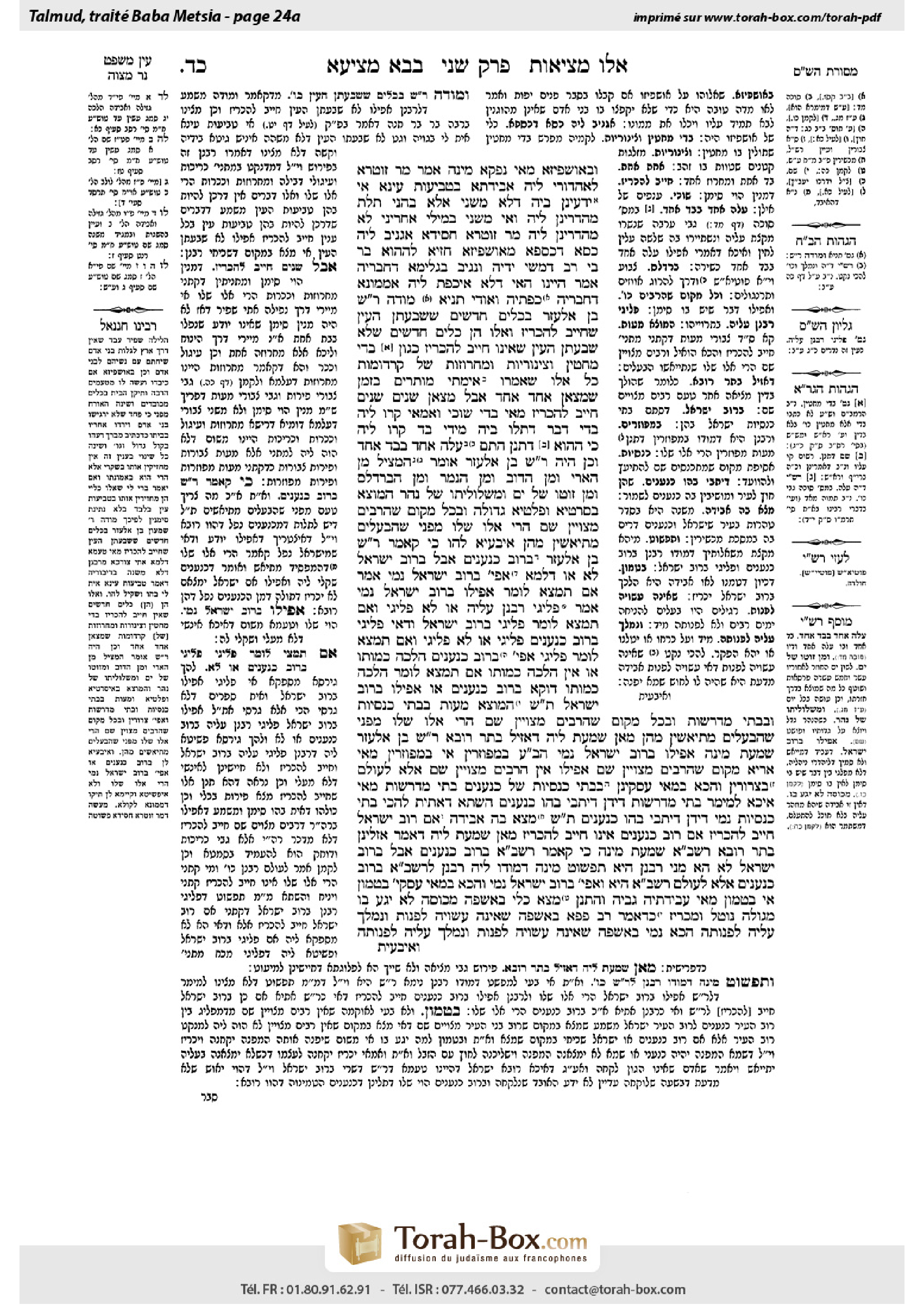
Scan : Torah-Box. Daf Study est un projet indépendant, sans affiliation ni approbation de Torah-Box ou de Sefaria.