Houlin 19a en français · חולין י״ט א
Traduction française du daf 19a du traité Houlin (Chullin 19a en anglais), avec le texte araméen, l’anglais de Sefaria et le scan de la page, pour étudier le Daf Yomi.
Ouvrir dans le lecteur interactifLire le daf du jour
Traduction française de Houlin 19a
Les traductions françaises de Daf Study sont générées par IA à partir de l’édition anglaise de Sefaria. Elles peuvent contenir des erreurs : vérifie toujours un passage avec le texte source.
La Guemara conclut : La halakha est la suivante : si l’on abat depuis la pente du cartilage thyroïde vers le bas, en direction de la trachée, l’abattage est valide. Cela correspond à l’opinion selon laquelle celui qui laisse une partie du cartilage aryténoïde a néanmoins effectué un abattage valide, puisque ce cartilage s’étend au-delà de ce point.
La Guemara rapporte que Rav Naḥman a déclaré valide un abattage effectué depuis la pente du cartilage thyroïde vers le bas. Rav Ḥanan bar Rav Ketina dit à Rav Naḥman : « De quelle opinion cette décision relève-t-elle ? Elle ne correspond ni à celle des Sages ni à celle de Rabbi Yosei, fils de Rabbi Yehuda, qui soutiennent tous deux que si l’on coupe la trachée au-dessus du grand anneau supérieur, le cartilage cricoïde, l’abattage n’est pas valide. »
Rav Naḥman lui dit : « Je ne connais ni Ḥillek ni Billek », c’est-à-dire que je ne connais la raison ni de l’opinion de l’un ni de celle de l’autre. Je connais la halakha, car Rabbi Ḥiyya bar Abba dit au nom de Rabbi Yoḥanan — et certains disent que Rabbi Abba bar Zavda dit au nom de Rabbi Ḥanina, et d’autres que Rabbi Ya’akov bar Idi dit au nom de Rabbi Yehoshua ben Levi : « Depuis la pente du cartilage thyroïde vers le bas, l’abattage est valide. »
§ La Guemara revient à l’analyse de la baraïta (18b) : si le couteau dévie de l’endroit de l’abattage et passe au-dessus de l’anneau, l’abattage n’est pas valide. Rabbi Ḥanina ben Antigonus a témoigné qu’en pareil cas, l’abattage est valide. Rabbi Yehoshua ben Levi dit : si le couteau a dévié selon l’opinion des Sages cités dans la Michna, l’abattage est valide selon l’opinion de Rabbi Yosei, fils de Rabbi Yehuda, qui a statué que l’abattage est valide lorsque la majorité de la trachée a été coupée à l’intérieur du grand anneau supérieur.
Et si le couteau a dévié selon l’opinion de Rabbi Yosei, fils de Rabbi Yehuda, l’abattage est valide selon l’opinion de Rabbi Ḥanina ben Antigonus, qui a statué que même si la majorité de la trachée a été coupée à l’extérieur du grand anneau supérieur, l’abattage est valide.
La Guemara objecte : Cela va de soi. La Guemara explique : de peur que tu ne dises que la déclaration de Rabbi Ḥanina ben Antigonus, selon laquelle l’abattage est valide lorsque le couteau dévie de l’endroit de l’abattage et passe au-dessus de l’anneau, se rapporte à la déclaration des Sages, et qu’il est d’accord avec Rabbi Yosei, fils de Rabbi Yehuda, selon qui l’abattage n’est pas valide lorsque la majorité de la trachée a été coupée au-dessus du grand anneau supérieur, Rabbi Yehoshua ben Levi nous enseigne que ce n’est pas le cas.
La Guemara objecte : « Et disons qu’il en est effectivement ainsi, que Rabbi Ḥanina ben Antigonus est d’accord avec Rabbi Yosei, fils de Rabbi Yehuda. » La Guemara répond : « Si c’était le cas, la formulation de la baraïta aurait dû être : “Rabbi Ḥanina ben Antigonus en a témoigné.” » Puisque l’opinion de Rabbi Ḥanina ben Antigonus est introduite simplement par le terme « témoigné », il semble qu’il soit en désaccord avec toutes les autres opinions. La Guemara conclut : la halakha suit l’opinion de Rabbi Ḥanina ben Antigonus, car Rav Naḥman se range à son avis.
§ La Michna citait un désaccord entre les Sages, qui soutiennent que si l’on abat à l’intérieur du grand anneau supérieur sans laisser une largeur de fil sur toute la surface de l’anneau, l’abattage n’est pas valide, et Rabbi Yosei, fils de Rabbi Yehuda, qui soutient que même si l’on laisse une largeur de fil sur la majeure partie de la surface de l’anneau, l’abattage est valide. À ce propos, Rav Huna dit au nom de Rav Asi : le désaccord ne porte que sur le cas où l’on a coupé les deux tiers de la trachée à l’intérieur de l’anneau, puis dirigé le couteau vers le haut, en direction de la tête de l’animal, et coupé le tiers restant. Les Sages soutiennent en effet que l’abattage entier doit être effectué à l’intérieur du grand anneau, tandis que Rabbi Yosei, fils de Rabbi Yehuda, soutient que le statut halakhique de la majorité est celui de la totalité.
Mais si l’on a dirigé le couteau vers le haut, en direction de la tête de l’animal, coupé un tiers de la trachée, puis coupé les deux tiers à l’intérieur de l’anneau, tous conviennent que l’abattage n’est pas valide. En effet, au moment où la vie a quitté l’animal, c’est-à-dire lorsque la majorité de la trachée a été coupée, nous exigeons que toute cette majorité ait été coupée au cours d’un abattage valide, ce qui n’est pas le cas ici.
Rav Ḥisda dit à Rav Huna : « Au contraire, que le maître dise l’inverse. Le désaccord ne porte que sur le cas où l’on a dirigé le couteau vers le haut, en direction de la tête de l’animal, coupé un tiers de la trachée, puis coupé les deux tiers à l’intérieur de l’anneau. Rabbi Yosei, fils de Rabbi Yehuda, soutient alors que l’abattage est valide, comme dans le cas où la trachée est entamée sur la moitié de son diamètre. Dans ce cas, dès que l’abatteur coupe une partie supplémentaire de la trachée, l’abattage est valide, car la coupe qui a rendu abattue la majorité de la trachée a été effectuée correctement. De même ici, puisque la coupe du deuxième tiers a été effectuée correctement, l’abattage est valide. »
Les Sages, eux, soutiennent que dans le cas de la trachée entamée, l’entaille se trouvait à l’endroit approprié pour l’abattage ; par conséquent, la majeure partie de la vie de l’animal a quitté son corps à l’endroit approprié. Ici, le premier tiers a été coupé alors que le couteau avait dévié ; par conséquent, la majeure partie de la vie de l’animal n’a pas quitté son corps à l’endroit approprié pour l’abattage.
Mais si l’on a coupé les deux tiers de la trachée à l’intérieur de l’anneau, puis dévié le couteau et coupé le tiers restant, tous conviennent que l’abattage est valide. N’avons-nous pas appris dans une Michna (27a) que le statut halakhique de l’abattage de la majorité d’un siman, la trachée ou l’œsophage, est celui de l’abattage du siman tout entier ?
Rav Yosef dit à Rav Ḥisda : « Qui nous dit que, dans la Michna concernant la majorité d’un siman, Rabbi Yosei, fils de Rabbi Yehuda, ne l’a pas enseigné ? Peut-être Rabbi Yosei, fils de Rabbi Yehuda, l’a-t-il enseigné et les Sages sont-ils en désaccord avec lui. »
Abaye dit à Rav Yosef : « Veux-tu dire que Rabbi Yosei, fils de Rabbi Yehuda, a enseigné tous les principes portant de manière générale sur les majorités ? » Rav Yosef lui dit : « Je parle du principe de la majorité en matière d’abattage, car nous avons entendu que les Sages sont en désaccord avec lui. »
Certains rapportent une autre version de cet échange : Rav Huna dit au nom de Rav Asi : le désaccord ne porte que sur le cas où l’on a dirigé le couteau vers le haut, en direction de la tête de l’animal, coupé un tiers de la trachée, puis coupé les deux tiers à l’intérieur de l’anneau. Rabbi Yosei, fils de Rabbi Yehuda, soutient que l’abattage est valide, comme dans le cas où la trachée est entamée sur la moitié de son diamètre ; les Sages, eux, soutiennent que dans le cas de la trachée entamée, l’entaille se trouvait à l’endroit approprié pour l’abattage, tandis qu’ici, la majeure partie de la vie de l’animal n’a pas quitté son corps à l’endroit approprié pour l’abattage.
Mais si l’on a coupé les deux tiers de la trachée à l’intérieur de l’anneau, puis dévié le couteau et coupé le tiers restant, tous conviennent que l’abattage est valide. N’avons-nous pas appris dans une Michna (27a) que le statut halakhique de l’abattage de la majorité d’un siman, la trachée ou l’œsophage, est celui de l’abattage du siman tout entier ?
Rav Ḥisda objecte : « Qui nous dit que, dans la Michna concernant la majorité d’un siman, Rabbi Yosei, fils de Rabbi Yehuda, ne l’a pas enseigné ? Peut-être Rabbi Yosei, fils de Rabbi Yehuda, l’a-t-il enseigné, et les Sages sont-ils en désaccord avec lui. » Rav Yosef dit à Rav Ḥisda : « Veux-tu dire que Rabbi Yosei, fils de Rabbi Yehuda, a enseigné tous les principes portant de manière générale sur les majorités ? » Rav Ḥisda lui dit : « Je parle du principe de la majorité en matière d’abattage, car nous avons entendu que les Sages sont en désaccord avec lui. »
§ Si l’on a dévié le couteau et coupé un tiers de la trachée, puis coupé correctement un autre tiers, puis dévié de nouveau et coupé le dernier tiers, Rav Huna dit au nom de Rav : l’abattage est valide. Rav Yehuda dit au nom de Rav : l’animal est une tereifa, c’est-à-dire interdit. Rav Huna dit au nom de Rav que l’abattage est valide, car lorsque la vie a quitté l’animal, elle l’a quitté au cours d’un abattage valide. Rav Yehuda dit au nom de Rav que l’animal est une tereifa, car nous exigeons que la majorité de la trachée soit coupée au cours d’un abattage valide, ce qui n’est pas le cas ici.
Si l’on a coupé correctement un tiers de la trachée, puis dévié le couteau et coupé un autre tiers, puis coupé correctement le dernier tiers de la trachée, Rav Yehuda dit au nom de Rav : l’abattage est valide. Lorsque les Sages vinrent consulter Rav Huna, celui-ci leur dit : « L’animal est une tereifa. » Rav Yehuda entendit la décision de Rav Huna et se mit en colère. Il dit : « Moi, je le déclare tereifa, et lui déclare l’abattage valide ; moi, je déclare l’abattage valide, et lui le déclare tereifa. » Rav Huna dit : « Il est normal qu’il se soit mis en colère. D’abord, il l’a entendu de Rav et moi, je ne l’ai pas entendu de Rav ; et en outre, la majorité du siman n’a-t-elle pas été coupée au cours d’un abattage valide ? »
Rav Ḥisda dit à Rav Huna : « Ne reviens pas sur ta déclaration, »
Texte source et traduction anglaise
חולין י״ט א · texte araméen et hébreu
וְהִלְכְתָא מִשִּׁיפּוּי כּוֹבַע וּלְמַטָּה – כְּשֵׁרָה, וְהַיְינוּ דְּשַׁיַּיר בְּחִיטֵּי.
רַב נַחְמָן אַכְשַׁר מִשִּׁיפּוּי כּוֹבַע וּלְמַטָּה, אֲמַר לֵיהּ רַב חָנָן בַּר רַב קַטִּינָא לְרַב נַחְמָן: כְּמַאן? לָא כְּרַבָּנַן וְלָא כְּרַבִּי יוֹסֵי בְּרַבִּי יְהוּדָה.
אֲמַר לֵיהּ: אֲנָא לָא חִילָק יָדַעְנָא וְלָא בִּילָק יָדַעְנָא, אֲנָא שְׁמַעְתָּא יָדַעְנָא, דְּאָמַר רַבִּי חִיָּיא בַּר אַבָּא אָמַר רַבִּי יוֹחָנָן, וְאָמְרִי לַהּ אָמַר רַבִּי אַבָּא בַּר זַבְדָּא אָמַר רַבִּי חֲנִינָא, וְאָמְרִי לָהּ אָמַר רַבִּי יַעֲקֹב בַּר אִידִי אָמַר רַבִּי יְהוֹשֻׁעַ בֶּן לֵוִי: מִשִּׁיפּוּי כּוֹבַע וּלְמַטָּה כְּשֵׁרָה.
וְאָמַר רַבִּי יְהוֹשֻׁעַ בֶּן לֵוִי: מוּגְרֶמֶת דְּרַבָּנַן כְּשֵׁרָה לְרַבִּי יוֹסֵי בְּרַבִּי יְהוּדָה.
וּדְרַבִּי יוֹסֵי בְּרַבִּי יְהוּדָה, כְּשֵׁרָה לְרַבִּי חֲנִינָא בֶּן אַנְטִיגְנוֹס.
פְּשִׁיטָא! מַהוּ דְּתֵימָא: רַבִּי חֲנִינָא בֶּן אַנְטִיגְנוֹס אַדְּרַבָּנַן קָאֵי, קָא מַשְׁמַע לַן.
וְאֵימָא הָכִי נָמֵי? אִם כֵּן, ״הֵעִיד עָלֶיהָ״ מִיבְּעֵי לֵיהּ. וְהִלְכְתָא כְּרַבִּי חֲנִינָא בֶּן אַנְטִיגְנוֹס, דְּקָאֵי רַב נַחְמָן כְּוָותֵיהּ.
אָמַר רַב הוּנָא אָמַר רַב אַסִּי: מַחְלוֹקֶת בְּשֶׁשָּׁחַט שְׁנֵי שְׁלִישׁ וְהִגְרִים שְׁלִישׁ, דְּרַבָּנַן סָבְרִי: כּוּלַּהּ שְׁחִיטָה בָּעֵינַן בְּטַבַּעַת גְּדוֹלָה, וְרַבִּי יוֹסֵי בְּרַבִּי יְהוּדָה סָבַר: רוּבּוֹ כְּכוּלּוֹ.
אֲבָל הִגְרִים שְׁלִישׁ, וְשָׁחַט שְׁנֵי שְׁלִישׁ – דִּבְרֵי הַכֹּל פְּסוּלָה, דְּכִי נָפְקָא חִיּוּתָא בָּעֵינַן רוּבָּא בִּשְׁחִיטָה, וְלֵיכָּא.
אֲמַר לֵיהּ רַב חִסְדָּא: אַדְּרַבָּה, לֵימָא מָר אִיפְּכָא: מַחְלוֹקֶת כְּשֶׁהִגְרִים שְׁלִישׁ, וְשָׁחַט שְׁנֵי שְׁלִישׁ, דְּרַבִּי יוֹסֵי בְּרַבִּי יְהוּדָה סָבַר מִידֵּי דְּהָוֵה אַחֲצִי קָנֶה פָּגוּם.
וְרַבָּנַן, הָתָם מָקוֹם שְׁחִיטָה, הָכָא לָאו מְקוֹם שְׁחִיטָה.
אֲבָל שָׁחַט שְׁנֵי שְׁלִישׁ, וְהִגְרִים שְׁלִישׁ – דִּבְרֵי הַכֹּל כְּשֵׁרָה, דְּהָא תְּנַן: רוּבּוֹ שֶׁל אֶחָד כָּמוֹהוּ.
אֲמַר לֵיהּ רַב יוֹסֵף: מַאן נֵימָא לַן דְּהָהוּא רוּבָּא דְּהָתָם לָאו רַבִּי יוֹסֵי בְּרַבִּי יְהוּדָה קָתָנֵי לַהּ? דִּלְמָא רַבִּי יוֹסֵי בְּרַבִּי יְהוּדָה קָתָנֵי לַהּ!
אֲמַר לֵיהּ אַבָּיֵי: אַטּוּ כֹּל רוּבֵּי דְּעָלְמָא רַבִּי יוֹסֵי בְּרַבִּי יְהוּדָה קָתָנֵי לְהוּ? אֲמַר לֵיהּ: אֲנָא רוּבָּא דִּשְׁחִיטָה קָאָמֵינָא, דִּשְׁמַעְנָא לְהוּ דִּפְלִיגִי.
לִישָּׁנָא אַחֲרִינָא אָמְרִי לַהּ, אָמַר רַב הוּנָא אָמַר רַב אַסִּי: מַחְלוֹקֶת שֶׁהִגְרִים שְׁלִישׁ וְשָׁחַט שְׁנֵי שְׁלִישׁ, דְּרַבִּי יוֹסֵי בַּר רַבִּי יְהוּדָה סָבַר: מִידֵּי דְּהָוֵה אַחֲצִי קָנֶה פָּגוּם, וְרַבָּנַן – הָתָם מְקוֹם שְׁחִיטָה, הָכָא לָאו מְקוֹם שְׁחִיטָה.
אֲבָל שָׁחַט שְׁנֵי שְׁלִישׁ, וְהִגְרִים שְׁלִישׁ – דִּבְרֵי הַכֹּל כְּשֵׁרָה, דְּהָא תְּנַן: רוּבּוֹ שֶׁל אֶחָד כָּמוֹהוּ.
מַתְקֵיף לַהּ רַב חִסְדָּא: מַאן לֵימָא לַן דְּהָהוּא רוּבָּא דְּהָתָם לָאו רַבִּי יוֹסֵי בְּרַבִּי יְהוּדָה קָתָנֵי לַהּ? דִּלְמָא רַבִּי יוֹסֵי בְּרַבִּי יְהוּדָה קָתָנֵי לַהּ! אֲמַר לֵיהּ רַב יוֹסֵף: אַטּוּ כֹּל רוּבֵּי דְּעָלְמָא רַבִּי יוֹסֵי בְּרַבִּי יְהוּדָה קָתָנֵי לְהוּ? אֲמַר לֵיהּ: אֲנָא רוּבָּא דִּשְׁחִיטָה קָאָמֵינָא, דִּשְׁמַעְנָא לְהוּ דִּפְלִיגִי.
הִגְרִים שְׁלִישׁ, וְשָׁחַט שְׁלִישׁ, וְהִגְרִים שְׁלִישׁ – רַב הוּנָא אָמַר רַב: כְּשֵׁרָה, רַב יְהוּדָה אָמַר רַב: טְרֵפָה. רַב הוּנָא אָמַר רַב: כְּשֵׁרָה – כִּי נָפְקָא חִיּוּתָא בִּשְׁחִיטָה קָא נָפְקָא. רַב יְהוּדָה אָמַר רַב: טְרֵפָה – בָּעֵינַן רוּבָּא בִּשְׁחִיטָה וְלֵיכָּא.
שָׁחַט שְׁלִישׁ, וְהִגְרִים שְׁלִישׁ, וְשָׁחַט שְׁלִישׁ – רַב יְהוּדָה אָמַר רַב: כְּשֵׁרָה. אֲתוֹ שַׁיְילוּהּ לְרַב הוּנָא, אֲמַר לְהוּ: טְרֵפָה. שְׁמַע רַב יְהוּדָה אִיקְּפַד, אֲמַר: טָרֵיפְנָא (ומכשר) [מַכְשַׁר], (ומכשרנא) [מַכְשַׁרְנָא] טָרֵיף! אָמַר רַב הוּנָא: שַׁפִּיר קָא מִיקְּפַד, חֲדָא – אִיהוּ שְׁמִיעַ לֵיהּ מִינֵּיהּ דְּרַב, וַאֲנָא לָא שְׁמִיעַ לִי, וְעוֹד – הָאִיכָּא רוּבָּא בִּשְׁחִיטָה.
אֲמַר לֵיהּ רַב חִסְדָּא: לָא תֶּהְדַּר בָּךְ,
Chullin 19a · traduction anglaise de Sefaria
The Gemara concludes: And the halakha is: If one slaughters from the incline of the thyroid cartilage and below in the direction of the windpipe, the slaughter is valid, and that is in accordance with the opinion that one who left part of the arytenoid cartilage has still performed a valid slaughter, as the arytenoid cartilage extends beyond this point.
The Gemara relates that Rav Naḥman deemed the slaughter valid in a case where one slaughtered from the incline of the thyroid cartilage and below. Rav Ḥanan bar Rav Ketina said to Rav Naḥman: In accordance with whose opinion is that ruling? It is neither in accordance with the opinion of the Rabbis nor in accordance with the opinion of Rabbi Yosei, son of Rabbi Yehuda, who both hold that if one cuts the windpipe above the large upper ring, the cricoid cartilage, the slaughter is not valid.
Rav Naḥman said to him: Neither do I know Ḥillek nor do I know Billek, i.e., I know the reason neither for this one’s opinion nor for that one’s opinion. I know the halakha, as Rabbi Ḥiyya bar Abba says that Rabbi Yoḥanan says, and some say that Rabbi Abba bar Zavda says that Rabbi Ḥanina says, and some say that Rabbi Ya’akov bar Idi says that Rabbi Yehoshua ben Levi says: From the incline of the thyroid cartilage and below, the slaughter is valid.
§ The Gemara returns to analyzing the baraita (18b): In a case where the knife is diverted from the place of slaughter above the ring, the slaughter is not valid. Rabbi Ḥanina ben Antigonus testified about a case where the knife is diverted from the place of slaughter above the ring that the slaughter is valid. And Rabbi Yehoshua ben Levi says: With regard to a case where the knife was diverted according to the opinion of the Rabbis cited in the mishna, the slaughter is valid according to the opinion of Rabbi Yosei, son of Rabbi Yehuda, who ruled that the slaughter is valid when the majority of the windpipe was cut within the large, upper ring.
And with regard to a case where the knife was diverted according to the opinion of Rabbi Yosei, son of Rabbi Yehuda, it is valid according to the opinion of Rabbi Ḥanina ben Antigonus, who ruled that even if a majority of the windpipe was cut outside the large upper ring, the slaughter is valid.
The Gemara objects: That is obvious. The Gemara explains: Lest you say that the statement of Rabbi Ḥanina ben Antigonus, who ruled that in a case where the knife is diverted from the place of slaughter above the ring it is valid, addresses the statement of the Rabbis and he agrees with the opinion of Rabbi Yosei, son of Rabbi Yehuda, that the slaughter is not valid when the majority of the windpipe was cut above the large upper ring, therefore, Rabbi Yehoshua ben Levi teaches us that this is not the case.
The Gemara objects: And say it is indeed so that Rabbi Ḥanina ben Antigonus agrees with Rabbi Yosei, son of Rabbi Yehuda. The Gemara responds: If so, the formulation of the baraita should have been: Rabbi Ḥanina ben Antigonus testified about it. Since the opinion of Rabbi Ḥanina ben Antigonus was introduced merely with the term: Testified, apparently he disagrees with all of the other opinions. The Gemara concludes: And the halakha is in accordance with the opinion of Rabbi Ḥanina ben Antigonus, as Rav Naḥman holds in accordance with his opinion.
§ The mishna cited a dispute between the Rabbis, who hold that in a case where one slaughtered within the large upper ring and did not leave a thread breadth over the entire surface of the ring, the slaughter is not valid, and Rabbi Yosei, son of Rabbi Yehuda, who holds that even if one left a thread breadth over a majority of the surface of the ring, the slaughter is valid. Apropos to that, Rav Huna said that Rav Asi says: The dispute is only in a case where one cut two-thirds of the windpipe within the ring and then diverted the knife upward toward the head of the animal and cut the remaining one-third, as the Rabbis hold that we require the entire slaughter to be performed within the large ring, and Rabbi Yosei, son of Rabbi Yehuda, holds: The halakhic status of its majority is like that of its entirety.
But if one diverted the knife upward toward the head of the animal, cut one-third of the windpipe, and then cut two-thirds within the ring, everyone agrees that the slaughter is not valid, as when the life left the animal, i.e., when the majority of the windpipe was cut, we require that the entire majority be cut by means of slaughter, and that is not so in this case.
Rav Ḥisda said to Rav Huna: On the contrary, let the Master say the opposite. The dispute is only in a case when one diverted the knife upward toward the head of the animal, cut one-third of the windpipe, and then cut two-thirds within the ring, as Rabbi Yosei, son of Rabbi Yehuda, holds that the slaughter is valid just as it is in the case where half the windpipe is deficient. In that case, once the slaughterer cuts any additional part of the windpipe, the slaughter is valid because the cut that rendered a majority of the windpipe slaughtered was performed properly. So too in this case, since the cut of the second third was performed properly, the slaughter is valid.
And the Rabbis hold that there, in the case of the deficient windpipe, the deficiency was in the place of proper slaughter, and therefore most of the life of the animal left in the proper place. Here, the first third was cut while the knife was diverted, and therefore most of the life of the animal did not leave in the place of proper slaughter.
But in a case where one cut two-thirds of the windpipe within the ring and then diverted the knife and cut the remaining one-third, everyone agrees that the slaughter is valid, as didn’t we learn in a mishna (27a): The halakhic status of the slaughter of the majority of one siman, the windpipe or the gullet, is like that of the slaughter of the entire siman itself?
Rav Yosef said to Rav Ḥisda: Who will say to us that with regard to the mishna there concerning the majority of one siman, Rabbi Yosei, son of Rabbi Yehuda, did not teach it? Perhaps Rabbi Yosei, son of Rabbi Yehuda, taught it, and the Rabbis disagree.
Abaye said to Rav Yosef: Is that to say that with regard to all principles that address majorities in general, Rabbi Yosei, son of Rabbi Yehuda, taught them? Rav Yosef said to him: I am speaking of the principle of majority with regard to slaughter, as we heard that the Rabbis disagree with him.
Some say that there is an alternative version of this discussion: Rav Huna said that Rav Asi says: The dispute is only in a case where one diverted the knife upward toward the head of the animal, cut one-third of the windpipe, and then cut two-thirds within the ring, as Rabbi Yosei, son of Rabbi Yehuda, holds that the slaughter is valid just as it is in the case where half the windpipe is deficient, and the Rabbis hold that there, in the case of the deficient windpipe, the deficiency was in the place of proper slaughter, but here, most of the life of the animal did not leave in the place of proper slaughter.
But in a case where one cut two-thirds of the windpipe within the ring and then diverted the knife and cut the remaining one-third, everyone agrees that the slaughter is valid, as didn’t we learn in a mishna (27a): The halakhic status of the slaughter of the majority of one siman, the windpipe or the gullet, is like that of the slaughter of the entire siman itself?
Rav Ḥisda objects to this: Who will say to us that with regard to the mishna there concerning the majority of one siman, Rabbi Yosei, son of Rabbi Yehuda, did not teach it? Perhaps Rabbi Yosei, son of Rabbi Yehuda, taught it, and the Rabbis disagree. Rav Yosef said to Rav Ḥisda: Is that to say that with regard to all principles that address majorities in general, Rabbi Yosei, son of Rabbi Yehuda, taught them? Rav Ḥisda said to him: I am speaking of the principle of majority with regard to slaughter, as we heard that the Rabbis disagree with him.
§ If one diverted the knife and cut one-third of the windpipe, and then cut one-third properly, and then diverted and cut the final one-third, Rav Huna says that Rav says: The slaughter is valid. Rav Yehuda says that Rav says: The animal is a tereifa, i.e., forbidden. Rav Huna says that Rav says: The slaughter is valid, as when the life left the animal, it was in the course of a valid slaughter that it left. Rav Yehuda says that Rav says: The animal is a tereifa, as we require a majority of the windpipe to be cut with valid slaughter, and that is not the case.
If one cut one-third of the windpipe properly, and then diverted the knife and cut one-third, and then cut the final one-third of the windpipe properly, Rav Yehuda says that Rav said: The slaughter is valid. When the Sages came and asked Rav Huna, he said to them: It is a tereifa. Rav Yehuda heard the ruling of Rav Huna, and he was angry. He said: I deem it a tereifa and he deems the slaughter valid, and I deem the slaughter valid and he deems it a tereifa. Rav Huna said: It is proper that he was angry. One reason is that he heard it from Rav and I did not hear it from Rav; and furthermore, isn’t there the majority of the siman that was cut with valid slaughter?
Rav Ḥisda said to Rav Huna: Do not retract your statement,
Texte de Sefaria : William Davidson Edition - Vocalized Aramaic (unknown) ; William Davidson Edition - English (CC BY NC).
Scan de Houlin 19a
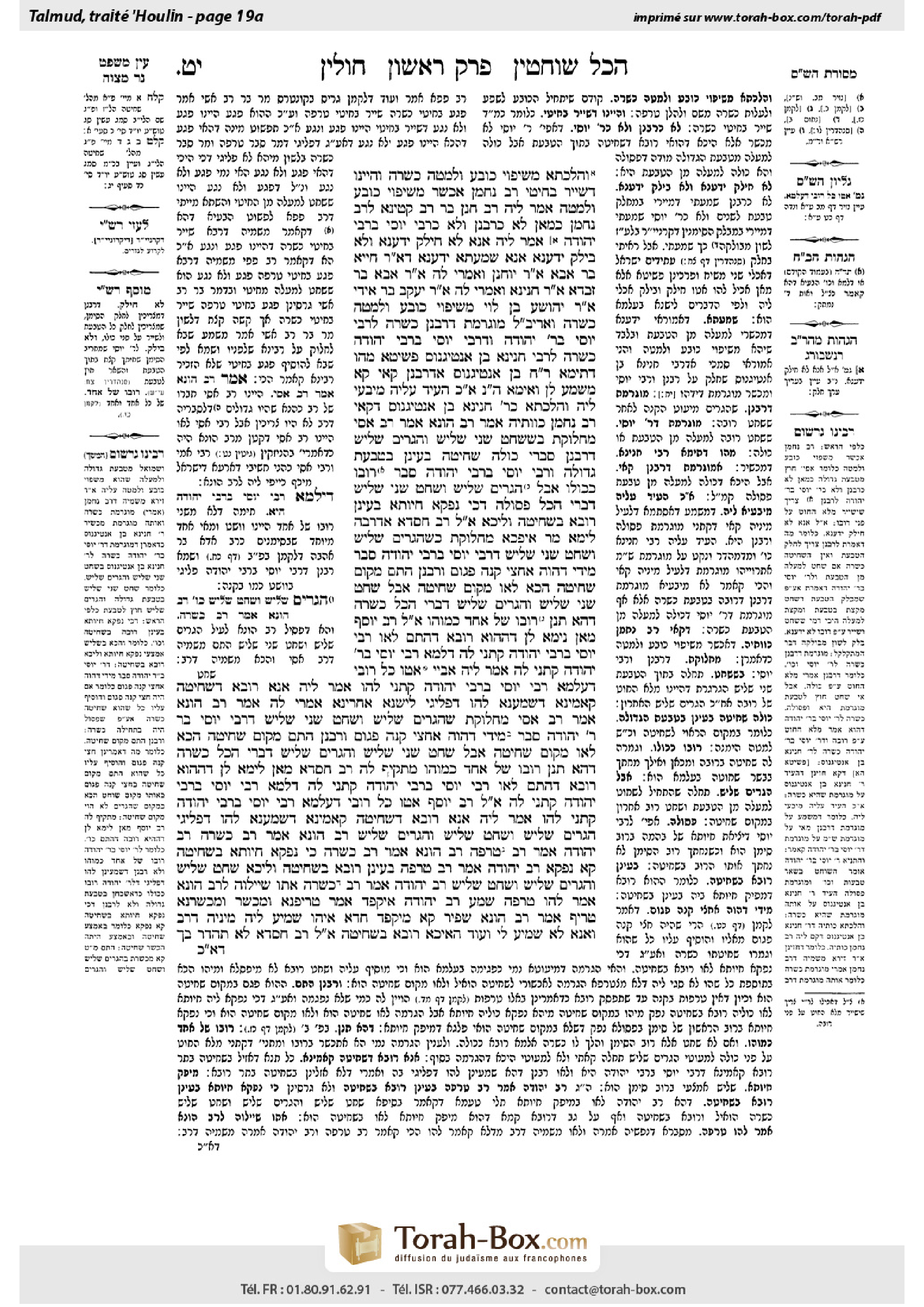
Scan : Torah-Box. Daf Study est un projet indépendant, sans affiliation ni approbation de Torah-Box ou de Sefaria.