Houlin 20a en français · חולין כ׳ א
Traduction française du daf 20a du traité Houlin (Chullin 20a en anglais), avec le texte araméen, l’anglais de Sefaria et le scan de la page, pour étudier le Daf Yomi.
Ouvrir dans le lecteur interactifLire le daf du jour
Traduction française de Houlin 20a
Les traductions françaises de Daf Study sont générées par IA à partir de l’édition anglaise de Sefaria. Elles peuvent contenir des erreurs : vérifie toujours un passage avec le texte source.
Et si tu penses que la mitsva consiste précisément à déplacer les simanim derrière la nuque, puis à les pincer, pourquoi le tanna a-t-il enseigné spécifiquement que, si l’on pince de cette manière, l’acte est valide ? Même si l’on égorgeait de cette manière depuis la nuque, l’égorgement serait valide. Ne faut-il donc pas en conclure que l’interprétation correcte est la suivante : on peut même déplacer les simanim derrière la nuque et les pincer, et la Michna parle d’un cas où l’on n’a pas déplacé les simanim derrière la nuque ?
Rabbi Yannai dit : Les jeunes gens [rovin], les fils de Rabbi Ḥiyya, recevront une réponse qui réfute leur propos à partir de ce qui est enseigné dans la Michna : « Il s’avère que ce qui est valide pour l’égorgement ne l’est pas pour le pincement, et que ce qui est valide pour le pincement ne l’est pas pour l’égorgement. » Qu’est-ce que cette affirmation vient exclure ? N’exclut-elle pas le cas où l’on déplace les simanim derrière la nuque, en enseignant que cela n’est valide que pour l’égorgement et non pour le pincement ?
Rabba bar bar Ḥana dit : Non, peut-être cela vient-il exclure le cas où l’on utilise une dent ou un ongle non détaché, qui conviennent pour le pincement, mais pas pour l’égorgement. La Guemara objecte : Cela ne peut être le cas, car le tanna enseigne explicitement le cas de la dent et de l’ongle dans une Michna (15b) ; il n’était donc pas nécessaire de le répéter.
Rabbi Yirmeya dit plutôt : L’affirmation de la Michna selon laquelle ce qui est valide pour l’égorgement ne l’est pas pour le pincement vient exclure le mouvement de va-et-vient. Celui qui pince ne peut pas couper les simanim en faisant aller et venir son ongle ; il doit au contraire les presser et les couper d’un seul mouvement. La Guemara demande : Cela se comprend bien selon celui qui dit que le mouvement de va-et-vient n’est pas valide pour le pincement ; mais, selon celui qui dit qu’il est valide, que peut-on répondre ? La Guemara répond : Les fils de Rabbi Ḥiyya sont d’avis que le mouvement de va-et-vient n’est pas valide pour le pincement.
Rav Kahana dit : La mitsva du pincement consiste à couper avec l’ongle depuis la nuque, puis à poursuivre vers le bas ; telle est sa mitsva. Rabbi Avin pensa alors : Couper et poursuivre vers le bas, oui ; faire un mouvement de va-et-vient, non. Rabbi Yirmeya lui dit : À plus forte raison, le mouvement de va-et-vient est-il valide pour le pincement. La Guemara demande : Que signifie alors l’expression « telle est sa mitsva », qui laisse entendre que cela doit se faire précisément de cette manière ? La Guemara répond : Il faut comprendre : cela aussi est sa mitsva.
§ Rabbi Yirmeya dit au nom de Shmuel : Tout endroit de la gorge où l’égorgement est valide correspond à un endroit de la nuque où le pincement est valide. On en déduit que tout endroit de la gorge où l’égorgement n’est pas valide ne l’est pas non plus pour le pincement. La Guemara demande : Qu’est-ce que cette affirmation vient exclure ? Si l’on dit qu’elle vient exclure l’arrachement des simanim de leur emplacement avant de les couper, ce qui est invalide pour le pincement comme pour l’égorgement, Rami bar Yeḥezkel n’a-t-il pas enseigné : « Il n’y a pas d’invalidité due à l’arrachement des simanim dans le cas d’un oiseau » ?
Rav Pappa dit : Cela vient exclure le pincement de l’os occipital, à l’arrière de sa tête ; de même que ce n’est pas l’endroit de l’égorgement, ce n’est pas non plus celui du pincement. La Guemara demande : N’est-il pas évident que le pincement à l’arrière de sa tête n’est pas valide ? Le Miséricordieux a dit : « À proximité de sa nuque », et non sur sa tête.
La Guemara répond : Que désigne « sa tête », qui n’est pas l’endroit du pincement ? La pente de sa tête. Par exemple, si quelqu’un a commencé sur cette pente, puis a dévié et poursuivi jusqu’à atteindre plus bas l’endroit des simanim, où il a achevé le pincement. Puisqu’il a commencé l’opération au mauvais endroit, elle est invalide, comme pour l’égorgement. Cela concorde avec l’avis que Rav Huna rapporte au nom de Rav Asi, car Rav Huna rapporte au nom de Rav Asi : « Si quelqu’un a dirigé le couteau vers le haut et coupé un tiers de la trachée, puis en a coupé les deux tiers à l’intérieur de l’anneau, l’égorgement n’est pas valide. »
Rav Aḥa, fils de Rava, dit à Rav Ashi : Quant à ce que Rami bar Yeḥezkel enseigne, à savoir qu’il n’y a pas d’invalidité due à l’arrachement des simanim chez un oiseau, nous ne disons cela que selon celui qui affirme que la Torah ne fournit aucune source pour l’égorgement d’un oiseau.
Texte source et traduction anglaise
חולין כ׳ א · texte araméen et hébreu
וְאִי סָלְקָא דַעְתָּךְ מַחְזִיר דַּוְקָא, מַאי אִירְיָא מוֹלֵק? אֲפִילּוּ שׁוֹחֵט נָמֵי! אֶלָּא לָאו שְׁמַע מִינַּהּ אַף מַחְזִיר, וּמַתְנִיתִין בִּדְלָא אַהְדַּר.
אָמַר רַבִּי יַנַּאי: יְקַבְּלוּ הָרוֹבִין אֶת תְּשׁוּבָתָן, דְּקָתָנֵי: נִמְצָא כָּשֵׁר בִּשְׁחִיטָה – פָּסוּל בִּמְלִיקָה, כָּשֵׁר בִּמְלִיקָה – פָּסוּל בִּשְׁחִיטָה. לְמַעוֹטֵי מַאי? לָאו לְמַעוֹטֵי מַחֲזִיר סִימָנִין לַאֲחוֹרֵי הָעוֹרֶף, דְּלָא?
אָמַר רַבָּה בַּר בַּר חָנָה: לָא, לְמַעוֹטֵי שֵׁן וְצִפּוֹרֶן. שֵׁן וְצִפּוֹרֶן בְּהֶדְיָא קָתָנֵי לְהוּ.
אֶלָּא אָמַר רַבִּי יִרְמְיָה: לְמַעוֹטֵי מוֹלִיךְ וּמֵבִיא. הָנִיחָא לְמַאן דְּאָמַר מוֹלִיךְ וּמֵבִיא בִּמְלִיקָה – פָּסוּל, אֶלָּא לְמַאן דְּאָמַר כָּשֵׁר, מַאי אִיכָּא לְמֵימַר? בְּנֵי רַבִּי חִיָּיא סָבְרִי לַהּ כְּמַאן דְּאָמַר מוֹלִיךְ וּמֵבִיא בִּמְלִיקָה – פָּסוּל.
אָמַר רַב כָּהֲנָא: מִצְוַת מְלִיקָה קוֹצֵץ וְיוֹרֵד, וְזוֹ הִיא מִצְוָתָהּ. סָבַר רַבִּי אָבִין לְמֵימַר: קוֹצֵץ וְיוֹרֵד – אִין, מוֹלִיךְ וּמֵבִיא – לָא. אֲמַר לֵיהּ רַבִּי יִרְמְיָה: כׇּל שֶׁכֵּן דְּמוֹלִיךְ וּמֵבִיא בִּמְלִיקָה כָּשֵׁר, וּמַאי זוֹ הִיא מִצְוָתָהּ? אֵימָא: אַף זוֹ הִיא מִצְוָתָהּ.
אָמַר רַבִּי יִרְמְיָה אָמַר שְׁמוּאֵל: כׇּל הַכָּשֵׁר בִּשְׁחִיטָה – כְּנֶגְדּוֹ בָּעוֹרֶף כָּשֵׁר בִּמְלִיקָה, הָא פָּסוּל בִּשְׁחִיטָה – פָּסוּל בִּמְלִיקָה. לְמַעוֹטֵי מַאי? אִילֵּימָא לְמַעוֹטֵי עִיקּוּר סִימָנִין, וְהָא תָּנֵי רָמֵי בַּר יְחֶזְקֵאל: אֵין עִיקּוּר סִימָנִין בָּעוֹף!
אָמַר רַב פָּפָּא: לְמַעוֹטֵי רֹאשׁוֹ. רֹאשׁוֹ פְּשִׁיטָא? ״מִמּוּל עׇרְפּוֹ״ אָמַר רַחֲמָנָא, וְלֹא בְּרֹאשׁוֹ!
מַאי ״רֹאשׁוֹ״? שִׁיפּוּי רֹאשׁוֹ, כְּגוֹן דְּנָקֵט מִשִּׁיפּוּי רֹאשׁוֹ וְהִגְרִים וַאֲזַל עַד דִּמְטָא תַּתַּאי, וְכִדְרַב הוּנָא אָמַר רַב אַסִּי, דְּאָמַר רַב הוּנָא אָמַר רַב אַסִּי: הִגְרִים שְׁלִישׁ וְשָׁחַט שְׁנֵי שְׁלִישׁ – פְּסוּלָה.
אֲמַר לֵיהּ רַב אַחָא בְּרֵיהּ דְּרָבָא לְרַב אָשֵׁי: הָא דְּתָנֵי רָמֵי בַּר יְחֶזְקֵאל אֵין עִיקּוּר סִימָנִין בָּעוֹף, לָא אֲמַרַן אֶלָּא לְמַאן דְּאָמַר אֵין שְׁחִיטָה לָעוֹף מִן הַתּוֹרָה,
Chullin 20a · traduction anglaise de Sefaria
And if it enters your mind that the mitzva is specifically to move the simanim behind the nape and pinch them, why did the tanna say specifically that if one pinches in this manner it is valid? Even if one slaughters from the nape in this manner the slaughter would be valid. Rather, must one not conclude from it that the proper understanding is: One may even move the simanim behind the nape and pinch, and the mishna is referring to a case where one did not move the simanim behind the nape.
Rabbi Yannai says: The young ones [rovin], the sons of Rabbi Ḥiyya, shall receive their response that rejects their statement from that which is taught in the mishna: It is found that that which is valid for slaughter is not valid for pinching and that which is valid for pinching is not valid for slaughter. What does this statement serve to exclude? Does it not serve to exclude the case where one moves the simanim behind the nape, teaching that it is valid only for slaughter and not for pinching?
Rabba bar bar Ḥana said: No, perhaps it serves to exclude one who uses a tooth or a fingernail that is not detached, which are valid for pinching and not valid for slaughter. The Gemara objects: That could not be, as the tanna teaches explicitly the case of a tooth and a fingernail in a mishna (15b), and there was no need to repeat it.
Rather, Rabbi Yirmeya said: The statement of the mishna: That which is valid for slaughter is not valid for pinching, serves to exclude drawing back and forth. One who pinches may not cut the simanim by drawing his fingernail back and forth. Rather, he must press and cut them in one motion. The Gemara asks: This works out well according to the one who says: Drawing back and forth for pinching is not valid, but according to the one who says: It is valid, what is there to say? The Gemara answers: The sons of Rabbi Ḥiyya hold in accordance with the one who says: Drawing back and forth for pinching is not valid.
Rav Kahana says: The mitzva of pinching is that one cuts with his fingernail from the nape and continues downward, and that is its mitzva. Rabbi Avin thought to say: Cuts and continues downward, yes; draws back and forth, no. Rabbi Yirmeya said to him: All the more so that drawing back and forth for pinching is valid. The Gemara asks: And what is the meaning of the phrase: That is its mitzva, which indicates that it is specifically in that manner? The Gemara answers: Say that it means: That too is its mitzva.
§ Rabbi Yirmeya says that Shmuel says: Any place that is valid for slaughter on the throat is correspondingly valid for pinching on the nape. By inference, any place on the throat that is not valid for slaughter is not valid for pinching. The Gemara asks: What does this statement serve to exclude? If we say that it serves to exclude ripping the simanim from their place before cutting them, which is invalid with regard to pinching just as with regard to slaughter, but didn’t Rami bar Yeḥezkel teach: There is no disqualification of ripping the simanim in the case of a bird?
Rav Pappa said: It serves to exclude pinching the occipital bone at the back of its head; just as it is not the place of slaughter, it is not the place of pinching. The Gemara asks: Isn’t it obvious that pinching at the back of its head is not valid? The Merciful One states: “Adjacent to its nape,” and not at its head.
The Gemara answers: What is its head that is not the place for pinching? It is the incline of its head, e.g., in a case where one began at the incline of its head and diverted and continued until he reached below to the place of the simanim, where he completed the pinching. Since he began the process in the incorrect location, it is invalid, similar to slaughter. And this is in accordance with the opinion that Rav Huna says that Rav Asi says, as Rav Huna says that Rav Asi says: If one diverted the knife upward and cut one-third of the windpipe and then cut two-thirds within the ring, the slaughter is not valid.
Rav Aḥa, son of Rava, said to Rav Ashi: With regard to that which Rami bar Yeḥezkel teaches: There is no disqualification for ripping simanim in a bird, we say it only according to the one who says: There is no source for the slaughter of a bird in the Torah.
Texte de Sefaria : William Davidson Edition - Vocalized Aramaic (unknown) ; William Davidson Edition - English (CC BY NC).
Scan de Houlin 20a
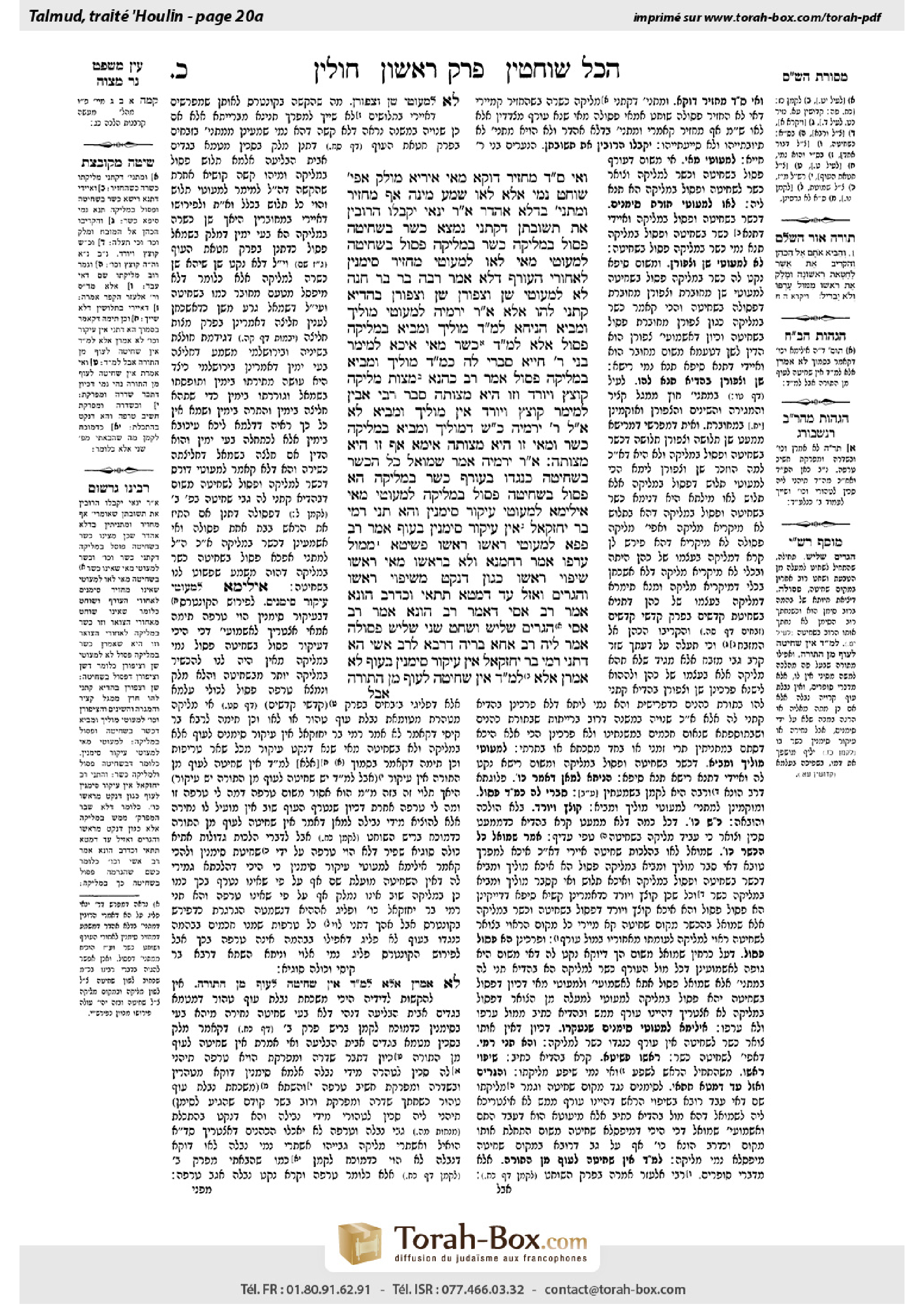
Scan : Torah-Box. Daf Study est un projet indépendant, sans affiliation ni approbation de Torah-Box ou de Sefaria.