Houlin 5a en français · חולין ה׳ א
Traduction française du daf 5a du traité Houlin (Chullin 5a en anglais), avec le texte araméen, l’anglais de Sefaria et le scan de la page, pour étudier le Daf Yomi.
Ouvrir dans le lecteur interactifLire le daf du jour
Traduction française de Houlin 5a
Les traductions françaises de Daf Study sont générées par IA à partir de l’édition anglaise de Sefaria. Elles peuvent contenir des erreurs : vérifie toujours un passage avec le texte source.
La Guemara rejette cette suggestion : Yehoshaphat ne se serait pas séparé d’Achab pour manger et boire seul, car il s’en remettait entièrement à lui. D’où le savons-nous ? Si l’on dit que cela se déduit de ce qui est écrit, à savoir que Yehoshaphat dit à Achab : « Je suis comme toi, mon peuple comme ton peuple » (I Rois 22:4), c’est-à-dire : je suis tout aussi digne de confiance, cela pose une difficulté. En effet, si tel est le cas, lorsque Yehoshaphat dit à la fin de ce verset : « Mes chevaux comme tes chevaux », cela aussi désigne-t-il la confiance ? Yehoshaphat voulait plutôt dire : ce qui arrivera à tes chevaux arrivera à mes chevaux ; de même, ce qui t’arrivera, à toi et à ton peuple, m’arrivera, à moi et à mon peuple.
On déduit plutôt que Yehoshaphat s’en remettait à Achab de ce passage : « Le roi d’Israël et Yehoshaphat, roi de Juda, étaient assis chacun sur son trône, revêtus de leurs habits, sur une aire de battage, à l’entrée de la porte de Samarie » (I Rois 22:10). La Guemara demande : Que signifie ici le terme « aire de battage » ? Si l’on dit qu’il s’agissait d’une véritable aire de battage, cela voudrait-il dire que la porte de Samarie était une aire de battage ? En général, la porte d’une ville était le lieu où se réunissaient ses juges et ses anciens, et non une aire de battage. Ils étaient plutôt assis selon une disposition semblable à celle d’une aire de battage circulaire, c’est-à-dire face à face, en signe d’amitié, comme nous l’avons appris dans une Michna (Sanhédrin 36b) : un Sanhédrin était disposé comme une moitié d’aire de battage circulaire, afin que les juges puissent se voir les uns les autres. Ce verset montre que Yehoshaphat délibérait avec Achab et se fiait à son jugement.
La Guemara propose : Disons que le verset concernant Élie appuie l’opinion de Rav Anan. Le verset dit : « Les corbeaux [orevim] lui apportaient du pain et de la viande le matin, et du pain et de la viande le soir » (I Rois 17:6) ; et Rav Yehouda a dit au nom de Rav : ils apportaient la viande de l’abattoir d’Achab. Il est clair qu’Élie n’aurait pas mangé cette viande si l’abattage d’Achab n’avait pas été valide. La Guemara répond : Puisqu’il mangeait cette viande sur l’ordre de Dieu, le cas d’Élie est différent, et on ne peut en tirer aucune preuve.
La Guemara demande : Que signifie ici orevim ? Ravina dit : Il s’agissait de véritables corbeaux. Rav Adda bar Minyumi lui dit : Et peut-être s’agissait-il de deux hommes nommés Orev ? N’est-il pas écrit : « Ils tuèrent Orev au rocher d’Orev, et Zeèv au pressoir de Zeèv » (Juges 7:25), ce qui indique que Orev est un nom de personne ? Ravina lui répondit : Se pourrait-il que les deux personnes qui fournissaient de la nourriture à Élie aient justement toutes deux porté le nom d’Orev ? Le caractère improbable d’une telle coïncidence indique qu’il s’agissait de véritables corbeaux.
La Guemara propose : Peut-être les appelle-t-on orevim d’après le nom de leur lieu d’origine. N’est-il pas écrit : « Les Araméens étaient sortis en bandes et avaient emmené captive du pays d’Israël une jeune fille mineure [na’ara ketana] » (II Rois 5:2) ? Il nous est difficile de comprendre pourquoi le verset la qualifie à la fois de jeune fille et de mineure, qui correspondent à deux étapes différentes du développement d’une fille. Rabbi Pedat a dit : C’était une fille mineure qui venait d’un lieu appelé Naaran. Peut-être, dans le cas d’Élie, s’agissait-il de deux hommes originaires d’un lieu appelé Orev. La Guemara rejette cette suggestion : Dans ce cas, le verset aurait dû dire Orevites [oreviyyim].
§ Disons que la baraïta suivante appuie l’opinion de Rav Anan, selon laquelle il est permis de manger de la viande provenant de l’abattage d’un Juif transgresseur en matière d’idolâtrie : tous peuvent pratiquer l’abattage, même un Samaritain, même un homme incirconcis et même un Juif transgresseur. La Guemara examine la baraïta : Dans quelles circonstances cet homme est-il incirconcis ? Si l’on dit qu’il est incirconcis parce que ses frères sont morts à la suite de leur circoncision et qu’on craint qu’il ne subisse le même sort, il est évident que l’on peut manger de ce qu’il abat, puisqu’il est pleinement Juif et nullement transgresseur. Il est donc évident qu’il s’agit d’un transgresseur qui refuse de se faire circoncire.
Considérons la dernière partie de la baraïta : « Et même un Juif transgresseur. » Dans quelles circonstances ? S’il transgresse une seule règle, cela revient au même que le cas du transgresseur qui refuse de se faire circoncire. Ne s’agit-il donc pas d’un transgresseur en matière d’idolâtrie, conformément à l’opinion de Rav Anan ?
La Guemara rejette cette preuve : Non, en réalité, je peux te dire qu’un transgresseur en matière d’idolâtrie ne peut pas pratiquer l’abattage, car le maître a dit : l’idolâtrie est une transgression grave, puisque celui qui la rejette est considéré comme reconnaissant l’ensemble de la Torah ; inversement, celui qui accepte l’idolâtrie est considéré comme niant l’ensemble de la Torah. Son statut halakhique est donc celui d’un transgresseur à l’égard de toute la Torah, et son abattage n’est pas valide.
Le transgresseur mentionné dans la dernière partie de la baraïta est plutôt un transgresseur dans le même domaine, celui de la consommation de bêtes mortes sans abattage rituel, et cela est conforme à l’opinion de Rava, qui a dit que l’on peut, a priori, se fier à l’abattage d’un transgresseur qui mange des bêtes mortes sans abattage rituel pour satisfaire son appétit.
La Guemara soulève une objection contre l’opinion de Rav Anan à partir d’une baraïta enseignée à propos du verset : « Quand l’un de vous présente une offrande à l’Éternel, prise parmi le bétail » (Lévitique 1:2). Le tanna déduit des mots « l’un de vous » : mais pas tous parmi vous. Cela vient exclure le transgresseur, dont l’offrande n’est pas acceptée. Le tanna poursuit : l’expression « l’un de vous » s’interprète aussi ainsi : j’ai établi une distinction parmi vous, mais pas parmi les nations. Par conséquent, un non-Juif peut présenter une offrande, même s’il est idolâtre. L’expression « prise parmi le bétail » vient inclure les personnes semblables à des bêtes, en ce qu’elles ne reconnaissent pas Dieu. De là, les Sages ont dit : on accepte les offrandes des Juifs transgresseurs afin qu’ils se repentent par la suite, à l’exception du transgresseur, de celui qui verse du vin en libation à l’idolâtrie et de celui qui profane le Chabbat en public [befarhesya].
Cette baraïta présente une difficulté en elle-même. Tu as d’abord dit : « l’un de vous », mais pas tous parmi vous, ce qui vient exclure le transgresseur, dont l’offrande n’est pas acceptée. Puis le tanna enseigne qu’on accepte les offrandes des Juifs transgresseurs.
La Guemara répond : Il n’y a pas de difficulté. La première partie parle d’un transgresseur à l’égard de toute la Torah. La partie intermédiaire parle d’un transgresseur à l’égard d’une seule règle.
La Guemara objecte : Considérons la dernière partie : « À l’exception du transgresseur, de celui qui verse du vin en libation à l’idolâtrie et de celui qui profane le Chabbat en public. » De quel transgresseur s’agit-il dans cette dernière partie ? S’il s’agit d’un transgresseur à l’égard de toute la Torah, cela revient à la première partie : « l’un de vous », mais pas tous, ce qui vient exclure le transgresseur. Et s’il s’agit d’un transgresseur à l’égard d’une seule règle, la partie intermédiaire pose une difficulté, puisqu’il y est dit qu’on accepte l’offrande d’un transgresseur à l’égard d’une seule règle.
Ne faut-il pas plutôt comprendre que voici ce que dit la Michna dans sa dernière partie : à l’exception du transgresseur qui verse du vin en libation à l’idolâtrie ou qui profane le Chabbat en public ? Il apparaît donc qu’un transgresseur en matière d’idolâtrie est un transgresseur à l’égard de toute la Torah, et cette baraïta réfute l’opinion de Rav Anan. La Guemara conclut : c’est effectivement une réfutation décisive.
La Guemara demande : Cette halakha, selon laquelle on n’accepte pas l’offrande d’un transgresseur, est-elle déduite du verset cité ici ? Elle est déduite du verset écrit là-bas à propos d’un sacrifice expiatoire :
Texte source et traduction anglaise
חולין ה׳ א · texte araméen et hébreu
לָא הֲוָה מְפַלֵּיג נַפְשֵׁיהּ מִינֵּיהּ, מְנָלַן? אִילֵּימָא מִדִּכְתִיב ״כָּמוֹנִי כָמוֹךָ כְּעַמִּי כְעַמֶּךָ״, אֶלָּא מֵעַתָּה ״כְּסוּסַי כְּסוּסֶיךָ״ הָכִי נָמֵי? אֶלָּא מָה דְּהָוֵי אַסּוּסֶיךָ תֶּהֱוֵי אַסּוּסַי, הָכִי נָמֵי מַאי דְּהָוֵי עֲלָךְ וְעִילָּוֵי עַמָּךְ תֶּיהֱוֵי עֲלַי וְעִילָּוֵי עַמִּי.
אֶלָּא מֵהָכָא: ״וּמֶלֶךְ יִשְׂרָאֵל וִיהוֹשָׁפָט מֶלֶךְ יְהוּדָה יֹשְׁבִים אִישׁ עַל כִּסְאוֹ מְלֻבָּשִׁים בְּגָדִים בְּגֹרֶן פֶּתַח שַׁעַר שֹׁמְרוֹן״. מַאי גּוֹרֶן? אִילֵּימָא גּוֹרֶן מַמָּשׁ, אַטּוּ שַׁעַר שׁוֹמְרוֹן גּוֹרֶן הֲוָה? אֶלָּא כִּי גוֹרֶן, דִּתְנַן: סַנְהֶדְרִין הָיְתָה כַּחֲצִי גוֹרֶן עֲגוּלָּה כְּדֵי שֶׁיְּהוּ רוֹאִין זֶה אֶת זֶה.
לֵימָא מְסַיַּיע לֵיהּ, ״וְהָעֹרְבִים מְבִיאִים לוֹ לֶחֶם וּבָשָׂר בַּבֹּקֶר וְלֶחֶם וּבָשָׂר בָּעָרֶב״, וְאָמַר רַב יְהוּדָה אָמַר רַב: מִבֵּי טַבָּחֵי דְאַחְאָב. עַל פִּי הַדִּבּוּר שָׁאנֵי.
מַאי עוֹרְבִים? אָמַר רָבִינָא: עוֹרְבִים מַמָּשׁ. אֲמַר לֵיהּ רַב אַדָּא בַּר מִנְיוֹמֵי: וְדִלְמָא תְּרֵי גַבְרֵי דְּהָוֵי שְׁמַיְיהוּ עוֹרְבִים! מִי לָא כְּתִיב: ״וַיַּהַרְגוּ אֶת עוֹרֵב בְּצוּר עוֹרֵב וְאֶת זְאֵב וְגוֹ׳״? אֲמַר לֵיהּ: אִיתְרְמַאי מִילְּתָא דְּתַרְוַיְיהוּ הֲוָה שְׁמַיְיהוּ עוֹרְבִים?
וְדִלְמָא עַל שֵׁם מְקוֹמָן! מִי לָא כְּתִיב: ״וַאֲרָם יָצְאוּ גְדוּדִים וַיִּשְׁבּוּ מֵאֶרֶץ יִשְׂרָאֵל נַעֲרָה קְטַנָּה״, וְקַשְׁיָא לַן: קָרֵי לַהּ ״נַעֲרָה״ וְקָרֵי לַהּ ״קְטַנָּה״, וְאָמַר רַבִּי פְּדָת: קְטַנָּה דְּמִן נְעוֹרָן! אִם כֵּן ״עוֹרְבִיִּים״ מִיבְּעֵי לֵיהּ.
לֵימָא מְסַיַּיע לֵיהּ: הַכֹּל שׁוֹחֲטִין, וַאֲפִילּוּ כּוּתִי, וַאֲפִילּוּ עָרֵל, וַאֲפִילּוּ יִשְׂרָאֵל מְשׁוּמָּד. הַאי עָרֵל הֵיכִי דָמֵי? אִילֵּימָא שֶׁמֵּתוּ אֶחָיו מֵחֲמַת מִילָּה – הַאי יִשְׂרָאֵל מְעַלְּיָא הוּא! אֶלָּא פְּשִׁיטָא מְשׁוּמָּד לַעֲרֵלוּת.
אֵימָא סֵיפָא: וַאֲפִילּוּ יִשְׂרָאֵל מְשׁוּמָּד, הֵיכִי דָמֵי? אִי מְשׁוּמָּד לְדָבָר אֶחָד – הַיְינוּ מְשׁוּמָּד לַעֲרֵלוּת, אֶלָּא לָאו מְשׁוּמָּד לַעֲבוֹדָה זָרָה, וְכִדְרַב עָנָן.
לָא, לְעוֹלָם אֵימַר לָךְ: מְשׁוּמָּד לַעֲבוֹדָה זָרָה לָא, דְּאָמַר מָר: חֲמוּרָה עֲבוֹדָה זָרָה, שֶׁכׇּל הַכּוֹפֵר בָּהּ כְּמוֹדֶה בְּכׇל הַתּוֹרָה כּוּלָּהּ.
אֶלָּא מְשׁוּמָּד לְאוֹתוֹ דָּבָר, וְכִדְרָבָא.
מֵיתִיבִי: ״מִכֶּם״ – וְלֹא כּוּלְּכֶם, לְהוֹצִיא אֶת הַמְשׁוּמָּד. ״מִכֶּם״ – בָּכֶם חִלַּקְתִּי וְלֹא בְּאוּמּוֹת. ״מִן הַבְּהֵמָה״ – לְהָבִיא בְּנֵי אָדָם שֶׁדּוֹמִים לִבְהֵמָה. מִכָּאן אָמְרוּ: מְקַבְּלִין קׇרְבְּנוֹת מִפּוֹשְׁעֵי יִשְׂרָאֵל כְּדֵי שֶׁיַּחְזְרוּ בָּהֶן בִּתְשׁוּבָה, חוּץ מִן הַמְשׁוּמָּד, וּמְנַסֵּךְ אֶת הַיַּיִן, וּמְחַלֵּל שַׁבָּתוֹת בְּפַרְהֶסְיָא.
הָא גוּפָא קַשְׁיָא, אָמְרַתְּ: ״מִכֶּם״ – וְלֹא כּוּלְּכֶם, לְהוֹצִיא אֶת הַמְשׁוּמָּד, וַהֲדַר תָּנֵי: מְקַבְּלִין קׇרְבָּנוֹת מִפּוֹשְׁעֵי יִשְׂרָאֵל!
הָא לָא קַשְׁיָא, רֵישָׁא – מְשׁוּמָּד לְכׇל הַתּוֹרָה כּוּלָּהּ, מְצִיעֲתָא – מְשׁוּמָּד לְדָבָר אֶחָד.
אֵימָא סֵיפָא: חוּץ מִן הַמְשׁוּמָּד וּמְנַסֵּךְ אֶת הַיַּיִן וּמְחַלֵּל שַׁבָּת בְּפַרְהֶסְיָא. הַאי מְשׁוּמָּד הֵיכִי דָמֵי? אִי מְשׁוּמָּד לְכׇל הַתּוֹרָה כּוּלָּהּ – הַיְינוּ רֵישָׁא, וְאִי מְשׁוּמָּד לְדָבָר אֶחָד – קַשְׁיָא מְצִיעֲתָא.
אֶלָּא לָאו הָכִי קָאָמַר: חוּץ מִן הַמְשׁוּמָּד לְנַסֵּךְ אֶת הַיַּיִן וּלְחַלֵּל שַׁבָּתוֹת בְּפַרְהֶסְיָא, אַלְמָא מְשׁוּמָּד לַעֲבוֹדָה זָרָה הָוֵה מְשׁוּמָּד לְכׇל הַתּוֹרָה כּוּלָּהּ, וּתְיוּבְתָּא דְּרַב עָנָן, תְּיוּבְתָּא.
וְהָא מֵהָכָא נָפְקָא? מֵהָתָם נָפְקָא,
Chullin 5a · traduction anglaise de Sefaria
The Gemara rejects that suggestion: Jehoshaphat would not have separated himself from Ahab to eat and drink by himself, as he relied on him completely. From where do we derive this? If we say that it is derived from that which is written that Jehoshaphat said to Ahab: “I am as you are, my people as your people” (I Kings 22:4), i.e., I am equally reliable, this is difficult, as, if that is so, then when Jehoshaphat said at the conclusion of that verse: “My horses as your horses,” can this also be referring to reliability? Rather, Jehoshaphat’s intention was: That which will befall your horses will befall my horses; so too, that which will befall you and your people will befall me and my people.
Rather, it is derived that Jehoshaphat relied upon Ahab from here: “And the king of Israel and Jehoshaphat, king of Judea, sat each on his throne, arrayed in their robes, in a threshing floor, at the entrance of the gate of Samaria” (I Kings 22:10). The Gemara asks: What is the meaning of the term threshing floor in this context? If we say that it was an actual threshing floor; is that to say that the gate of Samaria was a threshing floor? Typically, the gate of a city was the place of assembly for the city’s judges and elders, not a threshing floor. Rather, they were sitting in a configuration like that of a circular threshing floor, i.e., facing each other in a display of amity, as we learned in a mishna (Sanhedrin 36b): A Sanhedrin was arranged in the same layout as half of a circular threshing floor, so that the judges would see each other. This verse demonstrates that Jehoshaphat deliberated with Ahab and relied on his judgment.
The Gemara suggests: Let us say that the verse written with regard to Elijah supports the opinion of Rav Anan. The verse states: “And the ravens [orevim] brought him bread and meat in the morning, and bread and meat in the evening” (I Kings 17:6); and Rav Yehuda said that Rav said: They would bring the meat from the slaughterhouse of Ahab. Clearly, Elijah would not have eaten the meat if Ahab’s slaughter was not valid. The Gemara responds: Since he ate the meat according to the word of God, the case of Elijah is different, and no proof may be cited from there.
The Gemara asks: What is the meaning of orevim in this context? Ravina said: They were actual ravens. Rav Adda bar Minyumi said to him: And perhaps they were two men whose names were Oreb? Isn’t it written: “And they slew Oreb at the Rock of Oreb, and Zeeb they slew at the winepress of Zeeb” (Judges 7:25), indicating that Oreb is a person’s name? Ravina said to him: Did the matter just so happen that the names of both of the people supplying Elijah with food were Oreb? The improbability of this occurrence indicates that they were actual ravens.
The Gemara suggests: And perhaps they are called orevim after the name of their place of origin. Isn’t it written: “And the Arameans had gone out in bands, and had brought away captive out of the land of Israel a minor young woman [na’ara ketana]” (II Kings 5:2)? And it is difficult for us to understand why the verse calls her a young woman and also calls her a minor, which are two different stages in a girl’s development. And Rabbi Pedat said: She was a minor girl who was from a place called Naaran. Perhaps in the case of Elijah they were two people from a place called Oreb. The Gemara rejects that suggestion: If so, Orebites [oreviyyim] should have been written in the verse.
§ Let us say that the following baraita supports the opinion of Rav Anan, who says that it is permitted to eat from the slaughter of a Jew who is a transgressor with regard to idol worship: Everyone slaughters, and even a Samaritan, and even an uncircumcised man, and even a Jewish transgressor. The Gemara analyzes the baraita: This uncircumcised man, what are the circumstances? If we say that he is an uncircumcised man whose brothers died due to circumcision and the concern is that he might suffer a similar fate, clearly one may eat from what he slaughters, as he is a full-fledged Jew and not a transgressor at all. Rather, it is obvious that he is a transgressor with regard to remaining uncircumcised, as he refuses to be circumcised.
Say the latter clause of the baraita: And even a Jewish transgressor. What are the circumstances? If he is a transgressor with regard to one matter, that is identical to the case of a transgressor with regard to remaining uncircumcised. Rather, is it not that he is a transgressor with regard to idol worship, and it is in accordance with the opinion of Rav Anan?
The Gemara rejects that proof: No, actually I will say to you that a transgressor with regard to idol worship may not slaughter, as the Master said: Idol worship is a severe transgression, as with regard to anyone who denies it, it is as though he acknowledges his acceptance of the entire Torah. Conversely, with regard to one who accepts idolatry, it is as though he denies the entire Torah. Therefore, his halakhic status is that of a transgressor with regard to the entire Torah, and his slaughter is not valid.
Rather, the transgressor in the latter clause of the baraita is a transgressor concerning the same matter of eating unslaughtered carcasses, and it is in accordance with the opinion of Rava, who said that one may rely on the slaughter of a transgressor with regard to eating unslaughtered animal carcasses to satisfy his appetite even ab initio.
The Gemara raises an objection to the opinion of Rav Anan from that which is taught in a baraita with regard to the verse: “When any man of you brings an offering unto the Lord, from the animal” (Leviticus 1:2). The tanna infers: “Of you,” indicating: But not all of you. This serves to exclude the transgressor, from whom an offering is not accepted. The tanna continues: The term “of you” is also interpreted to mean that I distinguished among you and not among the nations. Therefore, a gentile may bring an offering even if he is an idol worshipper. The expression “from the animal” serves to include people who are similar to an animal in that they do not recognize God. From here, the Sages stated: One accepts offerings from Jewish transgressors so that they will consequently repent, except for the transgressor, one who pours wine as a libation to idolatry, and one who desecrates Shabbat in public [befarhesya].
This baraita itself is difficult. Initially, you said: “Of you,” indicating: But not all of you. This serves to exclude the transgressor, from whom an offering is not accepted. And then the tanna teaches: One accepts offerings from Jewish transgressors.
The Gemara answers: This is not difficult. The first clause states that an offering is not accepted from a transgressor with regard to the entire Torah. The middle clause states that one accepts an offering from a transgressor with regard to one matter.
The Gemara challenges: Say the last clause: Except for the transgressor, and one who pours wine as a libation to idolatry, and one who desecrates Shabbat in public. With regard to this transgressor in the last clause, what are the circumstances? If the reference is to a transgressor with regard to the entire Torah, that is identical to the first clause: Of you, and not all of you, to exclude the transgressor. And if the reference is to a transgressor with regard to one matter, the middle clause is difficult, as it is stated there that one accepts an offering from a transgressor with regard to one matter.
Rather, is it not that this is what the mishna is saying in the last clause: Except for the transgressor to pour wine as a libation to idolatry or to desecrate Shabbat in public? Apparently, a transgressor with regard to idol worship is a transgressor with regard to the entire Torah, and this baraita is a refutation of the opinion of Rav Anan. The Gemara concludes: It is indeed a conclusive refutation.
The Gemara asks: And is this halakha that one does not accept an offering from a transgressor derived from the verse cited here? It is derived from the verse written there with regard to a sin offering:
Texte de Sefaria : William Davidson Edition - Vocalized Aramaic (unknown) ; William Davidson Edition - English (CC BY NC).
Scan de Houlin 5a
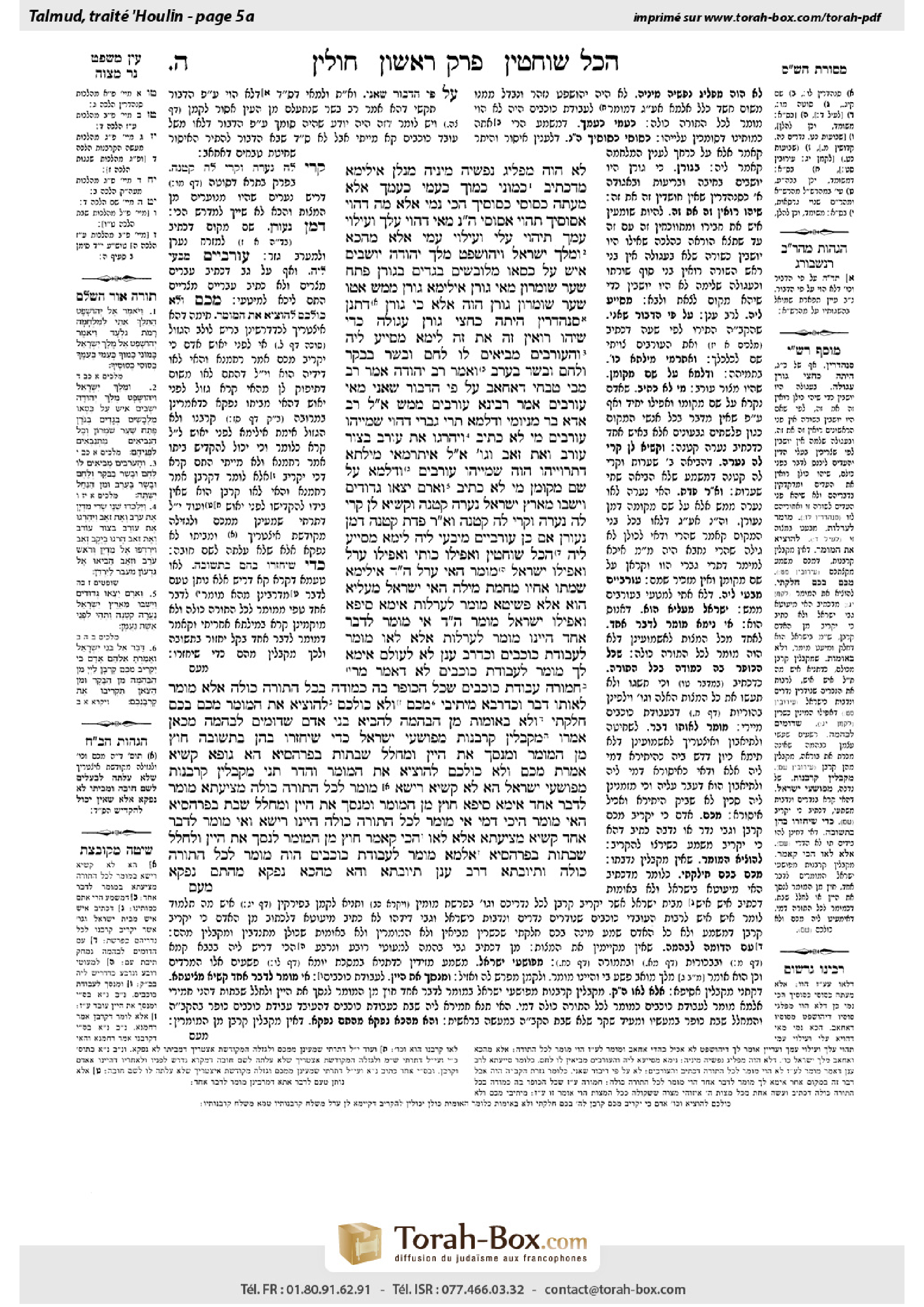
Scan : Torah-Box. Daf Study est un projet indépendant, sans affiliation ni approbation de Torah-Box ou de Sefaria.