Houlin 62b en français · חולין ס״ב ב
Traduction française du daf 62b du traité Houlin (Chullin 62b en anglais), avec le texte araméen, l’anglais de Sefaria et le scan de la page, pour étudier le Daf Yomi.
Ouvrir dans le lecteur interactifLire le daf du jour
Traduction française de Houlin 62b
Les traductions françaises de Daf Study sont générées par IA à partir de l’édition anglaise de Sefaria. Elles peuvent contenir des erreurs : vérifie toujours un passage avec le texte source.
disqualifier l’eau de purification, c’est-à-dire l’eau dans laquelle on a placé les cendres de la vache rousse, en y buvant. L’eau qui est entrée dans le bec de l’oiseau est disqualifiée, et une partie en retombe dans le récipient, disqualifiant ainsi le reste. Cela s’applique à tous les oiseaux, à l’exception de la colombe, car elle boit l’eau du récipient par petites gorgées et rien ne retombe de son bec. Mais si le tasil est une sorte de colombe, que la Michna enseigne : « À l’exception de la colombe et du tasil » ! Rabbi Zeira dit : Bien que le tasil soit une sorte de colombe et boive lui aussi par petites gorgées, celui-ci, le tasil, boit l’eau et en recrache une partie, disqualifiant ainsi l’eau de purification, tandis que celle-là, la colombe, boit sans recracher.
Rav Yehouda dit : Les colombes tzutzeyanei sont aptes à être offertes sur l’autel ; ce sont les colombes de Reḥava mentionnées précédemment. La Guemara soulève une objection à partir d’une Michna (Negaïm 14:6) : La Torah exige de l’hysope pour la purification d’un lépreux. Il doit s’agir d’hysope ordinaire, et non d’hysope de Grèce, d’hysope stibium, d’hysope romaine, d’hysope du désert, ni d’aucune autre sorte d’hysope dont le nom est accompagné d’un qualificatif. De même, les colombes tzutzeyanei devraient être inaptes à être offertes, puisque leur nom est accompagné d’un qualificatif.
Abayé dit : Tout objet dont le nom était accompagné d’un qualificatif avant le don de la Torah et au sujet duquel la Torah a tenu à préciser le nom est inapte si son nom est accompagné d’un qualificatif, puisque la formulation de la Torah a été établie pour l’exclure. Mais le nom de ces colombes tzutzeyanei n’était pas accompagné d’un qualificatif — c’est-à-dire que le qualificatif tzutzeyanei ne leur était pas appliqué — avant le don de la Torah. Même si ce qualificatif leur a été appliqué par la suite, elles restent aptes à être offertes. Autre explication : Rava dit que, dans leur lieu d’habitation, les colombes tzutzeyanei sont simplement appelées des colombes.
De même, Rav Yehouda dit : Ces sauterelles que l’on trouve parmi les arbustes sont cachères et permises à la consommation, tandis que celles que l’on trouve parmi les choux sont interdites. Ravina dit : Nous infligeons des coups de fouet à ceux qui en mangent, en raison de l’interdiction : « Toutes les bêtes ailées qui grouillent seront impures pour vous » (Deutéronome 14:19). Rav Yehouda dit également : L’oiseau appelé tzarda est permis à la consommation, et le barda est interdit. Voici un moyen mnémotechnique pour se rappeler lequel est lequel : « Mange n’importe quel oiseau, sauf [bar] celui-ci. » Quant au marda, on ne sait pas s’il est cachère.
Rav Assi dit : Il existe huit cas douteux : le ḥuva, le ḥuga, le suga et le harnuga, le tushelemi et le marda, le kuḥilna et le bar nappaḥa. La Guemara explique : En quoi consiste le doute ? Le gésier des oiseaux cachères peut être pelé, comme l’indique la Michna, tandis que celui des oiseaux non cachères ne peut pas l’être ; or, le gésier de ces oiseaux ne peut être pelé qu’avec un couteau.
La Guemara demande : Mais pourquoi ces oiseaux ne seraient-ils pas cachères ? N’y avait-il pas un certain canard, dans la maison de Mar Shmuel, dont le gésier ne pouvait pas être pelé ? On exposa le gésier au soleil et, une fois ramolli, il put être pelé. La Guemara répond : Dans ce cas, une fois ramolli, il pouvait être pelé à la main. Ici, pour ces huit cas, même une fois ramolli, il ne peut être pelé qu’avec un couteau.
Abayé dit : Le coq des marais est l’un des huit cas douteux ; il s’agit du mardu, c’est-à-dire du marda mentionné précédemment. Rav Pappa dit : Le coq des marais est interdit, mais la poule d’eau est permise. Voici un moyen mnémotechnique pour s’en souvenir : la déclaration des Sages au sujet du verset « Aucun Ammonite ni Moabite n’entrera dans l’assemblée de l’Éternel » (Deutéronome 23:4) : un homme ammonite est inapte à entrer dans l’assemblée, mais pas une femme ammonite. Mareimar enseignait : La poule d’eau est interdite, car les Sages ont vu qu’elle lacère sa proie avec ses griffes et la mange. C’est la giruta, un oiseau non cachère (voir 109b).
Rav dit : L’oiseau appelé shavor anderafta est permis, mais le piruz anderafta est interdit. Le moyen mnémotechnique pour s’en souvenir est le personnage bien connu de Piruz le Méchant. Rav Houna dit : L’oiseau appelé bunya est permis ; le parva est interdit. Le moyen mnémotechnique pour s’en souvenir est le personnage bien connu de Parva’a le Sorcier.
Rav Pappa dit : L’oiseau appelé mardu couché et mangeant est permis, tandis que le mardu qui s’incline et mange est interdit. Le moyen mnémotechnique pour s’en souvenir est le verset : « Tu ne te prosterneras devant aucun autre dieu » (Exode 34:14). Shmuel dit : L’oiseau appelé « buveur de vin » est interdit. Le moyen mnémotechnique pour s’en souvenir est la halakha selon laquelle ceux qui ont bu du vin sont inaptes au service dans le Temple. Shmuel dit également que l’oiseau appelé « verseur de vin » est interdit.
Texte source et traduction anglaise
חולין ס״ב ב · texte araméen et hébreu
פּוֹסְלִין בְּמֵי חַטָּאת חוּץ מִן הַיּוֹנָה מִפְּנֵי שֶׁמּוֹצֶצֶת, וְאִם אִיתָא לִיתְנֵי חוּץ מִיּוֹנָה וְתָסִיל! אָמַר רַבִּי זֵירָא: זֶה מוֹצֵץ וּמֵקִיא, וְזֶה מוֹצֵץ וְאֵינוֹ מֵקִיא.
אָמַר רַב יְהוּדָה: הָנֵי כּוּפְשָׁנֵי צוּצְיָינֵי כְּשֵׁרִים לְגַבֵּי מִזְבֵּחַ, וְהֵן הֵן תּוֹרִין שֶׁל רְחָבָה. מֵיתִיבִי: ״אֵזוֹב״, וְלֹא אֵזוֹב יוֹן, וְלֹא אֵזוֹב כּוֹחֳלִי, וְלֹא אֵזוֹב רוֹמִי, וְלֹא מִדְבָּרִי, וְלֹא כׇּל אֵזוֹב שֶׁיֵּשׁ לוֹ שֵׁם לְוַוי.
אָמַר אַבָּיֵי: כֹּל שֶׁנִּשְׁתַּנָּה שְׁמוֹ קוֹדֶם מַתַּן תּוֹרָה, וְהִקְפִּידָה תּוֹרָה עָלָיו, יֵשׁ לוֹ שֵׁם לְוַוי – פָּסוּל. וְהָנֵי לֹא נִשְׁתַּנָּה שְׁמָן קוֹדֶם מַתַּן תּוֹרָה. רָבָא אָמַר: הָנֵי כּוּפְשָׁנֵי צוּצְיָינֵי, בְּאַתְרַיְיהוּ סְתָמָא קָרֵי לְהוּ.
אָמַר רַב יְהוּדָה: הָנֵי כְּרָזֵי דְּבֵי חִילְפֵי שָׁרוּ, וּדְבֵי כְּרָבֵי אֲסִירִי. אָמַר רָבִינָא: וּמַלְקִינַן עֲלַיְיהוּ מִשּׁוּם שֶׁרֶץ הָעוֹף. וְאָמַר רַב יְהוּדָה: צְרָדָא – שְׁרֵי, בַּרְדָּא – אֲסִיר, וְסִימָנָיךְ ״בַּר מִינֵּיהּ״, מַרְדָּא – סְפֵקָא.
אָמַר רַב אַסִּי: שְׁמוֹנָה סְפֵיקוֹת הֵן: חוֹבָא, חוּגָא, סוּגָא, וְהַרְנוּגָא, תּוּשְׁלְמִי, וּמַרְדָּא, כּוֹחִילְנָא, וּבַר נַפָּחָא. מַאי סְפֵיקַיְיהוּ? עוֹפוֹת טְהוֹרִים קוּרְקְבָנָן נִקְלָף, וּטְמֵאִין אֵין קוּרְקְבָנָן נִקְלָף, וְהָנֵי קוּרְקְבָנָן נִקְלָף בְּסַכִּינָא.
וְהָא הָהִיא בַּר אֲוָוזָא דַּהֲוָה בֵּי מָר שְׁמוּאֵל, דְּלָא הֲוָה קָא מִקְּלֵף קוּרְקְבָנֵיהּ, וְאוֹתְבֵיהּ בְּשִׁימְשָׁא, וְכֵיוָן דְּרָפֵי אִיקְּלֵיף! הָתָם, כִּי רָפֵי אִיקְּלֵיף בִּידָא. הָכָא, אַף עַל גַּב דְּרָפֵי, לָא מִקְּלֵיף אֶלָּא בְּסַכִּינָא.
אָמַר אַבָּיֵי: תַּרְנְגוֹלָא דְּאַגְמָא חַד מִשְּׁמוֹנָה סְפֵיקוֹת הוּא, וְהַיְינוּ מַרְדּוּ. אָמַר רַב פָּפָּא: תַּרְנְגוֹלָא דְּאַגְמָא אֲסִירָא, תַּרְנְגוֹלְתָּא דְּאַגְמָא שַׁרְיָא, וְסִימָנָיךְ – ״עַמּוֹנִי וְלֹא עַמּוֹנִית״. דְּרַשׁ מָרִימָר: תַּרְנְגוֹלְתָּא דְּאַגְמָא אֲסִירָא, חַזְיוּהָ דְּדָרְסָה וְאָכְלָה, וְהַיְינוּ גֵּירוּתָא.
אָמַר רַב: שַׁבּוּר אַנַדַּרְפַּטָּא – שְׁרֵי, פֵּירוּז אַנַדַּרְפַּטָּא – אֲסִיר, וְסִימָנָיךְ – פֵּירוּז רַשִּׁיעָא. אָמַר רַב הוּנָא: בּוּנְיָא – שְׁרֵי, פַּרְוָא – אֲסִיר, וְסִימָנָיךְ – פַּרְוָאָה אַמְגּוּשָׁא.
אָמַר רַב פָּפָּא: מַרְדּוּ זָגֵיד וְאָכֵיל – שְׁרֵי, סָגֵיד וְאָכֵיל – אֲסִיר, וְסִימָנָיךְ ״לֹא תִשְׁתַּחֲוֶה לְאֵל אַחֵר״. אָמַר שְׁמוּאֵל: שָׁתְיָא חַמְרָא – אֲסִירָא, וְסִימָנָיךְ ״שְׁתוּיֵי יַיִן פְּסוּלִין לַעֲבוֹדָה״. וְאָמַר שְׁמוּאֵל: מָזְגָא חַמְרָא – אֲסִירָא,
Chullin 62b · traduction anglaise de Sefaria
disqualify the water of purification, i.e., water in which ashes of the red heifer have been placed, by drinking from it. The water that entered the bird’s mouth is disqualified, and some of it drips back into the container, disqualifying the rest. This applies to all birds except for the pigeon, because it sips the water from the container and none falls back in from its mouth. But if it is so that the tasil is a type of pigeon, let the mishna teach: Except for the pigeon and the tasil. Rabbi Zeira said: Although the tasil is a type of pigeon and sips the water as well, this, the tasil, sips the water and spits part of it back, and therefore disqualifies the water of purification, and that, the pigeon, sips but does not spit.
Rav Yehuda says: The tzutzeyanei doves are fit for sacrifice on the altar, and they are the doves of Reḥava mentioned earlier. The Gemara raises an objection from a mishna (Nega’im 14:6): The Torah requires hyssop for the purification of a leper. It must be standard hyssop, and neither a hyssop of Greece, nor stibium hyssop, nor Roman hyssop, nor desert hyssop, nor any other kind of hyssop whose name is accompanied by a modifier. Likewise, tzutzeyanei doves should be unfit for sacrifice, because they have a modifier in their name.
Abaye said: Any item whose name was modified before the giving of the Torah, and concerning which the Torah was particular when naming it, is unfit if its name is accompanied by a modifier, since the language of the Torah was formulated to exclude it. But the name of these tzutzeyanei doves was not modified, i.e., the modifier tzutzeyanei was not applied to them, before the giving of the Torah. Even though it was applied to them later, they are still fit for sacrifice. Alternatively, Rava said: The tzutzeyanei doves are called simply doves in their place of habitation.
Similarly, Rav Yehuda says: These grasshoppers found among the shrubs are kosher and permitted for consumption. And those found among the cabbages are forbidden. Ravina said: And we flog those who eat them on their account, due to the prohibition: “And all winged swarming things are impure unto you” (Deuteronomy 14:19). And Rav Yehuda says: The bird called tzarda is permitted for consumption, and the barda is prohibited. And your mnemonic to remember which is which is this: Eat any bird except [bar] for it. As for the marda, it is uncertain whether it is kosher.
Rav Asi says: There are eight uncertain cases: The ḥuva, ḥuga, suga, and harnuga, tushelemi, and marda, kuḥilna, and bar nappaḥa. The Gemara explains: What is their uncertainty? The gizzard of kosher birds can be peeled, as mentioned in the mishna, and the gizzard of non-kosher birds cannot be peeled, but the gizzard of these birds can be peeled only with a knife.
The Gemara asks: But why should these not be kosher? Wasn’t there a certain duck in the house of Mar Shmuel whose gizzard could not be peeled, and they set the gizzard in the sun, and once it softened it could be peeled? The Gemara responds: There, when it softened it could be peeled by hand. Here, in these eight cases, even when it softened it could be peeled only with a knife.
Abaye says: The swamp rooster is one of the eight uncertain cases, and this is the mardu, i.e., the marda mentioned earlier. Rav Pappa says: The swamp rooster is forbidden, but the swamphen is permitted. And your mnemonic to remember this is the statement of the Sages with regard to the verse: “An Ammonite or a Moabite shall not enter into the assembly of the Lord” (Deuteronomy 23:4), that an Ammonite man is unfit to enter the assembly, but not an Ammonite woman. Mareimar taught: The swamphen is forbidden, because the Sages saw that it claws its prey and eats it. And this is the giruta, a non-kosher bird (see 109b).
Rav says: The bird called the shavor anderafta is permitted, but the piruz anderafta is forbidden. And your mnemonic to remember this is the known personality Piruz the Evil. Rav Huna says: The bird called the bunya is permitted. The parva is forbidden. And your mnemonic to remember this is the known personality Parva’a the Sorcerer.
Rav Pappa says: The bird known as the reclining and eating mardu is permitted, while the bowing and eating mardu is forbidden. And your mnemonic to remember this is the verse: “You shall bow down to no other god” (Exodus 34:14). Shmuel says: The bird called the wine drinker is forbidden. And your mnemonic to remember this is the halakha: Those who drank wine are unfit for service in the Temple. And Shmuel says: The bird called the wine pourer is forbidden.
Texte de Sefaria : William Davidson Edition - Vocalized Aramaic (unknown) ; William Davidson Edition - English (CC BY NC).
Scan de Houlin 62b
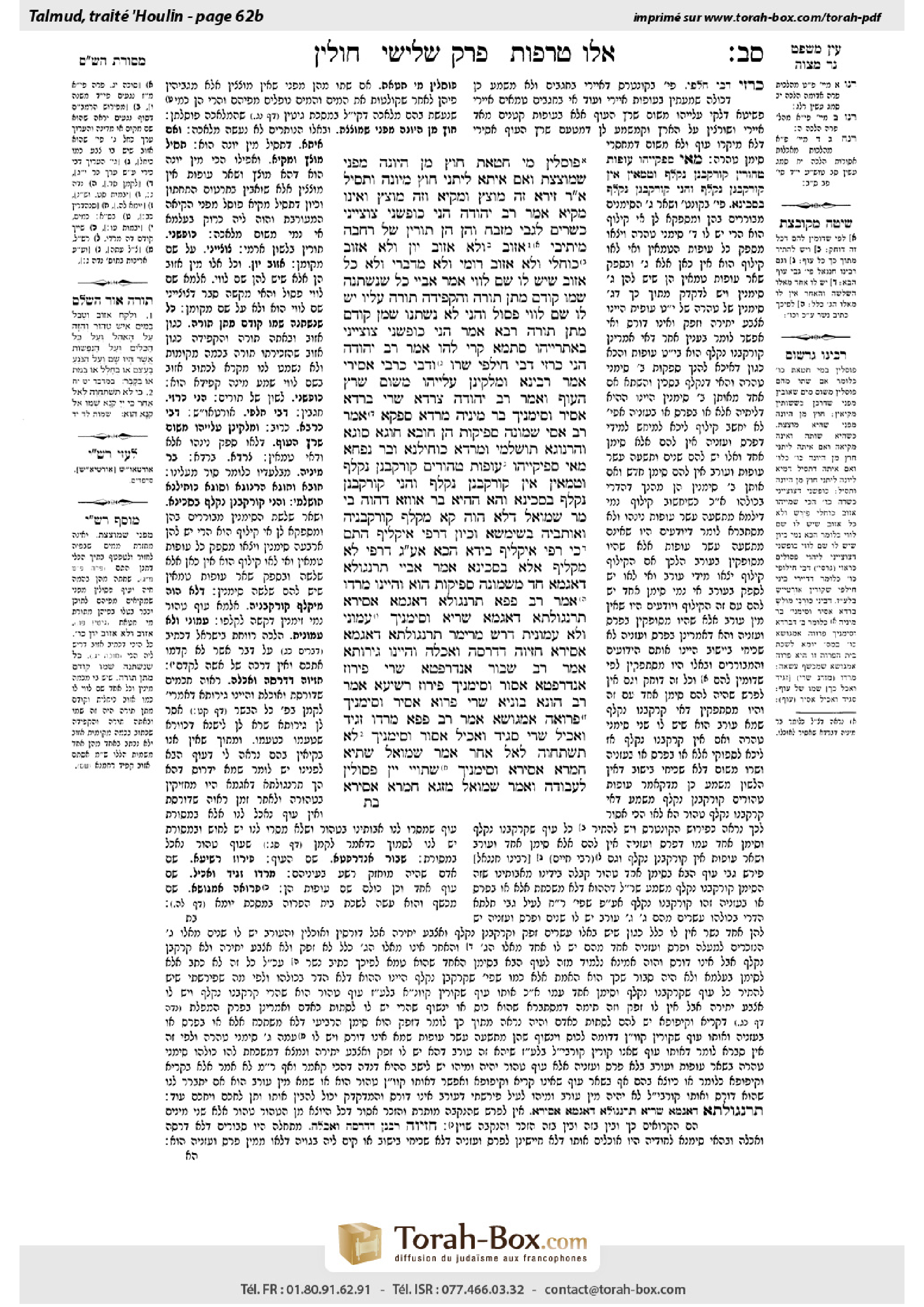
Scan : Torah-Box. Daf Study est un projet indépendant, sans affiliation ni approbation de Torah-Box ou de Sefaria.